
Paper wasp nests: identification and what to do
Paper wasp nests are the wasp nests American homeowners find most often: a gray, umbrella-shaped comb under the eaves, the porch ceiling, a deck railing or the lid of the grill. They are also the nests you are most likely to be able to handle yourself. This guide shows how to confirm that a nest belongs to paper wasps, how risky it is, and your options for what to do next.
Short answer
A paper wasp nest is a single open comb of paper cells, with no outer shell, hanging from a thin stalk. Paper wasps are slender, long-legged and less aggressive than yellowjackets. A small nest out of the way can be left alone; a small nest next to a door can often be removed yourself at dusk with a labeled product; a large or hard-to-reach nest is a job for a professional.
How to recognize the nest
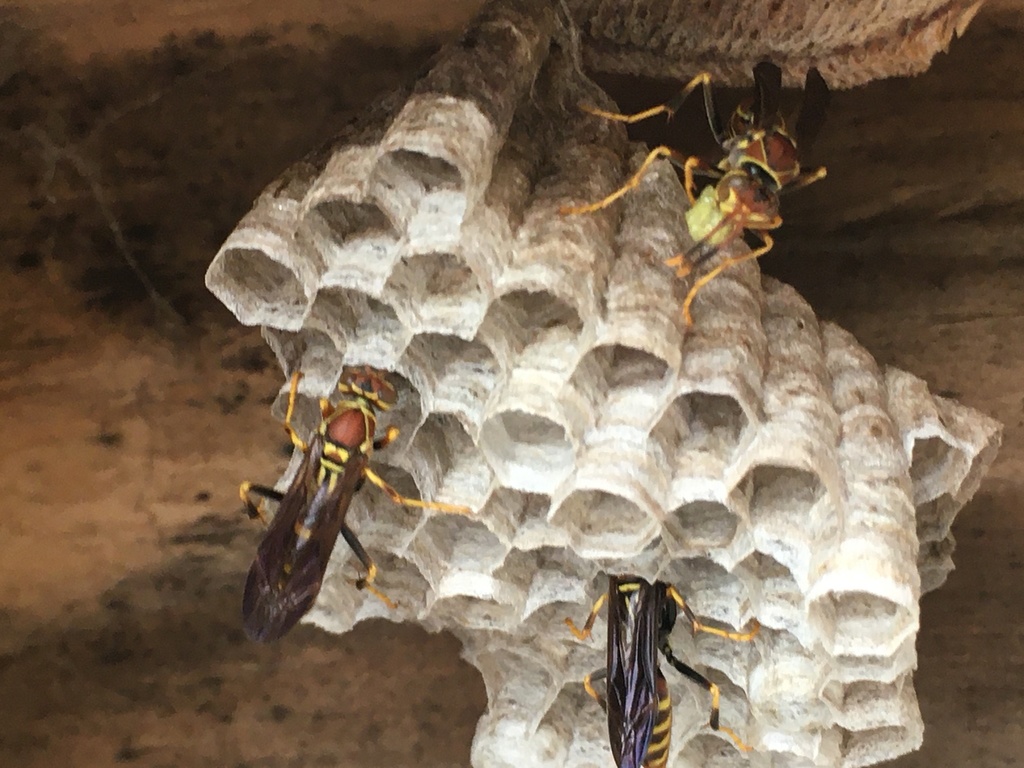
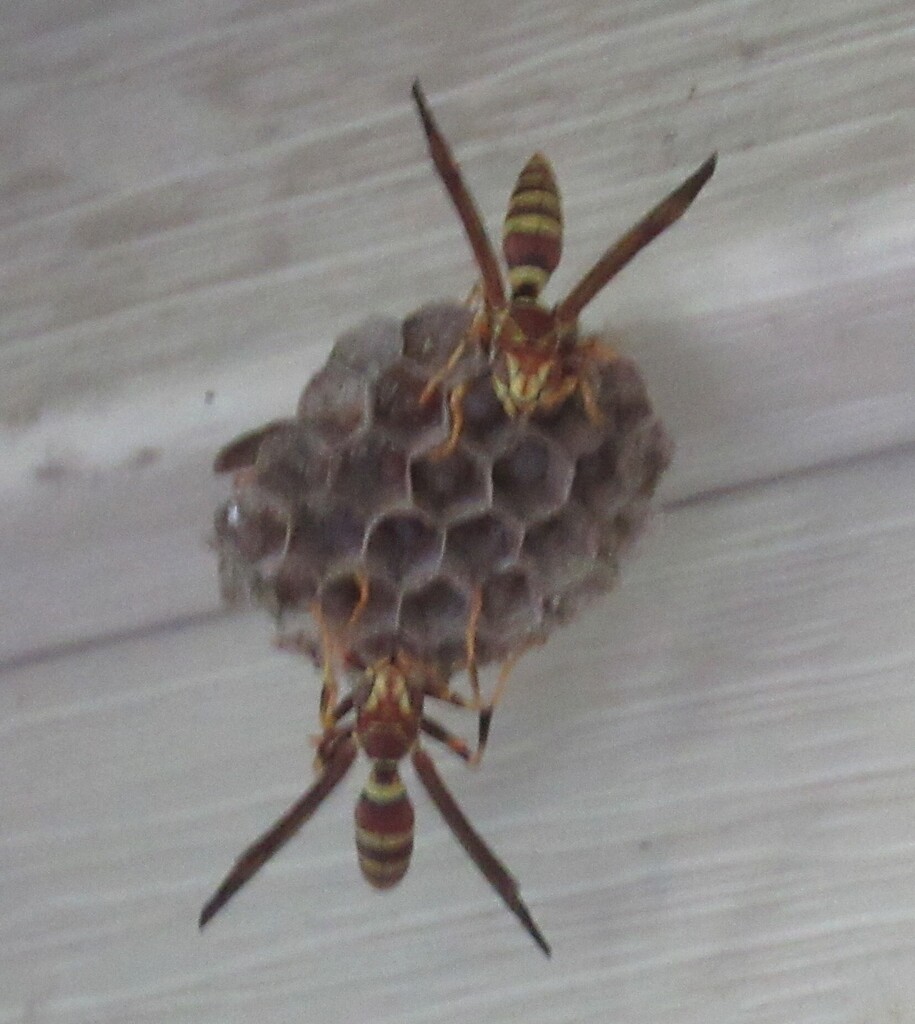
- Open cells. You can see the six-sided cells from below. There is no papery wrapper around them. If there is a shell with one entrance hole, it is not a paper wasp nest; compare in types of wasp nests.
- One comb on a stalk. The comb hangs from a single short, thin stem (a “petiole”), often at an angle, like an upside-down umbrella.
- Gray or tan paper made from chewed wood fiber.
- Sheltered spots outdoors: under eaves and gutters, porch ceilings, deck railings and joists, shutters, light fixtures, mailboxes, playsets, grill lids, the inside of an unused birdhouse or a pipe.
- Size: from a few cells in spring to the size of a saucer by late summer. Most stay smaller than a hand.
How to recognize the wasps
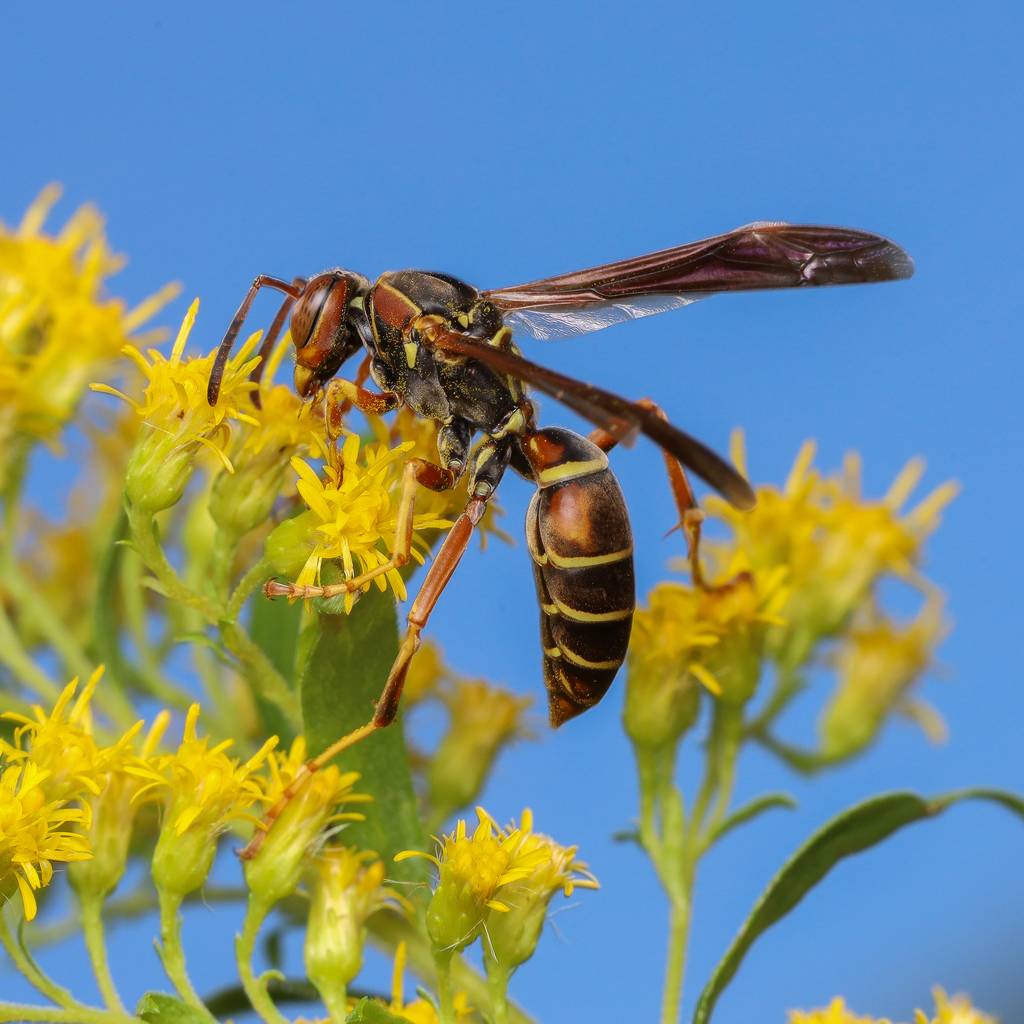
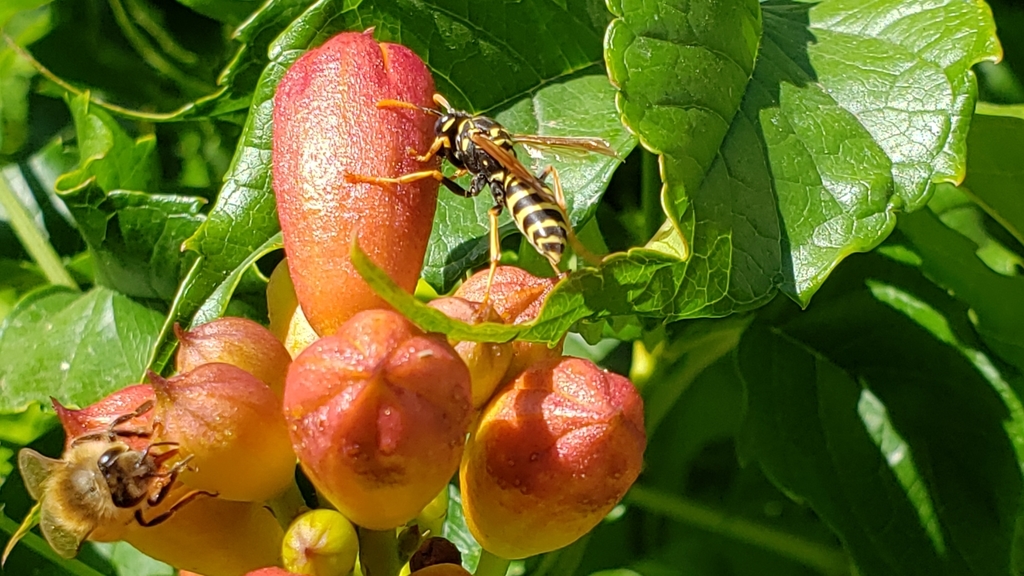
Paper wasps are slender, with a very thin waist and long legs that hang down when they fly. They move fairly slowly around the nest and tend to perch on its face, guarding the cells. Three kinds are common around US homes:
- Northern and other native paper wasps: brown to reddish-brown with thin yellow bands. Found across much of the country.
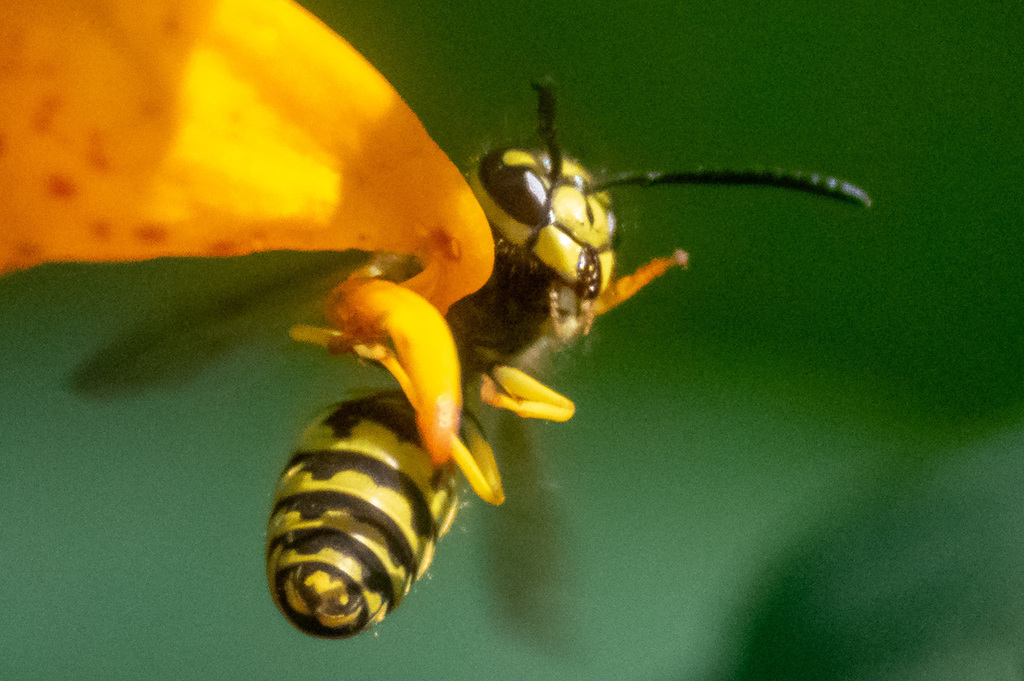
- European paper wasp: yellow and black and often mistaken for a yellowjacket. Look for orange antennae and the long dangling legs; yellowjackets have black antennae, shorter legs and a faster, more jerky flight. This introduced species is now widespread and often nests in very sheltered spots like pipes, grills and hollow railings.
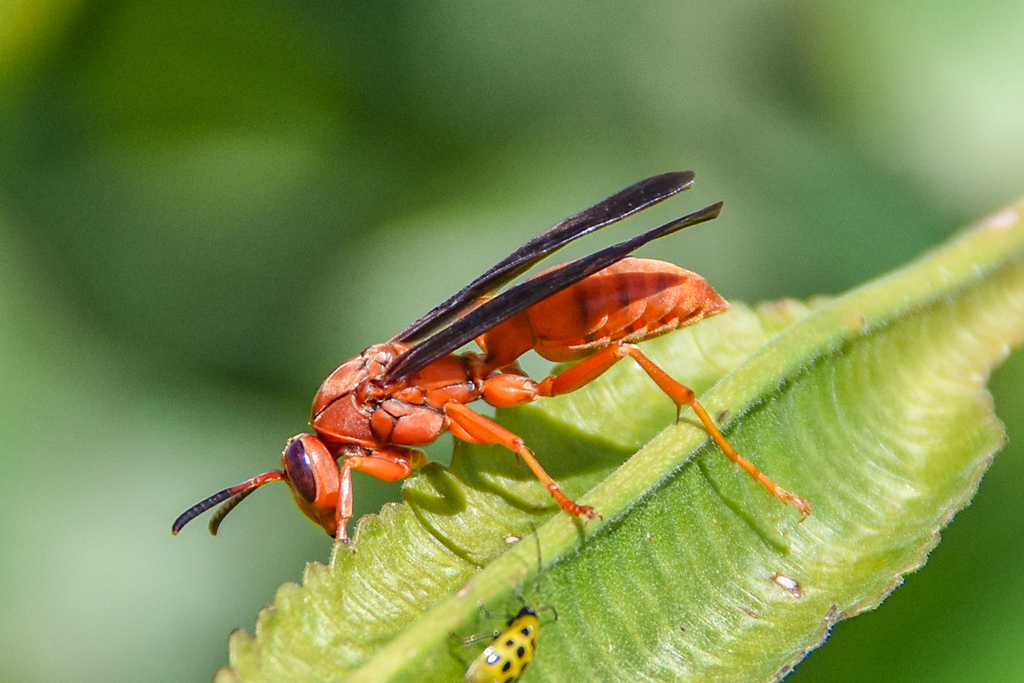
- Red paper wasp: rusty red with dark wings, common in the South and southern Plains.
How risky is a paper wasp nest?
Paper wasp colonies are small compared with yellowjackets: usually a few dozen wasps, rarely more than a couple of hundred. Away from the nest, paper wasps are not interested in people or food. They do defend the nest, though, and their sting is painful. Most stings happen when someone bumps the nest without seeing it: reaching under a railing, opening a grill, moving a patio umbrella or trimming a shrub.
They are also useful. Paper wasps hunt caterpillars and other insects to feed their larvae, so a nest at the far end of the yard is doing you a favor.
What to do about a paper wasp nest
Option 1: Leave it
If the nest is away from doors, paths, play areas and the grill, nobody in the household is allergic and the wasps ignore you, leaving it is often the safest and cheapest choice. The colony dies in fall in most of the country, and the nest is not reused. Mark the spot so nobody bumps it. More on this choice: should you remove a wasp nest or leave it.
Option 2: Remove a small nest yourself
A nest smaller than a softball, out in the open and reachable while you stand on the ground is the classic DIY case, especially in spring or early summer. The basics:
- Use a wasp and hornet product that is labeled for the site, and read the whole label first. The label is the law.
- Work at dusk or after dark, when the wasps are on the nest and less active. Avoid shining a bright white light straight at them.
- Wear long sleeves, long pants, gloves and eye protection, keep children and pets inside, and plan your way out.
- Wait at least a day, check that there is no activity, then knock the nest down and bag it.
Not sure whether to do it yourself? Compare DIY vs. professional removal. Step-by-step instructions: how to remove a paper wasp nest. Choosing a product: how to choose a wasp and hornet spray.
Never use fire, gasoline or other fuels on a nest, and do not knock down an active nest with a stick or a hose. Paper wasps under eaves are a common cause of ladder falls; if you would need a ladder, call a professional.
Option 3: Call a professional
Call a licensed pest professional if someone in the household is allergic to stings, the nest is large, high up or inside a hollow railing, pipe or wall, or if the wasps have already stung someone. See when to call a professional for wasps and what wasp nest removal costs.
Not sure which option fits? The wasp nest decision guide sorts it out in four questions.
Paper wasps through the year
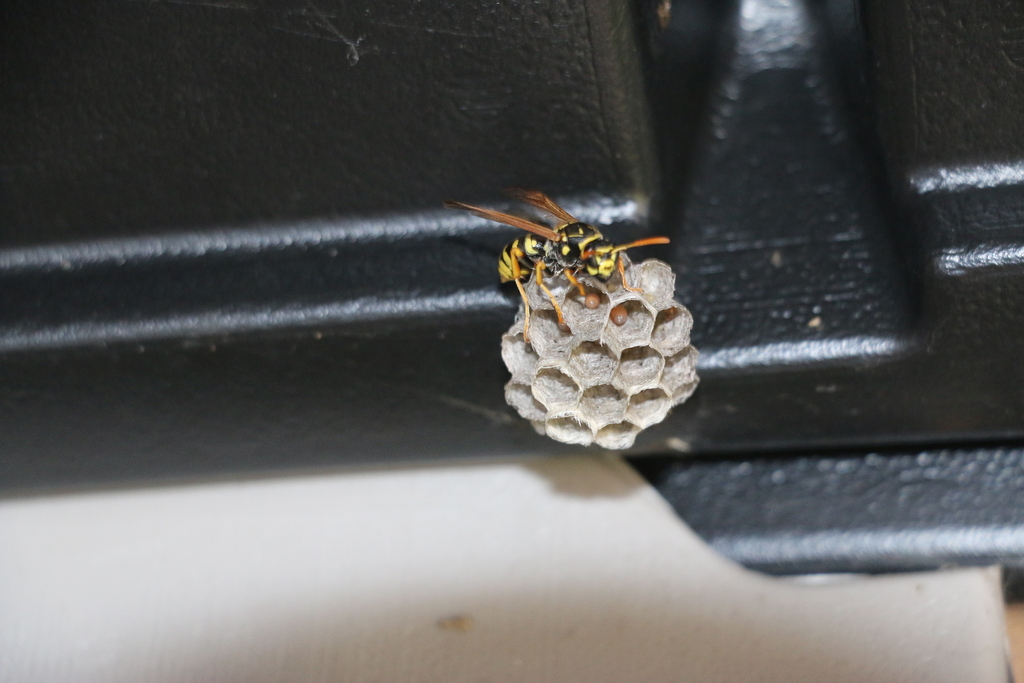
- Spring: a mated queen that spent the winter in a sheltered spot starts a new nest alone, sometimes with a few other queens. The nest is just a few cells. This is the easiest time to knock a nest down before it grows. See how to prevent wasp nests.
- Summer: workers emerge and the nest grows quickly.
- Late summer and fall: new queens and males are produced. The colony then breaks up and the old nest is abandoned.
- Winter: new queens hibernate in protected places, including attics, wall voids, sheds and window frames. That is why paper wasps sometimes appear indoors on warm days in late winter or early spring. See wasps in the house.
Allergic to stings?
If anyone in your household is allergic to bee or wasp stings, do not try to remove a nest yourself. In an emergency, such as trouble breathing or swelling of the face or throat after a sting, call 911 and use a prescribed epinephrine auto-injector if one is available.
Common questions
Are paper wasps aggressive?
Less than yellowjackets or bald-faced hornets. They mostly sting when the nest is touched or shaken. A nest you walk past every day may never cause trouble; a nest under the grill lid probably will.
Will paper wasps come back to the same spot?
They do not reuse the old nest, but a sheltered spot that suited one queen often attracts another the next spring. Removing old nests and checking that spot in April and May helps.
How can I tell a paper wasp from a yellowjacket?
Paper wasps are slender with long dangling legs and build open combs. Yellowjackets are compact, fly fast and build closed nests, often underground or in walls. The European paper wasp looks most like a yellowjacket; check for orange antennae and the open nest.
Is an empty paper wasp nest a problem?
No. Once the colony is gone, the nest is just paper. You can knock it down and throw it away.
Your next step
- Decide what to do: the wasp nest decision guide.
- Not sure it is a paper wasp nest? Compare types of wasp nests and yellowjacket nests.
- Still unsure whether it is wasps at all? See wasp vs. bee.
- Been stung? Here is what to do first.
Photos on this page are shared by their authors on iNaturalist under Creative Commons licenses, credited under each image. For who writes these guides and how we stay independent, see About.