
Types of wasp nests: a photo guide
The nest tells you more than the insect does. Its shape, material and location usually reveal which wasp built it, how big the colony can get and how careful you need to be. Use the photos below to match what you found, ideally from 10 to 15 feet away with your phone’s zoom, then follow the link for your nest type.
Short answer
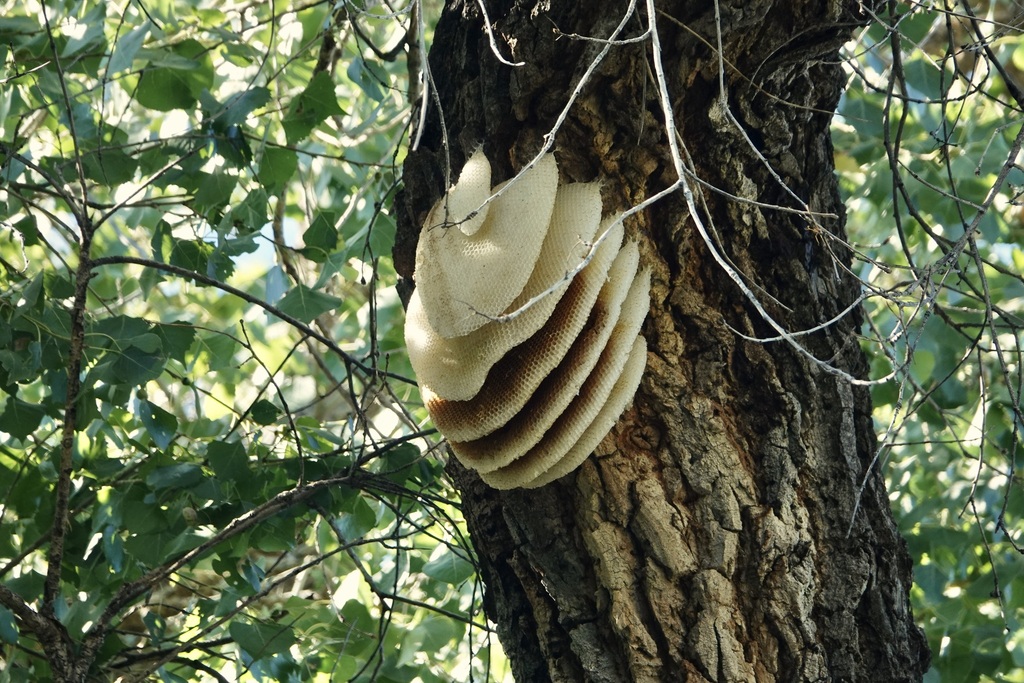
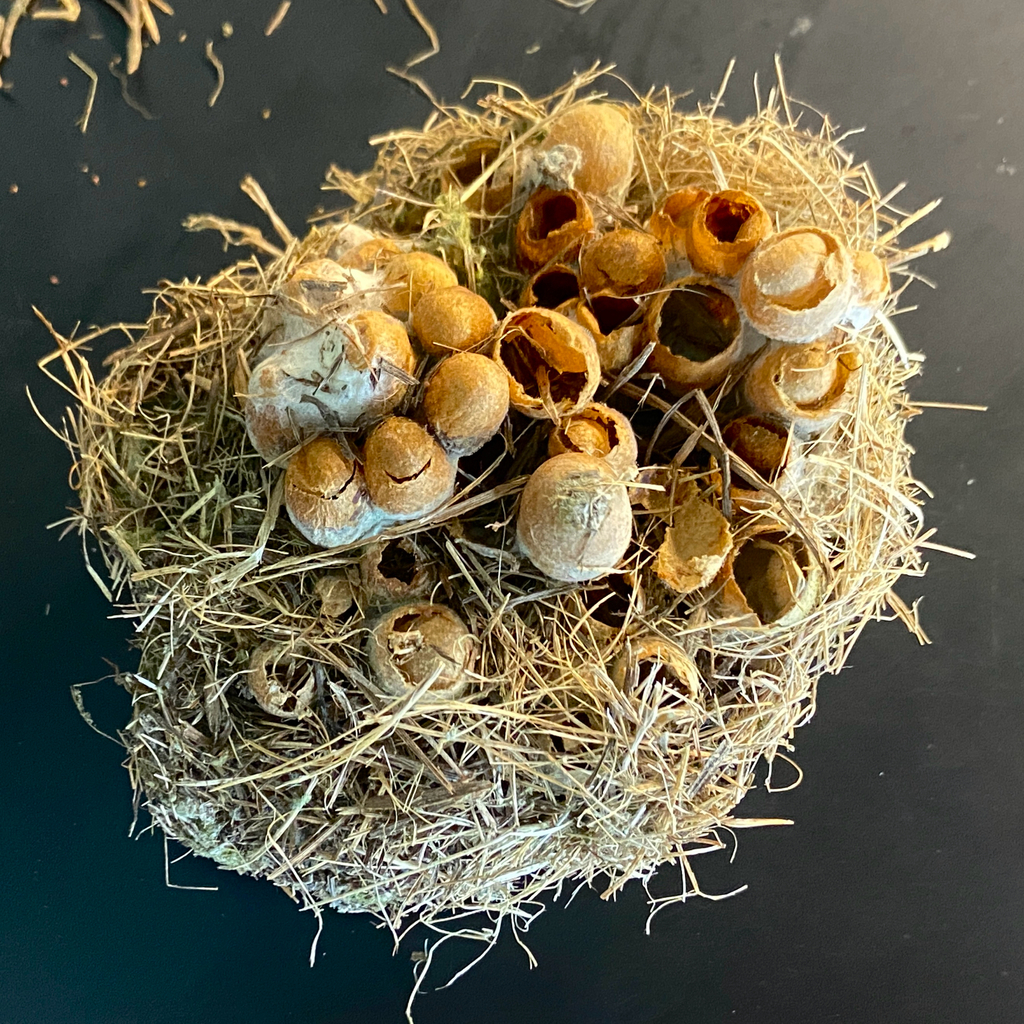
Most US wasp nests fall into four groups: an open paper comb (paper wasps), a closed paper ball (bald-faced hornets and some yellowjackets), a hidden nest in the ground, a wall or a tree (yellowjackets and European hornets), or mud tubes and lumps (mud daubers). Wax comb is not a wasp nest at all; it belongs to bees.
Quick identification table
| What you see | Who built it | Typical spot | How careful to be |
|---|---|---|---|
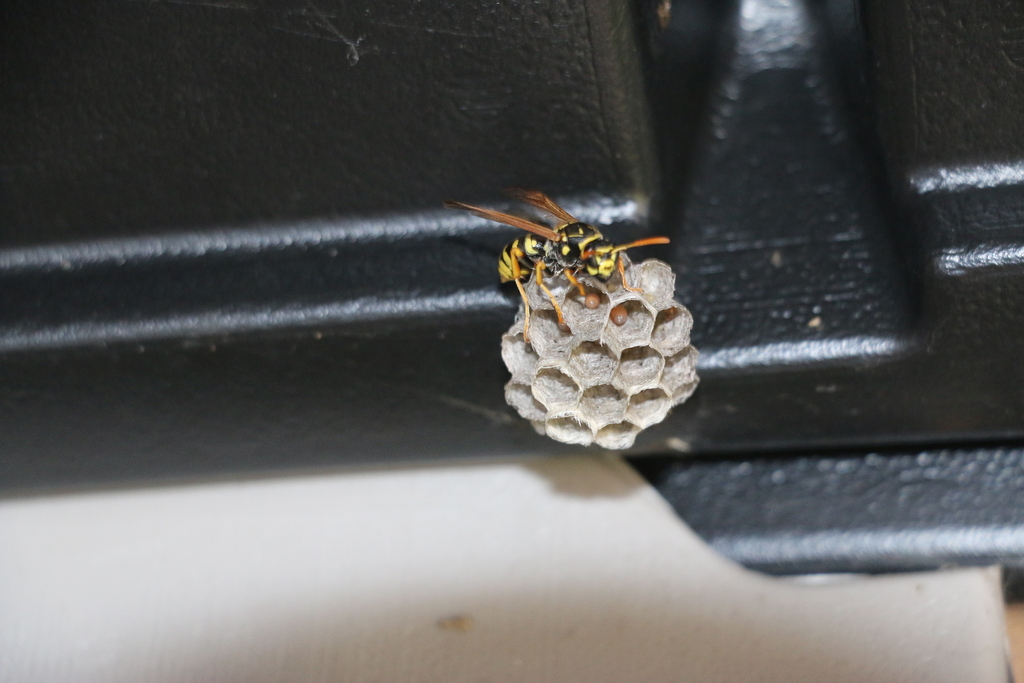
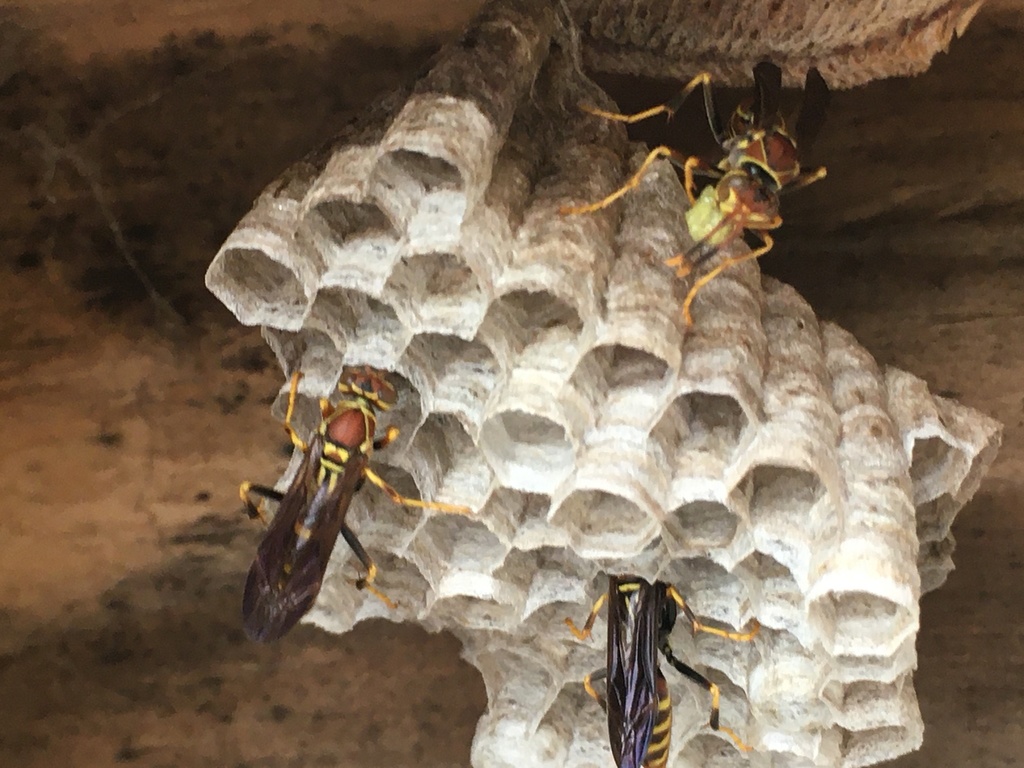
| Open gray paper comb, cells visible from below, on a short stalk | Paper wasps | Eaves, porch ceilings, railings, grills, mailboxes | Moderate; small nests are often a DIY job |
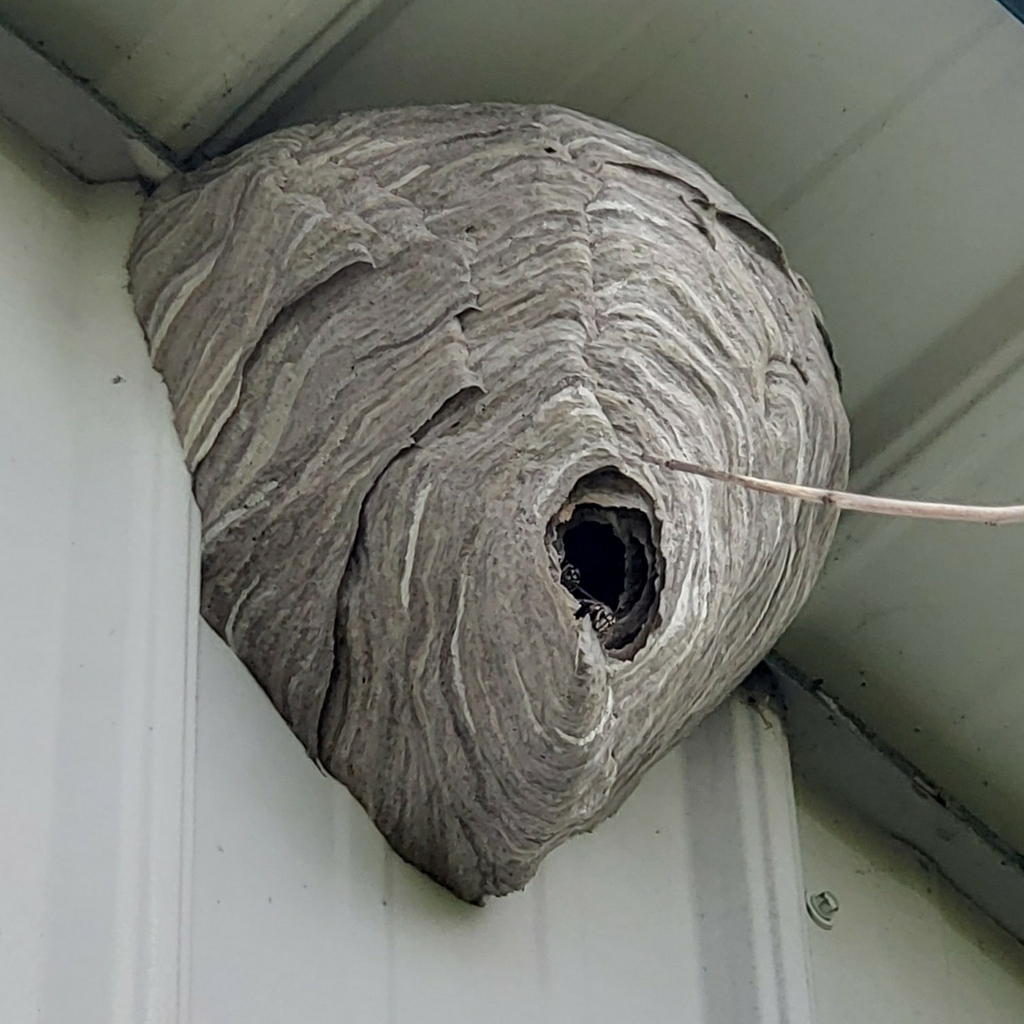
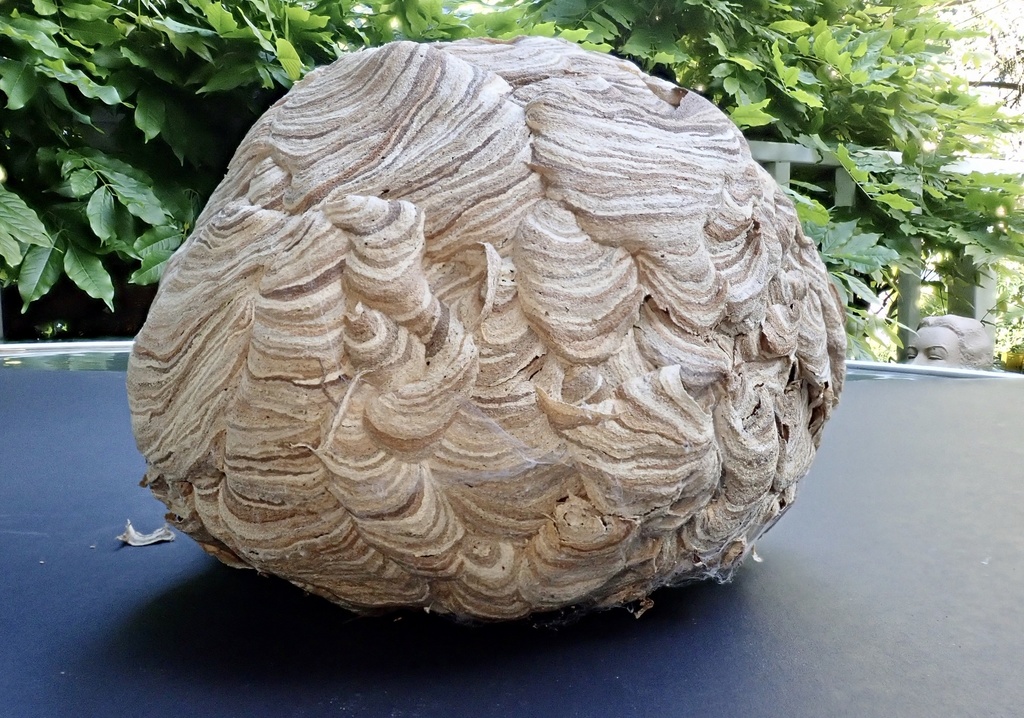
| Closed gray paper ball or “football” with one hole near the bottom | Bald-faced hornets, aerial yellowjackets | Trees, shrubs, eaves, sheds | High; very defensive, usually a pro job |
| Wasps flying fast in and out of a hole in the ground | Yellowjackets | Lawns, garden beds, under steps | High, especially in late summer |
| Wasps using a gap in siding, a soffit, a vent or a hollow tree | Yellowjackets, European hornets | Walls, attics, chimneys, tree cavities | High; hidden nests are a pro job |
| Mud tubes side by side (“organ pipes”) or a lumpy mud mass | Mud daubers | Sheltered walls, ceilings, garages, sheds | Low; mud daubers rarely sting |
| Pale wax comb, or a ball of grass with wax pots | Honey bees or bumblebees (not wasps) | Cavities, walls, old burrows, insulation | Do not spray; see wasp vs. bee |
1. Open paper comb: paper wasps
A single, uncovered comb of six-sided cells, hanging from a thin stalk, with the open cells facing down. The paper is gray or tan, made from wood fiber that the wasps chew and mix with saliva. In spring you may find a nest the size of a coin with one queen on it; by late summer the comb can be the size of a dinner plate, though most stay smaller.
Paper wasp nests are the easiest to see and usually the least risky of the paper nests. Paper wasps are slender, with long legs that dangle in flight, and they defend the nest if it is bumped. See paper wasp nests: identification and what to do.
2. Closed paper ball: bald-faced hornets and aerial yellowjackets
A round or teardrop-shaped nest wrapped in layers of paper, with a single entrance hole, usually near the bottom. Inside are several tiers of comb you cannot see. Bald-faced hornet nests are gray, often swirled, and can grow to the size of a basketball by late summer, hanging in trees, shrubs or under eaves. Aerial yellowjacket nests look similar, sometimes tan with scalloped layers, and also turn up in sheds, garages and storage boxes.
These colonies defend the nest aggressively, and the entrance often faces away from you. Treat any closed paper nest near a door, path or play area as a job for a professional. See bald-faced hornet nests and yellowjacket nests.
3. Ground nests: usually yellowjackets
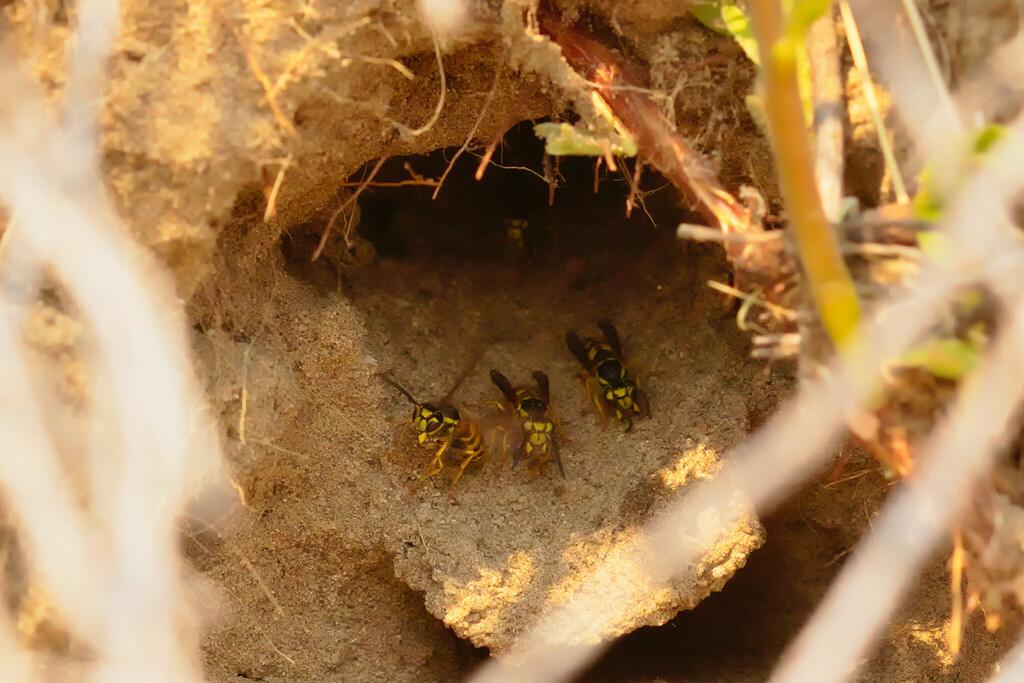
You rarely see the nest itself, only a hole about the size of a nickel or quarter, often in a lawn, a bare patch of soil, under a step or a landscape tie, with a steady stream of wasps flying straight in and out. The nest below can be much larger than the hole suggests and, by late summer, can hold thousands of wasps. People usually discover them by mowing over or stepping on one.
Never plug the hole, pour anything into it or stand over it. See how to deal with a yellowjacket ground nest. Lots of small holes with little mounds of soil in early spring, and calm bees flying low over them, are usually solitary ground-nesting bees rather than wasps; see bees or wasps nesting in the ground.
4. Hidden nests: walls, attics and hollow trees
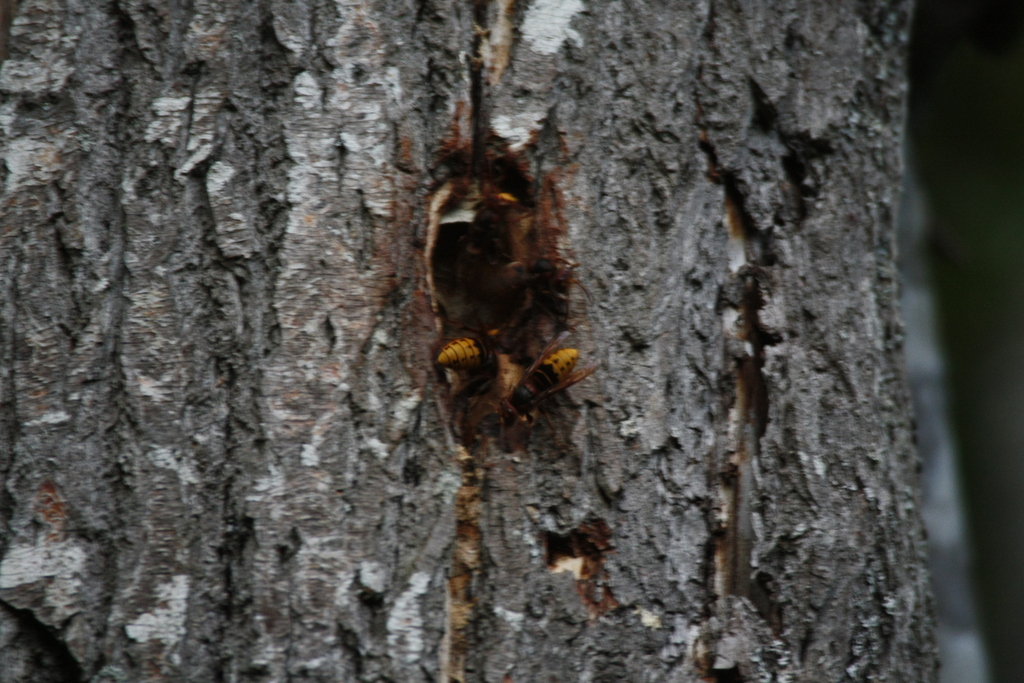
If wasps keep going in and out of a crack in the siding, a gap under a roof edge, a soffit vent or a hole in a tree, the nest is inside, out of sight. Yellowjackets often nest in wall voids and attics; European hornets favor hollow trees, wall voids and attics too, and they also fly at night and are drawn to lights.
Do not seal the entrance of a nest inside your house. Trapped wasps look for another way out and can chew through drywall into the living space. See wasp nests in walls and call a professional.
5. Mud nests: mud daubers
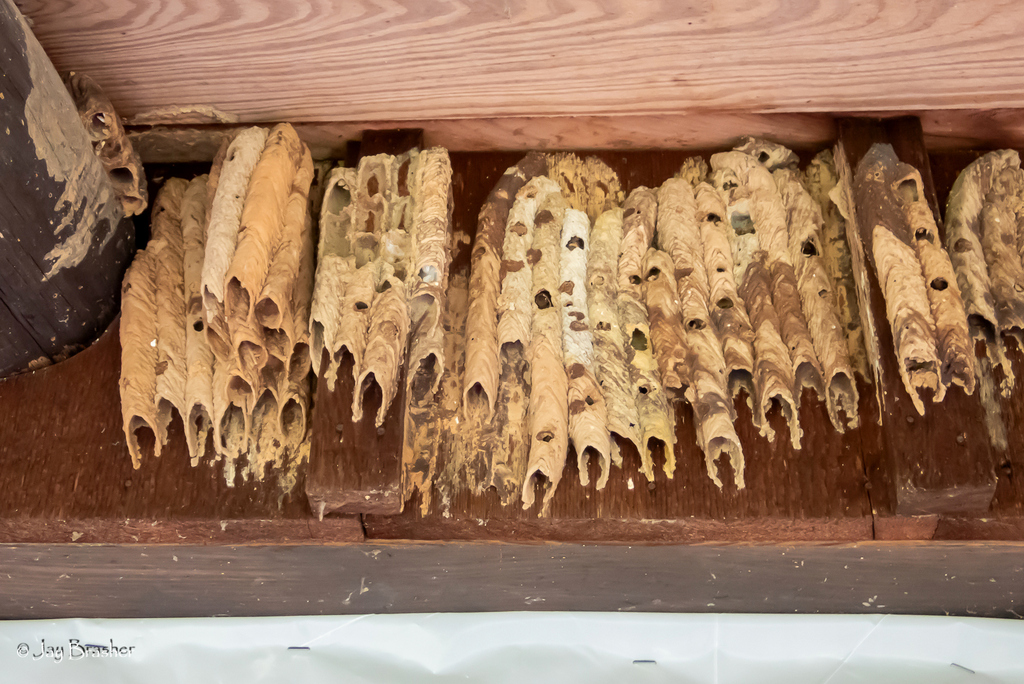
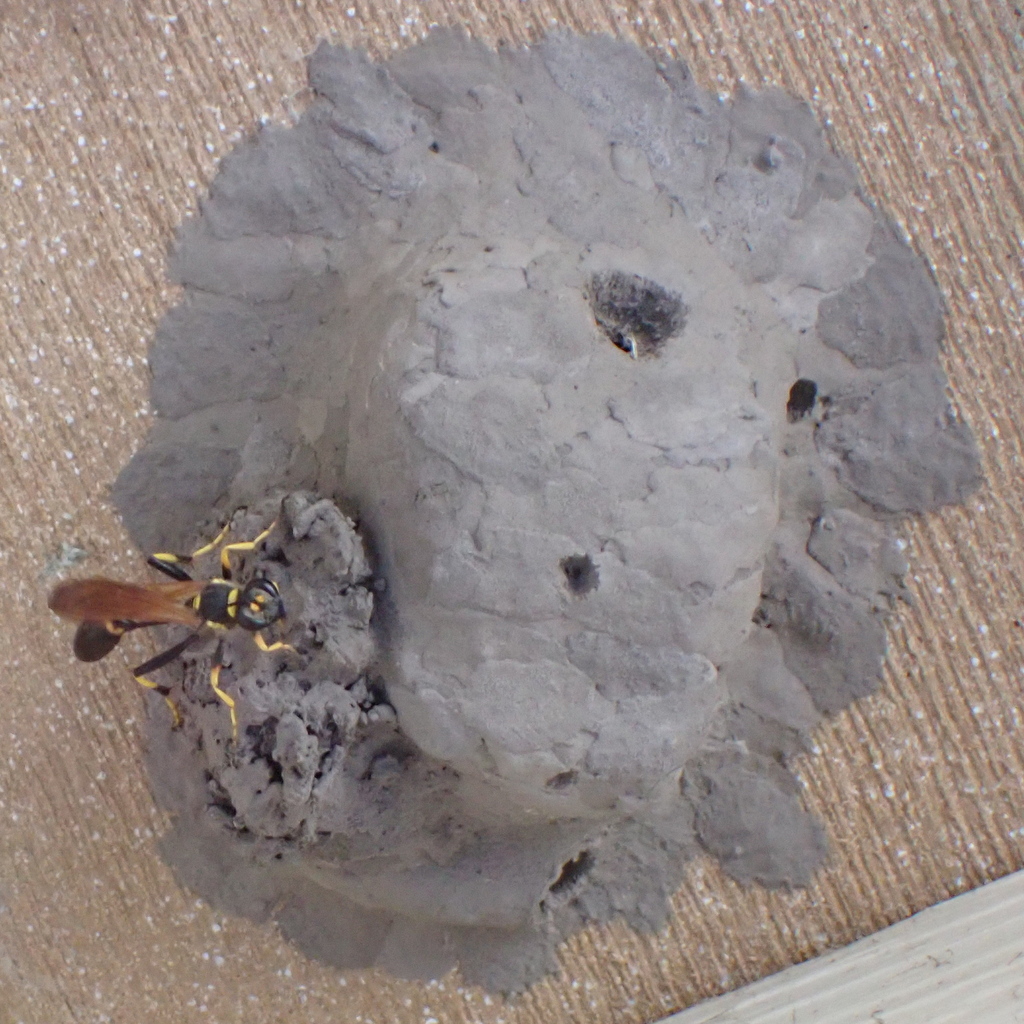
Hard, dry mud on a sheltered surface is the work of mud daubers, solitary wasps that do not defend their nests the way social wasps do and rarely sting. There are two common styles. Organ-pipe mud daubers build rows of long, parallel mud tubes. Black-and-yellow mud daubers build a lumpy mass of cells that looks like a splash of dried mud. Each cell holds a larva and paralyzed spiders for it to eat.
Small round holes in a mud nest mean the young wasps have already left, so the nest is usually empty. Old mud nests can simply be scraped off. See whether mud dauber nests are harmless or a problem.
Not wasp nests: bee nests
If the nest is made of pale, waxy comb, it belongs to honey bees. If it is a small ball of grass, moss or insulation with wax pots inside, it belongs to bumblebees. Perfectly round half-inch holes drilled into wood are carpenter bees. None of these should be sprayed like a wasp nest: a honey bee colony can often be removed alive by a beekeeper or bee removal specialist, and bumblebee colonies die out at the end of the season. See wasp vs. bee and bumblebee vs. wasp vs. hornet.
Size and season
- Spring: a single queen starts the nest alone. Paper nests are small, often just a few cells, and this is the easiest time to deal with one. See how to prevent wasp nests.
- Summer: workers take over, the nest grows quickly, and yellowjacket and hornet colonies become much more defensive.
- Fall: in most of the country the colony dies after hard frosts. Only new queens survive, hibernating elsewhere.
- Winter: the gray paper ball you spot in a bare tree is almost always empty. Wasps do not reuse old nests, although a new queen may build nearby next year.
Not sure whether a nest is still in use? Watch it from a distance for 10 to 15 minutes on a warm afternoon. No traffic in and out usually means no active colony. More in how to tell if a wasp nest is still active.
Allergic to stings?
If anyone in your household is allergic to bee or wasp stings, keep away from the nest and call a professional. In an emergency, such as trouble breathing or swelling of the face or throat after a sting, call 911 and use a prescribed epinephrine auto-injector if one is available.
Common questions
Which wasp nest is the most dangerous?
For most homeowners, yellowjacket nests in the ground or in walls and bald-faced hornet nests near the house. Their colonies get large, the nest is often hidden or hard to reach, and they defend it vigorously.
Do wasps reuse old nests?
No. US paper wasp, yellowjacket and hornet colonies are annual. An old nest is not reused, but a sheltered spot that suited one queen may attract another the next spring.
Is it safe to knock down an old nest in winter?
After several hard frosts, a paper nest is usually empty. Check from a distance on a warm day first. If there is no activity, you can knock it down and bag it. In the far South, where colonies can last longer, be more careful.
What is the small gray nest under my porch railing?
Most likely a paper wasp nest, especially if the cells are open and visible from below. If it is wrapped in a paper shell with one hole, it is a young yellowjacket or bald-faced hornet nest.
Why do wasp nests look like paper?
Because they are paper. Social wasps scrape fibers from wood and plant stems, chew them with saliva and spread the pulp into thin layers. That is why you sometimes see wasps “grazing” on an old fence or deck.
Your next step
- Decide what to do with the nest you found: the wasp nest decision guide.
- Wondering whether it needs to go at all? Read should you remove a wasp nest or leave it.
- Still not sure if it is wasps? Compare wasp vs. bee and bumblebee vs. wasp vs. hornet.
- Planning to remove a small nest? Read the best time to remove a wasp nest first.
Photos on this page are shared by their authors on iNaturalist under Creative Commons licenses, credited under each image. For who writes these guides and how we stay independent, see About.