
When to call a professional for wasps
Plenty of wasp nests can be left alone, and some small ones can be handled yourself. But a few situations reliably turn a DIY job into a trip to urgent care, a fall from a ladder or a hole chewed through the drywall. This guide lists those situations, explains why each one needs a licensed pest professional, and covers what a pro actually does, how to pick one and what to do while you wait.
Short answer
Call a licensed pest professional if anyone in the household is allergic to stings, if the nest is inside a wall, attic, crawl space or chimney, if it is bigger than a softball or you cannot see how big it is, if reaching it means a ladder or the roof, or if the wasps have already stung someone. A yellowjacket nest in the ground next to a path or a bald-faced hornet nest near the house is usually a pro job too. Bees are different: for honey bees, call a beekeeper or a live bee removal specialist instead.
Someone is having a reaction right now?
Call 911 if someone who was stung has trouble breathing, swelling of the lips, tongue or throat, hives spreading beyond the sting, dizziness or fainting, or has been stung many times. Use a prescribed epinephrine auto-injector if one is available. Deal with the nest later.
Call a pro if any of these apply
- Someone in the household is allergic to bee or wasp stings, has had a severe reaction before or carries an epinephrine auto-injector. One sting can become an emergency, and DIY removal almost always involves the risk of several.
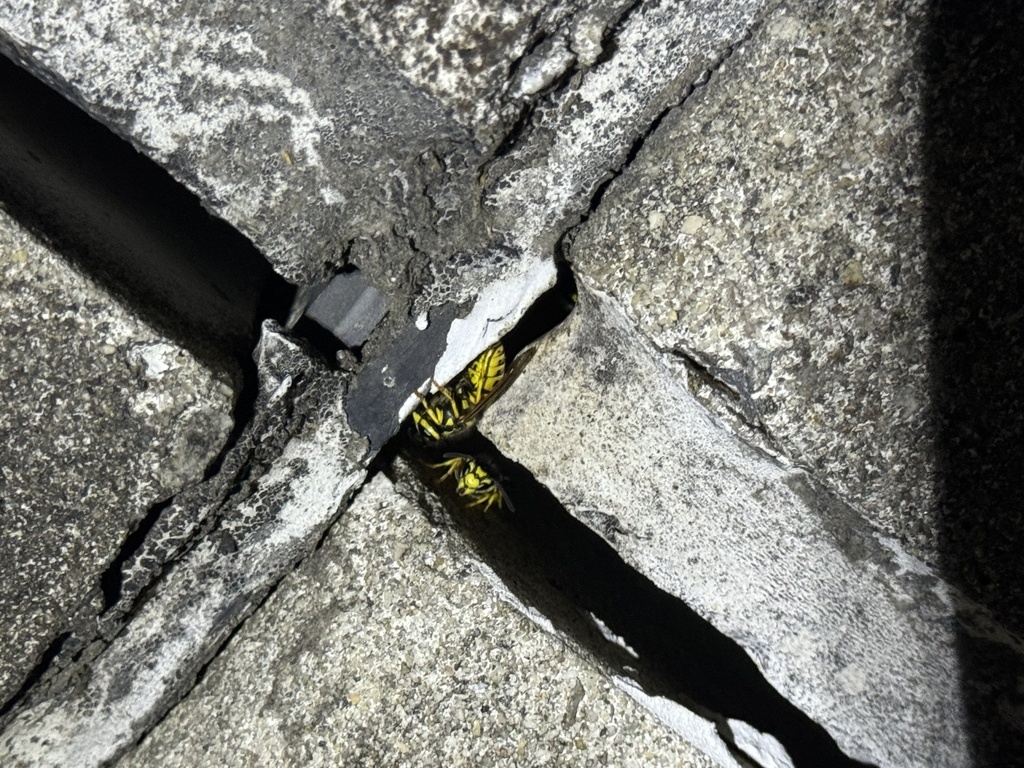
- The nest is inside the structure: a wall void, attic, crawl space, chimney, soffit or under siding, or wasps keep showing up indoors. You cannot see how big the nest is or where else the wasps can get out.
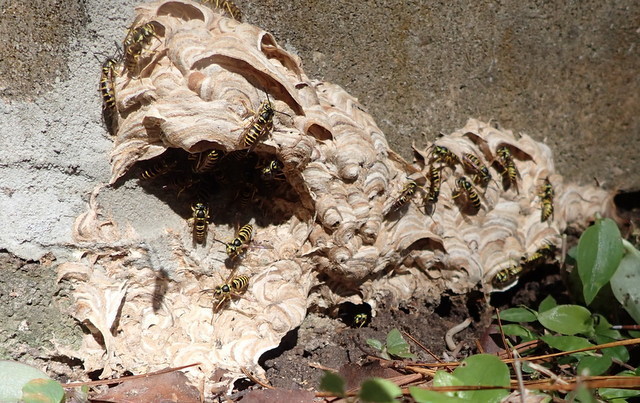
- The nest is bigger than a softball, or you cannot see all of it. Large yellowjacket and hornet colonies hold hundreds to thousands of wasps.
- Reaching it would mean a ladder, the roof or a crawl space. Being stung on a ladder is how many wasp injuries happen.
- The wasps are defensive: they have already stung someone, or they come out at people who walk past.
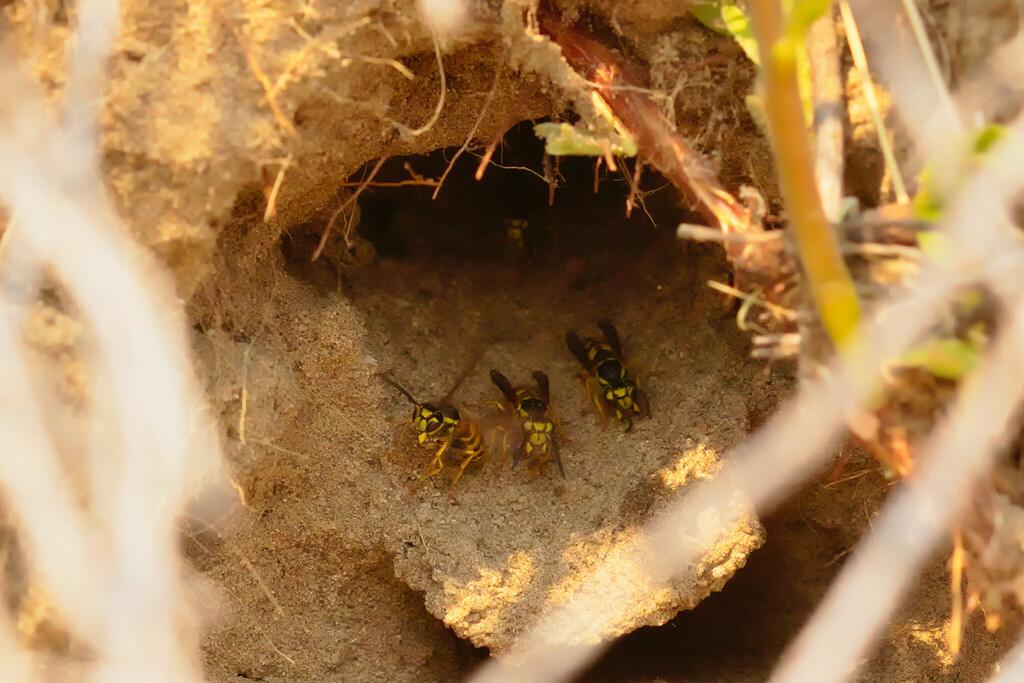
- It is a yellowjacket nest in the ground next to a path, a patio, a play area or a lawn you mow, or under a slab, step or landscape timber. Ground nests are deeper and larger than they look.
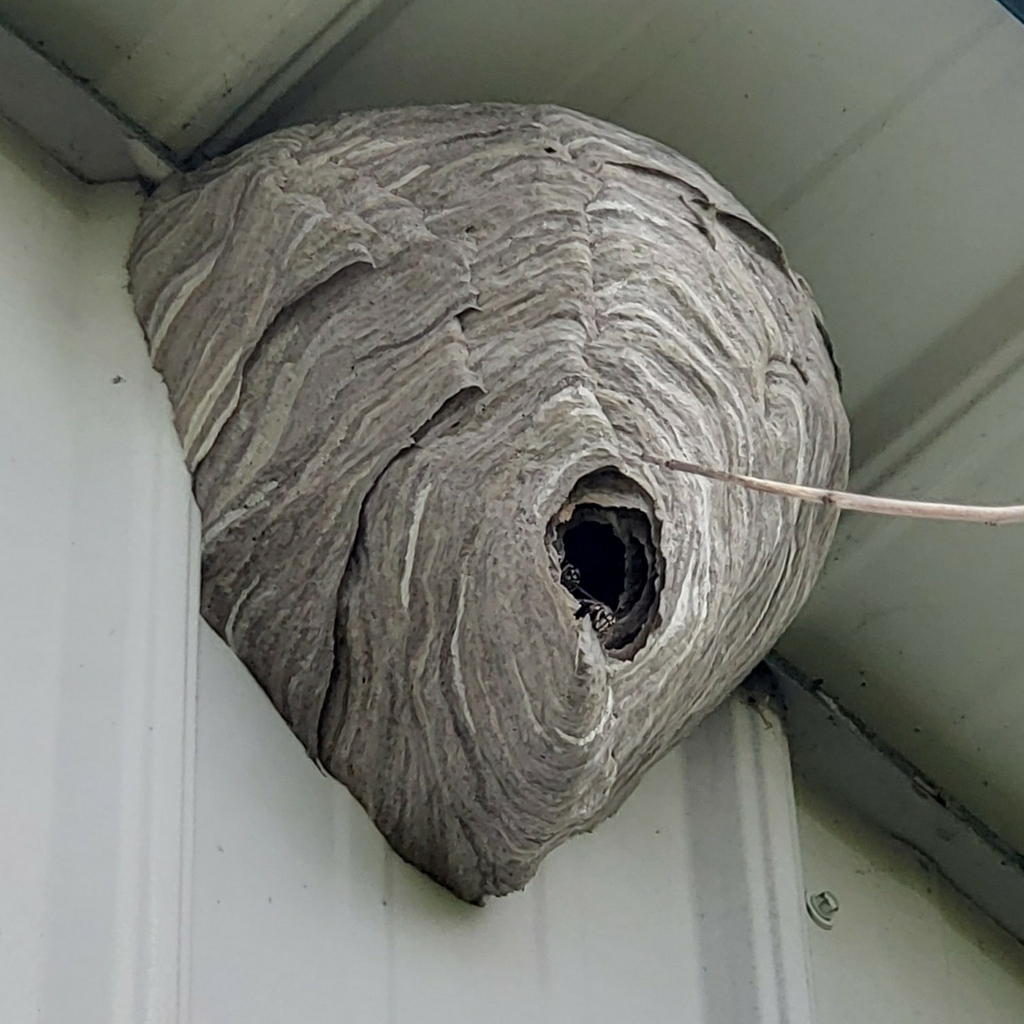
- It is a bald-faced hornet nest near a door, a path or at head height. These are among the most defensive wasps in North America.
- Wasps keep coming back, or there are several nests on the property.
- You are not comfortable reading and following a pesticide label exactly, or you do not want to handle pesticides around children or pets.
- You cannot tell what it is and the nest is close to the house. A pro can identify it on the spot.
Why these situations are pro jobs
| Situation | What goes wrong with DIY |
|---|---|
| Sting allergy | A single sting during removal can cause a severe reaction. |
| Nest in a wall or attic | Spray does not reach the nest; sealing the hole sends wasps into the house. |
| Large or hidden nest | Far more wasps come out than you expected, and a partly treated colony is very defensive. |
| Ladder or roof | Stings at height lead to falls, which are often worse than the stings. |
| Ground nest near activity | The entrance is easy to miss; plugging, flooding or pouring fuel into it rarely kills the colony. |
| Bald-faced hornets near the house | Guards respond to movement and vibration and may chase you some distance. |
When you probably do not need a pro
- A small paper wasp nest, smaller than a softball, out in the open and reachable from the ground, with nobody allergic in the household. See how to remove a paper wasp nest.
- Mud dauber nests. They rarely sting, and old mud nests can simply be scraped off; see mud dauber nests.
- A nest out of the way that nobody walks near. It may be fine to leave; see should you remove a wasp nest or leave it.
- An empty nest in late fall or winter. Check that there is no traffic, then knock it down; see how to tell if a wasp nest is still active.
- Bees. Honey bees call for a beekeeper or a live bee removal specialist, not an exterminator; bumblebees out of the way can usually be left. See wasp vs. bee.
Weighing it up? Compare DIY vs. professional removal.
What a pest professional does
- Inspects: identifies the species, finds the nest and its entrances, and checks for other nests nearby.
- Treats the nest with products and equipment matched to the site, such as a dust applied into a wall void or ground entrance, or an aerosol or liquid for an exposed nest, usually at a time when the wasps are less active.
- Removes the nest when it makes sense. An exposed nest is usually taken down after treatment. A nest inside a wall is often left to dry out, because opening the wall costs more than it helps.
- Follows up: many companies come back or re-treat if the wasps are still active after a few days.
- Advises on prevention: gaps to seal once the colony is dead, and what to check next spring.
How to choose a company
- Licensed: commercial pesticide applicators are licensed by the state. Ask for the license number; most state agriculture departments let you look it up.
- Insured for work on your property, especially if the job involves ladders or the roof.
- Clear about the job: what they will treat, whether they remove the nest, whether a return visit is included and what happens if the wasps are still there.
- Upfront on price: a single-nest quote, not just a monthly contract. Prices depend on the type of nest, how hard it is to reach and the season; see how much wasp nest removal costs.
- Bee-aware: a good company will tell you if it is honey bees and point you to a bee removal specialist.
More questions to ask on the phone: questions to ask a wasp removal company.
While you wait for the professional
- Keep people and pets away from the nest, and tell anyone who mows or works in the yard.
- Do not spray, poke, plug, flood or seal the nest or its entrance.
- If wasps are getting into the house, keep the door to that room closed and stuff a towel under it.
- Note where the wasps go in and out and roughly how busy it is. It helps the pro find the nest faster.
- If someone gets stung, see what to do first.
Where a professional fits here: we are an independent guide and do not do removals ourselves. When a situation calls for a pro, our aim is to help you find a qualified local one and know what to ask. We do not push DIY into situations where it is the wrong call.
Common questions
Is an exterminator the same as a pest control professional?
Yes. “Exterminator” is the everyday word; the company you want is a licensed pest control service that treats stinging insects.
Can a pro come the same day?
Often, especially in summer, when many companies keep slots for stinging insects. In late summer demand is high, so call early in the day.
Will they take the nest away?
For an exposed nest, usually yes, after treatment. For a nest in a wall, the nest is usually left in place once the colony is dead.
Is the treatment safe for my kids and pets?
Ask the company what product they will use and how long to keep people and pets away. Products are applied mostly into the nest or the entrance, not across the yard.
Should I call a pro for honey bees?
Call a beekeeper or a live bee removal specialist. Many pest companies will refer you, and in a wall the comb and honey need to come out too.
Your next step
- Not sure it is a pro job? Run the wasp nest decision guide.
- Find out what you are dealing with: types of wasp nests, yellowjacket nests and bald-faced hornet nests.
- Wasps in a wall? Read why not to seal a wall nest before anyone patches a hole.
Photos on this page are shared by their authors on iNaturalist under Creative Commons licenses, credited under each image. For who writes these guides and how we stay independent, see About.