
Wasp nest removal: DIY vs. professional
A can of wasp spray costs less than a takeout dinner; a pest professional costs a good deal more. For a small nest in the open, DIY is often the sensible choice. For a nest in a wall, high under the roof or anywhere near someone with a sting allergy, the cheap option can turn out to be the expensive one. This guide compares the two honestly and helps you decide which fits your nest.
Short answer
Do it yourself only when the nest is small (smaller than a softball), exposed, reachable from the ground, and nobody in the household is allergic to stings. That usually means a paper wasp nest in spring or early summer. Call a professional for nests inside walls, attics or the ground near paths, for anything large, high up or hidden, for bald-faced hornets near the house, and whenever someone is allergic or has already been stung.
DIY and professional removal compared
| DIY | Professional | |
|---|---|---|
| Upfront cost | Low: a labeled wasp and hornet product and basic protective gear | Higher; depends on the nest, access and season |
| Best for | Small, exposed nests reachable from the ground | Large, hidden, high or defensive nests; any allergy |
| Safety | You are the one near the nest, usually without a full suit | Trained, with full protective gear and the right equipment |
| Products and tools | Retail sprays and dusts | Professional products, dusters and extension tools for voids and heights |
| Hidden nests | Hard to find and treat completely | Inspection finds the nest and its entrances |
| If it does not work | Another attempt, with angrier wasps | Many companies include a follow-up visit |
| Time | An evening, plus a day or two of checking | Usually one visit, often the same or next day in season |
Prices for professional removal: how much wasp nest removal costs.
When DIY makes sense
All of these should be true:
- Nobody in the household is allergic to bee or wasp stings.
- The nest is small: smaller than a softball, and you can see all of it.
- It is exposed and reachable from the ground, without a ladder, the roof or a crawl space.
- You know what it is. Usually paper wasps; see paper wasp nests. Bees are never a spray job.
- The wasps are calm and have not stung anyone.
- You are comfortable following a pesticide label exactly, and you can keep children and pets indoors while you work.
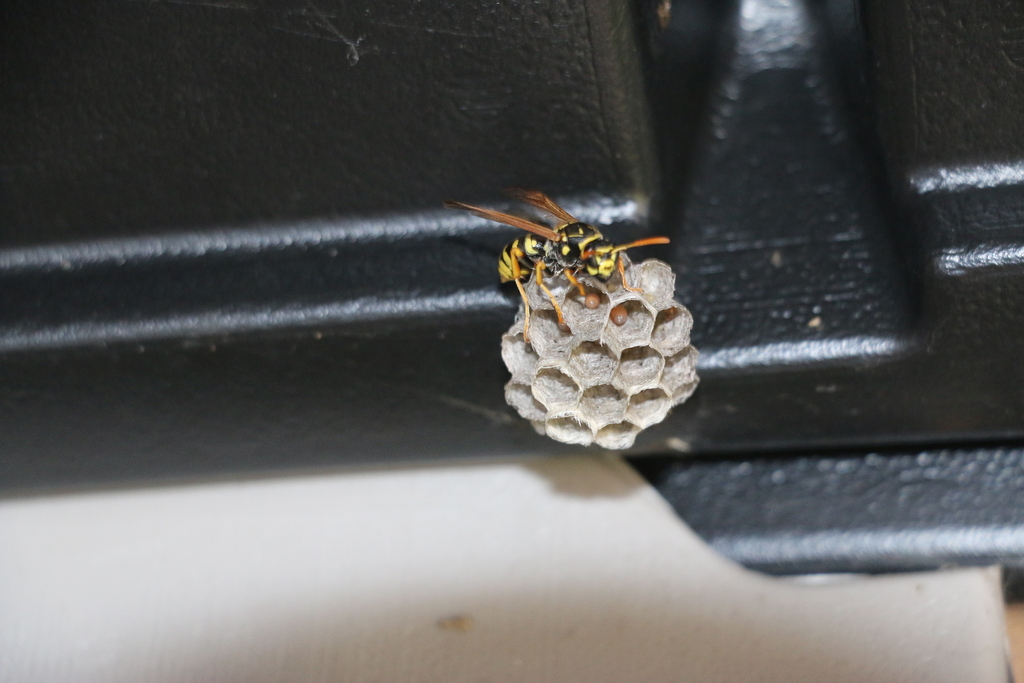
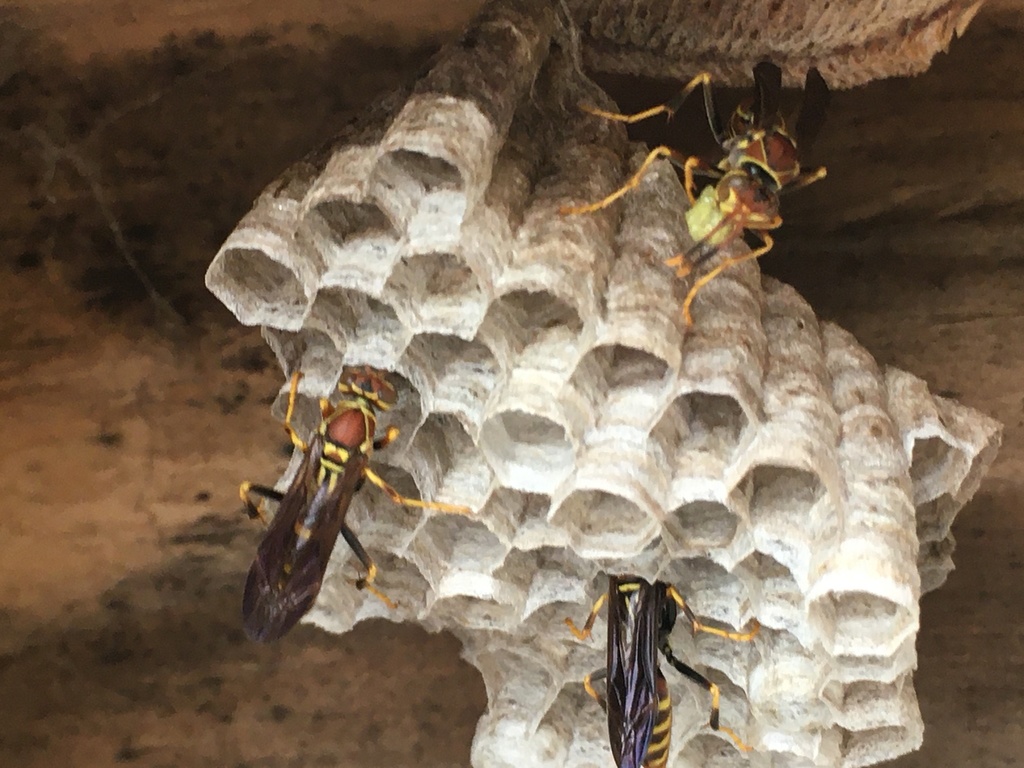
Old, empty nests and mud dauber nests are also easy DIY jobs: they can usually just be scraped off. See mud dauber nests and how to tell if a wasp nest is still active.
When to hire a professional
Any one of these is enough:
- Someone in the household is allergic, or the wasps have already stung someone.
- The nest is inside a wall, attic, crawl space, chimney or under siding. Do not seal the entrance; see wasp nest in a wall.
- The nest is larger than a softball, or you cannot see how big it is.
- It needs a ladder or the roof.
- It is a yellowjacket ground nest near a path, lawn or play area; see yellowjacket ground nests.
- It is a bald-faced hornet nest near the house; see bald-faced hornet nests.
- It is late summer and the colony is at its peak.
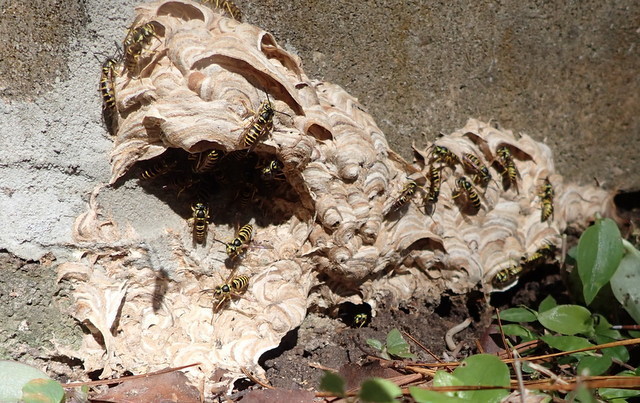
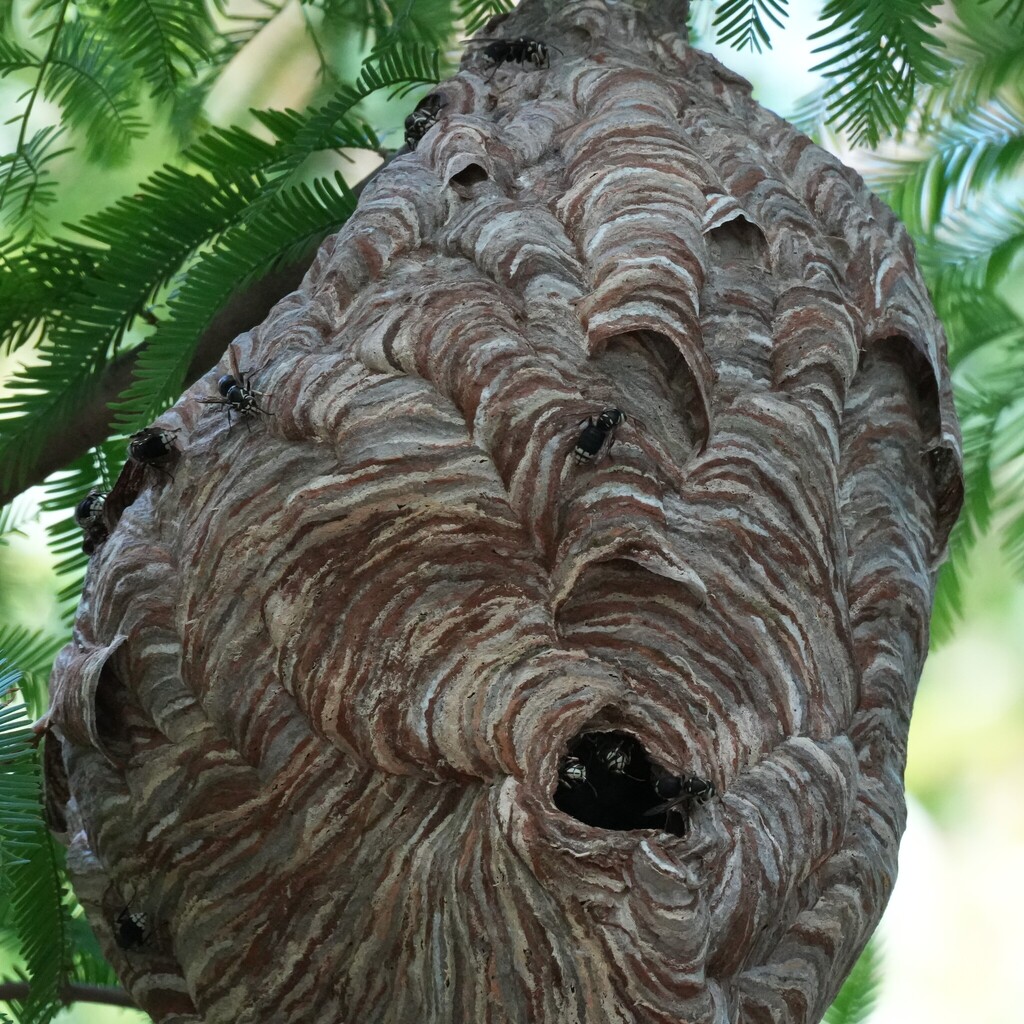
The full list, with reasons: when to call a professional for wasps.
The hidden costs of DIY
DIY is cheaper only when it works the first time. When it goes wrong, the costs show up elsewhere:
- Stings: a partly treated colony is more defensive than an untouched one, and multiple stings can mean a trip to urgent care.
- Falls: being stung on a ladder is a common way to get badly hurt.
- Damage to the house: sealing or spraying a wall nest can push wasps into the living space or leave a nest to rot inside the wall.
- Several attempts: two or three cans and a lost weekend often end with a call to a professional anyway.
- Dangerous shortcuts: fire, gasoline and flooding cause burns, house fires and contaminated soil, and rarely kill the colony.
If you go DIY: the basics
- Use a product labeled for wasps and for your site, and read the whole label first. The label is the law.
- Work at dusk or after dark, when the wasps are on the nest. Use a red light or keep the light off the nest.
- Wear long sleeves, long pants, gloves, closed shoes and eye protection. Keep children and pets inside.
- Know your way out before you start, with nothing to trip over.
- Wait at least a day, check for activity, then take the nest down and bag it.
- If the nest turns out bigger or more hidden than you thought, stop and call a professional.
Step by step: how to get rid of a wasp nest safely and how to remove a paper wasp nest. Choosing a product: how to choose a wasp and hornet spray. Timing: the best time to remove a wasp nest.
Allergic to stings?
If anyone in your household is allergic to bee or wasp stings, do not try to remove a nest yourself. In an emergency, such as trouble breathing or swelling of the face or throat after a sting, call 911 and use a prescribed epinephrine auto-injector if one is available.
If you hire a professional
- Choose a licensed and insured pest control company, and ask what is included: treatment, nest removal and a follow-up visit.
- Ask for a price for this one job, not only a monthly plan.
- Tell them what kind of wasps you think they are, where the entrance is and whether you have already sprayed anything.
- Keep people and pets away from the nest until they arrive.
What to ask on the phone: questions to ask a wasp removal company.
Where a professional fits here: we are an independent guide and do not do removals. When DIY is the wrong call, we would rather point you to a qualified local professional than sell you a spray.
Common questions
Is DIY always cheaper?
For a small, exposed nest, yes. For a large or hidden nest, not necessarily: failed attempts, extra products, stings and repairs can cost more than a single professional visit.
Can I try it myself first and call a pro if it fails?
For a small, exposed nest, that is reasonable. For a hidden, large or high nest, a failed attempt makes the colony more defensive and the job harder. Tell the professional what you used.
Do professionals use stronger products?
They have access to some products and equipment homeowners do not, such as dusters and extension tools for treating wall voids and high nests, and the training to use them. The bigger difference is usually the protective gear and experience.
Should I just leave the nest instead?
Sometimes that is the best option of all. If the nest is out of the way and nobody is allergic, see should you remove a wasp nest or leave it.
What if they are bees?
Neither DIY spray nor a regular exterminator. Honey bees call for a beekeeper or a live bee removal specialist; bumblebees out of the way can usually be left. See wasp vs. bee.
Your next step
- Not sure which applies to you? Run the wasp nest decision guide.
- Identify the nest first: types of wasp nests.
- Been stung? Here is what to do first.
Photos on this page are shared by their authors on iNaturalist under Creative Commons licenses, credited under each image. For who writes these guides and how we stay independent, see About.