
Wasp vs. bee: how to tell the difference
Before you decide what to do about a nest, you need to know who built it. Bees and wasps get mixed up all the time, and the mix-up matters: a honey bee colony can often be removed alive by a beekeeper, while a yellowjacket nest by the back door is a different problem entirely. This guide walks through the quick checks that tell them apart, from a safe distance, plus the look-alikes that fool most people.
Short answer
Bees are fuzzy and stocky. Wasps are smooth, shiny and narrow-waisted. Bees visit flowers and carry pollen; wasps hunt insects and, in late summer, go after your soda and hot dogs. Bees build with wax; most wasps build with paper or mud.
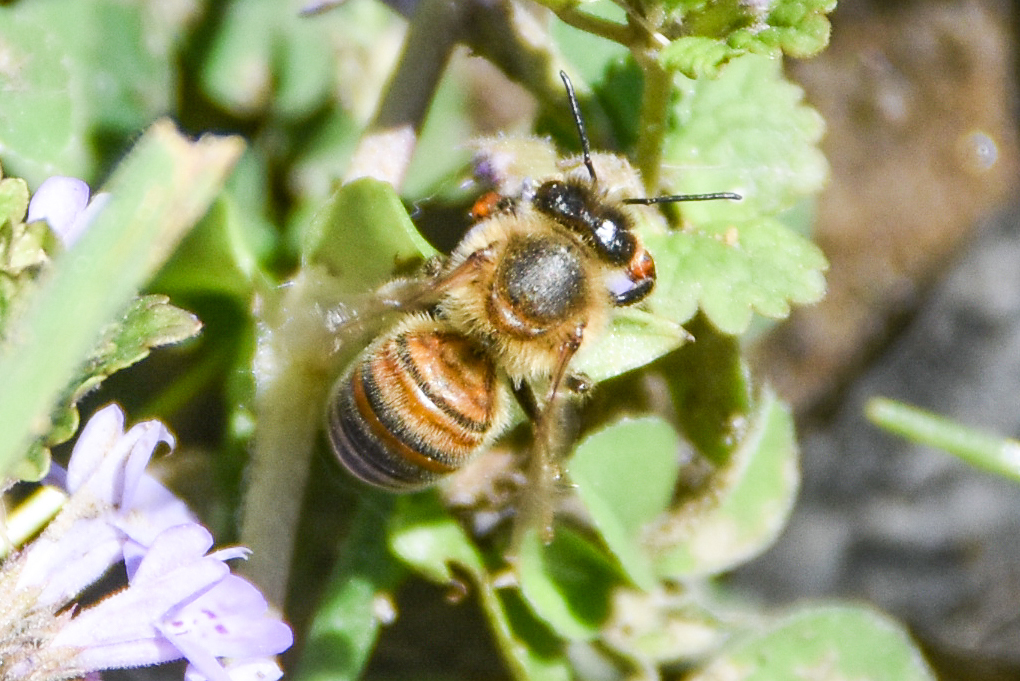
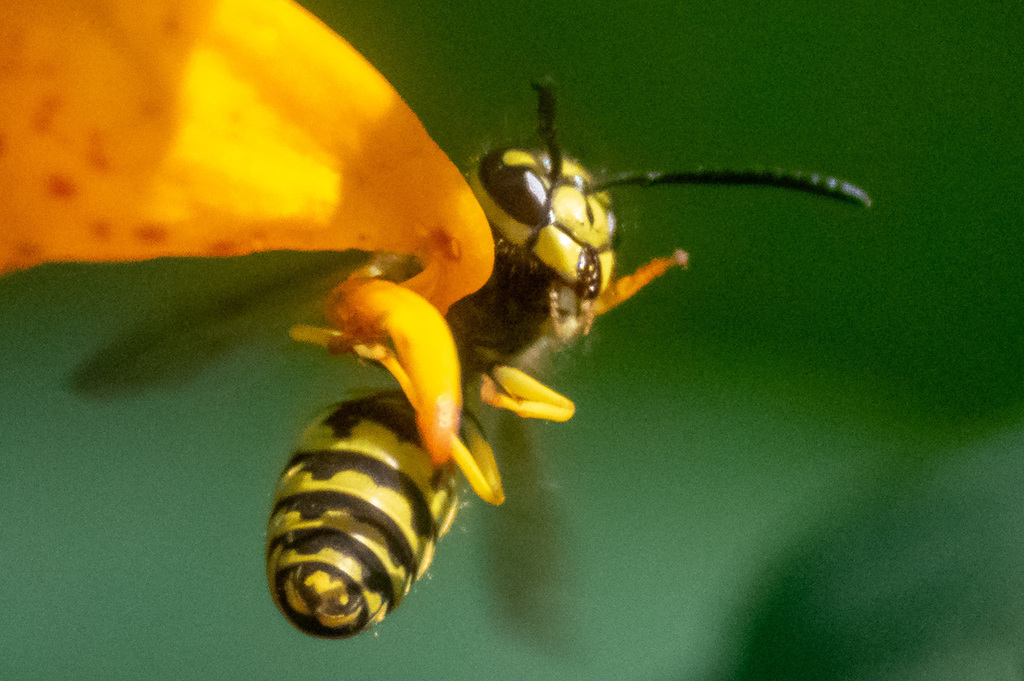
The two insects people confuse most often: a honey bee (left) and a yellowjacket (right).
Side-by-side comparison
| What to check | Bees | Wasps |
|---|---|---|
| Body | Hairy or fuzzy, rounder and thicker | Smooth and shiny, with little visible hair |
| Waist | Thick, the body looks like one solid piece | Very narrow “pinched” waist |
| Color | Usually golden-brown, amber or black and yellow with fuzz | Often bright yellow and black, or reddish-brown |
| Legs | Shorter, often with pollen packed on the hind legs | Longer and thinner; paper wasps let them dangle in flight |
| Food | Nectar and pollen from flowers | Insects, plus sweets and meat from picnics and trash |
| Nest | Wax comb in a cavity (honey bees), small nests in the ground or insulation (bumblebees), round holes in wood (carpenter bees) | Gray paper (paper wasps, yellowjackets, hornets) or hard mud (mud daubers) |
| Sting | A honey bee usually stings once and dies; bumblebees can sting more than once | Can sting repeatedly |
| Around people | Rarely interested in you away from the nest | Yellowjackets are drawn to food and drinks, especially in late summer |
Check 1: Look at the body
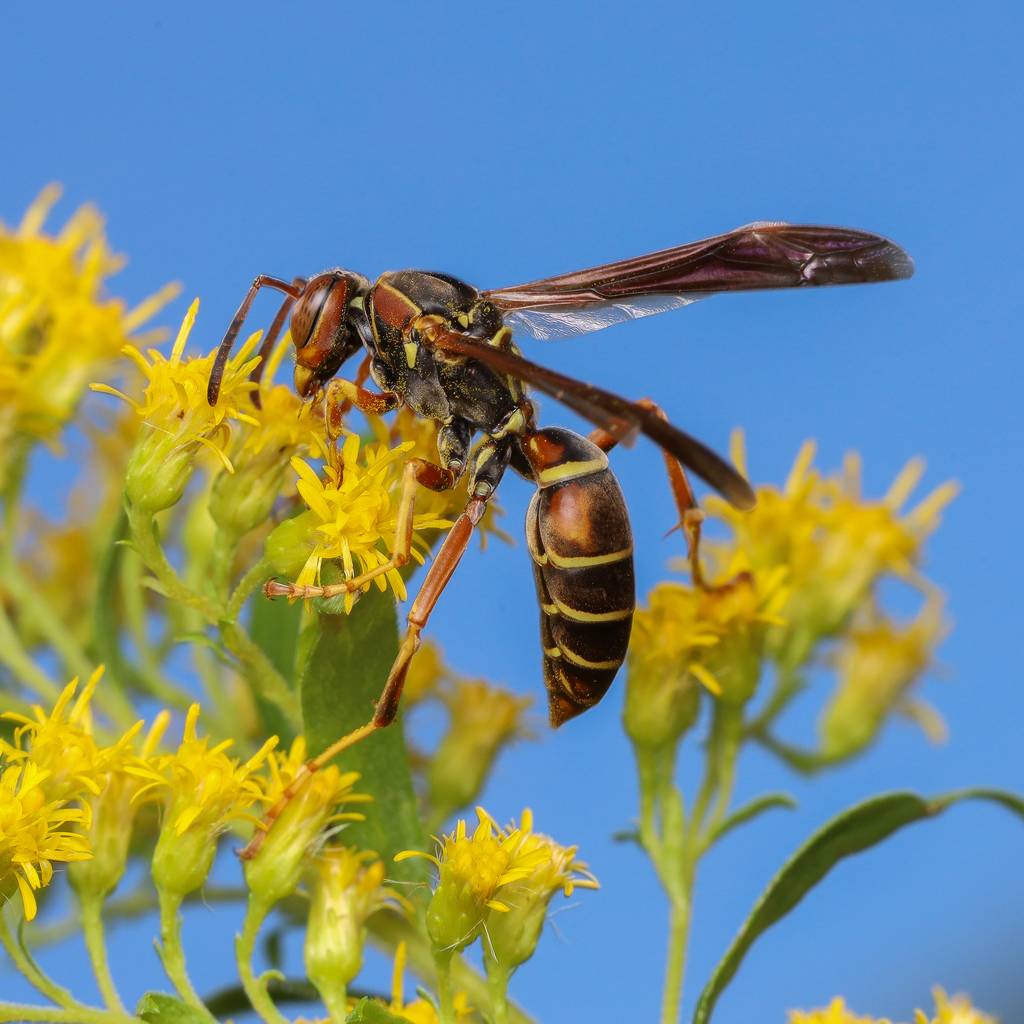
From a few feet away, the fastest clue is texture. Bees look fuzzy, because they are covered in branched hairs that pick up pollen. Wasps look smooth, almost polished. Then look at the middle of the insect: wasps have a thin, pinched waist between the chest and abdomen, while bees look thick and solid from front to back.
Color is a weaker clue than people think. Many wasps are yellow and black, but so are bumblebees, and some wasps are rusty brown or black. Use texture and shape first, color second.
Check 2: Watch how it flies and what it eats
- On flowers, moving from bloom to bloom with pollen on its legs → almost certainly a bee.
- Hanging around your drink, plate, grill or trash can → almost always a yellowjacket or another wasp. Bees are not interested in your burger.
- Long legs dangling below the body in slow flight → the classic look of a paper wasp.
- Hovering in one spot, then darting away → possibly a hover fly (see the look-alikes below) or a male carpenter bee guarding its patch.
Check 3: Look at the nest
If you can see the nest, it is often the most reliable clue of all.
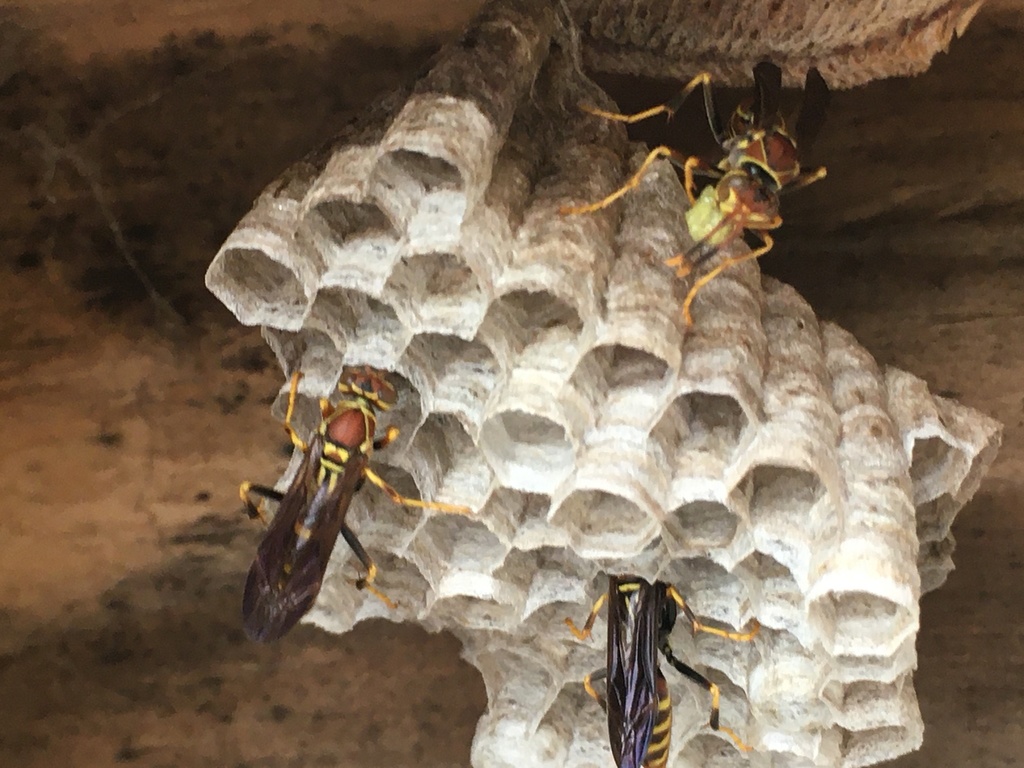
- Paper, gray or tan, made of chewed wood fiber: wasps. An open, umbrella-shaped comb hanging from a stalk is a paper wasp nest. A closed paper ball with one entrance hole belongs to yellowjackets or bald-faced hornets. Compare them in our photo guide to wasp nest types.
- Hard mud, as tubes or lumps on a wall: mud daubers, a wasp that rarely stings.
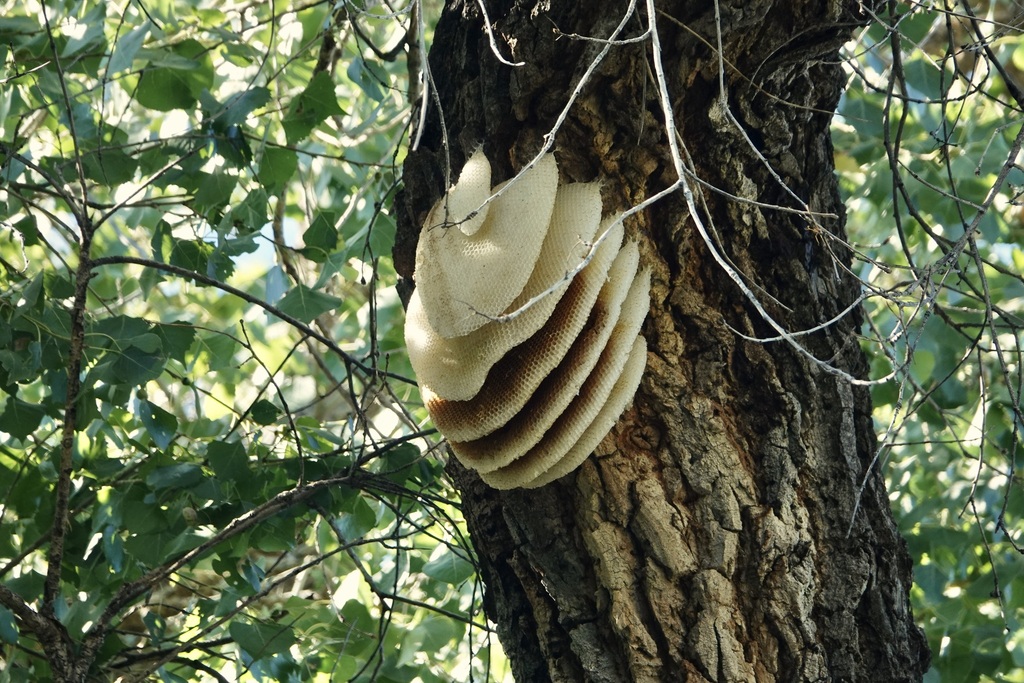
- Pale, waxy sheets of comb, usually inside a wall, tree hollow or other cavity: honey bees.
- Perfectly round holes, about half an inch wide, in wood such as fascia boards, decks or fence rails: carpenter bees.
- Insects going in and out of a hole in the ground: could be yellowjackets, bumblebees or solitary ground-nesting bees. See the look-alikes below before doing anything.
Common look-alikes
Bumblebee or carpenter bee?
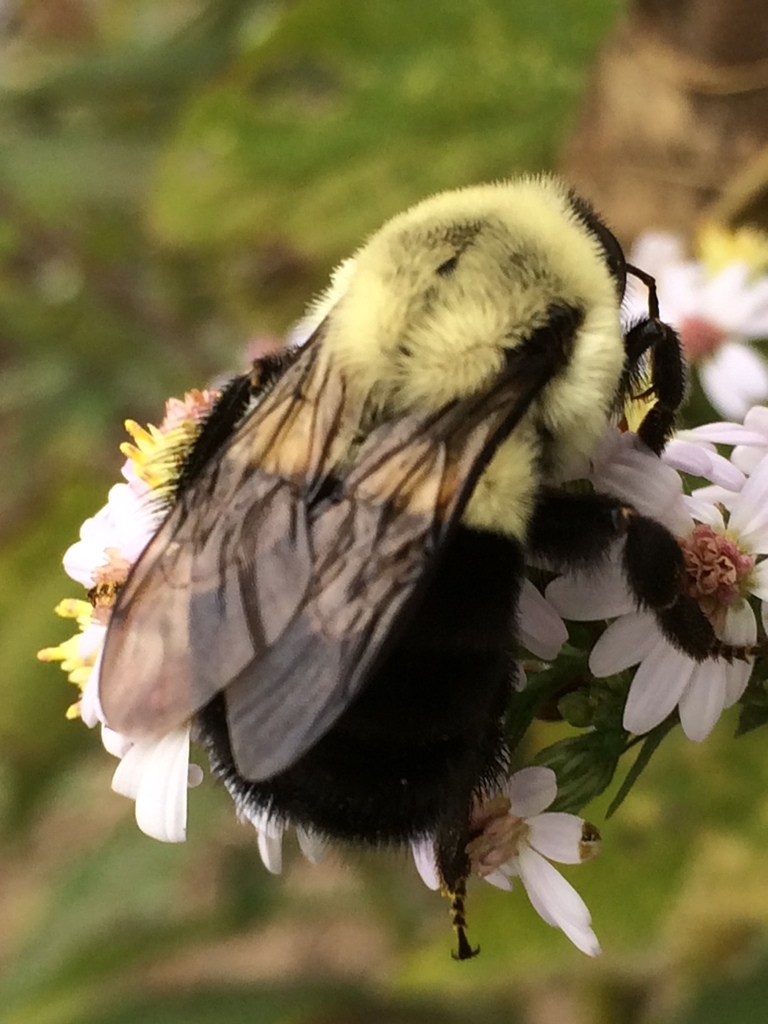
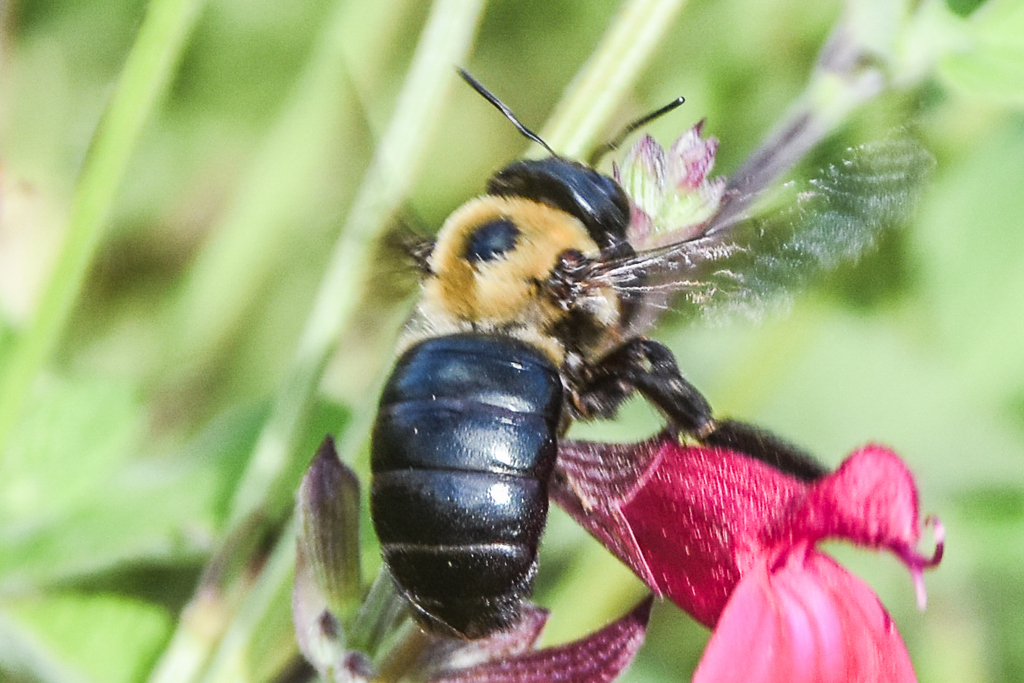
Both are big, black-and-yellow and fuzzy at the front. Check the rear end: a bumblebee’s abdomen is fuzzy all over, while an eastern carpenter bee’s abdomen is bare and shiny black. Carpenter bees drill nesting holes in wood around the house. Males often hover in your face but cannot sting at all; females can sting but rarely do.
Hover flies: neither bee nor wasp
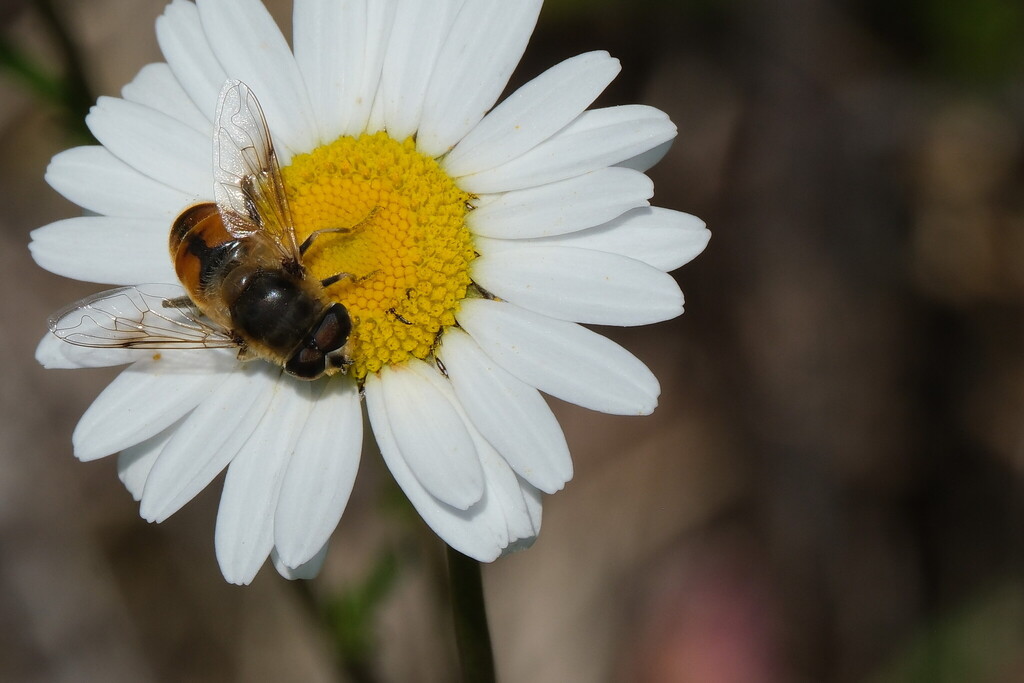
Hover flies are flies dressed up as bees or wasps. They have one pair of wings instead of two, very large eyes, short stubby antennae, and a habit of hanging motionless in the air. They cannot sting and are excellent garden pollinators and pest controllers.
Yellowjackets or ground-nesting bees?
In early spring, lawns and bare patches of soil can fill with dozens of small holes surrounded by little mounds, with bees flying low over them. These are usually solitary ground-nesting bees, such as mining bees. Each female has her own burrow, they are very gentle, and they are gone within a few weeks. Yellowjacket ground nests are different: one entrance hole, a steady stream of wasps flying in and out fast, and much more defensive behavior, especially in late summer. See yellowjacket nests.
Bald-faced hornets
Despite the name, bald-faced hornets are not true hornets; they are a black-and-white member of the yellowjacket group. They build large gray paper “footballs” in trees, shrubs and under eaves, and they defend them aggressively. See bald-faced hornet nests, and compare all three in bumblebee vs. wasp vs. hornet.
Why the difference matters
Getting this right changes what you should do next.
- If they are bees: do not spray. A honey bee swarm hanging on a branch can usually be collected by a local beekeeper, and an established colony in a wall needs a bee removal specialist who takes out the comb as well. Killing bees inside a wall can leave honey and wax behind to stain, smell and attract other pests. Bumblebee colonies are small and die out at the end of the season, so they are often best left alone. North America has roughly 4,000 species of native bees, and nearly all of them are harmless to people.
- If they are wasps: the nest type, its size and where it is decide whether you can leave it, handle it yourself or need a professional. Our wasp nest decision guide walks you through it in four questions.
Allergic to stings?
If anyone in your household is allergic to bee or wasp stings, do not try to identify a nest up close or remove it yourself. Call a professional. In an emergency, such as trouble breathing or swelling of the face or throat after a sting, call 911 and use a prescribed epinephrine auto-injector if one is available.
Common questions
Is a yellowjacket a bee or a wasp?
A wasp. Yellowjackets are often called “bees” because of their yellow and black stripes, but they are smooth, narrow-waisted wasps that build paper nests and scavenge for food.
Do bees die after they sting?
Honey bee workers usually do. Their stinger is barbed and stays in the skin, tearing away from the bee. Bumblebees, carpenter bees and wasps have smoother stingers and can sting more than once. If a honey bee stinger is left in your skin, scrape it out quickly with a fingernail or card edge.
Which is more aggressive, bees or wasps?
Away from their nests, most bees are focused on flowers and rarely sting unless handled or stepped on. Social wasps, especially yellowjackets, are more likely to bother people around food, and they become more defensive of their nests as colonies grow in late summer. Any colony, bee or wasp, will defend a nest that is disturbed.
Do bees build paper nests?
No. Paper nests are built by wasps. Honey bees and bumblebees build with wax, and carpenter bees tunnel into wood.
Can I tell them apart by the buzz?
Not reliably. Size, body texture, waist shape and what the insect is doing are far better clues than sound.
Your next step
- Found a nest? Run through the wasp nest decision guide.
- Want to know which wasp built it? See the types of wasp nests photo guide, then paper wasp nests or yellowjacket nests.
- Been stung? Here is what to do first.
Photos on this page are shared by their authors on iNaturalist under Creative Commons licenses, credited under each image. For who writes these guides and how we stay independent, see About.