
Should you remove a wasp nest or leave it?
Not every wasp nest has to go. Many are harmless where they are, die out on their own in fall and save you the cost and the risk of removal. Others get more dangerous every week and should be dealt with as soon as possible. This guide helps you decide which kind you have, based on what the nest is, where it is, who lives with it and what time of year it is.
Short answer
Leave a wasp nest alone if it is away from doors, paths, play areas and places you mow or work, nobody in the household is allergic, and the wasps ignore you. Remove it, or have it removed, if it is close to where people go, inside the house or a wall, if anyone is allergic, or if the wasps have already stung someone. Bees are a separate case: do not spray them. Late in the season, waiting for frost is often the smartest move.
Step 1: Make sure it is a wasp nest
Before deciding anything, check what you are looking at. Honey bees and bumblebees should not be treated like wasps, and some nests are already empty.
- Bees? Fuzzy insects, a hanging cluster of bees or wax comb mean bees, not wasps. Call a beekeeper or a live bee removal specialist; see wasp vs. bee and bumblebee vs. wasp vs. hornet.
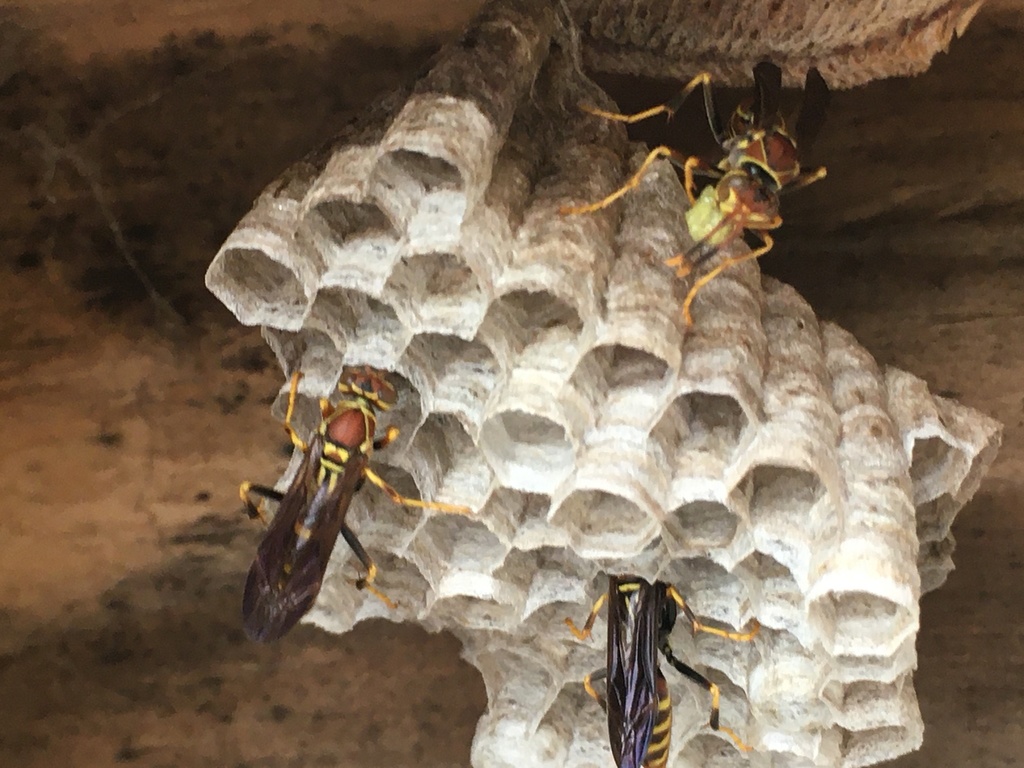
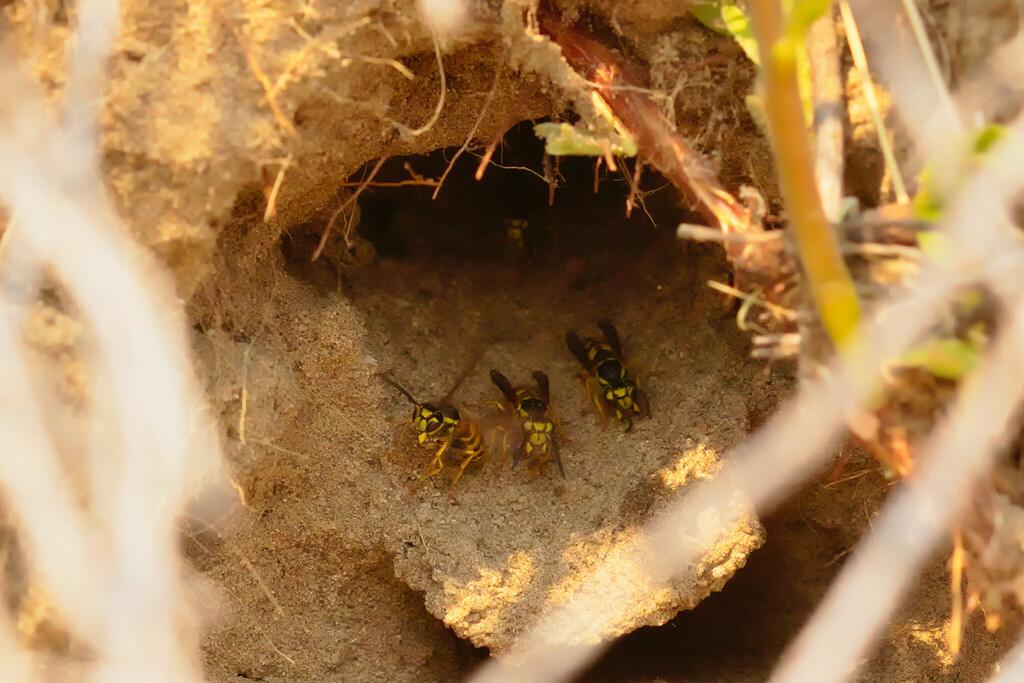
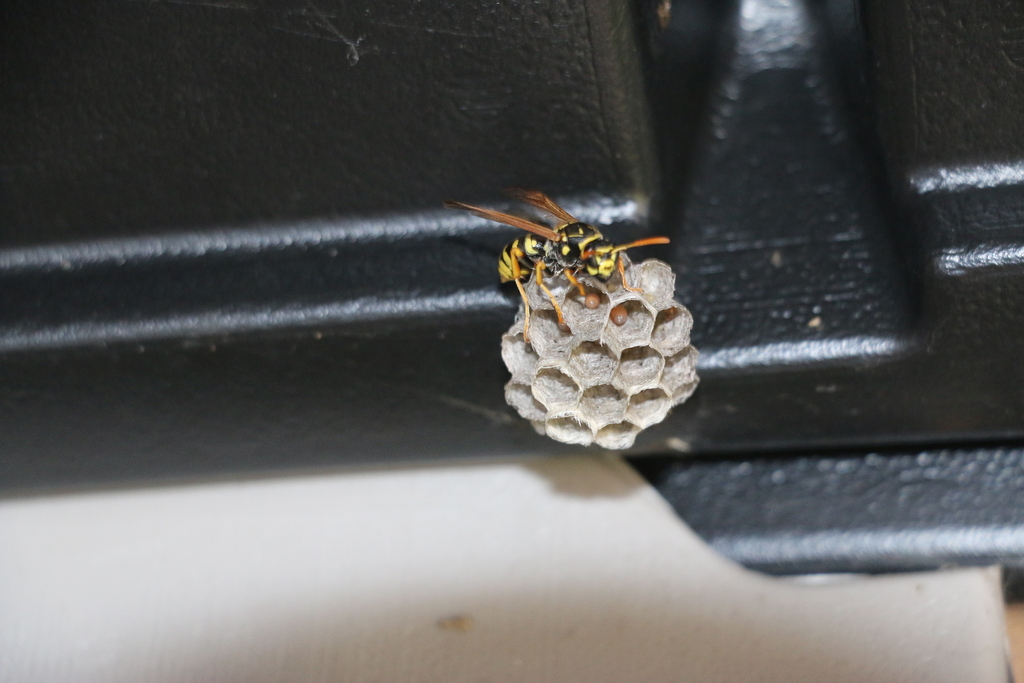
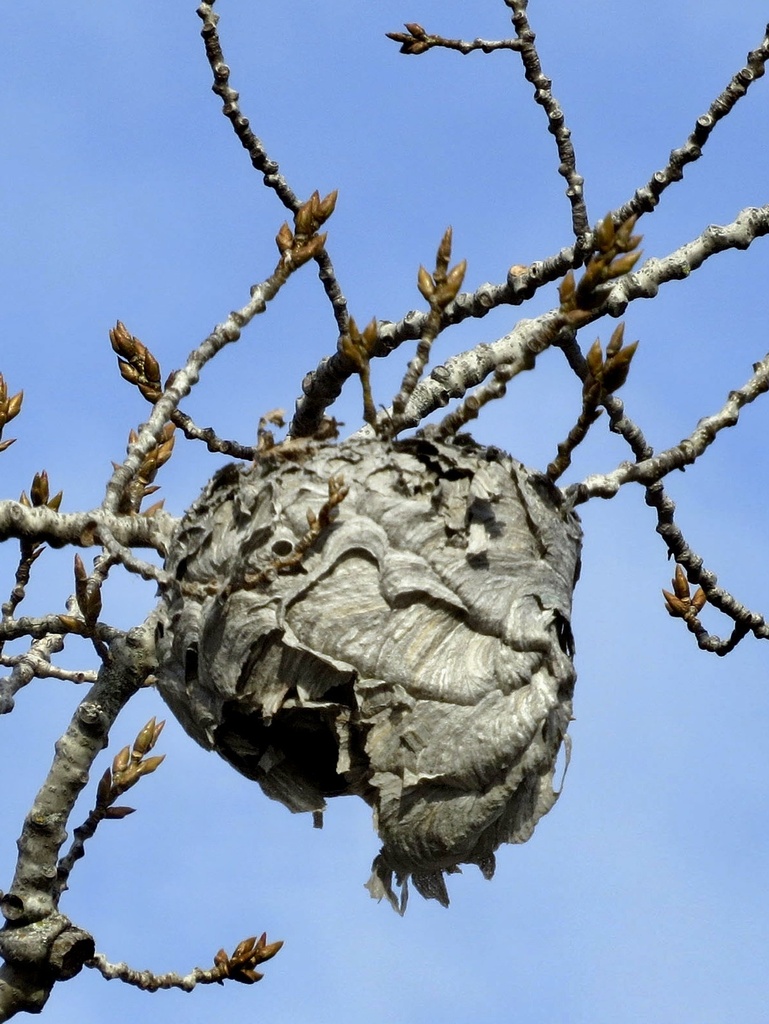
- Which wasps? The nest shape tells you a lot: an open comb is paper wasps, a hole in the ground or a gap in the siding is usually yellowjackets, a gray paper ball in a tree or under the eaves is often bald-faced hornets, and hard mud tubes are mud daubers. All of them side by side: types of wasp nests.
- Still active? Watch from 10 to 15 feet away for a few minutes on a warm afternoon. No wasps flying in or out usually means no colony. More in how to tell if a wasp nest is still active.
When it is fine to leave a wasp nest
Leaving a nest is a perfectly good choice, and often the safest one, when all of these are true:
- It is out of the way: high in a tree, at the far end of the yard, on a shed or fence nobody uses, or under an eave well away from doors and windows.
- Nobody in the household is allergic to bee or wasp stings.
- The wasps ignore you at a normal distance and have not stung anyone.
- You do not need to work near it: no mowing, trimming, painting or gutter cleaning planned close by.
- It is late in the season. From September on in most of the country, the colony will die after a few hard freezes anyway.
Wasps also earn their keep. Paper wasps, yellowjackets and hornets hunt caterpillars, flies and other insects to feed their young, and mud daubers hunt spiders. A nest that bothers nobody is free pest control.
When you should remove it (or have it removed)
Any one of these is enough:
- Someone is allergic to stings. Do not try to handle it yourself; call a professional.
- It is close to people: a few steps from a door, a path, the patio, the grill, a play area, a pet run or a garden bed you work in.
- It is in or on the house: inside a wall, an attic, a crawl space or a chimney, or wasps keep turning up indoors. These nests can grow large and push into the living space. Do not seal the entrance; see wasp nest in a wall.
- It is in the ground where you mow or walk. Yellowjacket ground nests cause many stings in late summer; see how to get rid of a yellowjacket ground nest.
- The wasps are defensive: they have stung someone, or they come out at you when you pass.
- It is early in the season and growing in a spot you will need all summer. A small nest in May is much easier to deal with than a big one in August.
Do not “just knock it down”. Hitting an active nest with a stick, spraying it with a hose, setting it on fire or pouring gasoline on it causes injuries and house fires and usually leaves angry wasps behind. If the nest has to go, use a labeled product at the right time, or call a professional.
By type of nest
| Nest | Leave it if… | Remove it if… | Who |
|---|---|---|---|
| Paper wasps (open comb) | It is away from doors and things you use | It is near a door, the grill, a railing or play equipment | Small and reachable: often DIY. High up: a pro |
| Yellowjackets in the ground | It is far from paths, lawn you mow and play areas | It is anywhere people walk, mow or play | Small and in the open: possibly DIY. Otherwise a pro |
| Yellowjackets in a wall or attic | Rarely; only late in fall if the wasps stay outside | Almost always | A pro. Do not seal the gap |
| Bald-faced hornets | It is high in a tree or far from the house | It is near a door, path or at head height | A pro |
| Mud daubers | Usually: they rarely sting | The mud is on something you use or want clean | DIY: scrape it off |
| Honey bees or bumblebees | Bumblebees away from paths: yes | Honey bees in a wall or near people | A beekeeper or live bee removal, not spray |
Timing: the season changes the answer
- Spring (April–May): a single queen starts a small nest. If it is somewhere you will need, this is the easiest and safest time to deal with it. Paper wasp nests at this stage are often the size of a walnut.
- Early to midsummer: the nest grows quickly. Decide early rather than waiting until it is big.
- Late summer (August–September): colonies are at their largest and most defensive. DIY removal is at its riskiest now. If a nest can be left, leave it; if it cannot, call a professional.
- Fall and winter: after several hard freezes the colony dies and the nest is not reused. In the warmest parts of the South some colonies last longer, so check for activity first.
More on timing: the best time to remove a wasp nest.
If you decide to leave it
- Mark the spot and tell everyone in the household, guests and anyone who mows or works in the yard.
- Keep a buffer when mowing, trimming or using a leaf blower near it.
- In late summer, cover drinks, food and trash outdoors, since yellowjackets look for sugar and protein then.
- Keep pets and children from poking at it.
- Check on it now and then. If the wasps start stinging or the nest turns up somewhere new, rethink.
- After a few hard frosts, when there is no traffic, knock the empty nest down and bag it.
- Next spring, check the same spot for new queens; see how to prevent wasp nests.
If you decide to remove it
The next question is whether to do it yourself. DIY can make sense for a small, exposed nest you can reach from the ground, with nobody allergic in the household. A large, hidden or high nest, a wall or attic nest, or any allergy means a professional.
- Compare the options: wasp nest removal: DIY vs. professional.
- Doing it yourself: how to get rid of a wasp nest safely.
- Calling a pro: when to call a professional for wasps and what wasp nest removal costs.
Allergic to stings?
If anyone in your household is allergic to bee or wasp stings, do not try to deal with a nest yourself. In an emergency, such as trouble breathing or swelling of the face or throat after a sting, call 911 and use a prescribed epinephrine auto-injector if one is available.
Common questions
Will wasps leave on their own?
Yes, eventually. In most of the US the colony dies in late fall after hard freezes, and new queens leave to spend the winter elsewhere. They do not move a nest during the season, though; until then it keeps growing.
Is it bad to remove a wasp nest?
Not when it is a real risk to people. Wasps are useful predators, so it makes sense to leave nests that are out of the way, but nobody expects you to live with a yellowjacket nest next to the front door.
If I leave a nest, will it come back next year?
The nest itself is not reused. A sheltered spot may attract a new queen the next spring, so check it in April and May.
Can I leave an empty nest up?
Yes. An empty nest is just paper and does not attract wasps back. Some people take it down for tidiness, others leave it until it falls apart.
Does a nest near the house always have to go?
Not always. A small paper wasp nest on a part of the house nobody uses can often be left. What matters is how close it is to where people go and what kind of wasp built it.
Your next step
- Run your situation through the wasp nest decision guide: four questions and a clear answer.
- Not sure what kind of nest it is? Start with types of wasp nests or all identification guides.
- Been stung? Here is what to do first.
Photos on this page are shared by their authors on iNaturalist under Creative Commons licenses, credited under each image. For who writes these guides and how we stay independent, see About.