
Bumblebee vs. wasp vs. hornet
A big buzzing insect around your porch could be a gentle bumblebee, a paper wasp, a yellowjacket or a hornet, and each one calls for a different response. This guide shows how to tell them apart from a safe distance, which ones actually deserve caution, and what to do next. If you are still at the “is it even a wasp?” stage, start with wasp vs. bee: how to tell the difference.
Short answer
A bumblebee is a bee: round, fuzzy and calm. Wasps are smooth and narrow-waisted. “Hornet” is just a name for some of the larger wasps. In the US, the “hornet” you meet is usually a bald-faced hornet (black and white, really a kind of yellowjacket) or a European hornet (large, brown and yellow, the only true hornet that is widespread here).
Hornets are wasps
The confusion starts with the names. All hornets are wasps, but not all wasps are hornets. In everyday American English, people use “hornet” for any big or scary-looking wasp. Entomologists reserve it for one group, the true hornets, of which only the European hornet is common in the US. The bald-faced hornet, despite its name, is a yellowjacket relative. Bumblebees are not wasps at all; they are bees, closely related to honey bees.
Side-by-side comparison
| Insect | Look | Nest | Temper |
|---|---|---|---|
| Bumblebee | Round, heavy, fuzzy all over; black and yellow, sometimes with orange bands | Small, hidden: an old rodent burrow, a grass tussock, a compost pile, insulation or a bird box | Calm; stings only if handled, trapped or the nest is disturbed |
| Paper wasp | Slender, long legs that dangle in flight, very thin waist; brown, red or yellow markings | Open, umbrella-shaped paper comb under eaves, railings and grills | Usually tolerant at a distance; defends the nest if bumped |
| Yellowjacket | Compact, smooth, bright yellow and black, fast and jerky flight | Enclosed paper nest, often in the ground, a wall void or an attic | Most likely to sting; drawn to food and drinks, very defensive late in summer |
| Bald-faced hornet | Black with ivory-white face and tail tip, larger than a yellowjacket | Large gray paper “football” in a tree, shrub or under an eave | Very defensive of its nest |
| European hornet | Large, about an inch or more, brown and dull yellow; flies at night too | Paper nest in a hollow tree, wall or attic, usually hidden | Rarely aggressive away from the nest; defends it strongly |
Bumblebees
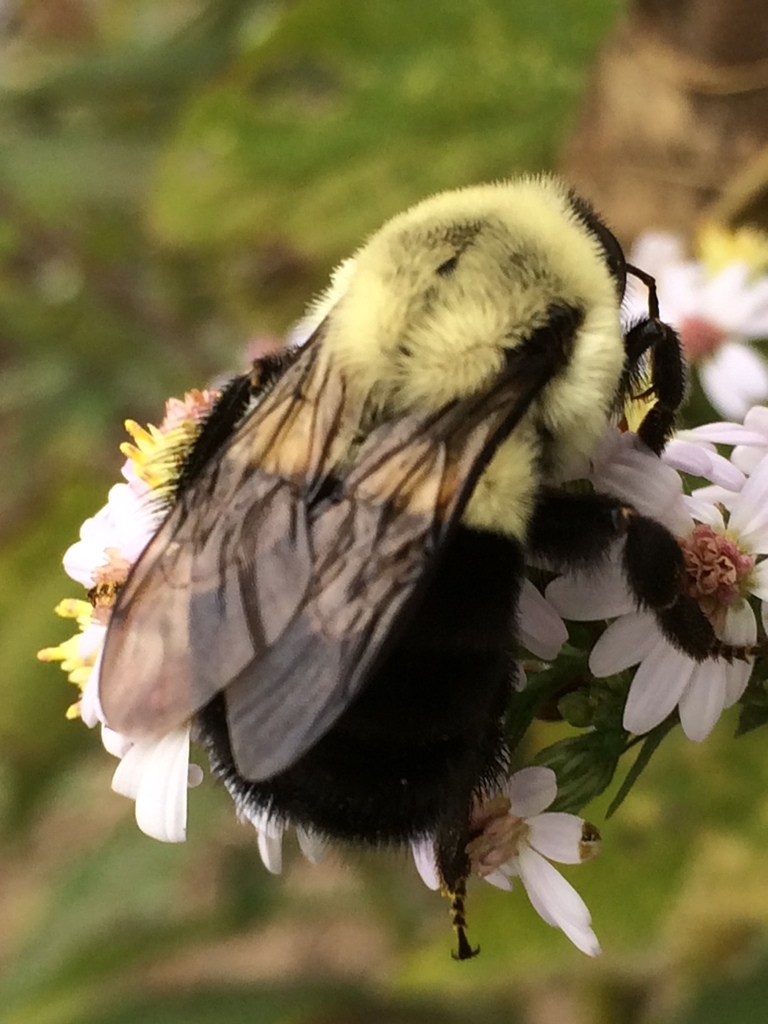
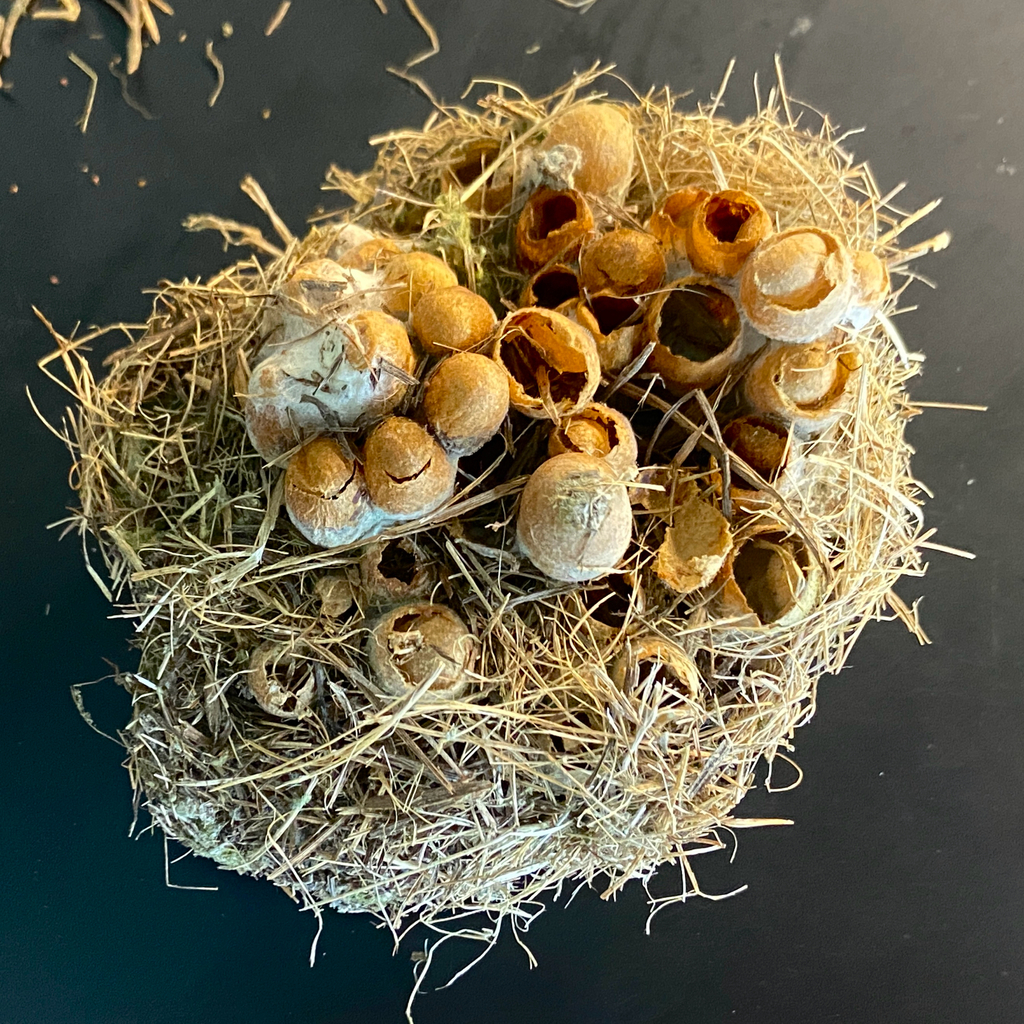
Bumblebees are the teddy bears of the group: large, round and covered in dense hair, with a slow, droning flight from flower to flower. Their colonies are small compared with yellowjackets, and the nest is usually hidden in a cavity near the ground. Only the new queens survive the winter; the old colony dies out in late summer or fall.
Females can sting more than once, but bumblebees are not interested in people and rarely sting unless the nest is disturbed. If you find a bumblebee nest away from paths, the simplest option is to leave it; it will be empty by fall. Do not confuse bumblebees with eastern carpenter bees, which have a bare, shiny black abdomen; see wasp vs. bee for the side-by-side photos.
Wasps: paper wasps and yellowjackets
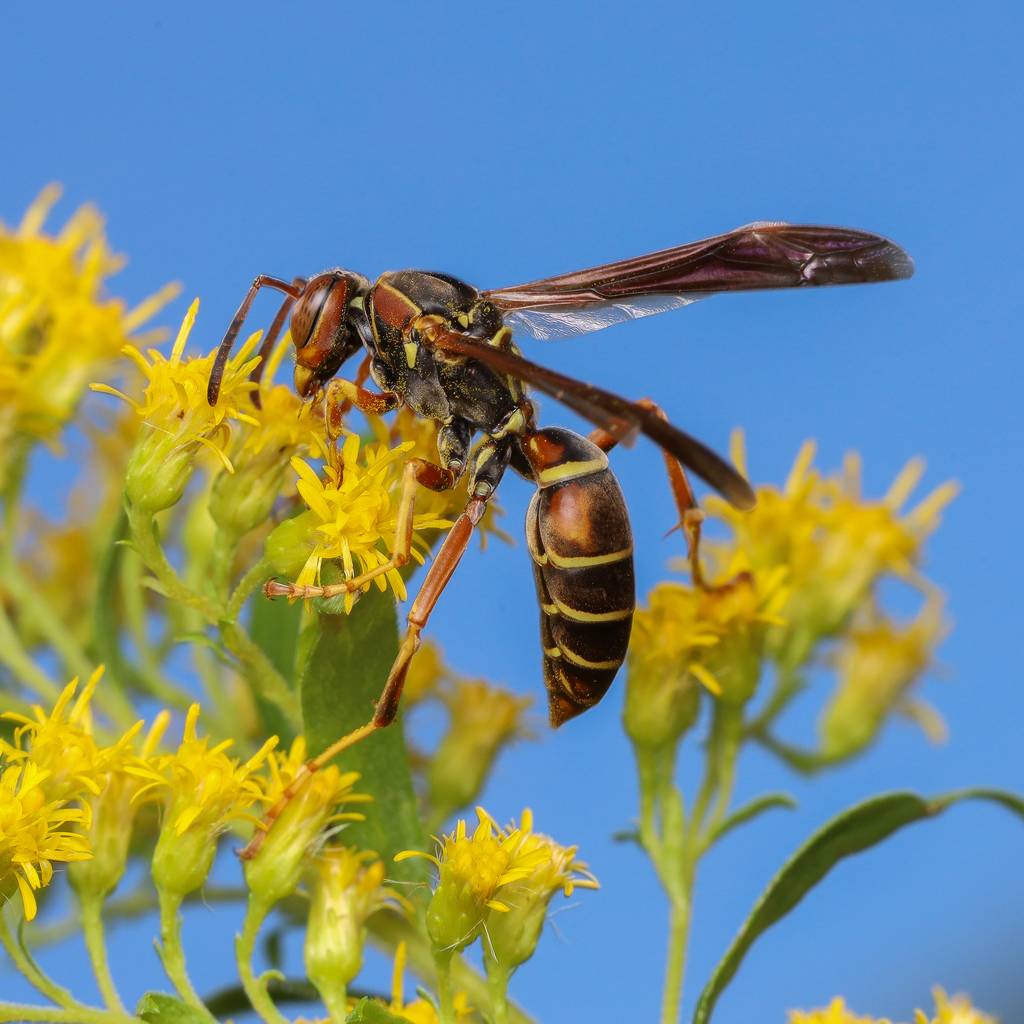
Paper wasps are slender, with long legs that hang down when they fly. They build a single open comb, with the cells visible from below, hanging from a short stalk under eaves, porch ceilings, railings, mailboxes and grill lids. They are useful predators of caterpillars and tend to leave people alone unless the nest is bumped. See paper wasp nests.
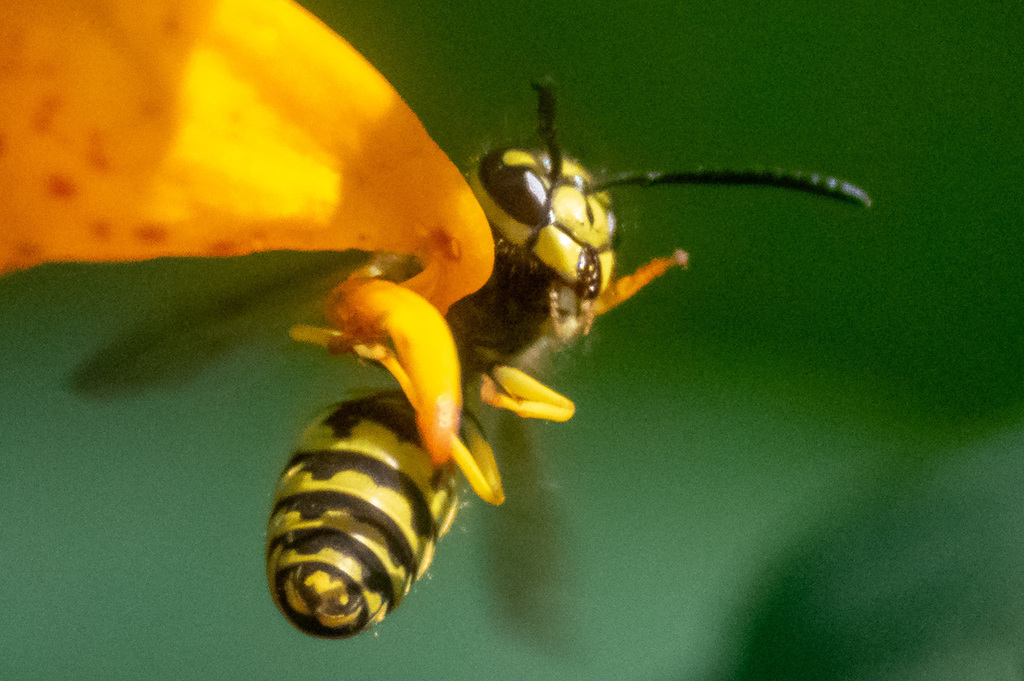
Yellowjackets are compact and bright yellow and black, with short legs and a fast, side-to-side flight. They build enclosed paper nests, very often underground or inside walls, and colonies grow large by late summer. They are the “bees” that crash picnics and sting most often. See yellowjacket nests.
Hornets
Bald-faced hornet
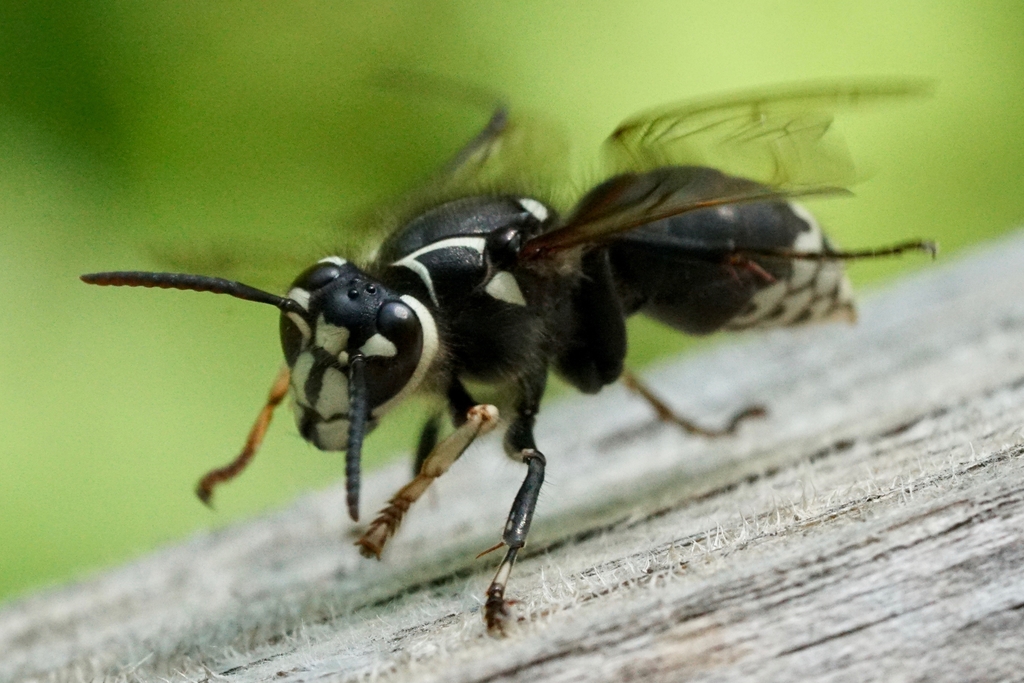
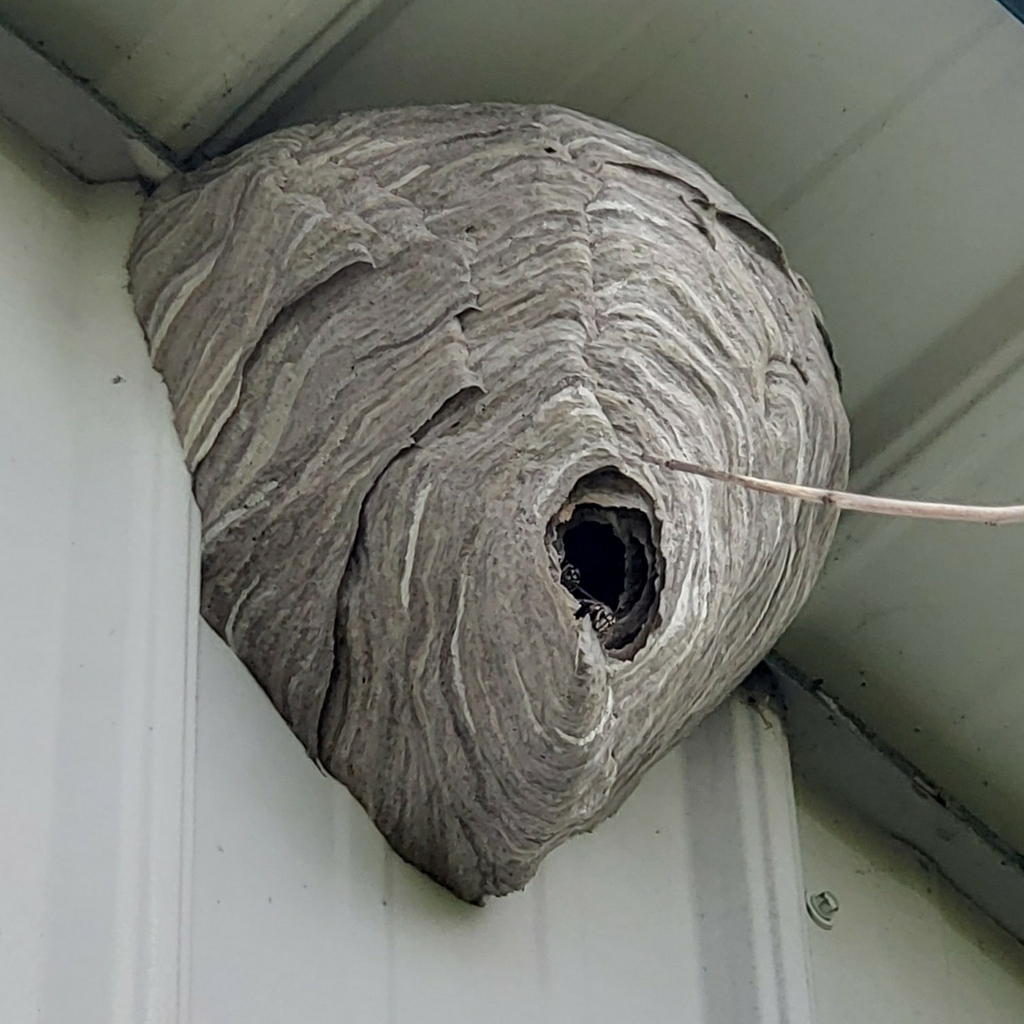
The bald-faced hornet is black with ivory-white markings on the face and the tip of the abdomen. It builds the classic gray paper “football” nest, which can reach basketball size by late summer, hanging from a branch, a shrub or an eave. These wasps defend their nest aggressively and can sting repeatedly, so a nest near a door or a path is a job for a professional. See bald-faced hornet nests.
European hornet
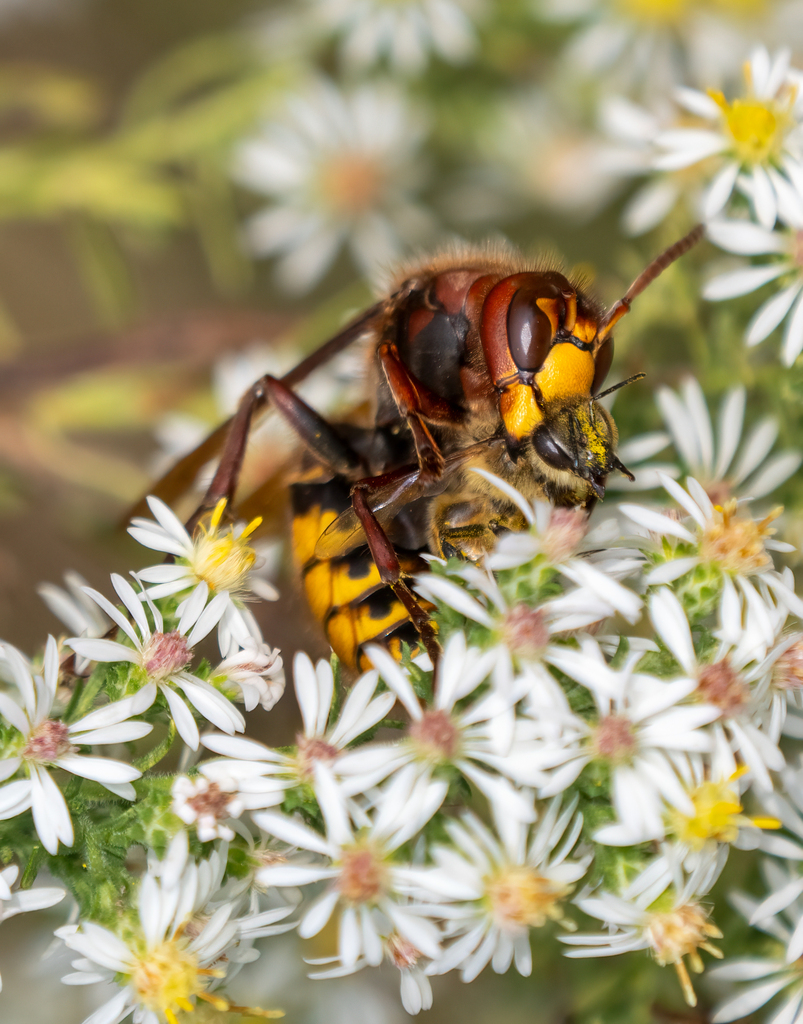
The European hornet is the largest common wasp in the eastern US, brown and dull yellow rather than black and bright yellow. It was introduced from Europe long ago and is now established across much of the East. Unlike most wasps, it also flies at night and is often drawn to porch lights and lit windows. Nests are usually hidden inside hollow trees, wall voids or attics. Away from the nest it is not especially aggressive, but its sting is painful and a nest in or on the house should be handled by a professional. See European hornets in the US.
What about “murder hornets”?
The northern giant hornet, nicknamed the “murder hornet”, was found in a small area of Washington State and became the target of a state and federal eradication effort. It is not established across the US, and the large hornet most people see in the East is the European hornet. If you live in the Pacific Northwest and think you have seen one, report it to the Washington State Department of Agriculture. More in northern giant hornets: what US homeowners should know.
Which ones should you worry about?
- Least concern: bumblebees away from paths, and paper wasps with a small nest out of reach.
- Use caution: paper wasp nests next to doors, railings or grills; European hornets around the house.
- Highest concern: yellowjacket nests in the ground, walls or attics, and bald-faced hornet nests anywhere people pass. These colonies get large and defend their nests hard.
To decide what to do with the nest you have found, use the wasp nest decision guide. It takes four questions.
Allergic to stings?
If anyone in your household is allergic to bee or wasp stings, keep away from the nest and call a professional. In an emergency, such as trouble breathing or swelling of the face or throat after a sting, call 911 and use a prescribed epinephrine auto-injector if one is available.
Common questions
Is a hornet a bee or a wasp?
A wasp. Hornets are a group of larger wasps. Bumblebees and honey bees are bees.
Is a bald-faced hornet a real hornet?
No. It is a yellowjacket relative that happens to be called a hornet. The only true hornet that is widespread in the US is the European hornet.
Do bumblebees sting?
Females can, and unlike honey bees they can sting more than once. In practice bumblebees rarely sting unless they are handled, trapped against skin or their nest is disturbed.
Why is there a big wasp at my window at night?
In the eastern US, a large brown-and-yellow wasp drawn to lights after dark is very likely a European hornet. Most other wasps stay in the nest at night. If you see them every evening, a nest may be nearby, possibly in a wall or a hollow tree.
Do hornets reuse their nests?
No. Like yellowjackets and paper wasps, hornet colonies in the US are annual. The colony dies in fall, new queens overwinter elsewhere, and the old nest is not reused.
Your next step
- Not sure what you are looking at? Compare nest shapes in the types of wasp nests photo guide.
- Found a nest? Run through the wasp nest decision guide.
- Bees in the ground? See bees or wasps nesting in the ground.
- Been stung? Here is what to do first.
Photos on this page are shared by their authors on iNaturalist under Creative Commons licenses, credited under each image. For who writes these guides and how we stay independent, see About.