
Wasp and hornet sprays: how to choose one that works safely
Updated
Store shelves are full of cans that promise to kill wasps from 20 feet away. Most of them work on the right nest, used the right way. The differences that matter are not the brand: they are how far the can sprays, whether it is labeled for your situation, and what is in it. This guide explains what to look for, and when a spray is the wrong tool altogether.
Short answer
For a small, exposed nest you can reach from the ground, choose an aerosol wasp and hornet spray that is labeled for wasps and for outdoor use on that site, shoots a jet stream at least 10 to 20 feet, and has an EPA registration number on the label. Use it at dusk, from the distance on the label, and follow the label exactly. For nests in the ground, walls or attics, a spray is usually the wrong tool: those call for a dust labeled for the site, or a professional.
What to look for on the can
| On the label | Why it matters |
|---|---|
| Wasps, hornets and yellowjackets listed as target pests | A general insect spray may not be labeled or effective for nests. |
| The site: eaves, porches, outdoor structures, and so on | The label tells you where the product may legally be used. Indoor use, crawl spaces and attics are listed only on some products. |
| Spray range, often 10 to 27 feet | Distance is your main safety margin. More reach means you can stand farther from the nest. |
| EPA Reg. No. | Shows the product was registered and reviewed by the U.S. EPA. Plant-oil “minimum risk” products are exempt from registration and do not have one. |
| Active ingredient | Most use pyrethrins or pyrethroids for fast knockdown, such as prallethrin, tetramethrin, cypermethrin or lambda-cyhalothrin. Some add a longer-lasting ingredient. |
| Directions and waiting time | How far to stand, how long to spray, and how long to wait before removing the nest, often 24 hours. |
| Cautions | Flammability, use near electrical equipment, keeping people and pets away, and protecting water, fish and bees. |
The label is the law: using a pesticide in a way its label does not allow is illegal and often unsafe. If you have questions about an ingredient, the National Pesticide Information Center explains health and environmental effects.
Types of products
| Type | Best for | Limits |
|---|---|---|
| Jet stream aerosol | Exposed paper wasp and small hornet nests, from a distance | Does not reach a nest inside a wall or deep in the ground |
| Foaming aerosol | Exposed nests; the foam clings and covers the comb | Usually a shorter range than a jet stream |
| Insecticide dust | Entrances of ground and void nests, where returning wasps carry it inside | Needs a duster and getting close to the entrance; wall nests are a pro job. See wasp dust for ground and wall nests |
| Plant-oil “natural” sprays | Small nests and single wasps, hit directly | Kill on contact only, with little lasting effect; may need repeat sprays. See natural wasp repellents |
| Traps | Reducing foragers around a patio or picnic area | Do not remove a nest. See do wasp traps work |
Which nests a spray can handle
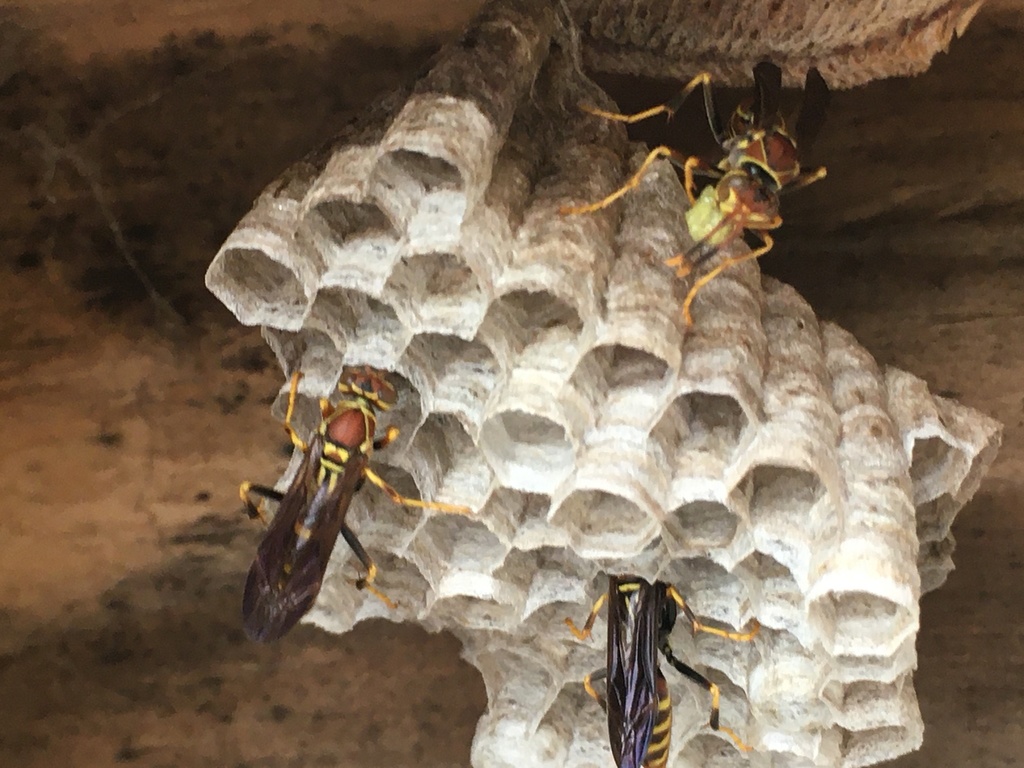
- Good fit: a small, exposed paper wasp nest under an eave, a railing or the grill; a small hornet nest low in a shrub. See how to get rid of a wasp nest.
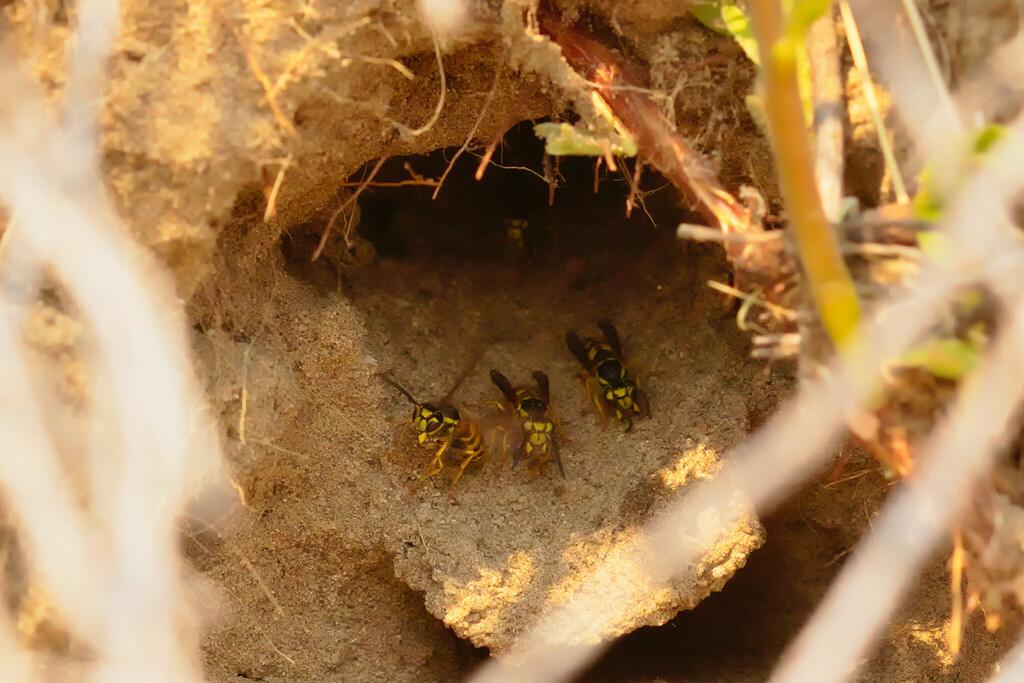
- Poor fit: yellowjackets in the ground, where dust at the entrance works better, or a professional. See yellowjacket ground nests.
- Wrong tool: nests inside walls, attics or ceilings, and large or high nests. Spraying a wall entrance can drive wasps into the house. See wasp nest in a wall and when to call a professional.
- Never: honey bees or bumblebees. Call a beekeeper or leave them. See wasp vs. bee.
How to use a wasp spray safely
- Read the whole label before you buy and again before you spray.
- Wait for dusk on a dry, calm evening, when the wasps are on the nest. See the best time to remove a wasp nest.
- Dress for it: long sleeves and pants, gloves, closed shoes and eye protection.
- Stand upwind, at the distance on the label, on the ground, with a clear path back indoors.
- Spray as directed, usually at the nest opening or the face of the comb until it is soaked.
- Walk away immediately and keep people and pets away for at least a day.
- Check from a distance the next afternoon; remove the empty nest with gloves once activity has stopped.
Safety notes
- Bees and other pollinators: wasp sprays kill bees too. Do not spray flowering plants or trees, or anywhere bees are feeding.
- Water: many pyrethroids are highly toxic to fish. Do not spray over ponds, streams or storm drains.
- Flammable aerosols: keep away from flames, grills and pilot lights.
- No ladders: a sting on a ladder can mean a fall.
- No home-made substitutes: do not use fuel, fire or improvised mixtures, and do not use products like lubricants or hair spray in place of a labeled pesticide.
- Allergies: if anyone in the household is allergic to stings, do not do it yourself.
Call 911
Call 911 right away if someone who was stung has trouble breathing, swelling of the lips, tongue or throat, hives spreading beyond the sting, dizziness or fainting, or has been stung many times. For ordinary stings, see what to do first.
When to skip the spray
Many nests do not need to be treated at all: a nest far from doors and paths, or one you find late in the season, will die on its own after hard frosts. Read should you remove a wasp nest or leave it first. If the nest has to go but you would rather not do it yourself, compare DIY vs. professional removal and what a professional charges.
How we cover products: we explain what to look for rather than ranking brands, and we are not paid by manufacturers.
Common questions
How far should a wasp spray reach?
At least 10 feet; many jet sprays reach 15 to 20 feet or more. Use the distance on the label rather than getting as close as possible.
Is foam or jet spray better?
Both work on exposed nests. A jet stream reaches farther; foam clings to the nest and covers it more completely. Choose by how far away you need to stand.
How long does wasp spray take to work?
Wasps that are hit directly are usually knocked down within seconds. The whole colony can take longer, including wasps that were away from the nest, which is why labels often say to wait a day before removing it.
Can I use wasp spray indoors?
Only if the label allows indoor use, and only as directed. Do not spray into walls, outlets or light fixtures. Wasps coming from inside a wall need a professional. See wasps in the house.
Are natural wasp sprays as good?
Plant-oil sprays can kill wasps they hit directly, but they generally have little lasting effect and may need to be repeated. For a defended nest, a registered wasp and hornet spray used as directed is more reliable.
Your next step
- Step-by-step method: how to get rid of a wasp nest safely.
- All product guides: wasp control products.
- Not sure what to do: the wasp nest decision guide.
Related guides
 How to Get Rid of a Yellowjacket Ground NestYellowjackets streaming in and out of a hole in the lawn are one of the most common late-summer…
 Wasp Nest in a Wall: Why Not to Seal ItWasps flying in and out of a crack in your siding, a gap under the trim or a vent usually mean a…Wasp DustInsecticide dust is the go-to tool for yellowjacket nests you cannot see: a hole in the lawn or a…
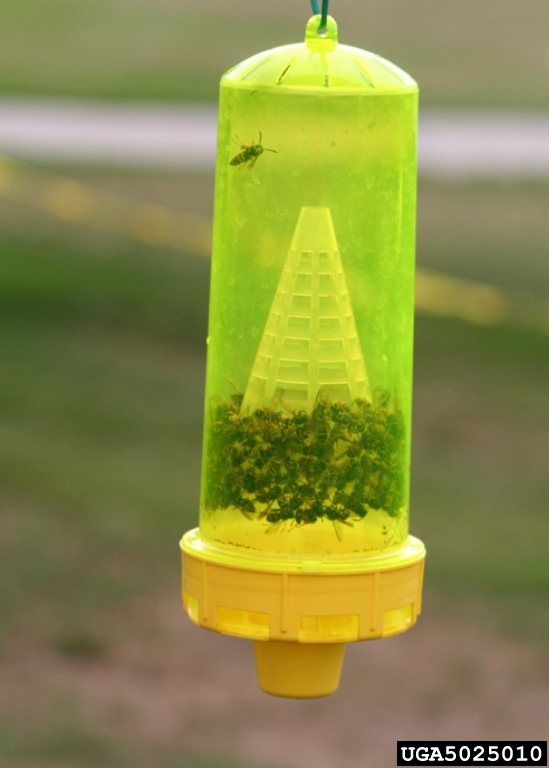 Do Wasp Traps Work?Partly. Lure traps catch foraging yellowjackets and can cut down how many show up around a patio or…
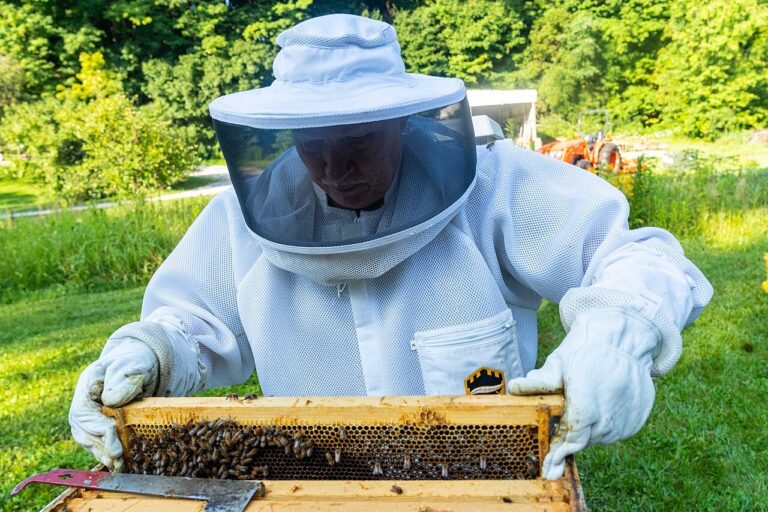 Protective Gear for Wasp Nest RemovalWhat to wear before you go near a nest, and the cases where no suit makes the job safe…
Sources
- Yellowjackets, Washington State University Pestsense, reviewed 2025.
- Yellowjackets and Their Control, University of Idaho Cooperative Extension.
- Yellowjackets and hornets on fruit trees, Oregon State University Extension via Ask Extension, 2024.
- Controlling Wasps, Yellow Jackets and Hornets, Cornell Cooperative Extension of Suffolk County, revised 2025.
- National Pesticide Information Center, Oregon State University and U.S. EPA.
Photos on this page are shared by their authors on iNaturalist under Creative Commons licenses, credited under each image. For who writes these guides and how we stay independent, see About.