
How to prevent wasps from building nests around your home
Updated
The easiest wasp nest to deal with is the one that never gets built. Every nest around your house starts with a single queen in spring, looking for a sheltered spot and a supply of food. Take those away, and catch the few starter nests that still appear, and most summers go by without a problem.
Short answer
Seal gaps in siding, eaves, vents and around pipes in winter. In April and May, walk around the house every week or two and knock down starter nests while only the queen is there. All summer, keep garbage, pet food, fallen fruit and sweet drinks covered or cleared away, and fill old rodent burrows in the lawn. Traps can help in early spring and around eating areas, but they do not replace the rest.
Why prevention works
Most nuisance wasps, including yellowjackets, paper wasps and bald-faced hornets, have annual colonies. Only mated queens survive the winter. In spring each queen chooses a site and builds a small nest by herself, and only later does it grow into a colony of hundreds or thousands. Old nests are never reused. So every season starts from zero, and the cheapest point to intervene is that first month, when one queen is working alone.
A year-round plan
| When | What to do |
|---|---|
| Winter | Seal cracks and gaps; repair vent screens; take down old empty nests; plan repairs to siding and trim. |
| Late winter to early spring | If yellowjackets were a problem last year, hang lure traps to catch queens before they nest. |
| April to May | Check eaves, porch ceilings, railings, sheds, play sets and the grill every week or two. Knock down starter nests. |
| Summer | Keep food, drinks, garbage and pet food covered; pick up fallen fruit; fill rodent burrows; watch for traffic at gaps in the house. |
| Late summer to fall | Peak season for scavenging yellowjackets. Be strict about food outdoors; deal with nests near doors and paths. See the best time to remove a wasp nest. |
1. Seal the places queens like
- Gaps in siding, brick and trim, and where walls meet the roof.
- Vents for the attic, soffit, ridge and dryer: make sure the screens are intact and fine enough to keep wasps out.
- Holes around pipes, cables, outdoor faucets and electrical boxes.
- Window and door screens: repair tears and add door sweeps.
- Old rodent burrows in the lawn and garden: fill them with soil; yellowjackets often take them over.
Never seal a gap that wasps are actively using. Trapped wasps can chew through drywall into the house. Seal only in winter or after activity has stopped for several days. See wasp nest in a wall.
2. Knock down starter nests in spring
A starter nest is about the size of a golf ball or smaller, with a single queen and a few cells. At dusk, when she is on the nest, knock it down with a long stick or broom handle, or scrape it into a bag, and crush or dispose of it. Wear gloves and eye protection. A queen without a nest may start again nearby, so keep checking every week or two until early summer.
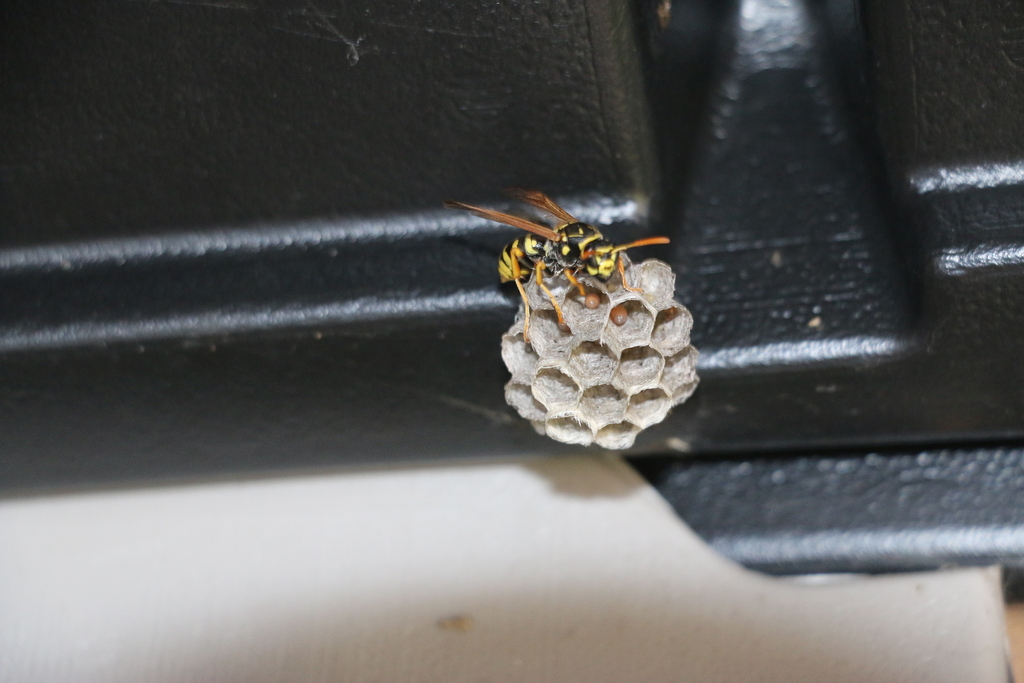
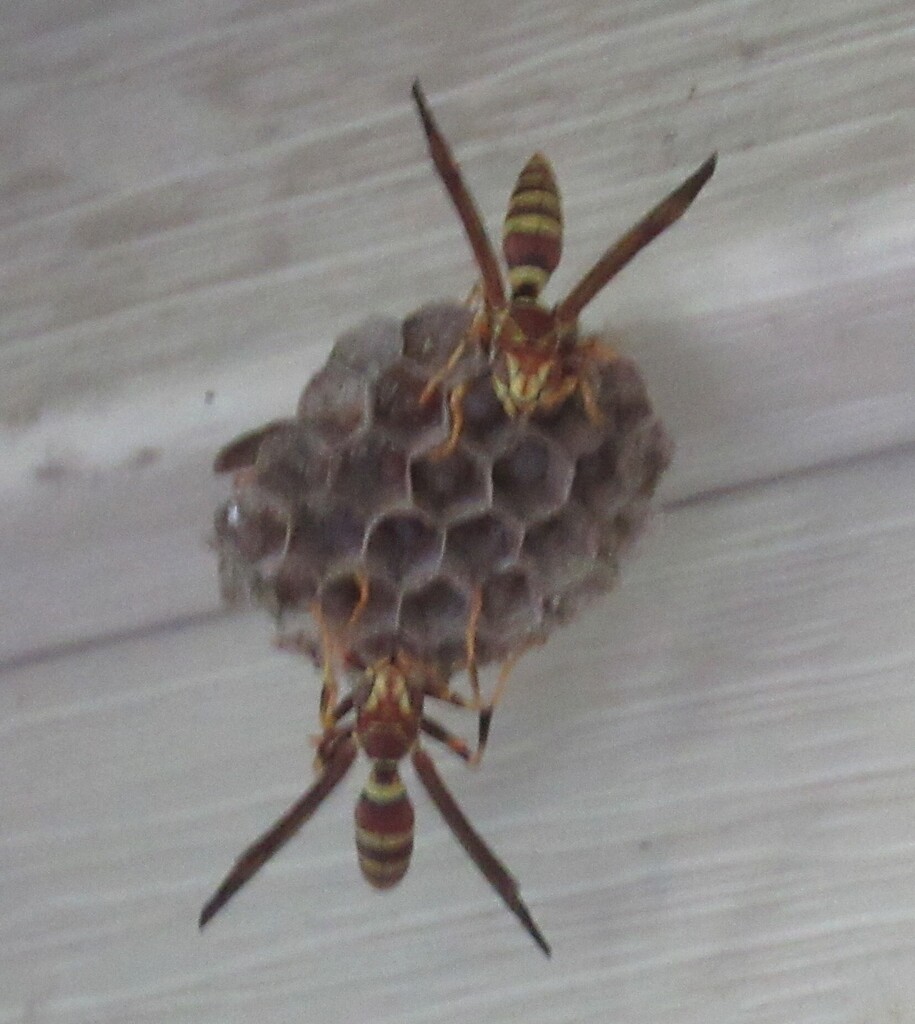
Places to check: under eaves and porch ceilings, behind shutters, inside grills and grill covers, under deck railings and stair treads, in sheds and garages, inside play sets, mailboxes and outdoor light fixtures.
3. Take away food and water
From midsummer on, yellowjackets scavenge for sugar and protein. Once they find a food source, they keep searching the area after it is gone.
- Garbage and recycling: use cans with tight or self-closing lids, bag food waste, empty them often and rinse recycling.
- Pet food: feed pets indoors, or pick up bowls right after meals.
- Fruit: pick ripe fruit promptly and clear fallen fruit under trees.
- Drinks and meals outdoors: keep food covered, use cups with lids, and check cans before you drink from them.
- Water: fix dripping faucets and empty standing water where wasps gather.
More for outdoor eating areas: how to keep wasps away from your patio.
4. Make the yard less inviting
- Remove old stumps and rotting logs near the house; trim dense shrubs against the walls.
- Keep the lawn in good shape; bare, dry patches and old burrows attract ground nesters.
- Store unused items, tarps and play equipment so they do not become sheltered nest sites.
5. Use traps where they help
Yellowjacket lure traps are most useful in late winter and early spring, when each queen caught is one less nest later, and around eating areas in late summer. Hang them at least 20 feet from where people sit, and keep the bait fresh. Traps reduce numbers but do not remove an existing nest, and they do not work on paper wasps or hornets as well. More: do wasp traps work.
What does not work
- Fake nests: paper decoys are popular, but there is little evidence they keep wasps away. See fake wasp nest decoys.
- Scents and home remedies such as peppermint oil, cloves or dryer sheets: results are inconsistent at best. See natural wasp repellents.
- Spraying insecticide around the house “just in case”: it does not stop queens from nesting and harms bees and other beneficial insects.
Already have a nest?
Prevention is for next season. For a nest you have now, start with should you remove a wasp nest or leave it, then how to get rid of a wasp nest, or when to call a professional.
Call 911
Call 911 right away if someone who was stung has trouble breathing, swelling of the lips, tongue or throat, hives spreading beyond the sting, dizziness or fainting. For ordinary stings, see what to do first.
Common questions
Do wasps come back to the same place every year?
Not to the same nest, but a new queen may choose the same sheltered spot if it is still open. That is why sealing and spring checks matter. More: do wasps come back to the same nest.
Should I remove old wasp nests?
Yes, once they are empty in winter. Old nests are not reused, but removing them lets you spot new ones in spring.
When should I start checking for nests?
When the weather warms in spring, usually April in most of the U.S., earlier in the South. Keep checking every week or two through June.
Will a pest control service prevent wasps?
Some offer seasonal treatments of eaves and other sites. They can reduce nesting, but sealing gaps, managing food and spring checks do most of the work.
Your next step
- All prevention guides: wasp prevention.
- Not sure what kind of nest you had: types of wasp nests.
- Products, honestly reviewed: wasp control products.
Related guides
 Best Wasp and Hornet Sprays: How to ChooseStore shelves are full of cans that promise to kill wasps from 20 feet away. Most of them work on…
 How to Keep Wasps Away from Your PatioIn late summer, a burger or a soda on the deck can draw yellowjackets within minutes. They are not…
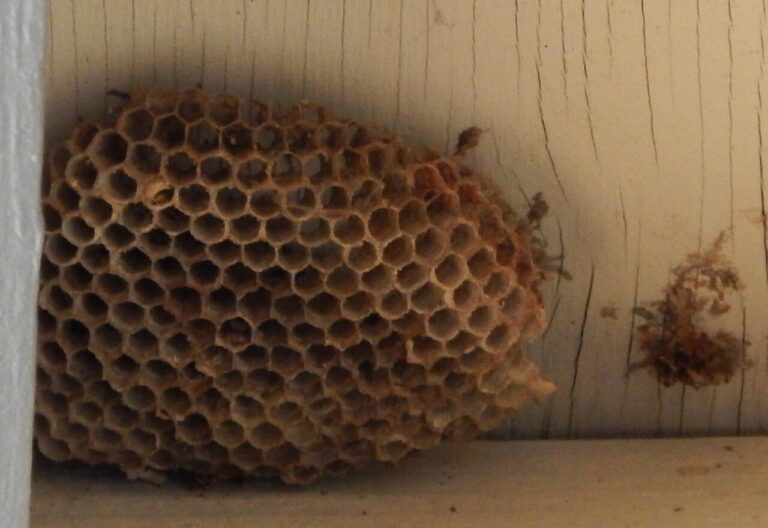 Do Wasps Return to an Old Nest?No. Paper wasps, yellowjackets and hornets do not move back into last year's nest. The colony…
 Natural Wasp Repellents: What WorksEssential oils, fake nests, and the simple steps that really keep wasps away.
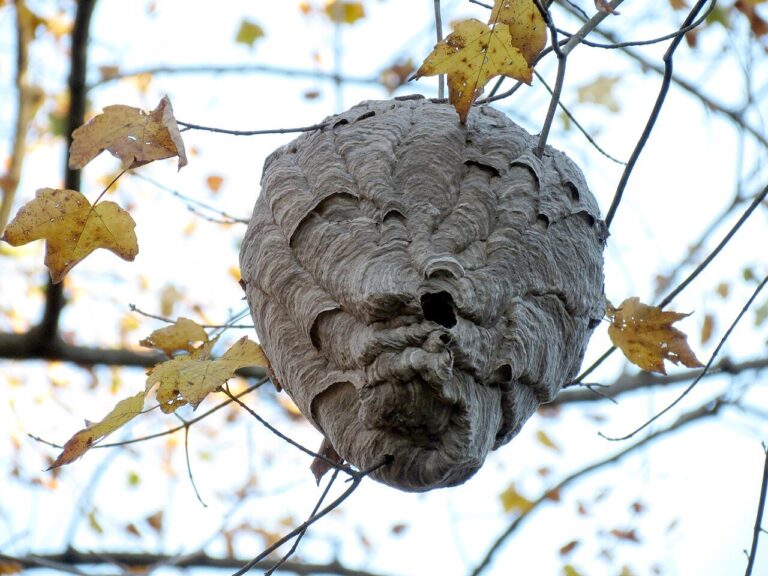 Fake Wasp Nests: Do They Work?What the evidence says about paper decoy nests, and what to do instead.
Sources
- Integrated Pest Management: Yellowjackets, California Childcare Health Program, UCSF School of Nursing, 2016.
- Start early to prevent yellowjacket problems later, JoAnne Skelly, University of Nevada Cooperative Extension, February 2026.
- Yellowjackets, Washington State University Pestsense, reviewed 2025.
- Controlling Wasps, Yellow Jackets and Hornets, Cornell Cooperative Extension of Suffolk County, revised 2025.
- Yellowjackets and Their Control, University of Idaho Cooperative Extension.
Photos on this page are shared by their authors on iNaturalist under Creative Commons licenses, credited under each image. For who writes these guides and how we stay independent, see About.