
Wasp nest in a wall: why not to seal it, and what to do instead
Updated
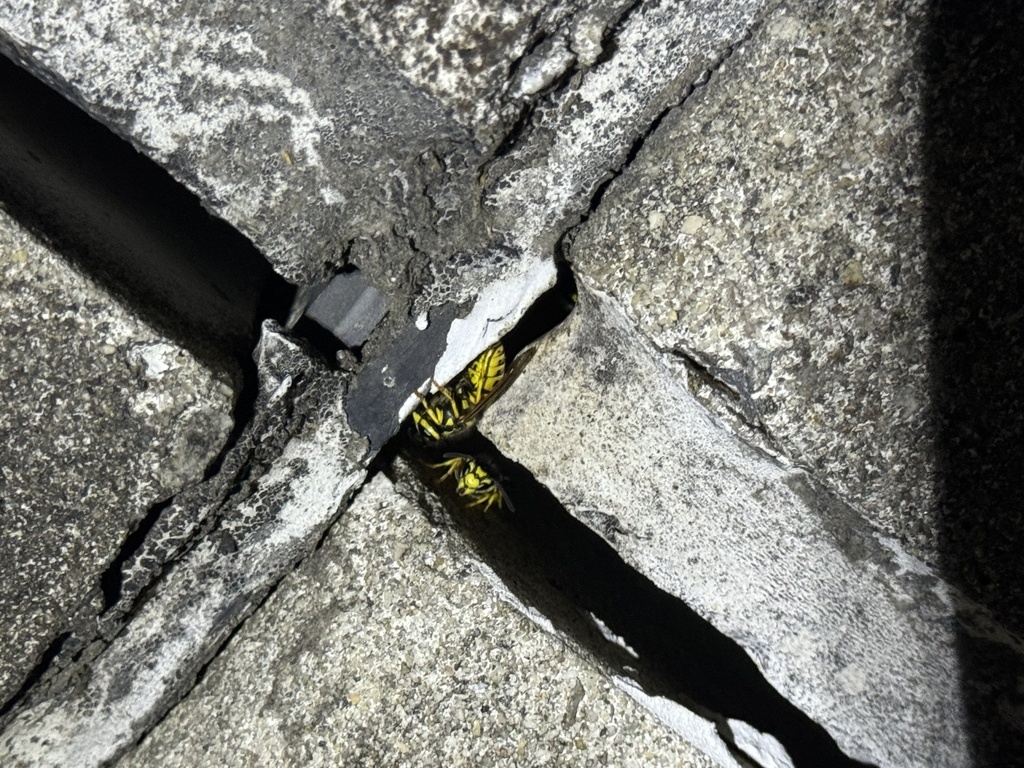
Wasps flying in and out of a crack in your siding, a gap under the trim or a vent usually mean a nest inside the wall. The first thing most people want to do is plug the hole. That is the one move that can bring the wasps into your living room. This guide explains why, how to tell what you are dealing with, and what actually works.
Short answer
Do not seal, caulk, tape or spray foam the entrance of an active wall nest. The wasps, usually yellowjackets, will look for another way out and can chew through drywall or ceiling board into the house. Mark the hole, keep people away from it, and call a licensed pest professional, who will treat the nest through the entrance and leave it open so returning wasps carry the treatment inside. Seal the hole only after activity has stopped for several days, or wait for a hard frost, after which the colony dies and is not reused.
Is this the right guide? This guide is about a colony inside the wall cavity, where you see wasps using a crack or gap in the siding, brick or trim. If they are coming out of a bathroom, dryer or soffit vent, see wasps in a vent; if the nest is in the roof space above, see wasp nest in the attic; and if you are finding wasps indoors, start with wasps in the house. If the wasps are going in through the outside cladding, see wasp nest in siding.
Why sealing the hole backfires
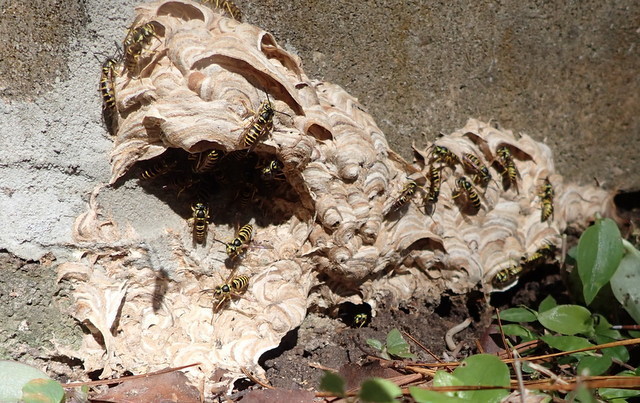
A colony inside a wall has one way in and out, and every forager uses it. Close it, and hundreds or thousands of wasps are trapped in the void with nowhere to go. Yellowjackets and European hornets are strong chewers: they build their nests from chewed material and can work through soft drywall, plaster board and ceiling tiles. Extension guides warn that a blocked colony may chew a new exit, possibly into a living area. People most often learn this when they hear scratching behind the wall, see a damp or darkening spot on the drywall, and then find wasps inside the house.
If wasps are already coming into a room: leave the room, close the door and stuff a towel along the bottom gap. Turn off lights in that room at night; wasps are drawn to light. Call a pest professional the same day. Do not try to spray inside the wall from indoors.
Signs of a nest in a wall
- Steady traffic at one spot on the outside of the house: a crack in siding or brick, a gap under trim or flashing, a weep hole, a hole around a pipe or cable, or a vent.
- Buzzing, rustling or scratching behind an inside wall or ceiling, often loudest on warm afternoons.
- A warm or discolored patch of drywall, or a soft spot that gives when pressed. Do not press hard or poke it.
- Wasps showing up indoors near outlets, light fixtures or ceiling vents, especially in late summer.
Who builds nests in walls?
| Insect | How it looks | What to do |
|---|---|---|
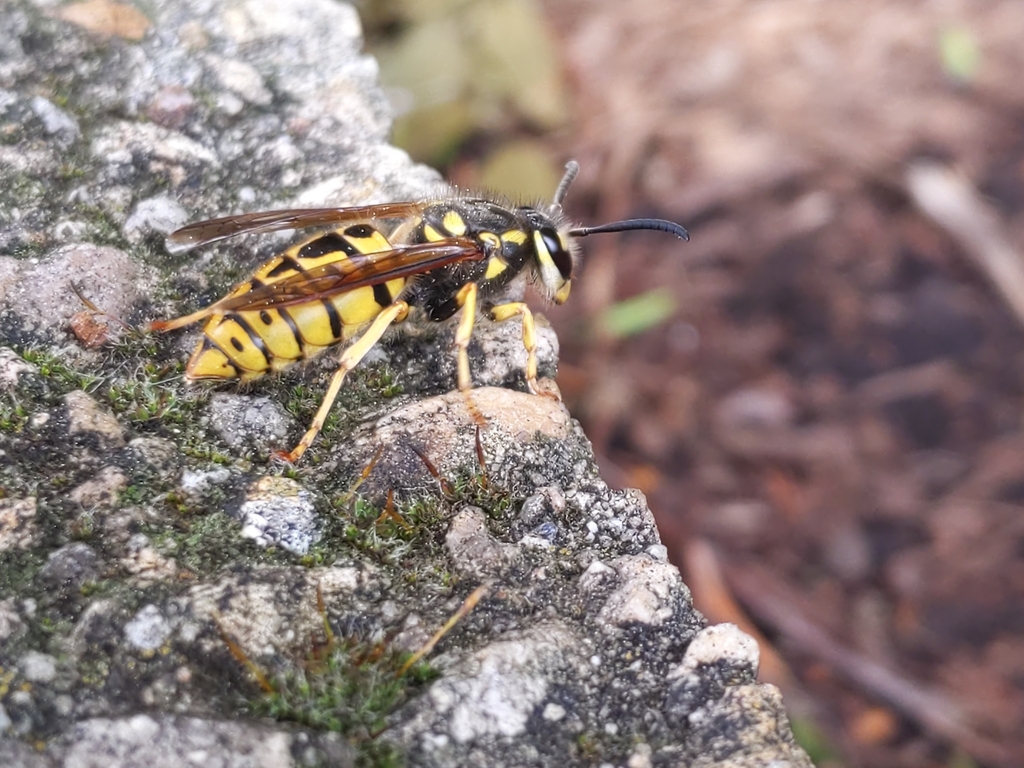
| Yellowjackets (especially German yellowjackets) | Hairless, shiny black and yellow, half an inch long; fast, straight flights in and out | Most common wall nester. Professional treatment; never seal while active. See yellowjacket nests |
| European hornets | Large, brown and yellow, about an inch long; fly at night too | Professional. Often in walls, attics and hollow trees. See European hornets |
| Honey bees | Fuzzy, golden-brown, slower; may carry pollen | Do not spray. Call a beekeeper or live bee removal; a wall colony leaves comb and honey that must be removed |
| Paper wasps | Slender, long legs dangling in flight | Usually nest under eaves, not deep in walls; a small exposed nest can be a DIY job. See paper wasp nests |
Not sure which you have? Watch from a safe distance and compare with wasp vs. bee. If they could be honey bees, do not treat anything.
What to do, step by step
- Do not block the entrance. No caulk, foam, tape, steel wool or screens while the colony is active.
- Mark the hole from a distance during the day and note where it is on the inside of the house, too.
- Keep people and pets away from the entrance. Do not mow, trim or use a ladder near it.
- Check the inside wall for warm spots, sounds or damp patches, without pressing or drilling.
- Call a licensed pest professional. Wall nests are one of the clearest cases for a pro: the nest can be several feet from the hole, and a wrong move sends wasps indoors. See when to call a professional.
- After treatment, leave the hole open for several days so returning wasps pass through the treated entrance.
- Seal the entrance once activity has stopped for several days, so next spring’s queen cannot use the same space.
How a professional treats a wall nest
Most pros treat at dusk or at night, when the wasps are inside. The usual method is to puff an insecticide dust labeled for wall voids into the entrance. Returning workers walk through it and carry it to the nest, which may be anywhere from a few inches to many feet inside the wall. If the nest location is known, some technicians drill a small hole and treat the nest directly, then seal the drill hole. Many check back after a few days. Large nests are sometimes removed afterward, because dead wasps and old comb can draw carpet beetles and other scavengers.
Wall nests usually cost more than an exposed nest, often in the $350 to $875 range. See what wasp nest removal costs and questions to ask a wasp removal company.
We are an independent guide and do not do removals or sell products. For a nest inside a wall, we would rather point you to a qualified local professional than suggest a do-it-yourself fix.
Can you treat it yourself?
Some extension services describe homeowners puffing a labeled insecticide dust into the entrance at night, and some products are labeled for that use. We do not recommend it for most people. You cannot see the nest, an aerosol spray usually does not reach it, and if the wasps are disturbed without being killed they may chew into the house. Never drill into the wall yourself, never spray into an outlet or light fixture, and never try it if anyone in the household is allergic to stings. Compare the options in DIY vs. professional removal.
What not to do
- Do not seal, foam or tape the entrance while wasps are active.
- Do not drill or cut into the wall to find the nest.
- Do not spray through outlets, switch plates or light fixtures. Pesticides and electricity do not mix, and it pushes wasps toward you.
- No fire, gasoline or smoke bombs in or near the house.
- Do not work from a ladder at a high entrance. A sting on a ladder can mean a fall.
- Do not spray honey bees.
More common mistakes: what not to do with a wasp nest.
Timing: act now or wait for frost?
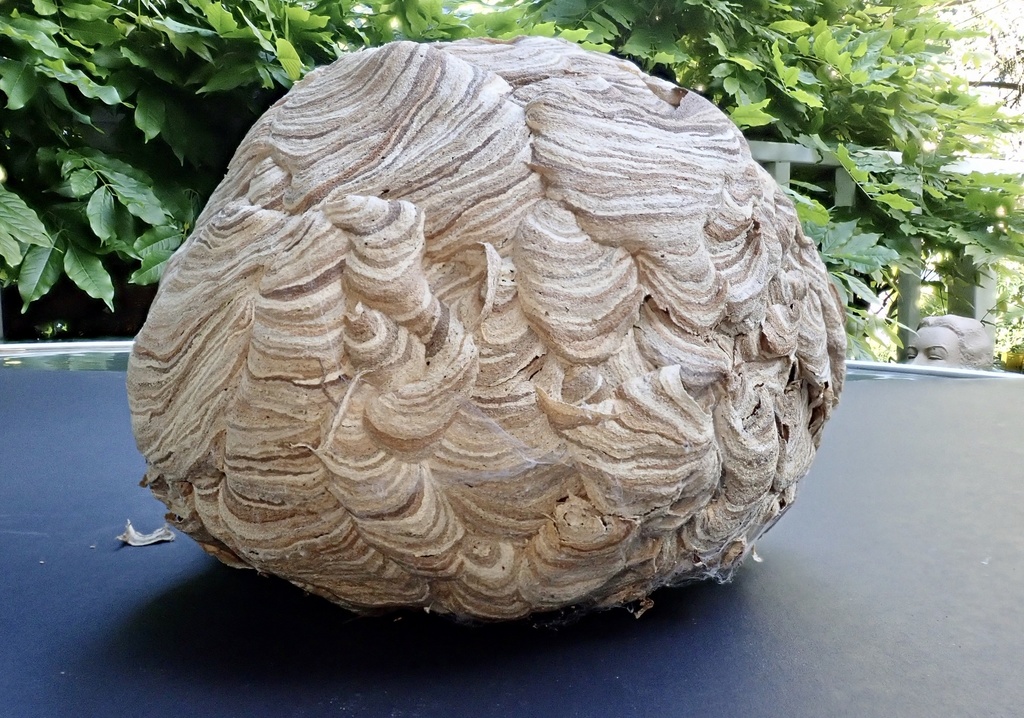
Yellowjacket colonies start from a single queen in spring, grow all summer and are largest and most defensive in late summer and fall. In fall the colony raises new queens, which leave to spend the winter elsewhere, and the rest of the colony dies after hard frosts. The old nest is never reused.
- Act now if wasps are getting indoors, if the entrance is next to a door, window, deck or play area, or if it is still early or midsummer.
- Waiting can be reasonable if it is October or November in a cold-winter area, nobody uses that side of the house, and no wasps are getting inside. Then seal the hole in winter, once you are sure there is no activity.
More: the best time to remove a wasp nest.
If you get stung
Move away from the entrance quickly, get indoors or into a car, and remove any wasps caught in clothing. For ordinary stings, see what to do first.
Call 911
Call 911 right away if someone who was stung has trouble breathing, swelling of the lips, tongue or throat, hives spreading beyond the stings, dizziness or fainting, or has been stung many times. Use a prescribed epinephrine auto-injector if one is available.
After the nest is gone: keep it from happening again
Once there has been no activity for several days, or after a hard frost, seal the old entrance and any similar gaps: cracks in siding and brick, gaps around pipes, cables and vents, and loose trim. Make sure vent screens are intact and fine enough to keep wasps out, and fix screens on windows and doors. Check the outside of the house in April and May, when new queens look for nest sites. More: how to prevent wasp nests.
Common questions
Can wasps really chew through drywall?
Yes. Yellowjackets and hornets chew wood fiber and paper to build their nests, and a trapped colony can chew through the paper face and gypsum of drywall or a ceiling. It does not happen with every wall nest, but sealing the entrance makes it much more likely.
How long until the wasps in my wall die off?
After a professional treatment, activity usually drops within a day or two and stops within about a week. Without treatment, a yellowjacket colony dies after the first hard frosts in fall.
Will they come back next year?
Not to the old nest, but a new queen may choose the same wall void if the entrance is still open. That is why you seal it once the colony is dead.
Do I need to remove the nest from the wall?
Usually not. Small dead nests can stay. A very large nest, or one that left a stain or smell, may be worth having removed, because old comb and dead wasps can attract other insects.
Does homeowners insurance cover damage from a wall nest?
Policies usually treat insect damage as maintenance, but it depends on the policy and the cause. Check with your insurer before opening a wall. See homeowners insurance and wasp damage.
Your next step
- Nest in the ground instead: how to get rid of a yellowjacket ground nest.
- Nest in the attic: wasp nest in the attic. Wasps already inside: wasps in the house.
- All removal guides: wasp nest removal. Not sure what to do: the wasp nest decision guide.
More in Removal
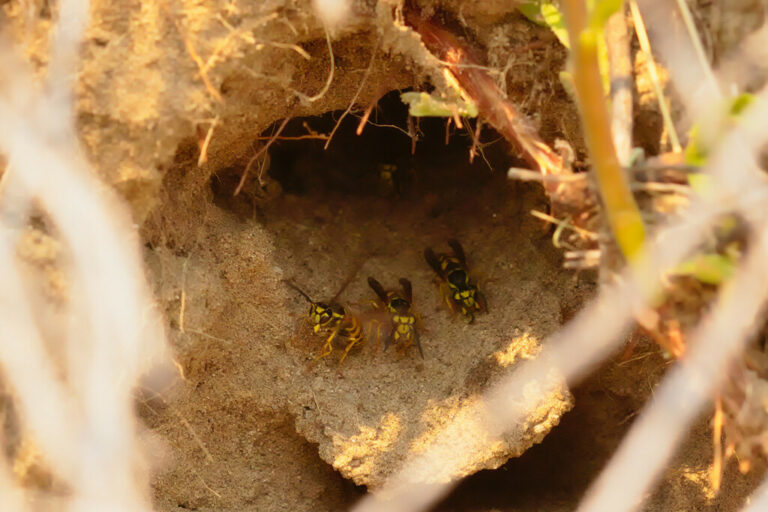 How to Get Rid of a Yellowjacket Ground NestYellowjackets streaming in and out of a hole in the lawn are one of the most common late-summer…
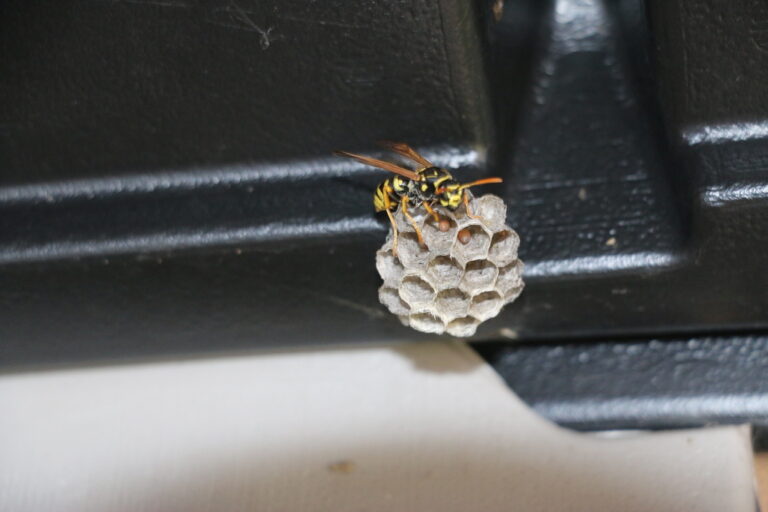 How to Get Rid of a Wasp Nest SafelyA small wasp nest you can reach from the ground is often a job you can do yourself in one evening.…Best Time to Remove a Wasp NestWhen you deal with a wasp nest matters almost as much as how. The same nest that takes two minutes…
 Wasps in the Chimney: What to DoWasps flying around the chimney top or showing up by the fireplace usually come from a yellowjacket…
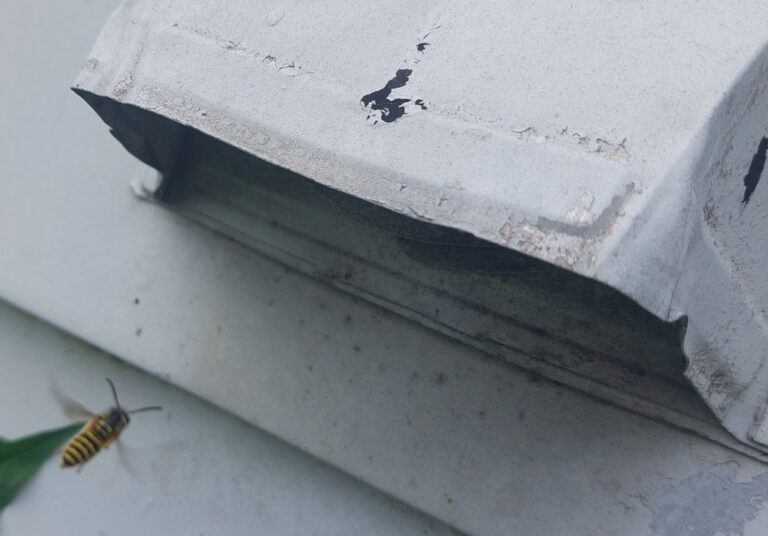 Wasps in a VentWasps showing up in a bathroom, laundry room or kitchen usually come through the duct behind an…
Sources
- Controlling Wasps, Yellow Jackets and Hornets, Cornell Cooperative Extension of Suffolk County, revised 2025.
- Western Yellowjacket, Utah State University Extension.
- Yellowjackets, Washington State University Pestsense, reviewed 2025.
- Yellowjacket Wasps, Iowa State University Extension.
- Yellowjackets Undercover, Pinto & Associates, PCT Magazine.
Photos on this page are shared by their authors on iNaturalist under Creative Commons licenses, credited under each image. For who writes these guides and how we stay independent, see About.