
What not to do with a wasp nest: 10 mistakes that get people stung
Updated
Short answer
Most bad stings around wasp nests come from a few predictable mistakes: disturbing the nest in the middle of the day, sealing or plugging the entrance, burning, flooding or mowing over it, and going at a nest that did not need to be touched at all. The safer pattern is simple: identify it, decide whether it really has to go, treat only small and reachable nests yourself at dusk, and call a professional for the rest.
Trouble breathing, throat or tongue swelling, dizziness or hives spreading over the body after a sting: call 911.
The 10 mistakes
1. Assuming it is wasps
Why it backfires: Honey bees, bumble bees and ground-nesting bees look similar at a glance. Spraying a bee nest kills pollinators for nothing, and some bees are protected or can be collected by a beekeeper. Mud daubers are solitary and rarely sting.
Instead: check first with wasp vs. bee and types of wasp nests. A bee swarm or a honey bee nest is a job for a local beekeeper.
2. Removing a nest that could be left alone
Why it backfires: Every approach risks stings. A nest high in a tree, at the back of the yard or in a spot nobody uses is often safer left until hard frosts end the colony.
Instead: ask should you remove it or leave it before you do anything.
3. Attacking it in the middle of the day
Why it backfires: In daylight many workers are out foraging and the rest are fully alert. You get stung by the ones on the nest and the ones coming home.
Instead: treat at dusk or after dark, when the wasps are back and slow. See the best time to remove a wasp nest.
4. Plugging or sealing the entrance
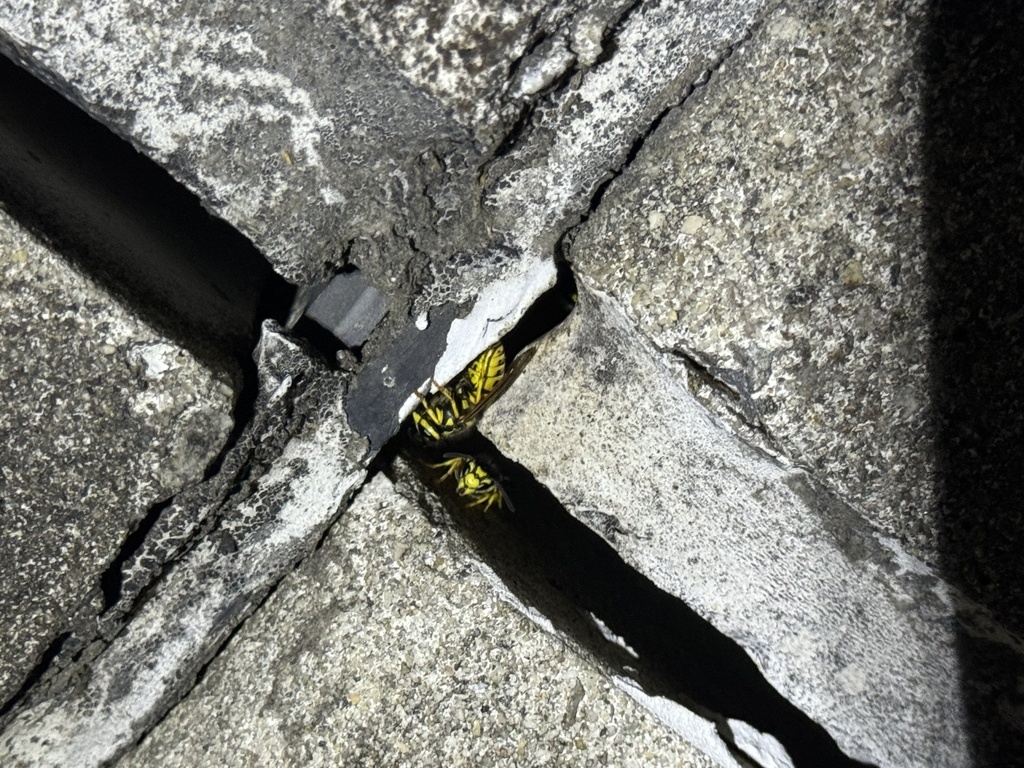
Why it backfires: Wasps in a wall, attic, vent or ground hole do not give up; they dig or chew a new way out, sometimes straight into your house.
Instead: leave the hole open, mark it and keep people away. Seal only after activity has stopped. See wasp nest in a wall.
5. Burning it or pouring gasoline in
Why it backfires: Fire spreads to siding, eaves, dry grass and roofs, and gasoline poisons soil and groundwater. Burning nests has started house fires.
Instead: use a product labeled for wasp nests, following the label, or call a professional.
6. Flooding it with a hose or boiling water
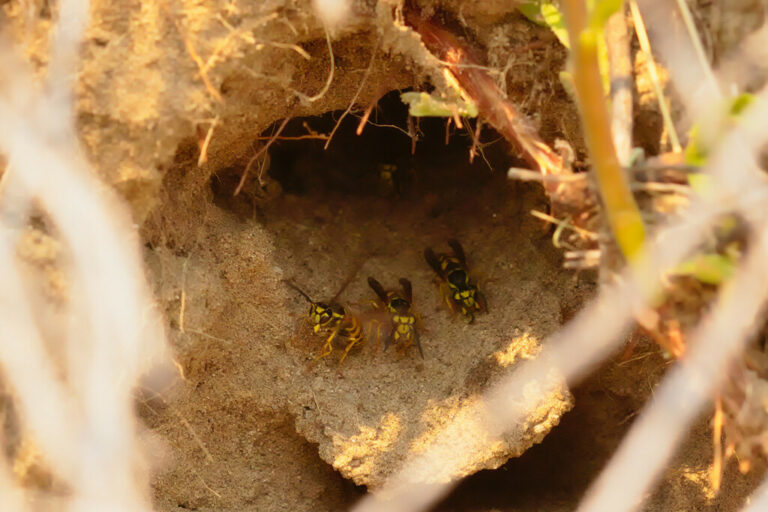
Why it backfires: Water rarely reaches a whole underground nest and soaks you in angry wasps. Boiling water risks burns and does not kill a large colony.
Instead: for ground nests, see how to get rid of a yellowjacket ground nest.
7. Mowing, trimming or blowing leaves over a nest
Why it backfires: The vibration sets off the whole colony at once, and you are standing right on top of it. This is one of the most common ways people get stung many times.
Instead: flag known ground nests with a stake and mow around them; check hedges before you trim.
8. Knocking an active nest down with a stick or broom
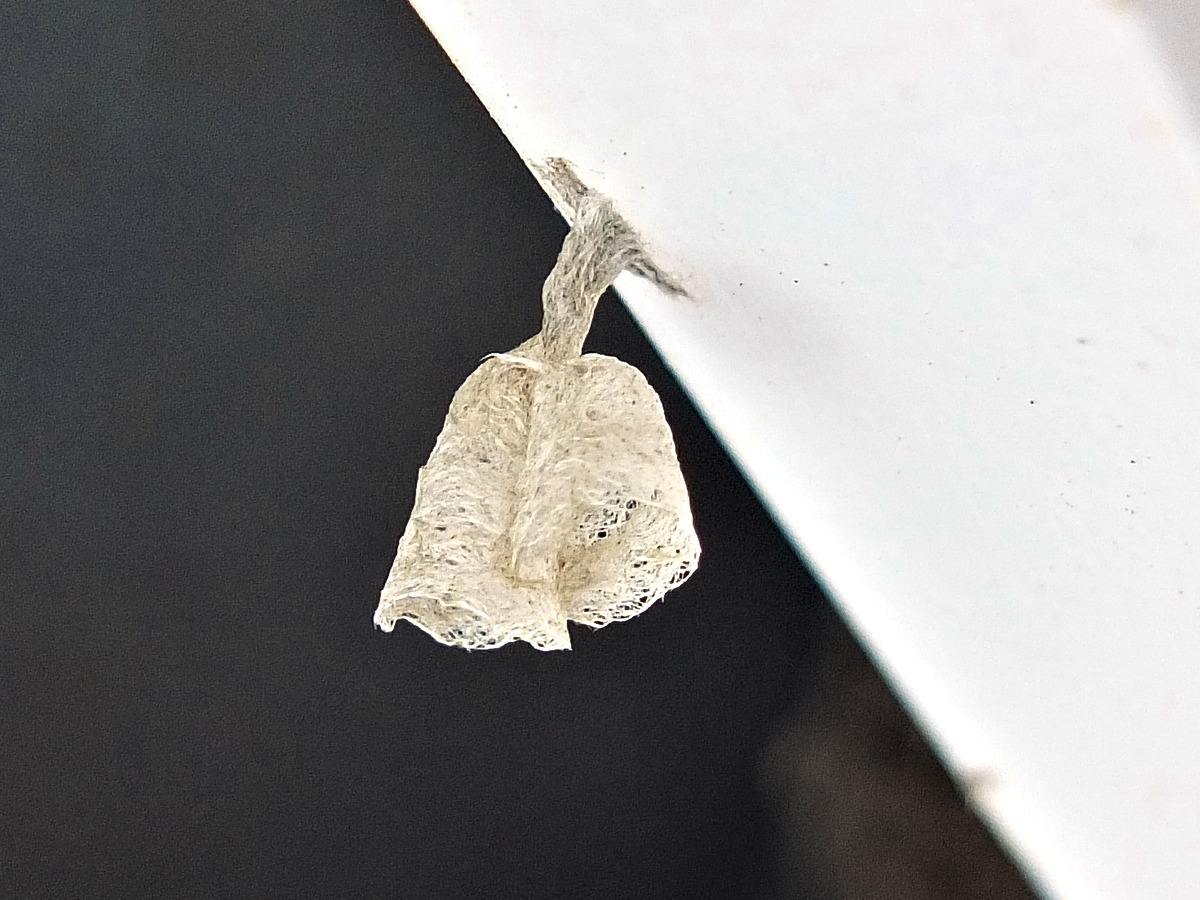
Why it backfires: It only works on a spring starter nest with one queen. On a summer nest it releases a cloud of defending wasps with you inches away.
Instead: for small open nests, follow how to get rid of a wasp nest; leave enclosed nests to a professional.
9. Spraying from a ladder
Why it backfires: When the wasps come out, the first reaction is to back away, and on a ladder that means a fall. Falls cause serious injuries in nest removal.
Instead: spray only nests you can reach from the ground with a product that sprays a long distance, or call a pro for anything higher.
10. Going it alone when someone is allergic
Why it backfires: A sting that is a nuisance for most people can be a medical emergency for someone with a venom allergy.
Instead: if anyone in the house has had a serious reaction, do not do it yourself. Read about sting allergy signs.
Also skip these
- Bug bombs and foggers for a nest: they do not reach inside a nest or a wall void, and they add a fire risk indoors.
- Swatting and flailing near the nest: crushed wasps release an alarm scent that brings others. Walk away calmly.
- Standing in front of the entrance to spray: approach from the side, and know your escape route before you start.
- Removing the nest right after spraying: wait a day or two so returning wasps are dead too.
What to do instead
- Identify it: wasps or bees, and which kind of nest.
- Decide: leave it, treat it yourself, or call a pro. Our decision guide walks you through it.
- If you treat it: small and reachable nests only, at dusk, with protective clothing and a labeled product, following the label exactly.
- If it is big, hidden or high: see when to call a professional and what it will cost.
If someone is stung
Move away from the nest first; wasps keep chasing for a short distance. For an ordinary sting, see what to do first after a sting. Call 911 for the warning signs listed at the top of this page.
Common questions
Will wasps come back to the nest after I remove it?
Foragers that were away may hover around the spot for a day or so, but the colony does not rebuild there. Old nests are never reused; see do wasps return to an old nest.
Is it OK to spray a nest from a distance with a garden hose first?
No. Wetting the nest stirs up the wasps before you have treated it and gives you no benefit.
Can I just leave the nest and stay away?
Often, yes. If it is out of the way and nobody at home is allergic, the colony dies on its own after hard frosts in most of the country.
Your next step
- All removal guides: wasp nest removal.
- Not sure what to do: the wasp nest decision guide.
More in Removal
 Wasps in the House: Where They Come FromA wasp buzzing against a window is usually nothing more than a lost visitor. A few slow wasps…
 How to Get Rid of a Yellowjacket Ground NestYellowjackets streaming in and out of a hole in the lawn are one of the most common late-summer…
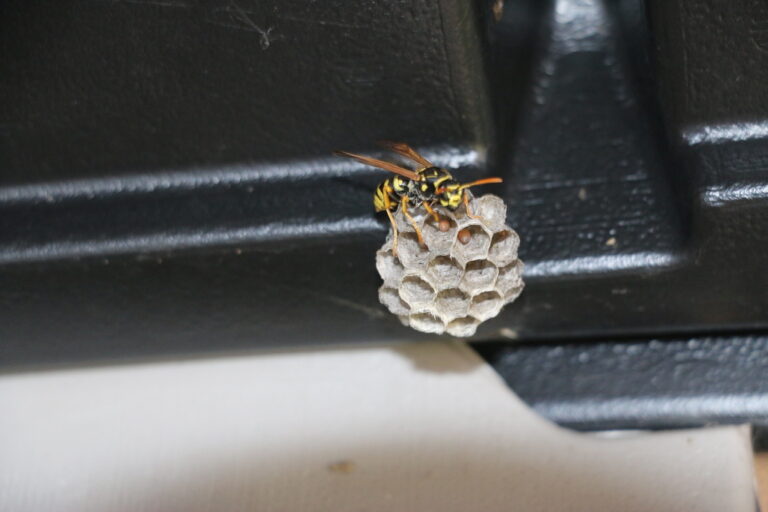 Best Time to Remove a Wasp NestWhen you deal with a wasp nest matters almost as much as how. The same nest that takes two minutes…
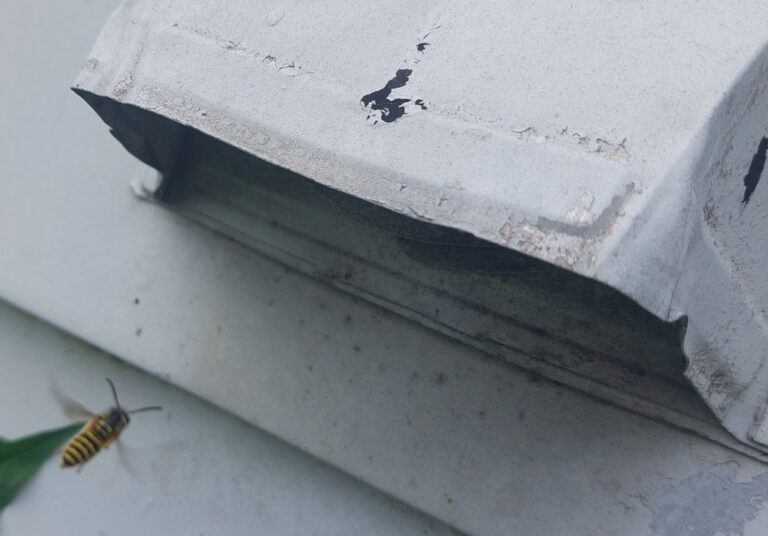 Wasps in a VentWasps showing up in a bathroom, laundry room or kitchen usually come through the duct behind an…
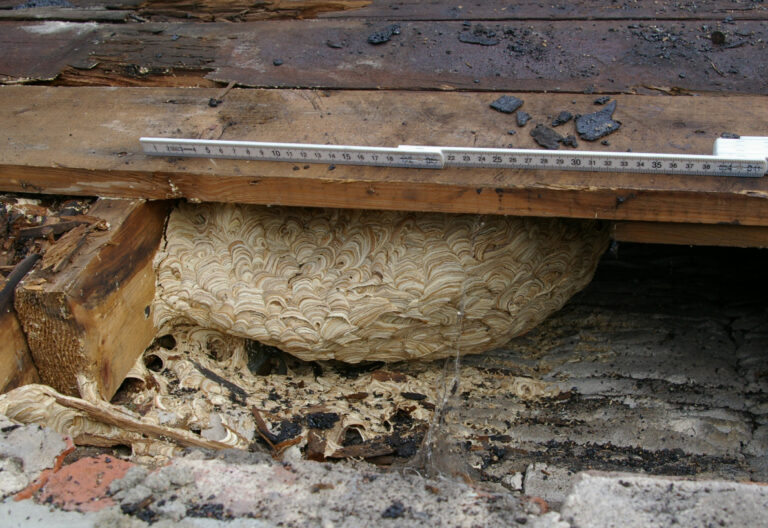 Wasp Nest in the AtticWasps in an attic usually get in from outside, through a gable vent, a soffit gap or a gap at the…
Sources
- Yellow Jackets, University of Florida IFAS Gardening Solutions.
- Wasp Control Around the House, Iowa State University Extension, Yard and Garden.
- Controlling Paper Wasps in and around Structures, NC State Extension, 2018.
- Wasps nesting around the house (Ask Extension), University of Maryland Extension, Home and Garden Information Center, April 2024.
- How do I get rid of a yellowjacket nest without harming my garden?, Oregon State University Extension, 2026.
- Controlling Wasps, Hornets and Yellowjackets (ENTFACT-620), Michael F. Potter, University of Kentucky Entomology, revised 2018.
Photos on this page are shared by their authors on iNaturalist and Wikimedia Commons under Creative Commons licenses, credited under each image. For who writes these guides and how we stay independent, see About.