
How to get rid of a wasp nest safely
Updated
A small wasp nest you can reach from the ground is often a job you can do yourself in one evening. A large, hidden or high nest is not. This guide walks you through the checks to make first, the right time and gear, a step-by-step method for a small exposed nest, and what to do instead for ground nests, wall nests and hornets.
Short answer
To get rid of a small, exposed wasp nest: confirm it is wasps, not bees; wait until dusk; wear long sleeves, gloves and eye protection; treat the nest with a wasp and hornet product labeled for the site, following the label exactly; leave right away; then wait a day or two and remove the empty nest. Do not try this if anyone in the household is allergic, if the nest is bigger than a softball, hidden in a wall or the ground near people, high up, or built by bald-faced hornets. Call a professional for those.
Before you start: three checks
1. Is it really wasps?
Fuzzy insects, a hanging cluster of bees or wax comb mean bees. Do not spray them; call a beekeeper or a live bee removal specialist. See wasp vs. bee. If you are not sure which wasp built the nest, check types of wasp nests.
2. Is it a DIY nest?
DIY is reasonable only when all of these are true:
- the nest is exposed: you can see all of it;
- it is smaller than a softball;
- you can reach it while standing on the ground, without a ladder or the roof;
- the wasps are calm and have not stung anyone.
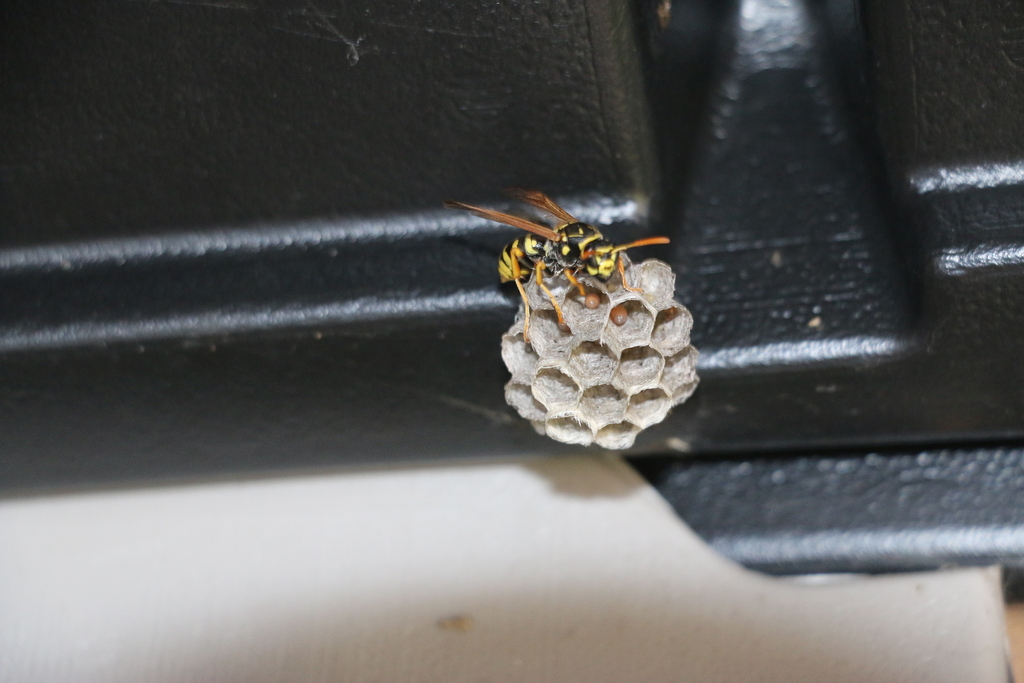
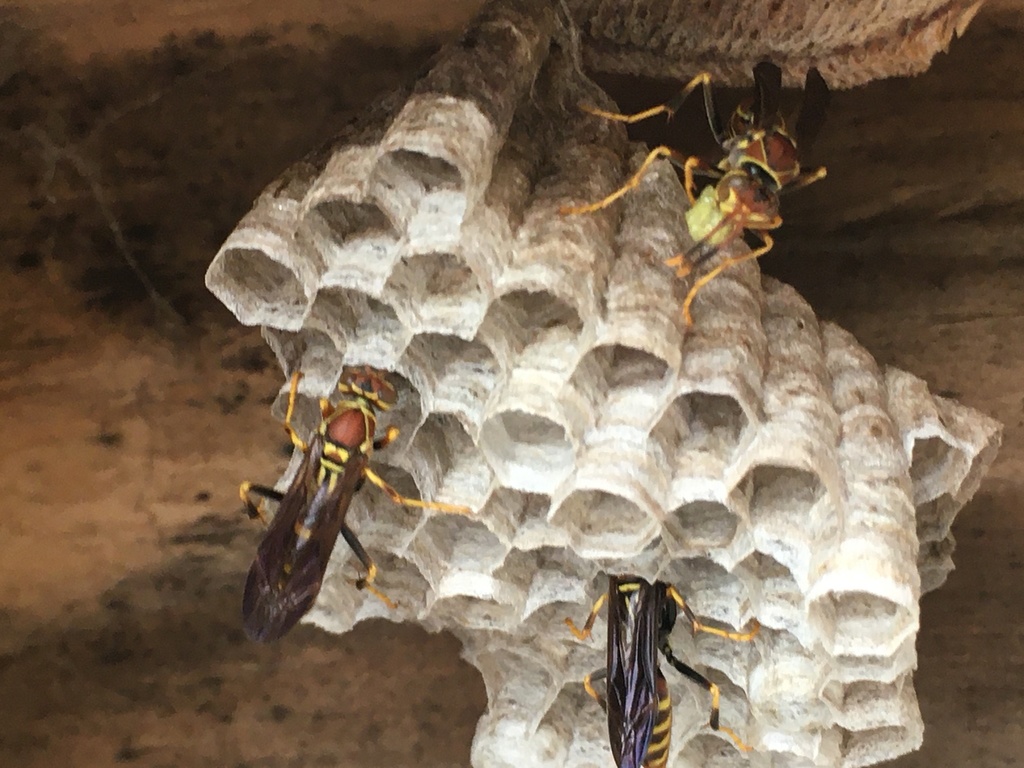
The classic DIY case is a paper wasp nest under an eave, a railing or the grill in spring or early summer.
3. Is anyone at risk?
If anyone in the household is allergic to stings, has had a severe reaction or carries an epinephrine auto-injector, do not do this yourself. The same goes if you cannot keep children and pets indoors while you work.
Stop here and call a professional if the nest is inside a wall, attic, crawl space or chimney; in the ground next to a path or lawn; high up; larger than a softball; or built by bald-faced hornets. See when to call a professional for wasps. Not sure whether the nest needs to go at all? Read should you remove a wasp nest or leave it.
When to do it
- Time of day: at dusk or after dark. The wasps are back on the nest and much less active, and they do not fly well in the dark.
- Time of year: spring and early summer, when nests are small. Late summer colonies are at their largest and most defensive. In late fall, after hard freezes, the nest is usually empty and can simply be taken down.
- Weather: a dry, calm evening. Wind blows spray back at you; rain washes products off.
More detail: the best time to remove a wasp nest.
What you need
- A wasp and hornet product labeled for your site. For an exposed nest that is usually an aerosol wasp and hornet spray that reaches several feet. Dusts are mainly for nest openings in voids and the ground, and those are usually jobs for a pro. Read the whole label before you buy; it tells you which pests and sites the product is for and how to use it. Choosing a product: how to choose a wasp and hornet spray.
- Protective clothing: long sleeves and long pants, gloves, closed shoes, a hat or hood, and eye protection. Tuck sleeves into gloves and pants into socks.
- A light that will not draw wasps to you: a flashlight with a red filter, or a light set on the ground aimed near, not at, the nest.
- A trash bag and a scraper or stick for taking the empty nest down later.
Step by step: a small, exposed nest
- Plan during the day. From a safe distance, note exactly where the nest is, where you will stand, and your way back indoors. Clear anything you could trip over.
- Prepare the area. Bring children and pets inside, close nearby windows and doors, and tell everyone at home what you are doing.
- Read the label again and check how far away to stand and how long to spray.
- Get dressed in your protective clothing shortly before dusk.
- Approach slowly and quietly. Keep the light off the nest. Stand upwind, at the distance on the label, with the nest in clear view.
- Treat the nest as the label directs, usually aiming at the nest opening or the face of the comb until it is thoroughly covered.
- Walk away immediately along your planned route and go indoors. Do not stay to watch.
- Wait at least a day. Many labels say 24 hours. Keep people and pets away from the area in the meantime.
- Check for activity from a distance on a warm afternoon. If wasps are still flying in and out, repeat once following the label, or call a professional.
- Remove the empty nest. Wearing gloves, scrape it into a trash bag, seal the bag and put it in the trash. Clean the spot so it is less attractive to new queens.
Stop at any point if the nest turns out larger or more hidden than you thought, or if wasps start coming at you. Back away calmly, go indoors and call a professional.
Different nests, different plans
| Nest | Do it yourself? | What to do |
|---|---|---|
| Small paper wasp nest | Usually yes | The method above. More: how to remove a paper wasp nest |
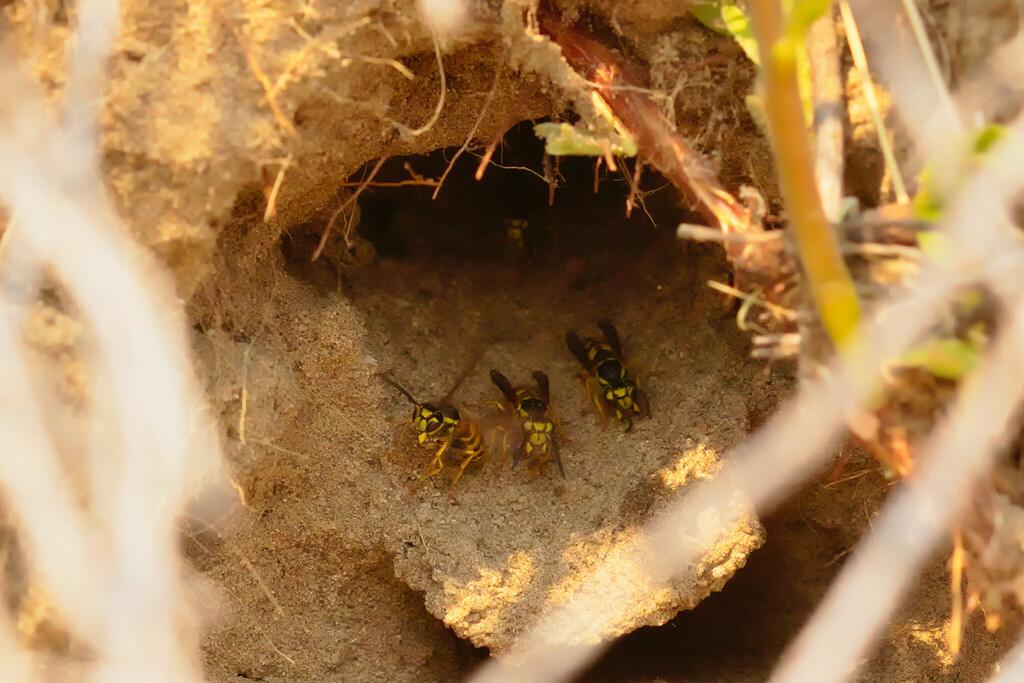
| Yellowjackets in the ground | Only if small and away from people | Never plug or flood the hole. See yellowjacket ground nests |
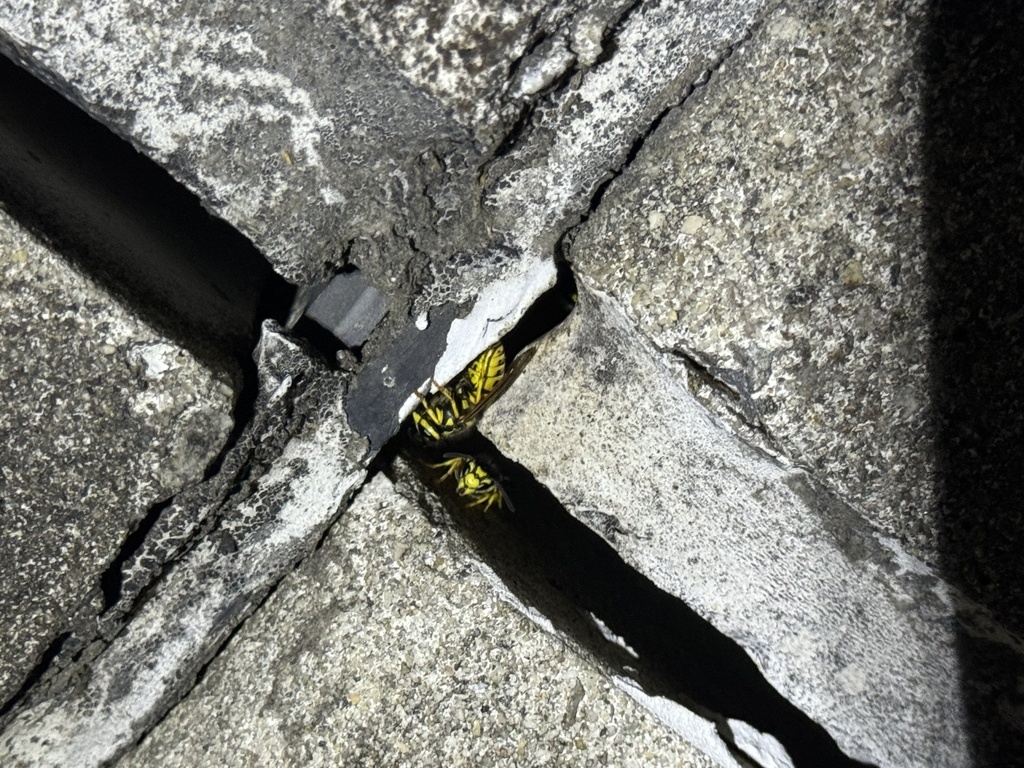
| Wasps in a wall or attic | No | Professional. Do not seal the entrance. See wasp nest in a wall |
| Bald-faced hornets | No, unless tiny and low | Professional, or leave until frost if far from the house |
| Mud daubers | Yes | Scrape old mud nests off; the wasps rarely sting |
| Honey bees or bumblebees | No spraying | Beekeeper or live bee removal; leave bumblebees if out of the way |
What not to do
- No fire, gasoline or other fuels. They cause burns and house fires and rarely kill the colony.
- Do not knock down an active nest with a stick, a broom or a hose, and do not try to bag a live nest.
- Do not plug or flood a ground nest or seal a hole in the house. The wasps dig or chew their way out, sometimes into the house.
- Do not work from a ladder. A sting on a ladder can mean a fall.
- Do not use products in ways the label does not allow, or mix your own chemicals.
- Do not spray bees.
If it goes wrong
If wasps come after you, cover your face, walk or run away quickly and get indoors or into a car. Do not swat, and do not jump into water; wasps wait for you to come up. Once you are safe, remove any wasps caught in clothing and check for stings. For ordinary stings, see what to do first.
Call 911
Call 911 right away if someone who was stung has trouble breathing, swelling of the lips, tongue or throat, hives spreading beyond the sting, dizziness or fainting, or has been stung many times. Use a prescribed epinephrine auto-injector if one is available.
After the nest is gone
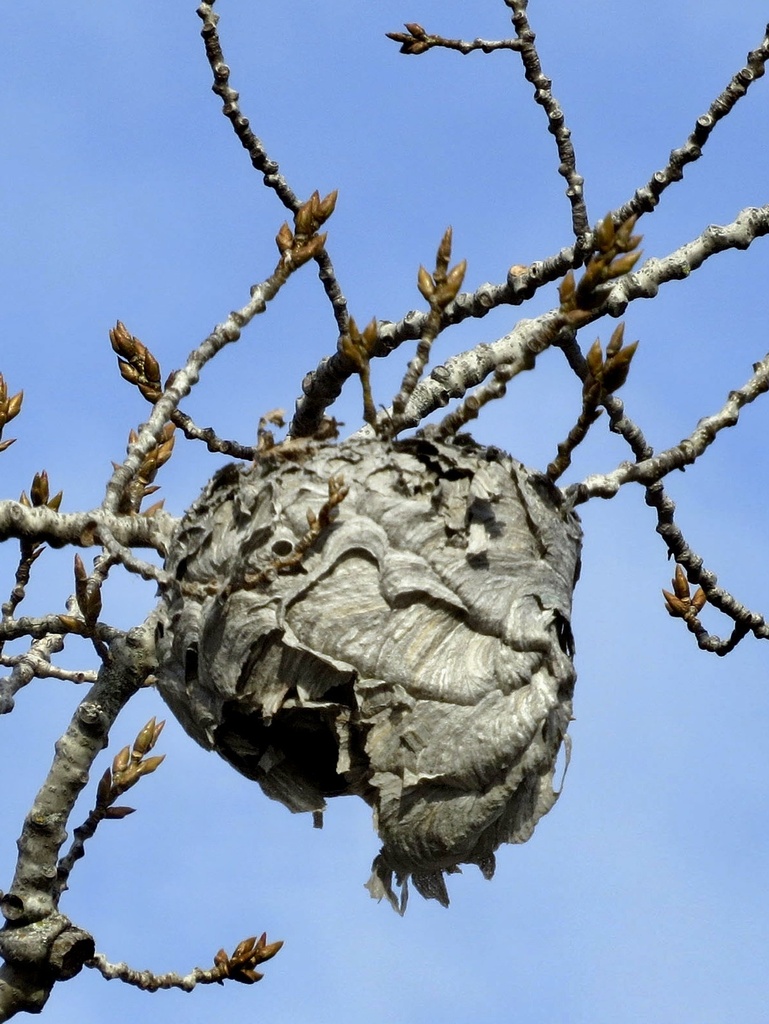
Wasps do not reuse an old nest, but a sheltered spot that suited one queen may attract another next spring. Remove old nests, check eaves, railings and the grill in April and May, and knock down starter nests while they are tiny. See how to prevent wasp nests.
When to call a professional instead
Hire a licensed pest professional if any of the stop conditions above apply, if your first attempt did not work, or if you simply do not want to do it. A pro has full protective gear, professional products and the equipment to treat nests in walls, in the ground and at height. Compare the options in DIY vs. professional removal and see what wasp nest removal costs.
Where a professional fits here: we are an independent guide and do not do removals or sell sprays. When DIY is the wrong call, we would rather point you to a qualified local professional.
Common questions
How long does wasp spray take to work?
Wasps that are hit directly are usually knocked down quickly, but the whole colony can take longer, especially wasps that were away from the nest. That is why labels typically say to wait at least a day before removing the nest.
Can I remove a wasp nest during the day?
It is much riskier. During the day many wasps are out foraging and the rest are active and alert. Dusk or after dark is safer.
Will the wasps come back?
Not to the old nest. Wasps returning from foraging may hover around the spot for a day or so. A new queen may choose the same sheltered spot next spring, so check it then.
Do home remedies like soapy water work?
Some people use them on very small nests, but they only work on wasps they hit directly and require getting close. A labeled product used from a distance, or a professional, is the safer choice.
What if I am not sure it is safe to do myself?
Then do not. Run through the wasp nest decision guide; when in doubt, call a professional.
Your next step
- Not sure what you have? Types of wasp nests and all identification guides.
- Deciding whether to act at all: should you remove a wasp nest or leave it.
- All removal guides: wasp nest removal.
More in Removal
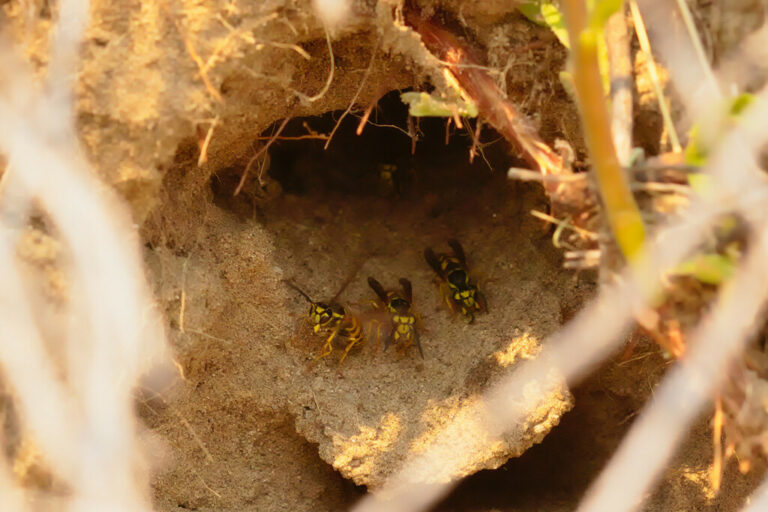 How to Get Rid of a Yellowjacket Ground NestYellowjackets streaming in and out of a hole in the lawn are one of the most common late-summer…
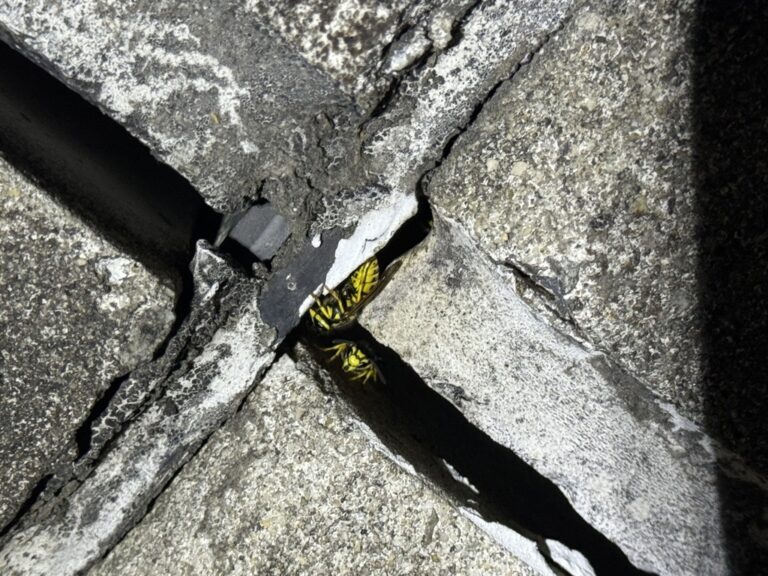 Wasp Nest in a Wall: Why Not to Seal ItWasps flying in and out of a crack in your siding, a gap under the trim or a vent usually mean a…
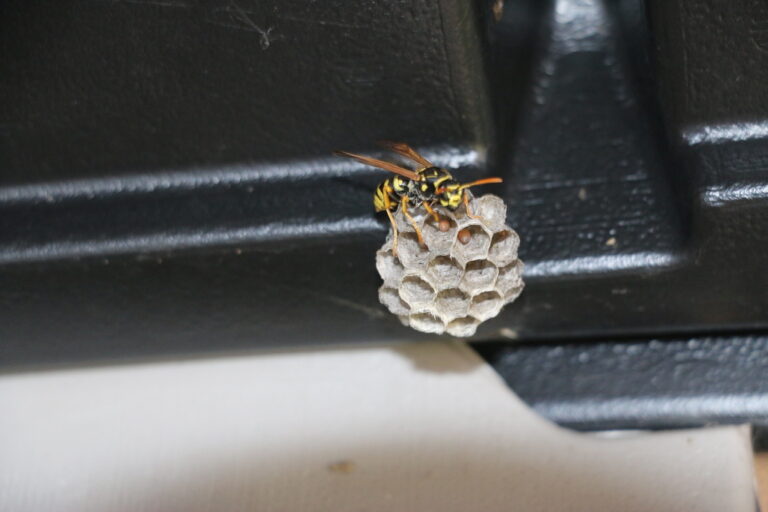 Best Time to Remove a Wasp NestWhen you deal with a wasp nest matters almost as much as how. The same nest that takes two minutes…
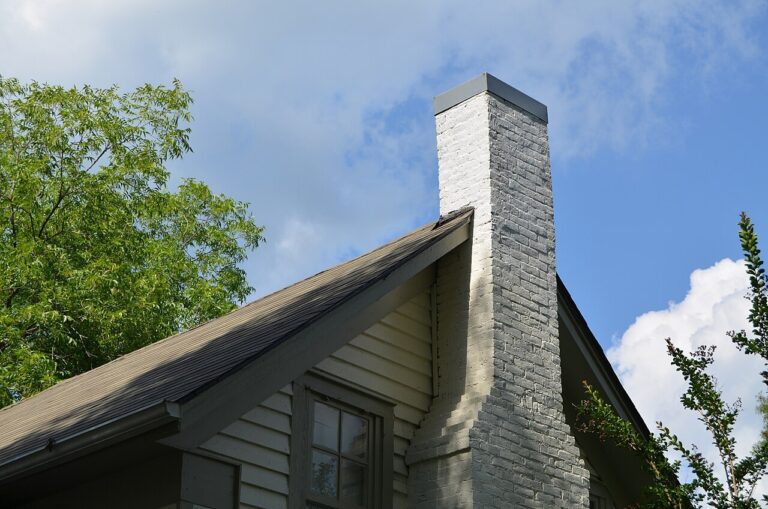 Wasps in the Chimney: What to DoWasps flying around the chimney top or showing up by the fireplace usually come from a yellowjacket…
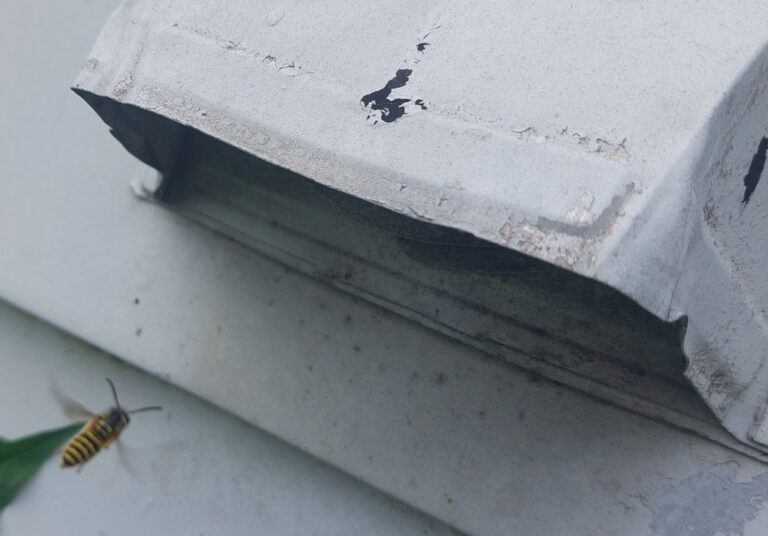 Wasps in a VentWasps showing up in a bathroom, laundry room or kitchen usually come through the duct behind an…
Photos on this page are shared by their authors on iNaturalist under Creative Commons licenses, credited under each image. For who writes these guides and how we stay independent, see About.