
Hornet nest removal cost: what you will pay and why
Updated
Short answer
Professional removal of a hornet nest usually costs $300 to $475. Bald-faced hornet nests, the big gray paper balls in trees and under eaves, cost more: about $500 to $800, with $625 to $750 the most common quote. Height, access and whether the nest is inside the house change the price more than nest size does. In late fall, after several hard frosts, a nest is usually empty and may not need a paid visit at all.
Is this the right guide? This page is about hornets: bald-faced hornets and European hornets. For paper wasps, yellowjackets and wasp nests in general, see wasp nest removal cost. If you are still deciding whether to hire anyone, see DIY vs. professional removal.
Prices at a glance
| Situation | Typical price | Notes |
|---|---|---|
| Hornet nest within easy reach | $300–$475 | Shrub, low branch, or under a low eave |
| Bald-faced hornet nest | $500–$800 | Most quotes fall between $625 and $750 |
| European hornet nest | From about $450 | Usually hidden in a hollow tree, wall or attic |
| Nest in an attic | $325–$700 | Work above about 10 feet may carry a small surcharge |
| Nest inside a wall | $350–$1,000 | May need a small opening and a follow-up visit |
| Very high or hard to reach | Up to about $100 extra | Tall trees, above the roofline, lift needed |
| Same-day or emergency call | $50–$100 extra | Evenings, weekends, nests over a busy door |
| Follow-up visit | $100 or more | Often included; ask before you book |
| Repairs after removal | Extra | Drywall, soffit or ceiling work is billed separately, for example $200–$750 for drywall |
Prices compiled from HomeAdvisor, HomeGuide, Fixr (updated January 2025) and LawnLove (updated October 2026), checked November 2026. Local quotes can be higher or lower.
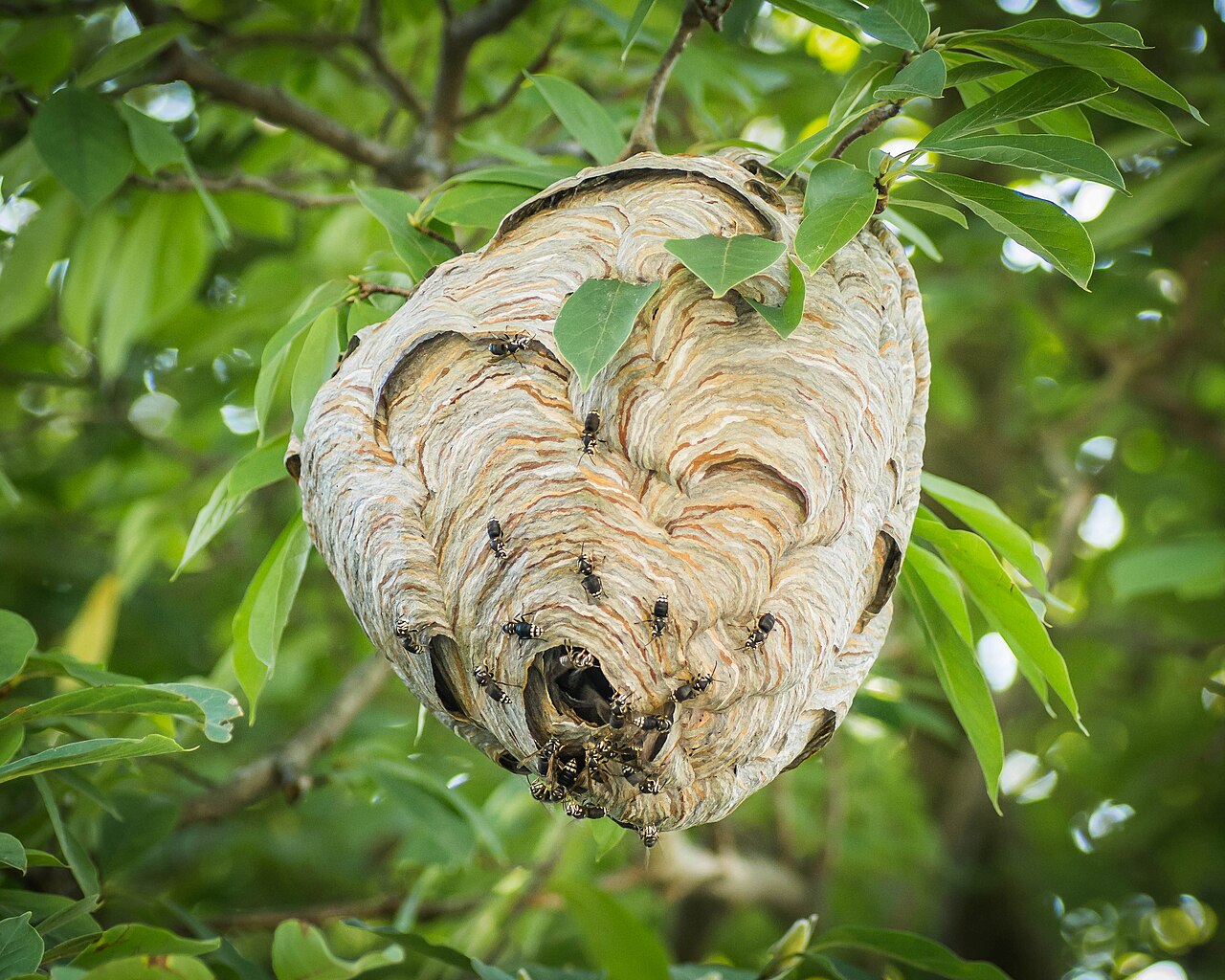
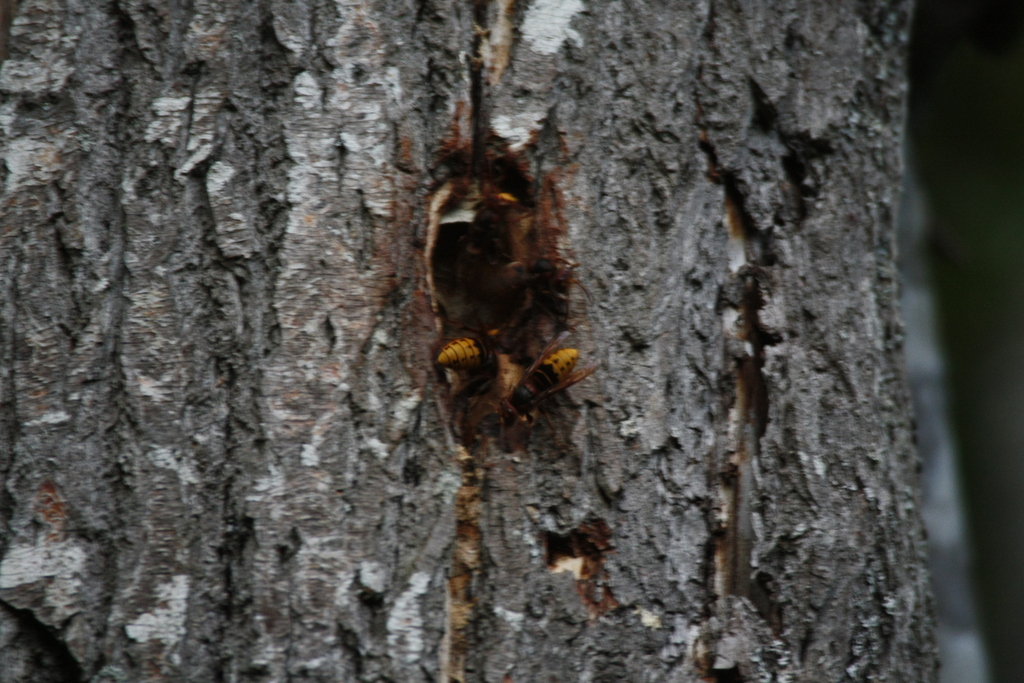
Not sure which hornet you have? See how to identify a bald-faced hornet nest and European hornets.
What drives the price
- Height and access. A nest high in a tree or above the roofline may need tall ladders or a lift. This is the biggest reason two hornet quotes differ.
- Inside or outside. A nest in a wall, attic or chimney takes more time and sometimes a small opening in the house. Repairs are usually extra.
- The species. Bald-faced hornets defend the nest aggressively, so the job carries more risk than a small paper wasp nest.
- Nest size and season. A late-summer nest holds far more hornets than a spring nest and takes longer to treat and remove.
- Timing. Same-day, evening and weekend calls often cost $50 to $100 more.
- What is included. Some quotes cover treatment only; taking the nest down, a follow-up visit or a warranty can be extra.
- Where you live. Local labor rates, travel distance and how many companies compete in your area all shift the price.
When you may not need to pay at all
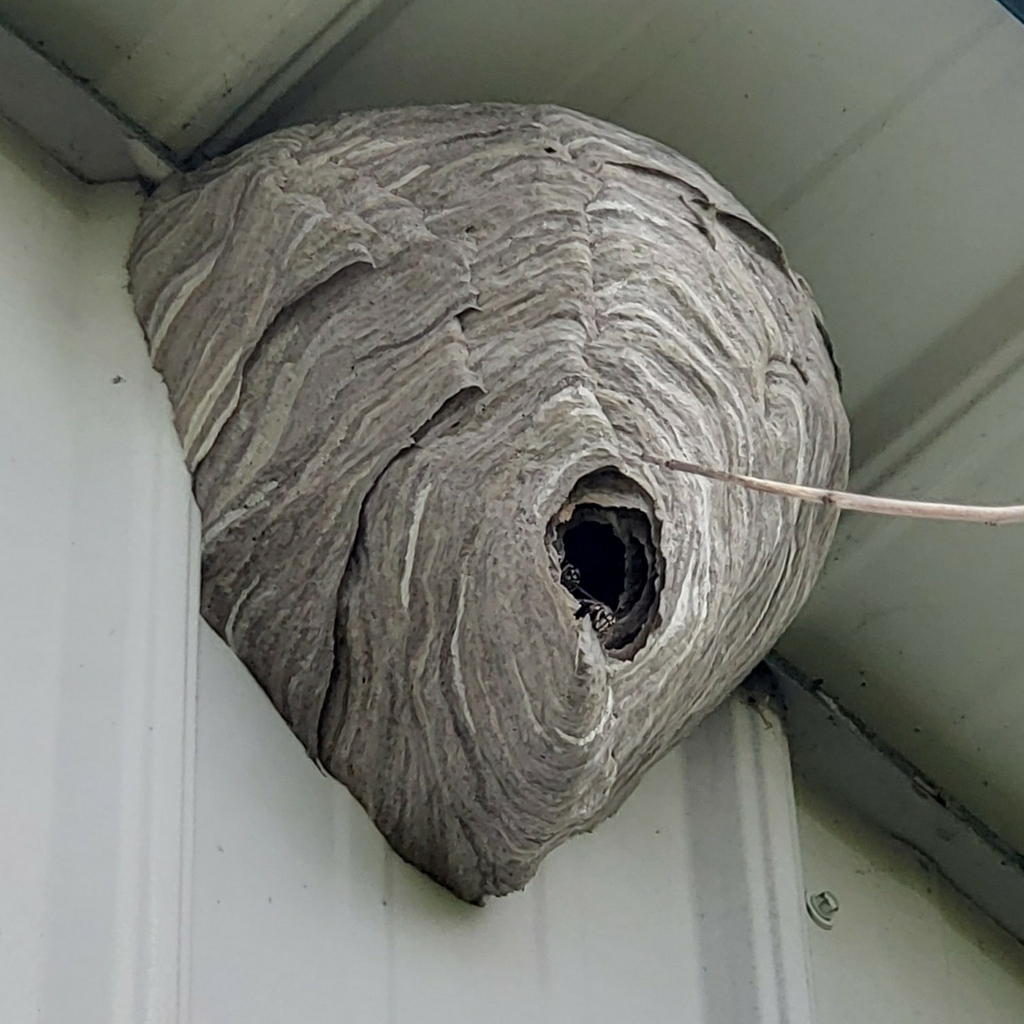
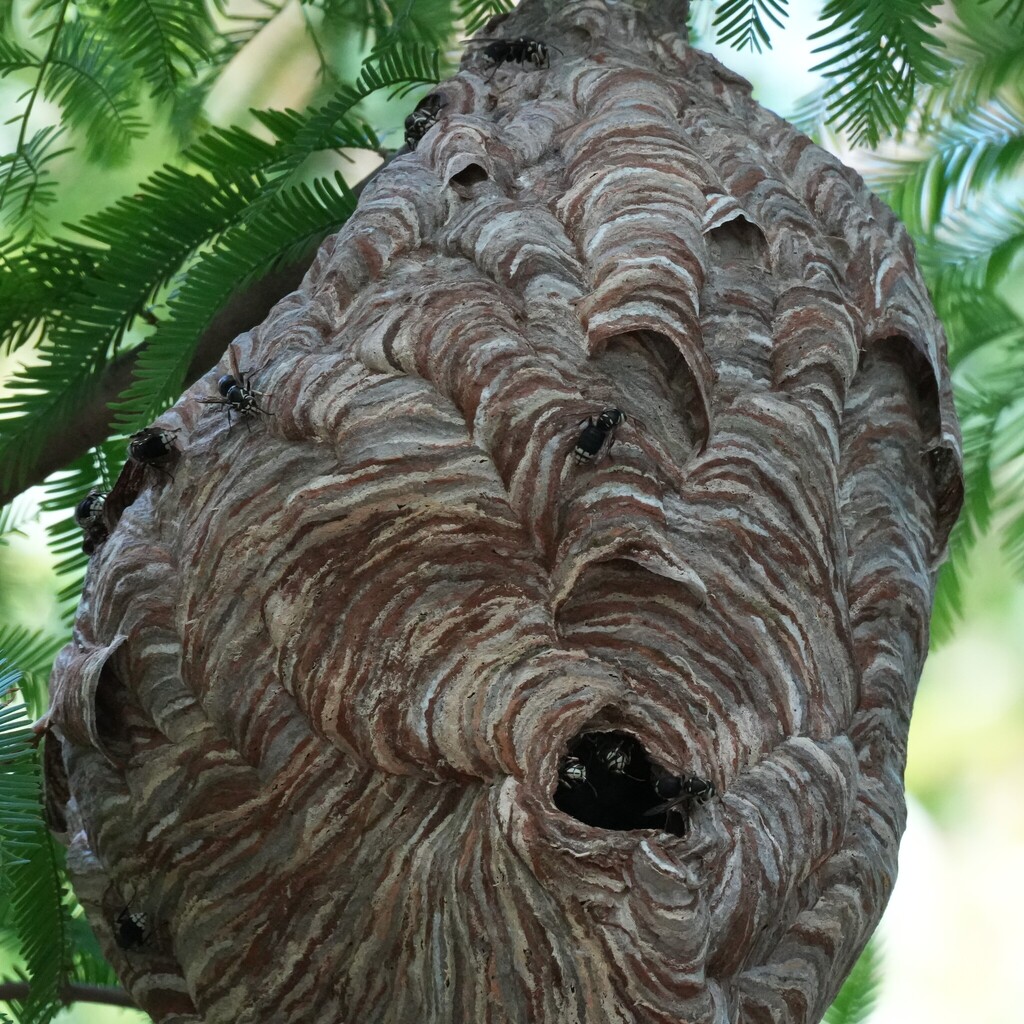
Hornet colonies die off after several hard frosts, and the old nest is never reused. In most of the country, a gray nest you notice in November or December after the leaves fall is usually empty. Watch it from a distance for 10 to 15 minutes on a warm afternoon: if nothing flies in or out, you can leave it or knock it down yourself. In the South, colonies can stay active much longer, so check first. See how to tell if a nest is active and the best time to remove a wasp nest.
A nest high in a tree at the back of the yard, away from doors, paths and play areas, can often be left alone until it dies off on its own. See should you remove a wasp nest.
Questions to ask before you hire
- Is the price flat, or per visit? Is the follow-up visit included?
- Does the price include taking the nest down and away, or only treating it?
- What happens if hornets are still active a few days later?
- If the nest is in a wall or attic, will you need to open anything, and who repairs it?
- What product will you use, and how long should children and pets stay away?
- Are you licensed and insured for pest control in this state?
More on hiring: questions to ask a wasp removal company and when to call a professional.
Can you do it yourself?
A large, active bald-faced hornet nest is one of the jobs most guides, including ours, say to leave to a professional, especially if it is high up, over a door, or inside the house, or if anyone at home is allergic to stings. Never knock down, burn, flood or seal an active nest. See what not to do with a wasp nest and how to get rid of a wasp nest safely.
If someone is stung
Trouble breathing, throat or face swelling, or hives spreading over the body after a sting: call 911.
For an ordinary sting, see what to do first after a sting and signs of a sting allergy.
Common questions
Is hornet removal more expensive than wasp removal?
Usually, yes. A small paper wasp nest often costs $100 to $200 to remove, while a bald-faced hornet nest is typically $625 to $750. Hornet nests tend to be larger, higher and more strongly defended.
Does the exterminator take the nest away?
Not always. Many companies treat the nest first and remove it on a later visit, once the hornets are dead; some charge extra for removal. Ask what your quote includes.
Can I wait until winter?
If the nest is out of the way, yes. After hard frosts the colony dies and the nest is not reused. If it is next to a door, a path or where children play, waiting is a bigger risk than the cost.
Does homeowners insurance pay for hornet removal?
Pest removal is usually treated as routine maintenance. Check your own policy, and see does homeowners insurance cover wasp damage.
Your next step
- All cost guides: wasp removal costs.
- Wasp nests in general: wasp nest removal cost.
- Not sure what to do: the wasp nest decision guide.
Related guides
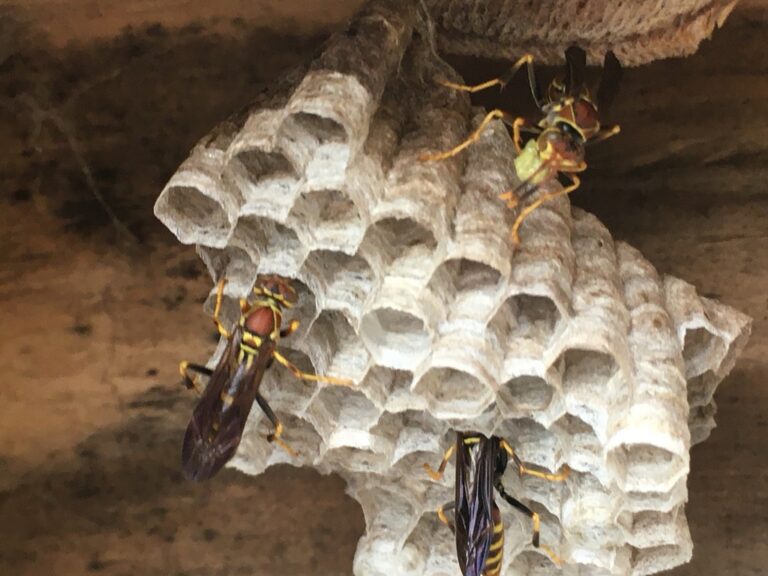 How Much Does Wasp Nest Removal Cost?Professional wasp nest removal in the US usually costs a few hundred dollars, but the price for one…
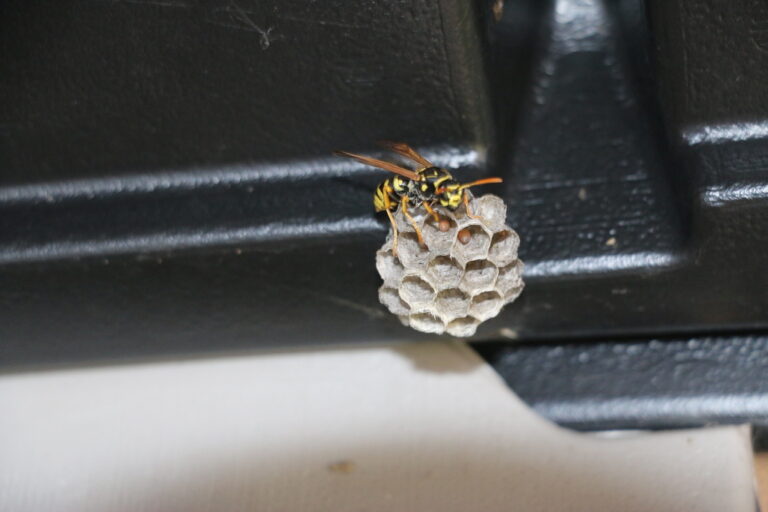 Wasp Nest Removal: DIY vs. ProfessionalA can of wasp spray costs less than a takeout dinner; a pest professional costs a good deal more.…
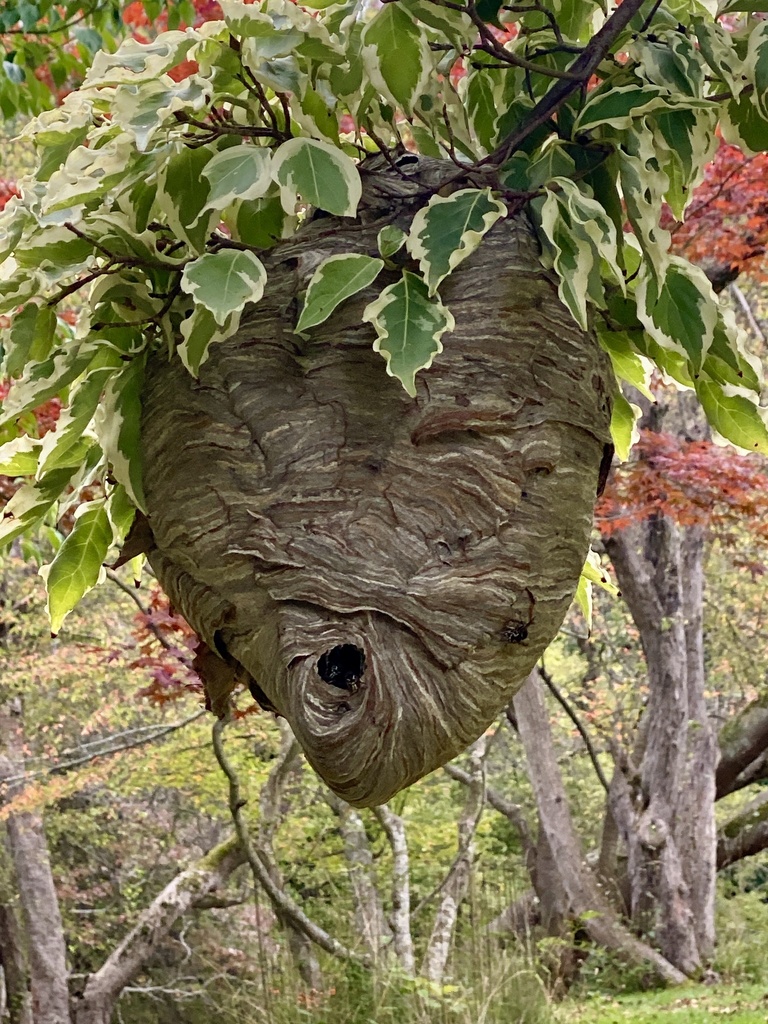 Bald-Faced Hornet NestsA big gray paper ball hanging in a tree, a hedge or under the eaves is one of the most alarming…
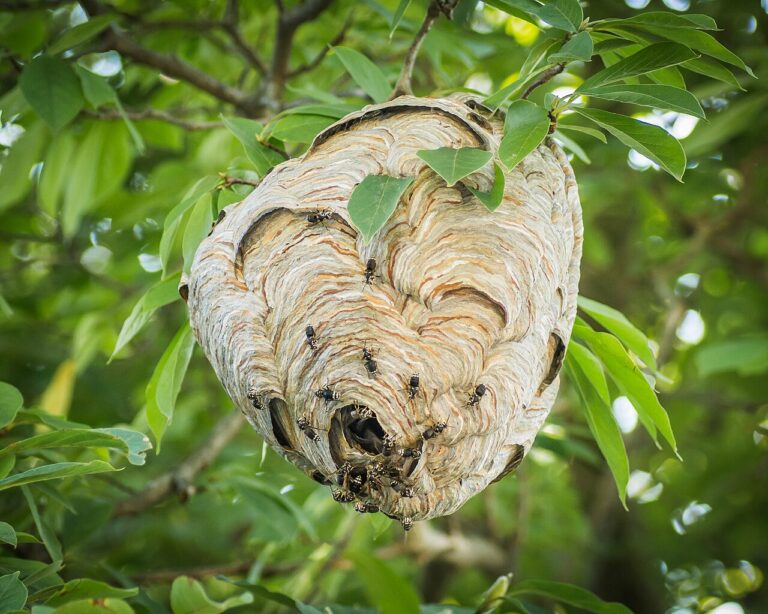 Questions to Ask a Wasp Removal CompanyLicense, insurance, the treatment plan and what the price includes.
Sources
- How Much Does Wasp Nest Removal Cost?, HomeAdvisor.
- Wasp and hornet nest removal cost, HomeGuide.
- Wasp nest removal cost, Fixr, updated January 2025.
- How Much Does Wasp Nest Removal Cost?, LawnLove, updated October 2026.
- The cost of stinging pest control and removal, Terminix, updated June 2026.
Prices are national ranges for homeowners in the United States and change over time; we review them once a year. Photos on this page are shared by their authors on Wikimedia Commons and iNaturalist under Creative Commons licenses, credited under each image. For who writes these guides and how we stay independent, see About.