
Home Products
Wasp control products: what works and what to skip
Updated
Honest guides to wasp sprays, dusts, traps, repellents and protective gear: what each product is good for, how to read the label, and when no product is the right answer. We explain what to look for rather than ranking brands.
A product only helps if it matches the nest. Sprays are for small, exposed nests; dusts are for nest entrances in the ground; traps reduce foragers but do not remove a nest; and nests in walls, attics or high up are a job for a professional. Always use a pesticide exactly as its label directs.
Which product for which nest?
Most bad experiences with wasp products come from using the right product on the wrong nest. A jet spray that works on an open paper wasp comb does almost nothing to a yellowjacket colony a foot underground, and no product you can buy is a safe answer for a nest hidden inside a wall. Match the product to the nest first, then read the label.
| The situation | What fits | Read |
|---|---|---|
| Small, open nest you can see and reach from the ground | A wasp and hornet jet spray, used at dusk or after dark | Best wasp spray |
| A single entrance hole in the ground or a gap in siding | An insecticide dust puffed into the entrance at night | Wasp dust |
| Many yellowjackets around food in late summer | Traps can cut the number of foragers; they do not remove a nest | Do wasp traps work? |
| Nest in a wall, attic, chimney, high up or very large | No product: call a professional | When to call a pro |
Whatever you buy, the label is the law: use it only where the label allows, never indoors in a wall void or attic unless the label says so, and never mix products. Skip foggers, gasoline and fire, which cause injuries and house fires every year; the reasons are in what not to do with a wasp nest. We do not rank brands or earn money from product links; these guides explain what to look for on the label.
Treating a nest
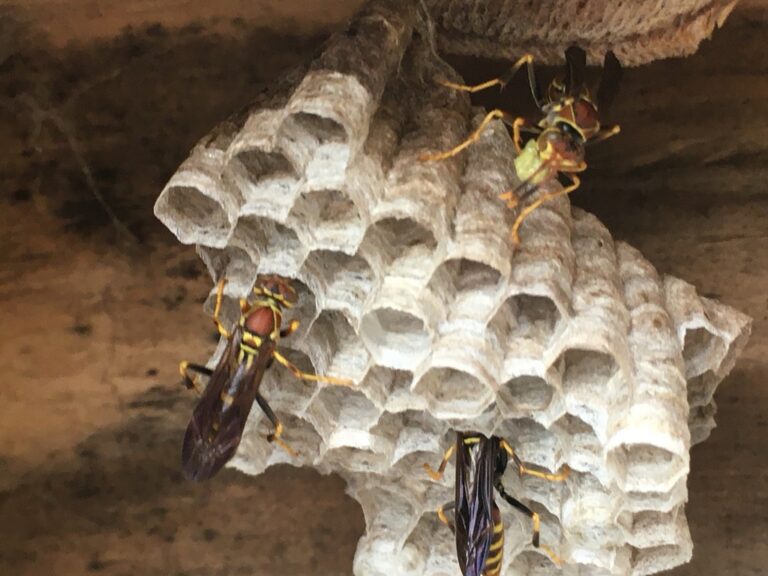 Wasp and hornet sprays: how to chooseRange, label, ingredients, foam vs. jet, and which nests a spray cannot handle.
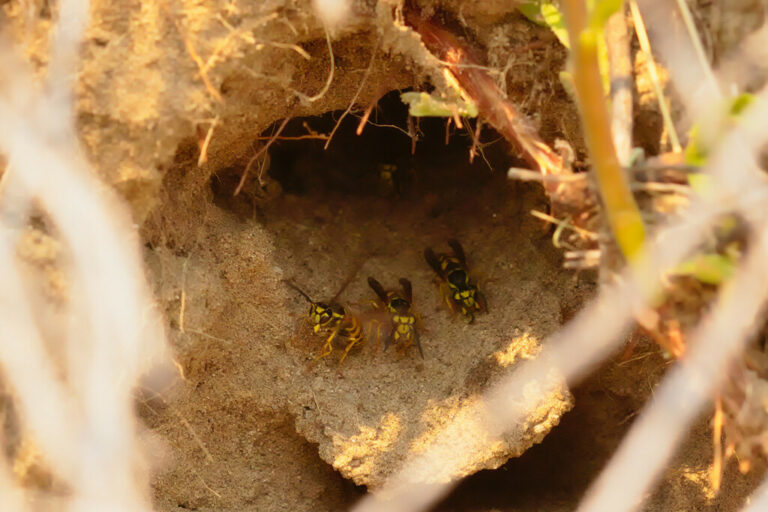 Wasp dust for ground and wall nestsHow insecticide dust works at a nest entrance, and when it is a job for a pro.
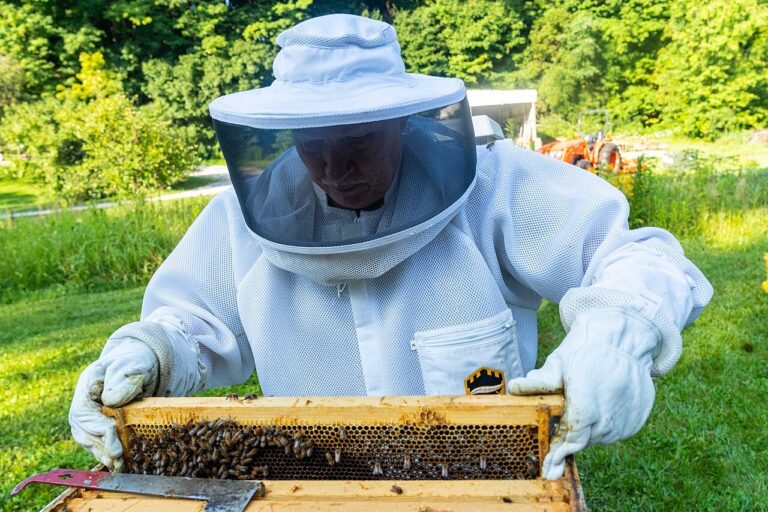 Protective Gear for Wasp Nest RemovalWhat to wear before you go near a nest, and the cases where no suit makes the job safe…
Keeping wasps away
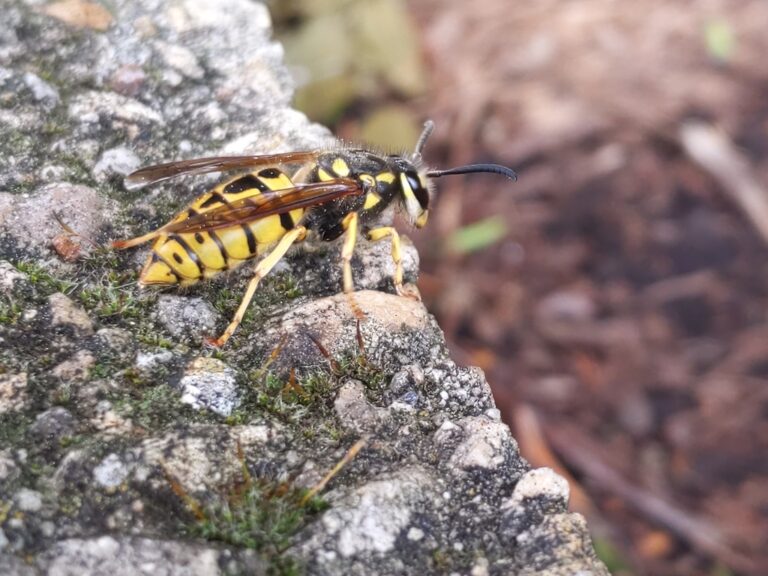 Wasp trapsWhich traps catch yellowjackets, where to hang them, and what they cannot do.
Before you buy anything
Allergic to stings?
If anyone in your household is allergic to bee or wasp stings, do not treat a nest yourself. In an emergency, such as trouble breathing or swelling of the face or throat after a sting, call 911 and use a prescribed epinephrine auto-injector if one is available.
How we cover products
We are an independent guide. Manufacturers do not pay for coverage, and we base advice on product labels and university extension guidance.
Not sure what you need?
Take the wasp nest decision guide, identify the nest with types of wasp nests, or see all removal guides.
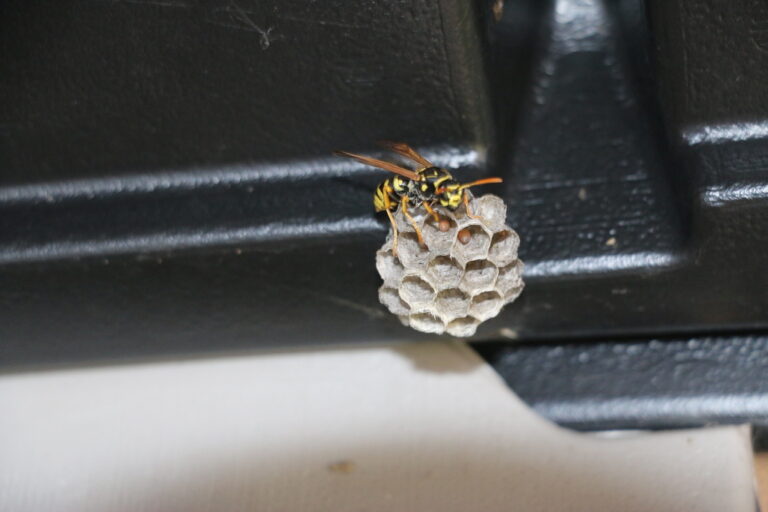
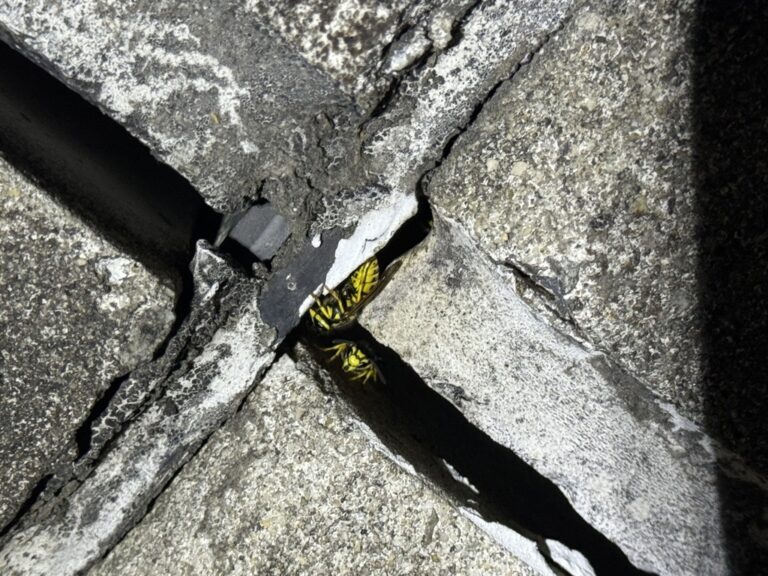
Photos on these cards are shared by their authors on iNaturalist under Creative Commons licenses and credited in each guide. For who writes these guides and how we stay independent, see About.