
Is a wasp nest active? How to check safely
Updated
Short answer
Watch the nest from at least 10 to 20 feet away on a warm, sunny afternoon for 10 to 15 minutes. If wasps are flying in and out or crawling on the nest, it is active. If you see no traffic on two or three warm days in a row, it is probably empty. In most of the U.S., nests are abandoned by winter after several hard frosts, and old nests are not reused. Never tap, poke or shake a nest to find out.
How to check from a safe distance
- Pick a warm, sunny time of day, late morning to mid-afternoon. Wasps fly least on cold, wet or windy days and at night, so a quiet nest at those times proves nothing.
- Stand back 10 to 20 feet and off to the side, not in the flight path. Binoculars or a phone camera zoom help.
- Watch for 10 to 15 minutes. For an enclosed nest, watch the entrance hole. For a ground or wall nest, watch the hole or crack where wasps would come and go.
- Repeat on another warm day if you saw nothing. Two or three quiet checks are much more reliable than one.
- Listen near walls, ceilings and attic hatches. A steady buzzing or scratching sound means a hidden nest is active.
If anyone in the household is allergic to stings, let someone else do the checking, or ask a pest professional.
Signs by type of nest
| Nest | Active | Probably empty |
|---|---|---|
| Open paper comb (paper wasps) | Wasps sitting on the comb; white larvae or capped cells | No wasps on several warm days; empty, gray, brittle cells |
| Enclosed paper ball (yellowjackets, hornets) | Steady traffic at the entrance hole; fresh, smooth paper | No traffic; shell torn open, faded or sagging, often broken into by birds or squirrels |
| Hole in the ground | A stream of wasps flying straight in and out | No wasps at the hole on warm days |
| In a wall or roofline | Wasps at a crack or gap; buzzing inside; wasps showing up indoors | No traffic outside and no sound inside |
| Mud tubes or lumps (mud daubers) | Sealed tubes may still hold developing young | Small round exit holes mean the adults have left |
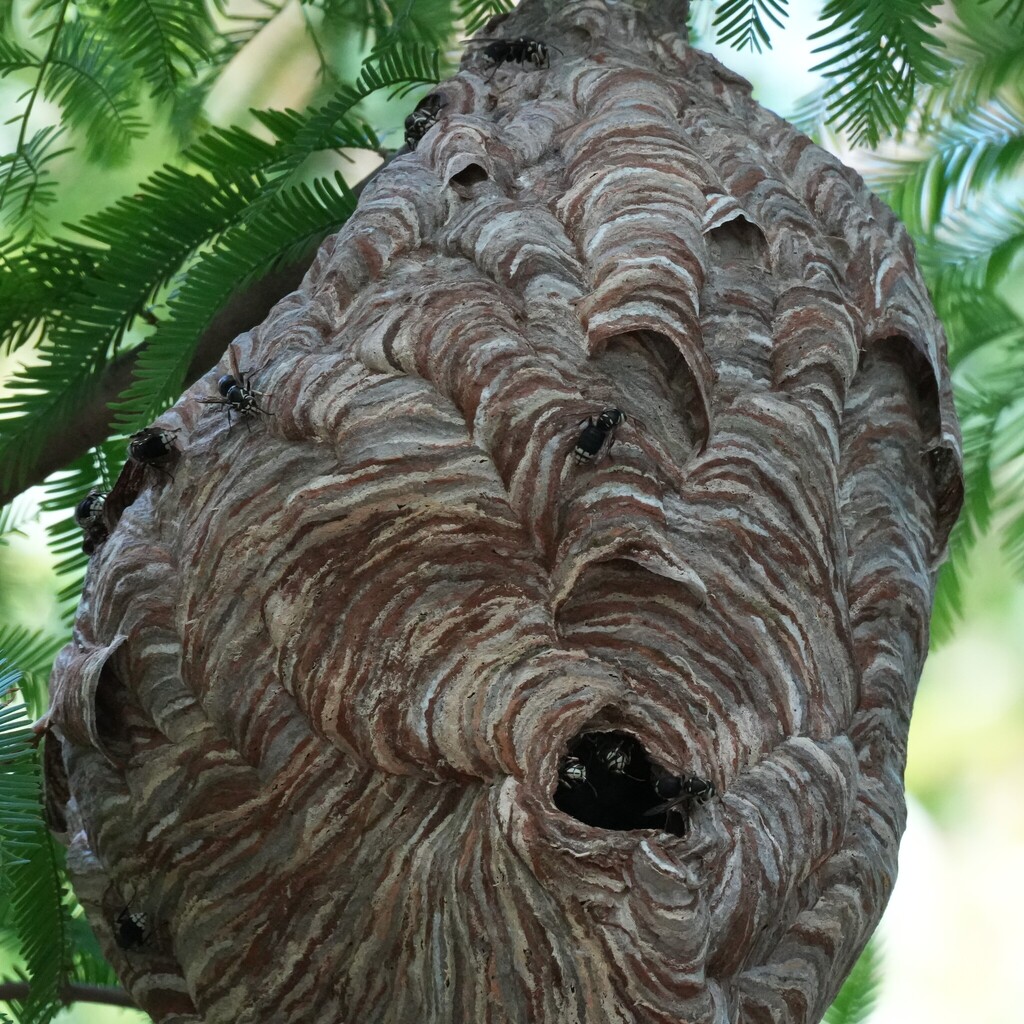
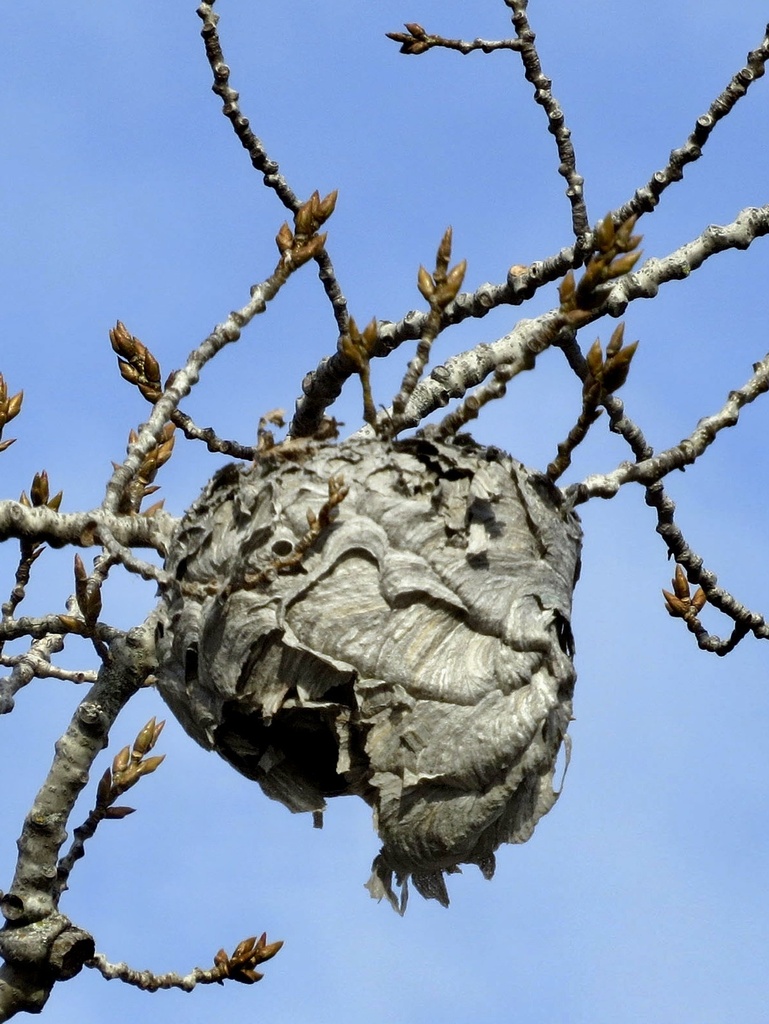
Not sure what kind of nest it is? See types of wasp nests, paper wasp nests, yellowjacket nests, bald-faced hornet nests and mud dauber nests.
What the season tells you
- Spring: a single queen builds a small new nest. Any nest that is growing, with fresh paper, is active.
- Summer: colonies grow fast. A bald-faced hornet colony can reach 100 to 400 workers by late summer, and yellowjacket colonies are often larger. Assume any intact nest is active.
- Fall: the colony raises new queens and males, which leave to mate. The workers and the old queen die off as hard frosts arrive.
- Winter: in most of the country, the nest is empty after several hard freezes. Only the new queens survive, sheltering elsewhere, under bark, in woodpiles, in attics. In mild southern climates, activity can continue much later, so check before you assume.
Will the wasps come back to the old nest?
No. Paper wasps, yellowjackets and hornets build a new nest every year, and the old one is abandoned. New queens may pick a spot nearby, though, especially a sheltered one that worked before. An empty nest in a tree can be left to fall apart on its own. More: do wasps return to an old nest.
If the nest is empty
- Knock it down or cut the branch, wearing gloves, and bag it. An old nest in a tree or a quiet corner can also simply be left.
- Scrape off the base where a nest was attached to the house, so the spot is less attractive next spring.
- Leave an old nest inside a wall or attic alone unless it causes a problem; it will not be reused.
- Check the area again in spring, when new queens start nests. See how to prevent wasp nests.
If the nest is active
- Decide whether it needs to go at all: should you remove a wasp nest.
- If it does, timing matters: the best time to remove a wasp nest. A nest that is already late in the season may be gone on its own in a few weeks.
- For a small open nest: how to remove a paper wasp nest. For other nests: how to get rid of a wasp nest, ground nests and nests in walls.
- Large, high or hidden nests, or anyone allergic: when to call a professional.
Common questions
How do I know if a wasp nest is empty in winter?
After several hard freezes in a cold climate, the colony has died and the nest is empty. Confirm by watching on a warm winter afternoon: no wasps at the entrance means it is safe to remove.
Is it safe to knock down a wasp nest in winter?
In most northern and central states, yes, once there have been several hard frosts and you see no activity. In the South, check first, because colonies can stay active much longer.
I sprayed a nest. How do I know it worked?
Wait at least a day, then watch from a distance on a warm afternoon. If wasps are still flying in and out, it needs another treatment or a professional. Only remove the nest when it is quiet.
Why are there wasps around an old nest?
Wasps returning from foraging may hover around a treated or removed nest for a day or two. Wasps checking an old nest in spring are usually queens looking for a nesting spot; they will build a new nest rather than move into the old one.
Your next step
- All identification guides: identify wasps and nests.
- Not sure what to do: the wasp nest decision guide.
More in Identification
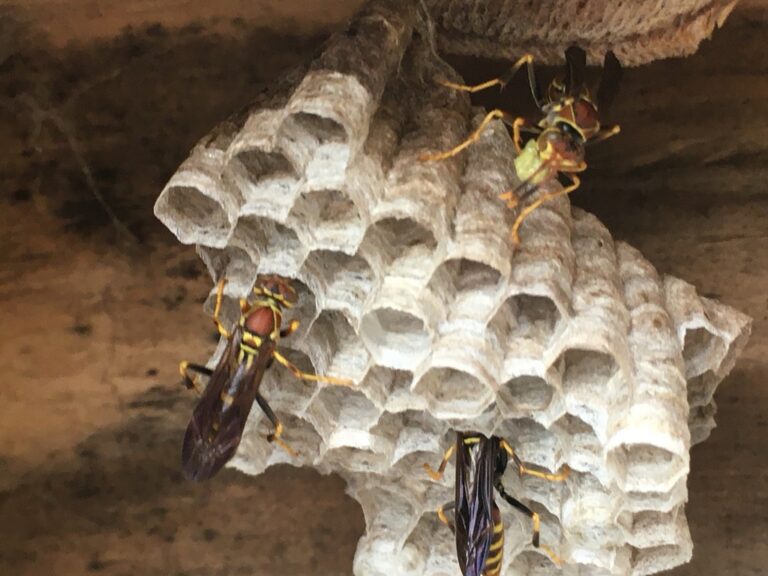 Paper Wasp Nests: Identification and What to DoHow to recognize a paper wasp nest and the wasps that build it, how risky it is, and whether to…
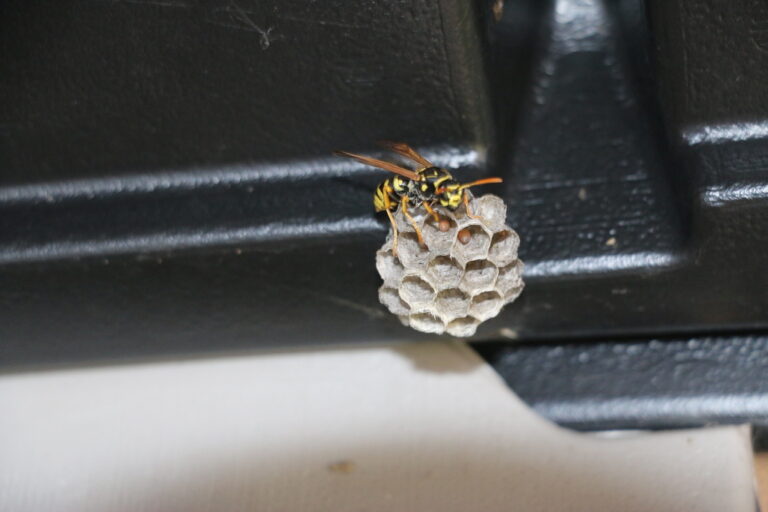 Types of Wasp Nests: A Photo GuideOpen paper combs, closed paper balls, ground nests, hidden nests and mud tubes: how to tell which…
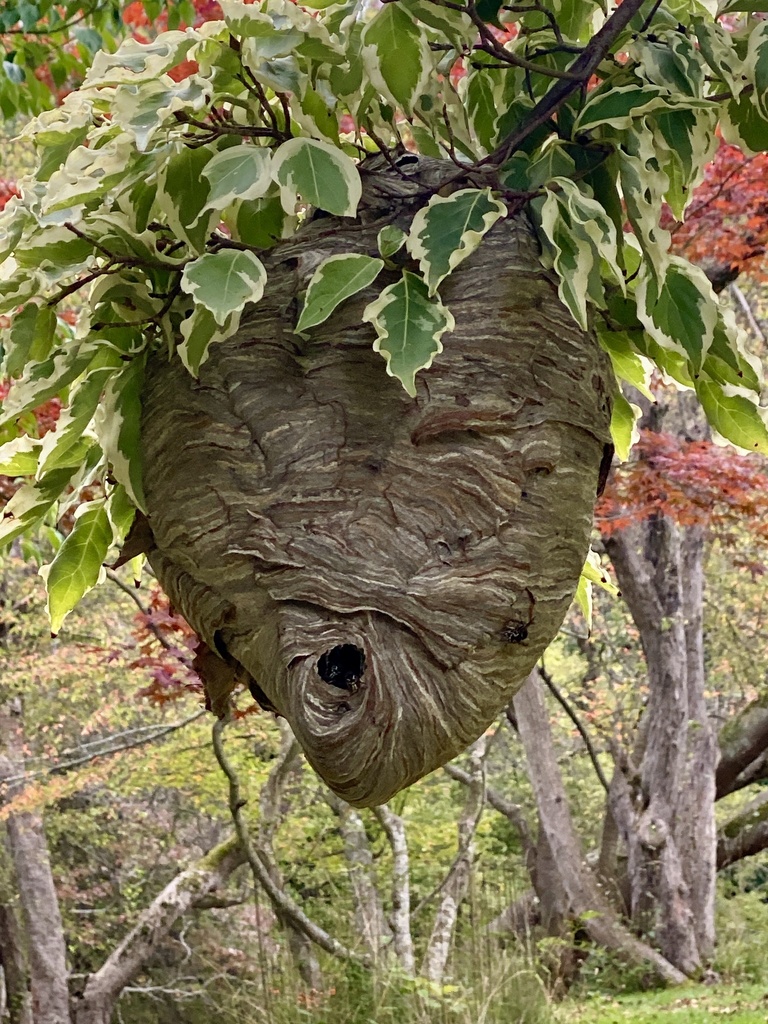 Bald-Faced Hornet NestsA big gray paper ball hanging in a tree, a hedge or under the eaves is one of the most alarming…
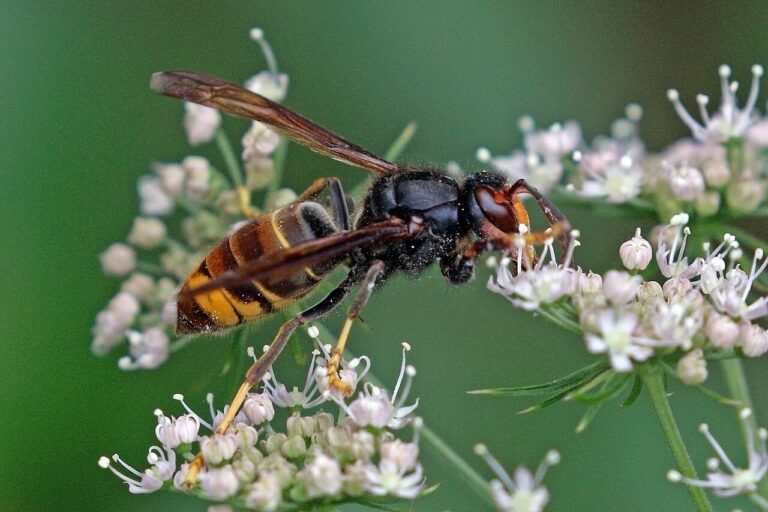 Yellow-Legged Hornet: How to Recognize It and What to DoThe yellow-legged hornet is an invasive hornet from Southeast Asia, first found in the U.S. near…
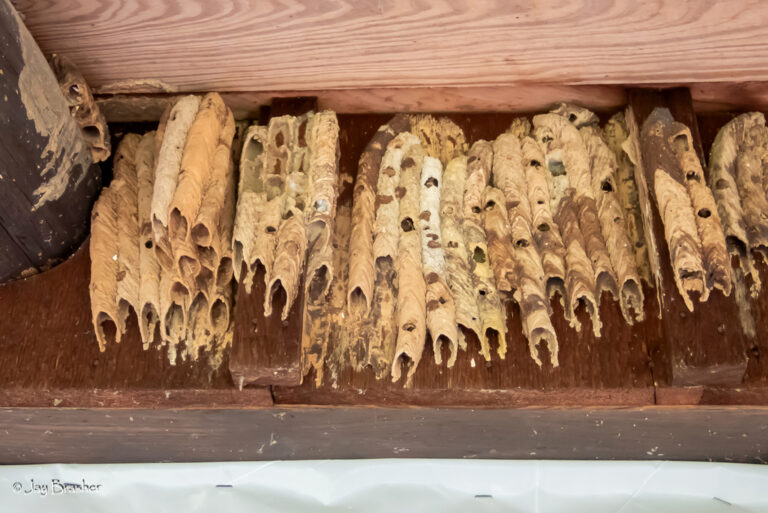 Mud Dauber Nests: What They Are and What to DoMud tubes or fist-sized lumps of dried mud on a wall, ceiling or under a deck are built by mud…
Sources
- Baldfaced Hornet, Olivia C. McCraw and Theresa A. Dellinger, Virginia Cooperative Extension, 2020.
- Bald-faced Hornets, Iowa State University Extension and Outreach, reviewed 2021.
- Controlling Paper Wasps in and around Structures, NC State Extension, 2018.
- Controlling Wasps, Hornets and Yellowjackets (ENTFACT-620), Michael F. Potter, University of Kentucky Entomology, revised 2018.
Photos on this page are shared by their authors on iNaturalist under Creative Commons licenses, credited under each image. For who writes these guides and how we stay independent, see About.