
Yellow-legged hornet: how to recognize it, and what to do if you find one
Updated
Short answer
The yellow-legged hornet is an invasive hornet from Southeast Asia. It was first found in the U.S. near Savannah, Georgia, in 2023 and is now established in coastal Georgia and South Carolina. Its main victims are honey bees; its sting is not believed to be worse than a native wasp sting, but its colonies get large. If you think you have found one, do not spray or knock down the nest. Take a photo from a safe distance and report it to your state, so a response team can remove the whole colony, queen included.
Since 2023, state crews in Georgia and South Carolina have been trapping these hornets and pulling down their nests, and they depend on homeowners to find them. Most nests are first noticed by someone mowing, trimming shrubs or looking up at a bare tree in late fall. This guide shows how to tell a yellow-legged hornet from the local look-alikes, where its nests turn up through the year and exactly what to do if you spot one.
Where it has been found
As of fall 2026, the U.S. population is in two states:
- Georgia: the hornet arrived through the port of Savannah. The Georgia Department of Agriculture names Bryan, Bulloch, Chatham, Effingham and Liberty counties as the main concern. In September 2026 alone, its team found 1,310 hornets and 33 nests.
- South Carolina: the hornet spread into the Lowcountry. By mid-July 2026, Clemson’s response team had traps in 13 counties and had removed nearly 400 early-season nests in the Lowcountry, plus a few in the York County area near Charlotte.
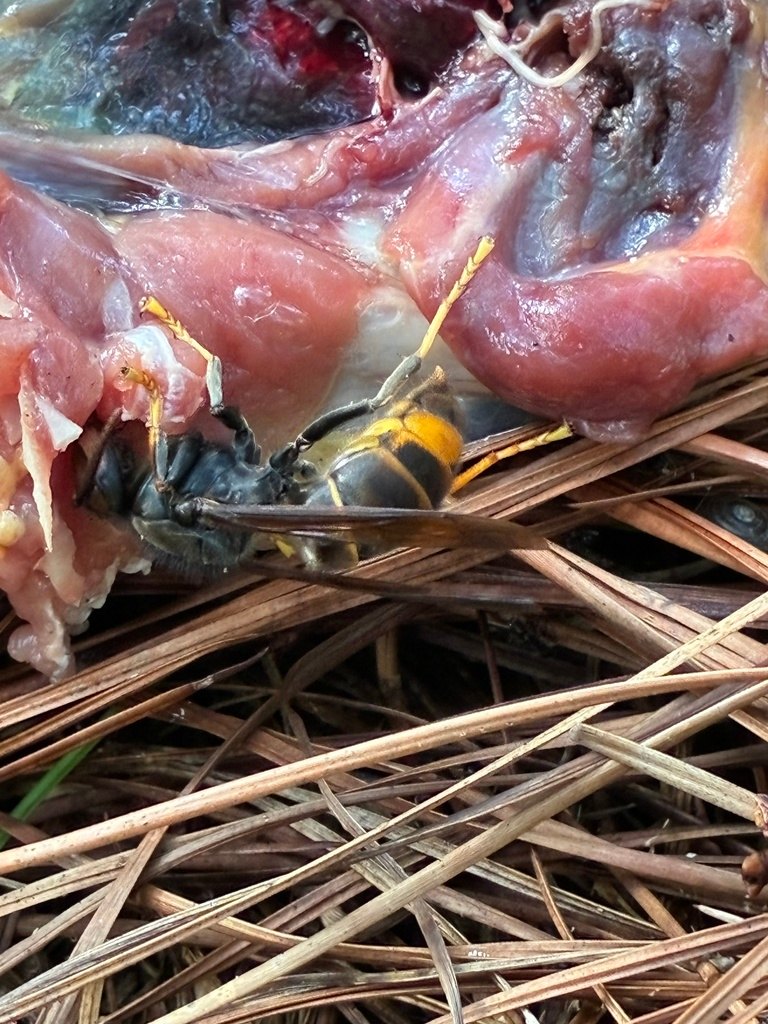
That York County find was more than 150 miles from the nearest earlier record. Queens hide over winter in leaf litter, log piles and stored items, and people move them by accident. That is why officials ask anyone in the area to check vehicles, firewood, cargo and outdoor items before a move or a long trip.
How to recognize it
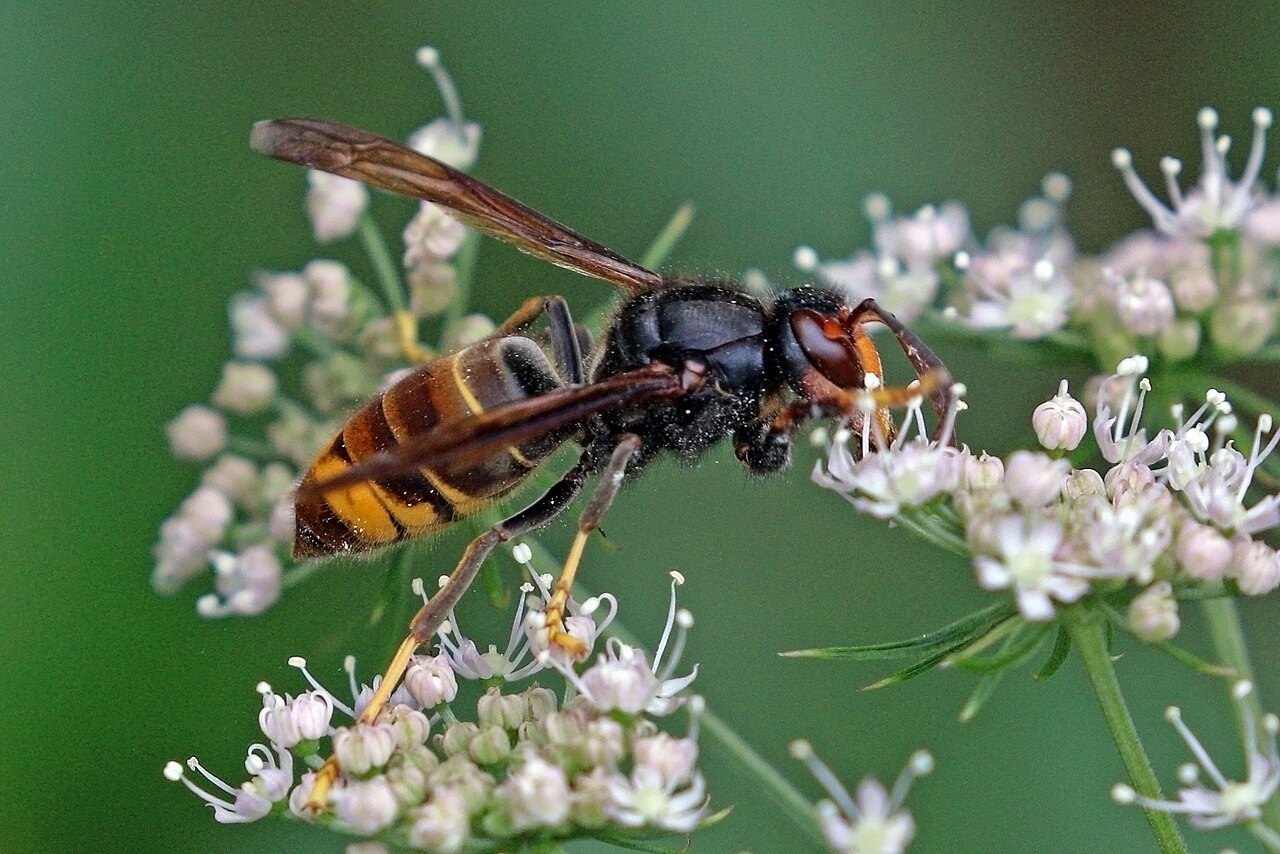
Yellow legs alone are not enough. Several common wasps in the Southeast have yellowish legs too. Look at the whole insect:
| Insect | Size | What to look for |
|---|---|---|
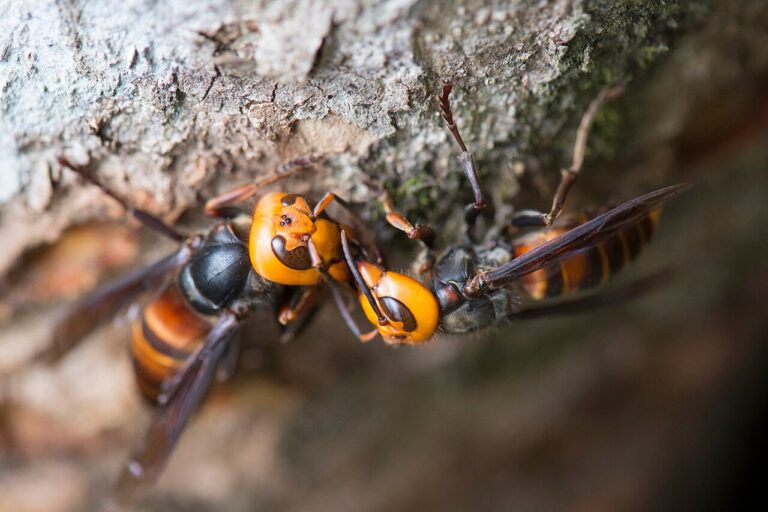
| Yellow-legged hornet | About 0.7–1 in | Mostly dark brown to black body, orange face, one wide yellow-orange band near the tip of the abdomen, legs dark near the body and yellow on the last third. |
| European hornet | About 1–1.4 in | Larger and much more yellow: reddish-brown head and thorax, abdomen mostly yellow with brown markings. Common across the East; also flies at night. |
| Southern yellowjacket and other yellowjackets | About 0.5–0.75 in | Smaller, with a bright, busy yellow-and-black pattern from head to tail. Most nest in the ground or in walls. |
| Cicada killer | About 1–2 in | Rusty head and thorax, black abdomen with pale yellow marks. A solitary wasp that digs burrows in sandy soil in summer and rarely stings. |
| Bald-faced hornet | About 0.75 in | Black and white, not yellow. Builds the familiar gray paper ball in trees and shrubs. |
For more look-alikes, see bumblebee vs. wasp vs. hornet and the identification guides.
Where the nests are, season by season
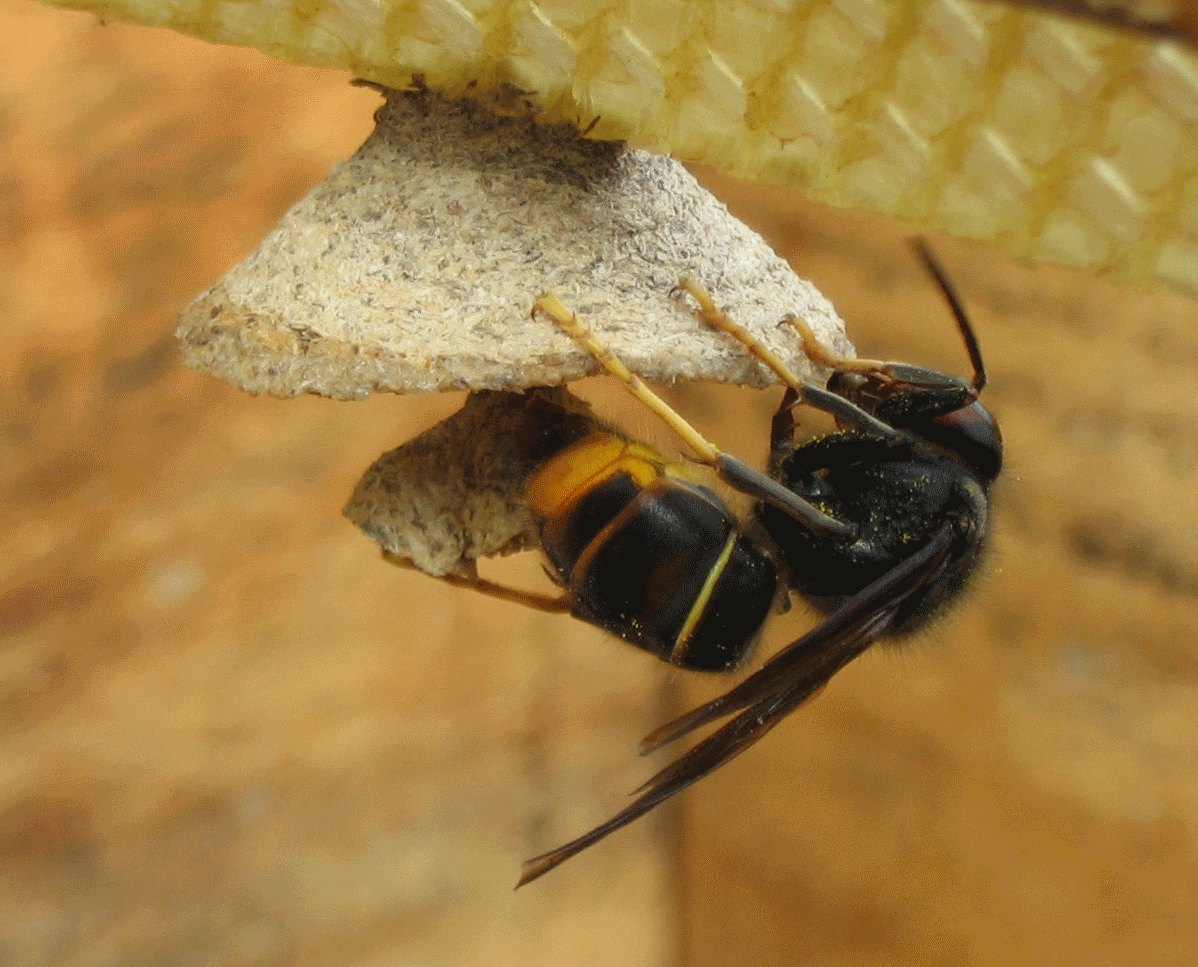
- March–April (embryo nest): a queen alone builds a small paper nest, often ping-pong-ball size, with the opening at the bottom. Typical spots: under eaves and porch roofs, inside sheds and garages, in birdhouses, on awnings and in low, dense shrubs.
- May–June (primary nest): the first workers hatch and the nest grows, still usually on a building or low in vegetation.
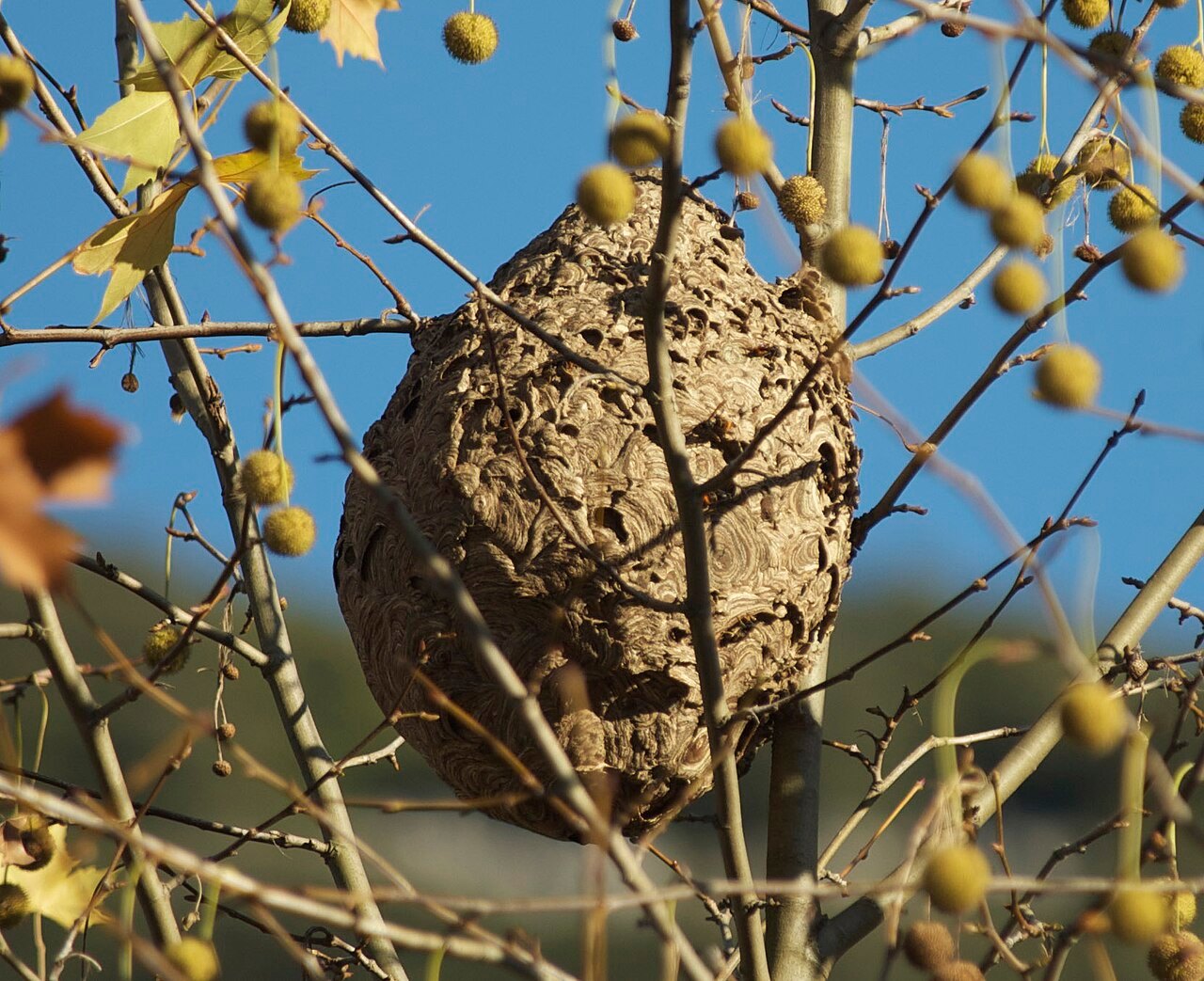
- Midsummer to fall (secondary nest): most colonies move up into a large, egg-shaped nest with a side entrance, often 30 to 60 feet or more up in a tree. A single nest can hold thousands of hornets. Activity peaks in fall.
- November–December: new queens and males leave and mate; the queens shelter for winter and the old nest is abandoned.
Early nests are the most important ones to report, because one removed in spring never becomes a large summer colony. In late fall and winter, big nests show up in bare trees. In Georgia and South Carolina, report any large paper nest high in a tree with a photo, even if you think it is a bald-faced hornet nest.
Is it dangerous to people?
Not more than other stinging insects, sting for sting. The Georgia Department of Agriculture says these hornets are not a significant threat to people and usually sting only when the nest is disturbed. Clemson specialists add that run-ins may be more common than with native wasps because colonies are large, nests are often on buildings and the hornets scavenge in trash and fallen fruit. If anyone at home has a wasp or bee sting allergy, keep well away.
Trouble breathing, throat or tongue swelling, dizziness or hives spreading over the body after a sting: call 911.
For an ordinary sting, see what to do first after a sting.
What to do if you think you found one
- Back off. Stay at least 15 to 20 feet from the nest and keep children and pets away. Do not mow, trim or use a leaf blower next to it.
- Do not spray, knock down or burn the nest. State teams need to remove the colony with its queen; a damaged nest can scatter hornets and lets the queen start over somewhere else. They also set traps nearby to find other nests.
- Take a photo from a safe distance. Zoom in on the hornet or the nest. A clear photo is required for a report: officials cannot confirm the species without one.
- Note the location: address or GPS pin, what the nest is attached to and roughly how high it is.
- Report it. Georgia: email yellow.legged.hornet@agr.georgia.gov or use the form on the Georgia Department of Agriculture hornet page. South Carolina: use the reporting tool at clemson.edu/ylh. Other states: contact your state department of agriculture or county extension office.
- Already got rid of it? Report it anyway, with a photo of the nest or the hornets, so the state can confirm what it was and check the area.
Beekeepers: watch for hornets hovering in front of hive entrances and picking off bees, a behavior called hawking. Georgia officials say it is most often seen before noon and after 5 p.m. Report it right away.
Outside Georgia and South Carolina
Most “giant hornet” sightings in the rest of the country turn out to be European hornets, cicada killers or bald-faced hornets. The northern giant hornet, once nicknamed the murder hornet, is a different species; Washington State declared it eradicated in December 2024. If you see something that matches the yellow-legged hornet outside the Southeast, photograph it and send the photo to your state department of agriculture.
Common questions
Is the yellow-legged hornet the same as the murder hornet?
No. The so-called murder hornet is the northern giant hornet, a much larger species that was found in Washington State and has since been declared eradicated there. The yellow-legged hornet is smaller and darker.
Should I hire a pest control company to remove a yellow-legged hornet nest?
Report it first. In Georgia and South Carolina, the state response teams remove confirmed nests and want to collect the queen and set traps nearby. If a company finds one, it should report it too.
Can I set a trap for them?
Homemade traps catch many other insects, including native wasps and bees. If you want to help, South Carolina runs a citizen trapping program; follow your state’s instructions rather than trapping on your own.
There is an old, empty paper nest in my tree. Should I report it?
In coastal Georgia and South Carolina, yes. A photo lets the state confirm the species and tells them colonies may be nearby. Elsewhere, it is far more likely to be a bald-faced hornet or yellowjacket nest that will not be reused.
Your next step
- Live in Georgia? See wasps in Georgia for how to report it and local season details.
- All identification guides: what built this nest.
- Found a nest by the house: when to call a professional.
More in Identification
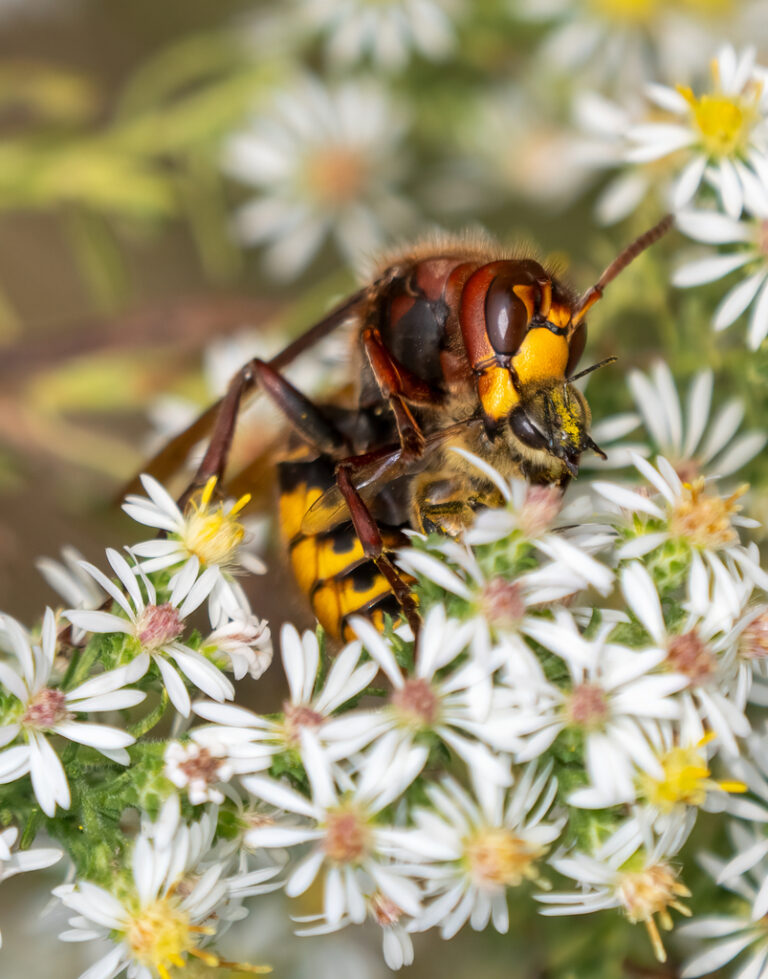 European HornetThe European hornet is the only true hornet in the eastern U.S. and the largest one you are likely…
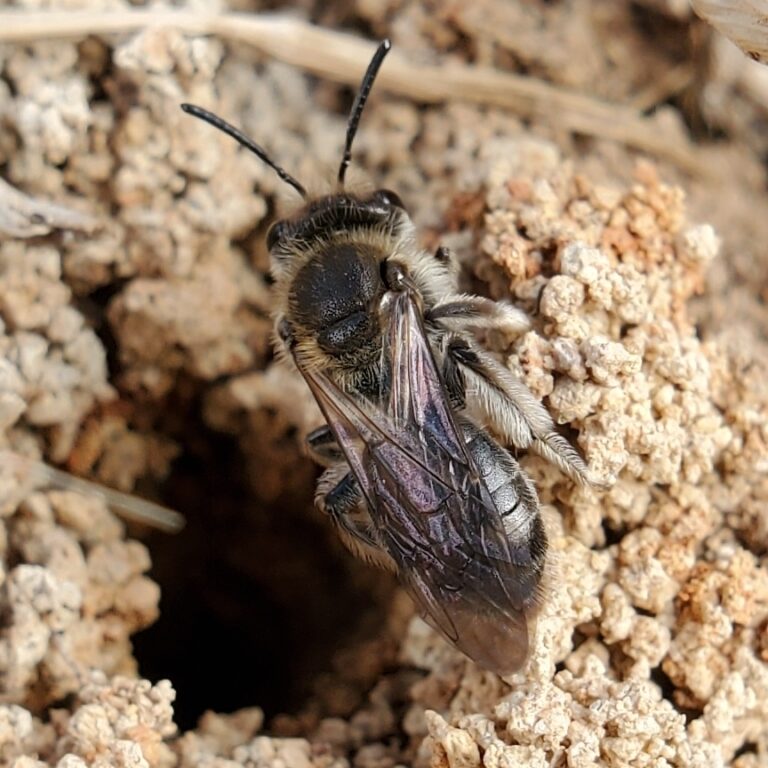 Bees Nesting in the GroundLots of small holes with little mounds of soil in a bare or thin patch of lawn, with fuzzy bees…
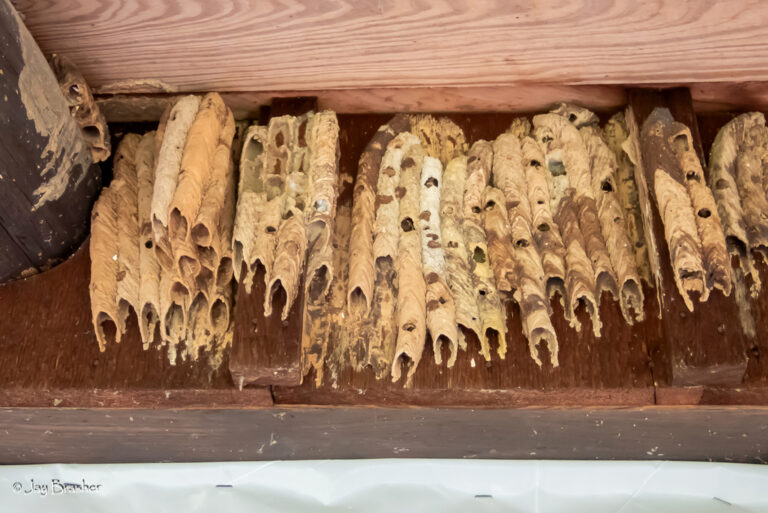 Mud Dauber Nests: What They Are and What to DoMud tubes or fist-sized lumps of dried mud on a wall, ceiling or under a deck are built by mud…
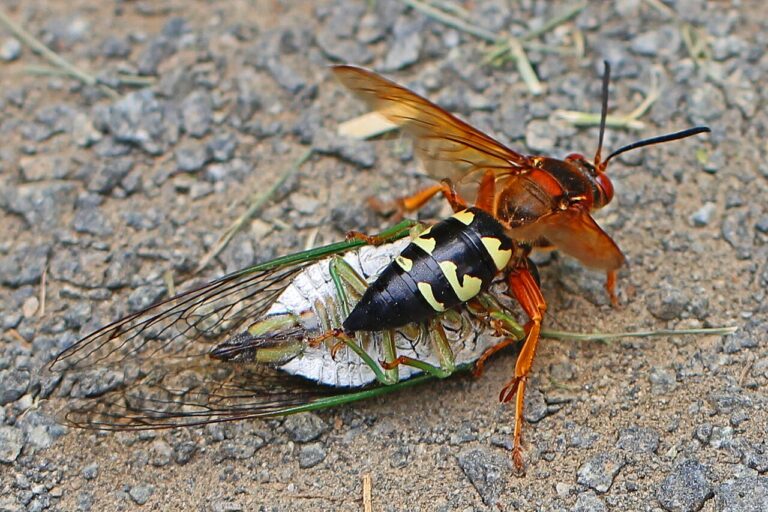 Cicada Killer WaspsGiant wasps digging holes in bare soil in summer. Males cannot sting.
 Northern Giant Hornet: Still in the US?The “murder hornet” was declared eradicated from the US in 2024. How to recognize it and its look-alikes…
Sources
- Yellow-legged Hornet FAQ, Georgia Department of Agriculture.
- Yellow-Legged Hornets on the Move: Identification, Spread and Risks in South Carolina, Ben Powell, Clemson Cooperative Extension HGIC, March 2026.
- July 2026 Yellow-Legged Hornet Update, Clemson University Regulatory Services, July 2026.
- Yellow-legged hornets still active, state warns, WSB-TV, October 2026.
- Yellow-legged hornets’ spread stirs concerns in Georgia, WRDW, June 2026.
- Pest Alert: Yellow-Legged Hornet, North Central IPM Center, May 2024.
Photos on this page are shared by their authors on Wikimedia Commons and iNaturalist under Creative Commons licenses or in the public domain, credited under each image. For who writes these guides and how we stay independent, see About.