
Bees nesting in the ground: what they are and what to do
Updated
Short answer
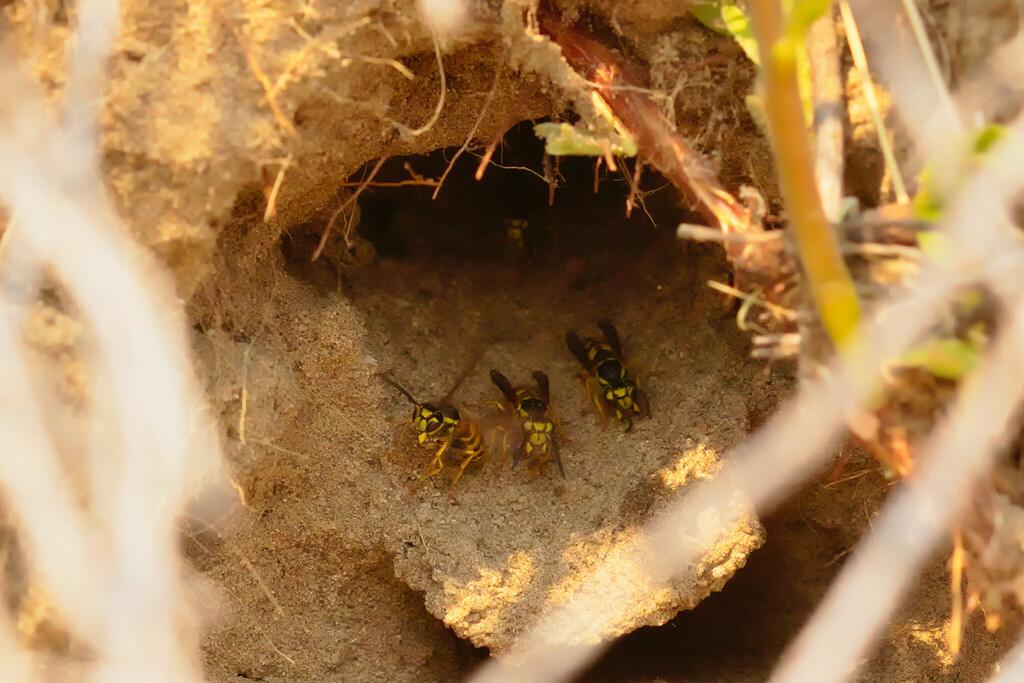
Lots of small holes with little mounds of soil in a bare or thin patch of lawn, with fuzzy bees hovering low over them in spring, are almost always ground-nesting bees, such as mining bees. They are gentle, rarely sting, are gone in a few weeks and are valuable pollinators, so the best move is usually to leave them alone. A single hole with no dirt pile and a steady stream of black-and-yellow wasps, usually in late summer, is a yellowjacket nest, which is a different story.
Bee or yellowjacket? Check this first
Watch from a few feet away on a warm, sunny day. These clues tell them apart:
| What you see | Ground-nesting bees | Bumble bees | Yellowjackets |
|---|---|---|---|
| Holes | Many small holes, about 1/4 inch across, often each with its own little mound of soil | One entrance, often an old rodent hole or under a grass clump | One entrance, no pile of dirt |
| The insects | Fuzzy, mostly smaller than a honey bee; brown, black or metallic green | Large, round and very fuzzy, black and yellow | Smooth, shiny, bright yellow and black, narrow waist |
| Flight | Many bees hovering or zigzagging low over the patch | A few bees coming and going at a time | A steady line flying straight in and out |
| When | Mostly early spring, for 2 to 4 weeks | Late spring through summer; colony dies in fall | Builds through summer, worst in August and September |
| Sting risk | Very low; males cannot sting, females sting only if squeezed | Low unless the nest is disturbed | High; defend the nest in large numbers |
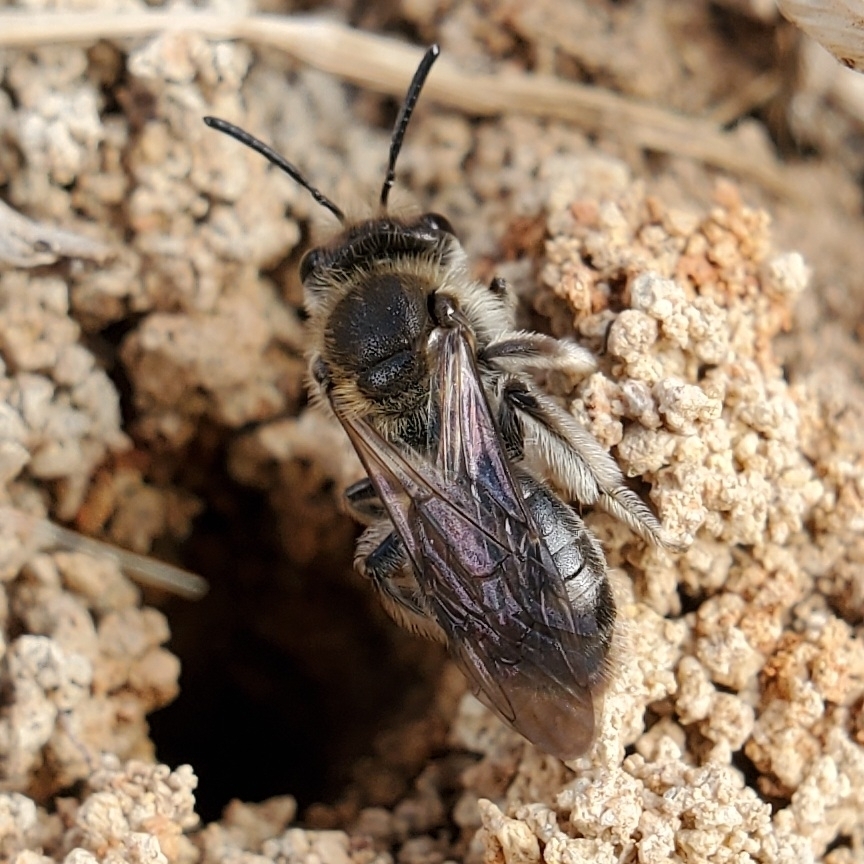
Big black-and-yellow wasps digging single holes in sandy spots in midsummer are often cicada killers, which also rarely sting people. For more on telling insects apart, see wasp vs. bee and bumblebee vs. wasp vs. hornet.
Which bees nest in the ground
- Mining bees and other solitary bees (such as sweat bees). Each female digs and stocks her own burrow. They are not a colony, but many females often pick the same sunny, bare patch, so a lawn can have dozens or hundreds of holes at once. Adults fly for only a few weeks; the young stay underground, 6 to 12 inches down, until the next year.
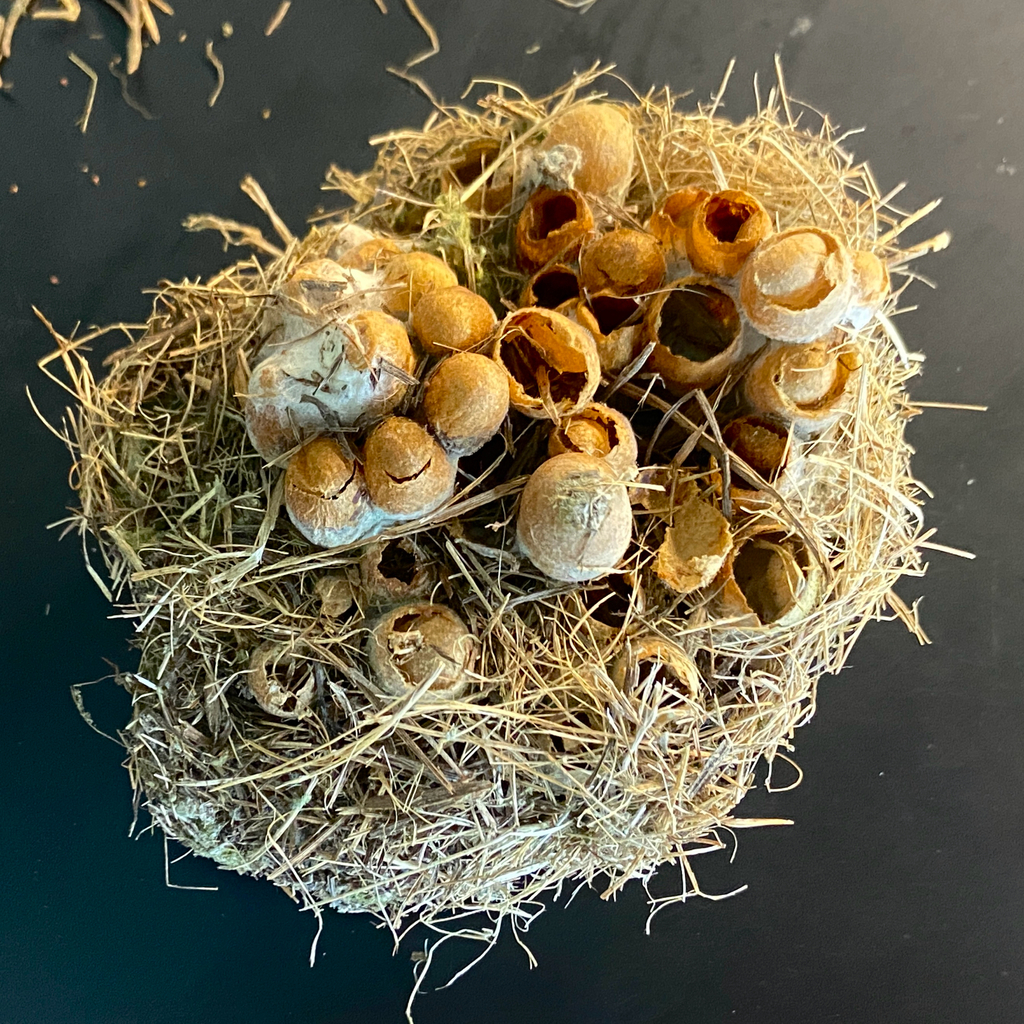
- Bumble bees. A queen starts a small colony in spring, often in an abandoned rodent burrow, under a grass clump or in a compost pile. The colony grows through summer and dies in fall; only new queens survive the winter, and they do not reuse the old nest.
- Honey bees almost never nest in the ground. Insects pouring in and out of a hole in the ground in late summer are much more likely to be yellowjackets.
Do they need to go?
Usually not. Ground-nesting bees pollinate fruit trees, garden plants and wildflowers, do not damage healthy lawns, and leave on their own after a few weeks. Extension specialists recommend leaving them alone whenever you can. Treating a lawn for them also harms other beneficial insects and does not stop new bees from arriving next spring.
Reasons to act: the nests are in a play area or right along a path you cannot avoid, or someone in the household has a serious sting allergy. Even then, simple steps below are usually enough.
How to live with them for a few weeks
- Walk through the area normally. The bees are busy with their own burrows and fly around you rather than at you.
- Wear shoes in the patch; a bee stepped on barefoot is the most common way people get stung.
- If children play there, rope off the busiest spot until the bees stop flying.
- Mow as usual; it does not harm the burrows.
How to make the spot less attractive next year
Most ground-nesting bees want bare, dry, sunny, well-drained soil. Once the adults stop flying:
- Thicken the turf. Overseed and fertilize thin, bare areas. Dense grass is the best long-term fix.
- Cover bare soil. Where grass will not grow, use a ground cover or a few inches of mulch.
- Water deeply during the nesting season; bees prefer dry soil.
For bumble bees, filling old rodent holes and clearing heavy grass clumps in early spring leaves queens fewer places to start a nest.
If it is a bumble bee nest
A bumble bee nest in a quiet corner of the yard can stay until fall, when the colony dies naturally. If it is right next to a door, a path or a play area, mark it off and keep people and mowers away from the entrance. If it must go sooner, ask a local beekeeper or a pest professional; some will relocate bumble bee colonies. Do not try to dig it out yourself.
What not to do
- Do not pour gasoline, bleach or boiling water into the holes. It is dangerous, damages soil and grass, and does not solve the problem.
- Do not spray the whole lawn with insecticide for gentle ground bees.
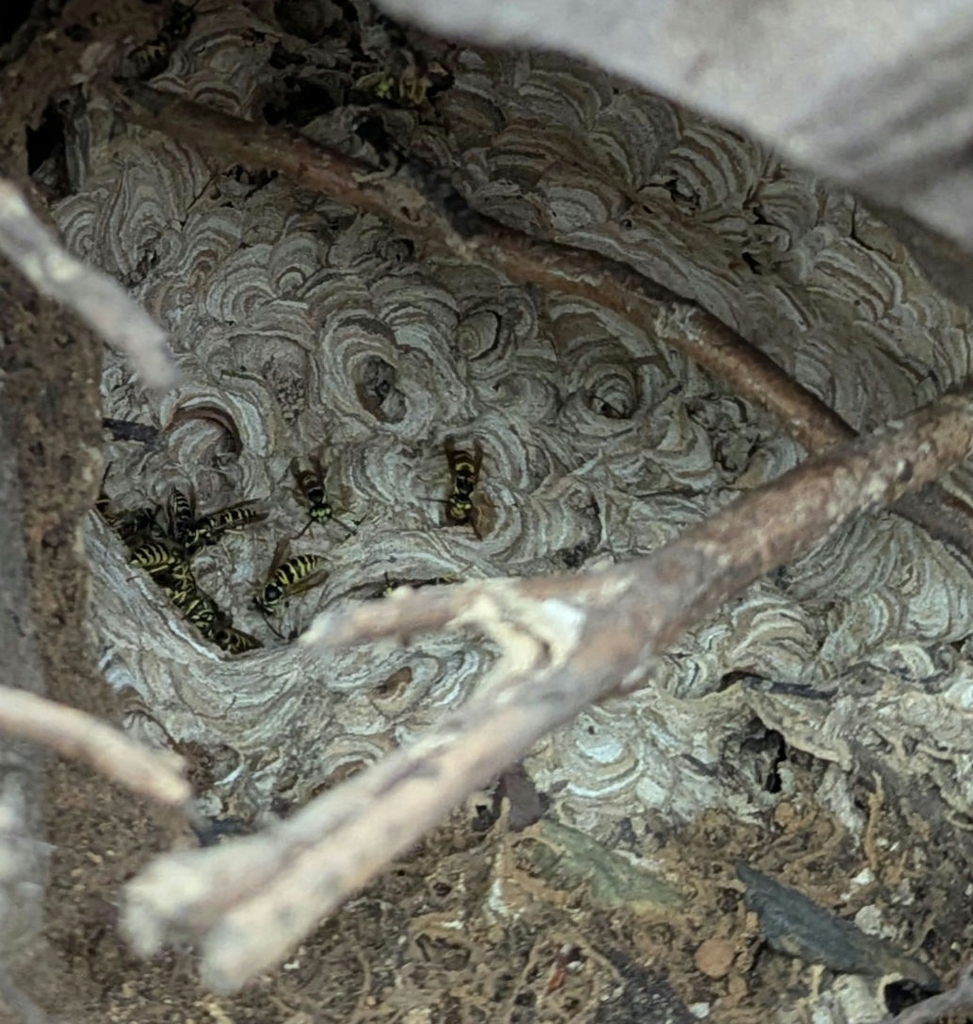
- Do not plug or stomp on a hole with bees or wasps coming and going; if it is a yellowjacket nest, that can trigger a mass attack. See how to check a nest safely.
If someone is stung
Trouble breathing, throat or tongue swelling, dizziness or hives spreading over the body after a sting: call 911.
For an ordinary sting, see what to do first after a sting; signs of a serious reaction are in sting allergy. How bee and wasp stings differ: bee sting vs. wasp sting.
Common questions
Do ground bees sting?
Rarely. Male mining bees, the ones that patrol low over the lawn, cannot sting at all. Females can, but they almost never do unless they are trapped or squeezed, and the sting is mild compared with a yellowjacket’s.
Will ground bees ruin my lawn?
No. The small mounds can look messy for a few weeks, but they wash away in the rain. Bees nest where grass is already thin, so they are a sign of bare soil, not the cause of it.
Why are there so many in one spot?
Each female has her own burrow, but they all like the same kind of soil, so a good patch attracts many of them. It looks like a swarm, but it is really lots of individual nests.
Will they come back next year?
Often, yes, because their young develop underground and emerge in the same spot the next spring. Thicker grass or mulch over the patch is the way to move them on gradually.
I see bees going into a hole in the ground in September. Are they bees?
Probably not. Most ground-nesting bees are done by late spring. Busy insects at a single hole in late summer or fall are usually yellowjackets: see how to deal with a yellowjacket ground nest.
Your next step
- Still not sure what you are looking at: all identification guides and types of wasp nests.
- Deciding whether anything needs to be done: should you remove a nest and the wasp nest decision guide.
More in Identification
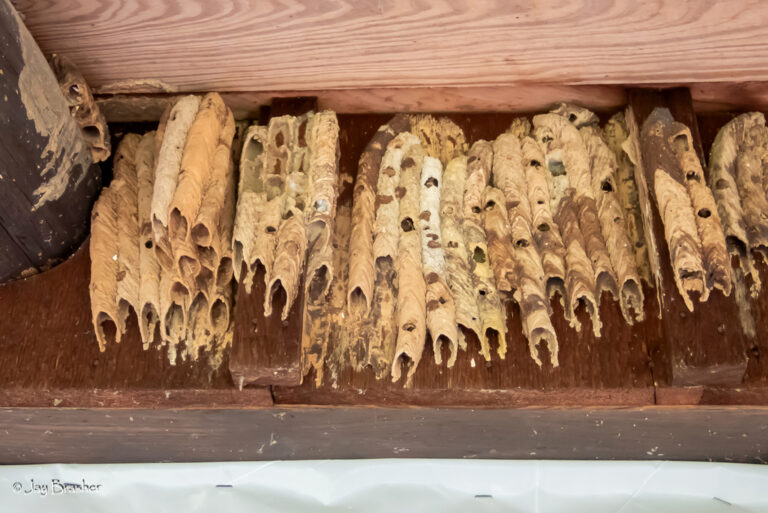 Mud Dauber Nests: What They Are and What to DoMud tubes or fist-sized lumps of dried mud on a wall, ceiling or under a deck are built by mud…
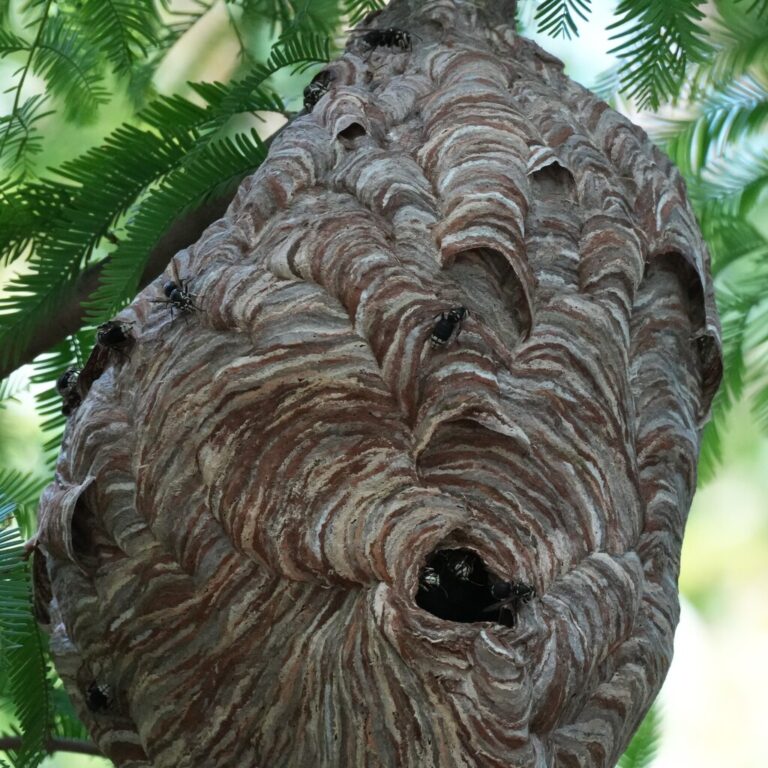 Is a Wasp Nest Active? How to Check SafelyWatch the nest from at least 10 to 20 feet away on a warm, sunny afternoon for 10 to 15 minutes. If…
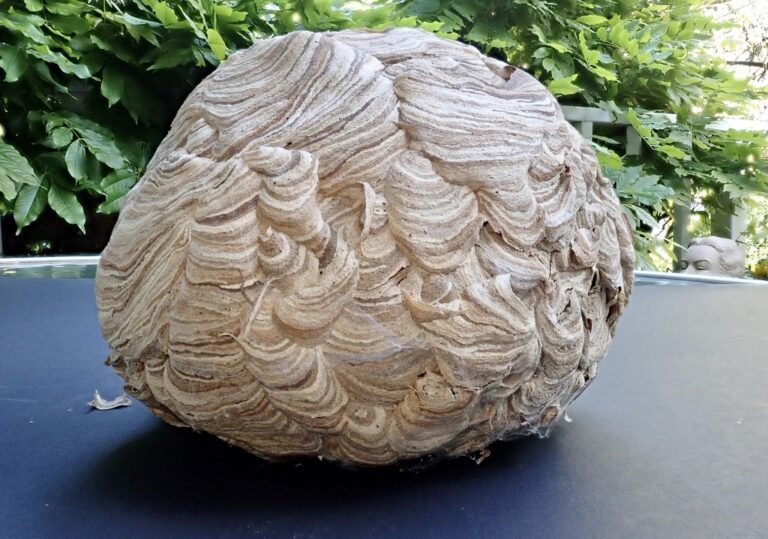 Yellowjacket Nests: Ground, Wall and AtticYellowjackets cause more stings around American homes than any other wasp, and most of those stings…
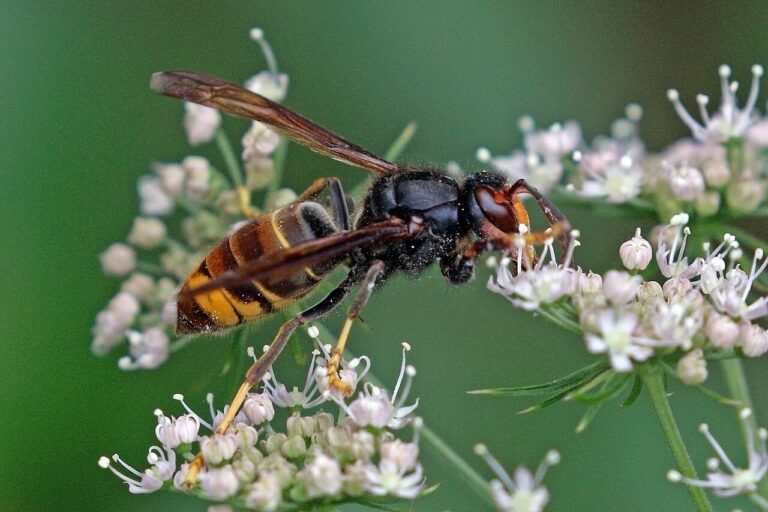 Yellow-Legged Hornet: How to Recognize It and What to DoThe yellow-legged hornet is an invasive hornet from Southeast Asia, first found in the U.S. near…
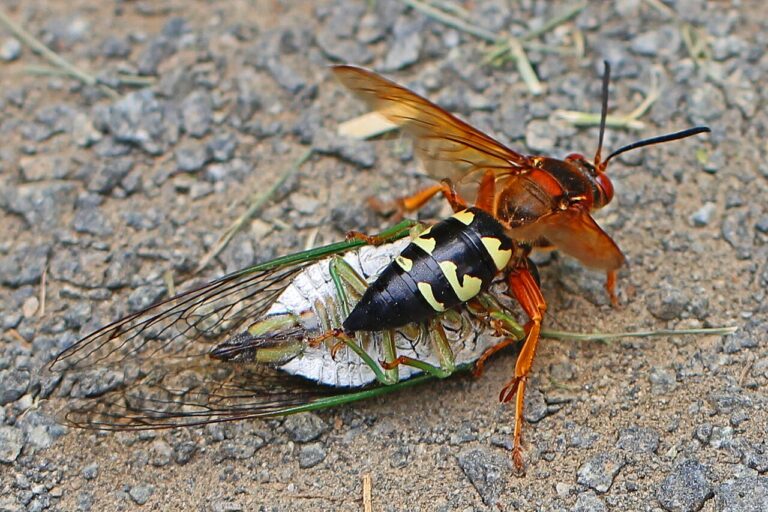 Cicada Killer WaspsGiant wasps digging holes in bare soil in summer. Males cannot sting.
Sources
- Mining Bees in Lawns, University of Maryland Extension, updated 2023.
- Help, I Have Bees!, David Tarpy, NC State Extension, updated 2026.
- Friend or Foe? Protecting Pollinators in the Ground, Amanda Bratcher, N.C. Cooperative Extension, Lee County Center, 2026.
- Solitary/Ground Bees, Utah State University Extension.
- Bumble Bees, Utah State University Extension.
Photos on this page are shared by their authors on iNaturalist under Creative Commons licenses, credited under each image. For who writes these guides and how we stay independent, see About.