
Cicada killer wasps: the giant wasps digging holes in your yard
Updated
Short answer
A wasp up to 2 inches long, with a rust-red head and thorax, amber wings and a black abdomen with pale yellow bands, digging holes in bare or sandy ground in July and August, is almost always a cicada killer. It looks alarming, but it is one of the least dangerous wasps you will meet. Males cannot sting at all, and the females rarely sting people unless they are grabbed or stepped on. Most homeowners can simply wait: the adults are gone by September.
Is this the right guide? If you see many small, ordinary-sized wasps streaming in and out of one hole in the lawn, read yellowjacket ground nest instead; those do defend their nest. Lots of tiny holes with fuzzy bees are covered in bees nesting in the ground.
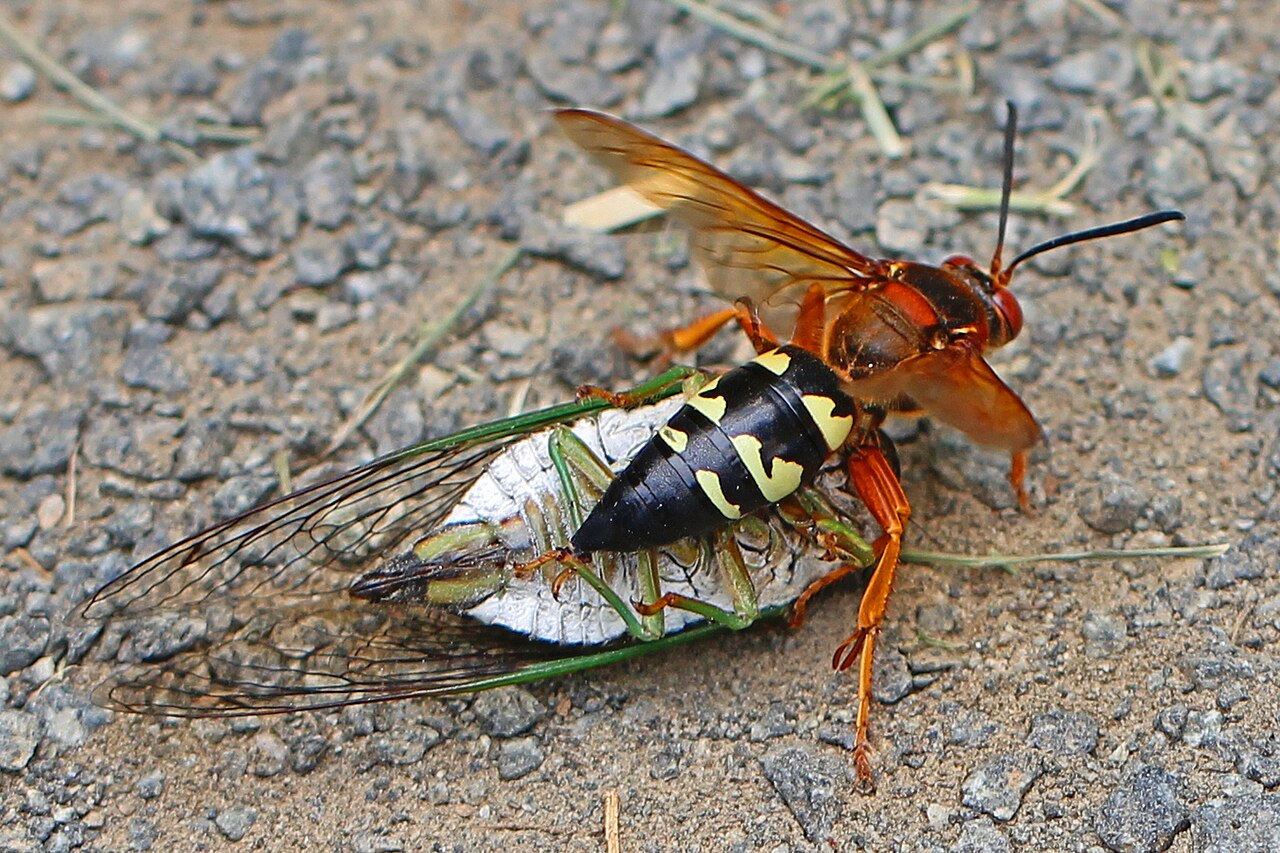
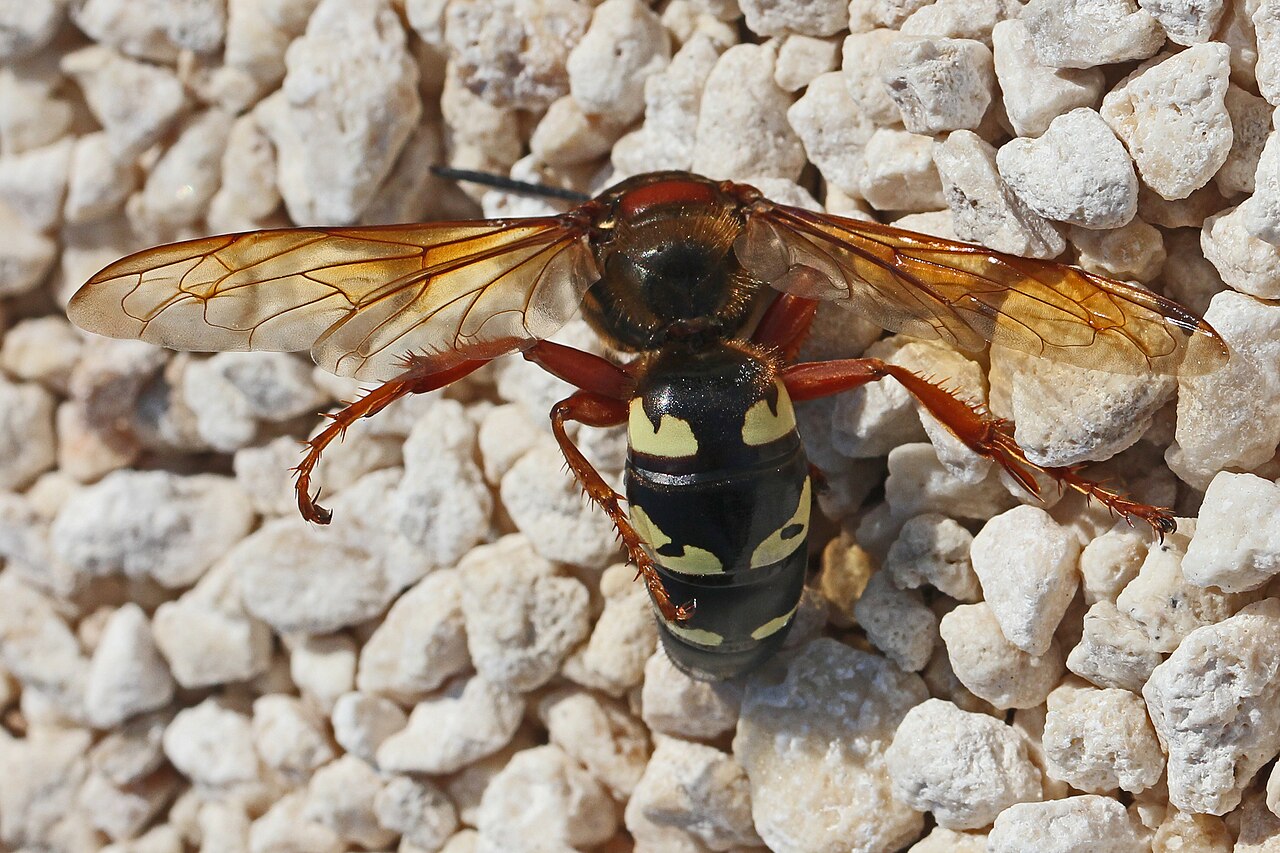
How to recognize a cicada killer
- Size: about 1⅛ to 2 inches long and heavy-bodied; females are bigger than males. Among the largest wasps in the U.S.
- Colors: dark rust-red head and thorax, brownish or amber wings and legs, black abdomen with yellow to whitish stripes.
- Where: bare, dry, well-drained soil in full sun. Favorite spots are the edges of sidewalks, driveways and patios, thin lawn, flower beds, sandboxes, playgrounds and golf course bunkers.
- When: adults appear around early July and are gone by about mid-September. They live only a few weeks, so the problem is seasonal.
- The hole: about ½ to 1½ inches across, often with a fan- or U-shaped pile of loose soil at the entrance. Each female digs her own burrow, but several females may use the same sunny patch.
Do cicada killers sting?
The big wasps that buzz around you, hover in front of your face and chase each other over the lawn are males. They are guarding small territories and looking for females. A male wasp has no stinger; at most it can poke with a harmless spine at the tip of the abdomen. The “attack” is a bluff.
Females do have a stinger, but they use it on cicadas, not on people. They do not defend their burrows the way yellowjackets and hornets defend a nest. Extension entomologists describe them as mild-mannered: a female usually flies off if disturbed and stings only if she is handled roughly, squeezed in clothing or stepped on with bare feet.
Allergic to stings? The risk is low, but not zero. Wear shoes near the burrows and keep children from catching the wasps. If anyone has trouble breathing or swelling of the face or throat after any sting, call 911 and use a prescribed epinephrine auto-injector. More: wasp sting first aid and sting allergy signs. Dog bit one? See dog stung by a wasp.
Cicada killer or something else?
| Insect | What you see | Risk |
|---|---|---|
| Cicada killer | 1½–2 in, rust-red front, one big wasp per hole, soil fan at the entrance, July–August | Very low; males cannot sting |
| Yellowjacket ground nest | ½ in, bright yellow and black, a steady stream of wasps through one hole, worst in late summer and fall | High; they defend the nest in numbers. See yellowjacket ground nest |
| Ground-nesting bees | Many small holes with tiny soil mounds in spring, fuzzy bees | Very low. See bees nesting in the ground |
| European hornet | About 1 in, brown and yellow, nests in hollow trees or walls, flies at night | Moderate near the nest. See European hornet |
| “Murder hornet” | Not found in your yard: the northern giant hornet was declared eradicated from the U.S. in December 2024 | See northern giant hornet |
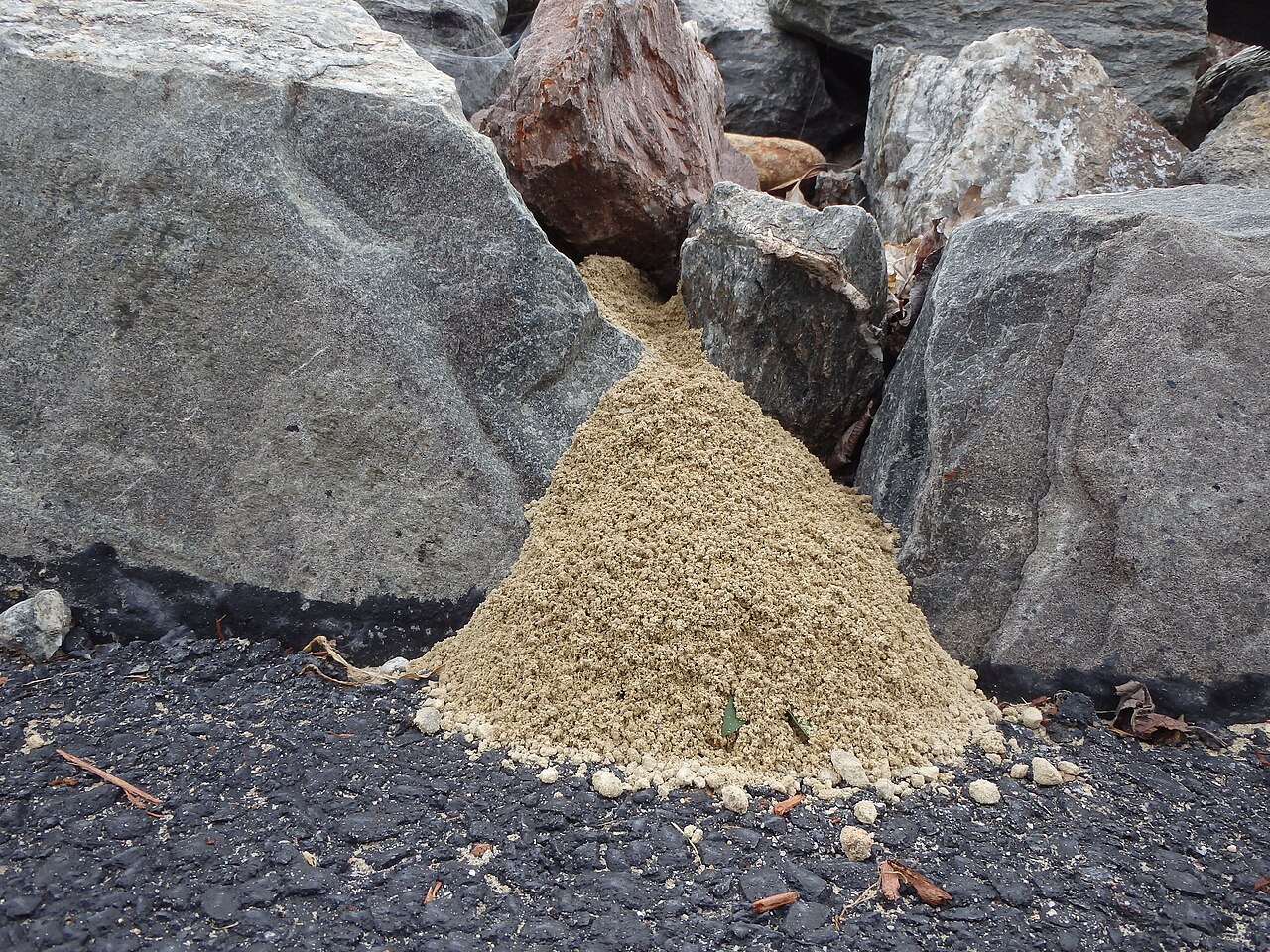
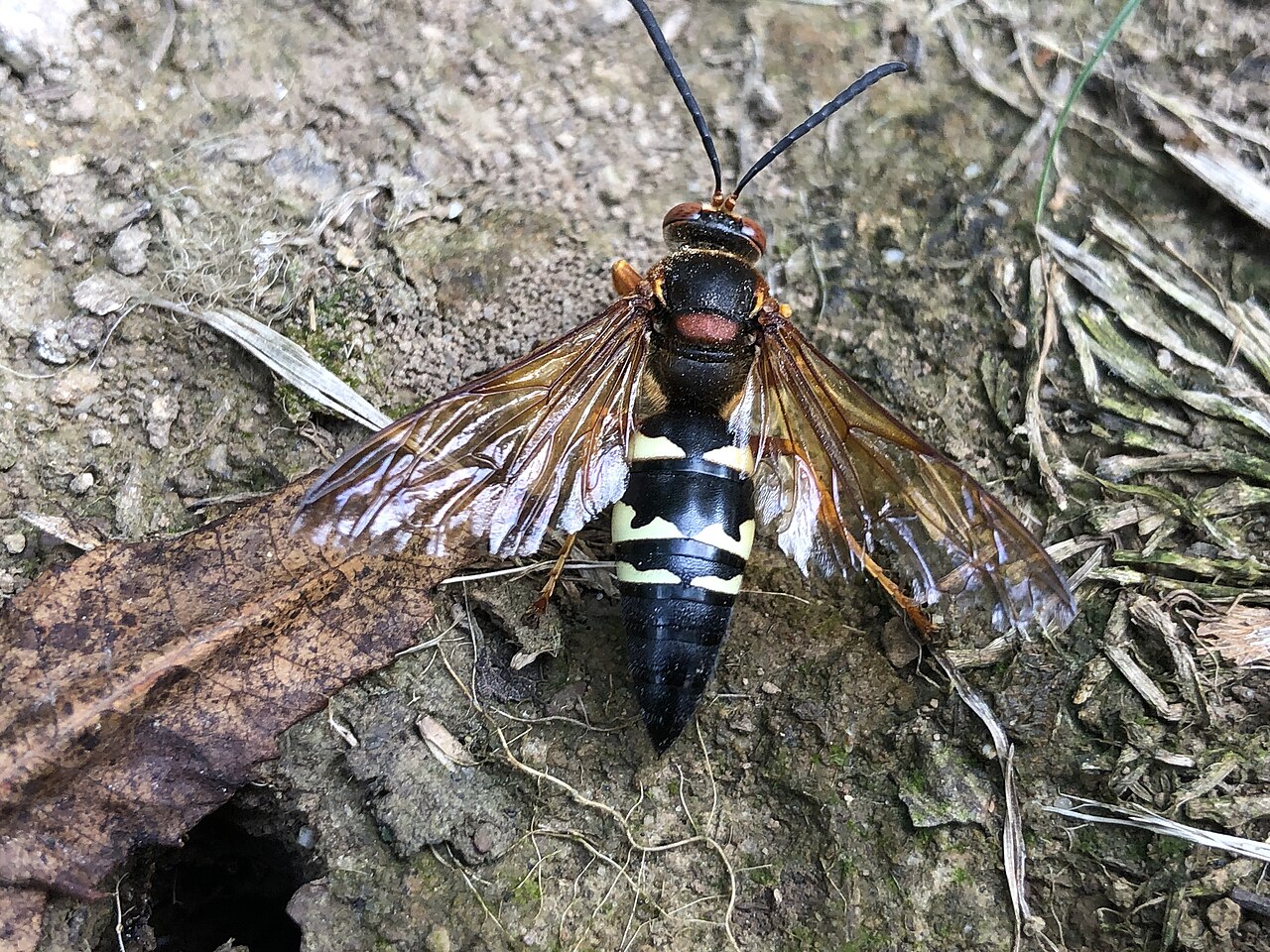
What is going on underground
Each female digs a tunnel about half an inch wide that runs at an angle for 12 to 18 inches and reaches 6 to 10 inches deep. At the end she builds several cells, stocks each with one or two paralyzed cicadas and lays one egg. The larva eats the cicada, spends the winter in a cocoon underground and comes out as a new adult the next summer. There is one generation a year, and no adults survive the winter.
That is why the same sunny patch can have cicada killers year after year: the next generation is already in the soil. The holes and soil piles can make a lawn look messy, but the wasps cause little real damage, and they help control cicadas, which can harm young trees.
What to do about cicada killers
- Usually, nothing. If the burrows are not in a spot people use every day, let the season run out. Adults fly for only a couple of months, and most extension services recommend leaving them alone.
- Keep people and pets calm around them. Wear shoes, do not swat at the hovering males (they cannot sting) and keep kids from grabbing the wasps.
- Make the spot less attractive. Cicada killers want bare, dry, loose soil in full sun. Thicken the lawn with fall seeding and fertilizing, cover bare patches with mulch or ground cover, and water problem areas regularly during July and August; moist, well-covered soil is far less inviting.
- Cover sandboxes and fill in old burrows after the season is over.
- Only if the burrows are in a high-traffic spot (a play area, a step, a doorway) and the wasps truly cannot be tolerated, a labeled insecticidal dust can be puffed into each entrance at dusk without filling the hole, following the label exactly. Insecticides can also harm pollinators, so this is a last resort. See wasp dust for how dusts work, or when to call a professional, especially if someone in the household is allergic.
Common questions
Is a cicada killer a “murder hornet”?
No. Cicada killers are native, solitary, ground-nesting wasps found across much of the U.S. The northern giant hornet is a social hornet that nests in colonies, and officials declared it eradicated from the U.S. in December 2024. A huge wasp digging in your lawn is a cicada killer.
Why is a giant wasp dive-bombing me?
It is a male guarding his patch of ground. He investigates anything that moves, including people, but he has no stinger. Walk through calmly.
Will cicada killers come back next year?
Often, yes, if the spot stays bare, dry and sunny, because the larvae already in the soil will emerge next July. Improving the ground cover is the long-term fix.
Are they dangerous to dogs?
Rarely. A dog would have to catch or bite a female to be stung. Discourage a dog from digging at the burrows, and watch for swelling of the face or trouble breathing after any sting.
Should I pour gasoline or water down the hole?
No. Never use gasoline or other fuels. Flooding a single burrow rarely helps, while keeping the whole area moist during the season does discourage digging.
Your next step
- Not sure what is in your lawn: identify wasps and nests or compare bumblebee vs. wasp vs. hornet.
- Many smaller wasps in one hole: yellowjacket ground nest.
- Still unsure what to do: the wasp nest decision guide.
More in Identification
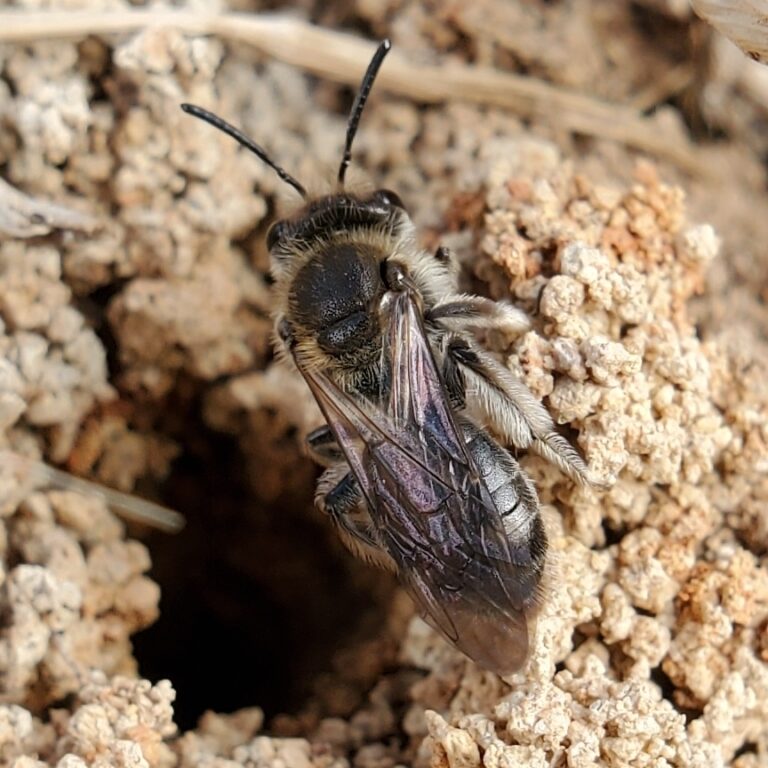 Bees Nesting in the GroundLots of small holes with little mounds of soil in a bare or thin patch of lawn, with fuzzy bees…
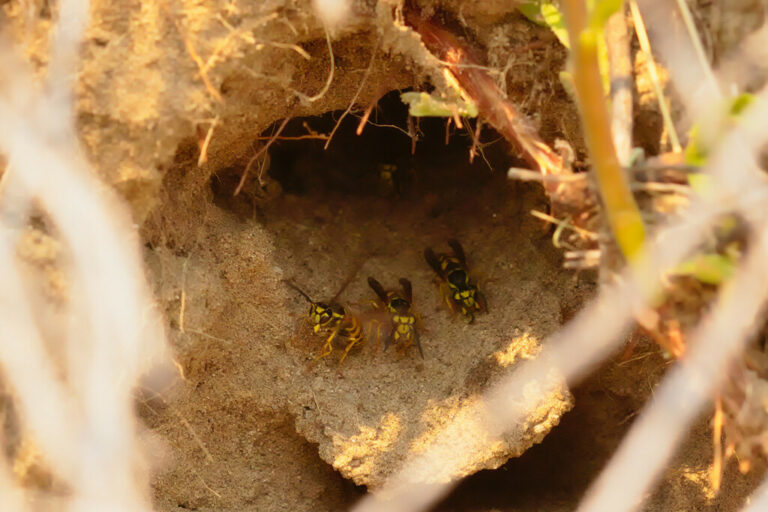 How to Get Rid of a Yellowjacket Ground NestYellowjackets streaming in and out of a hole in the lawn are one of the most common late-summer…
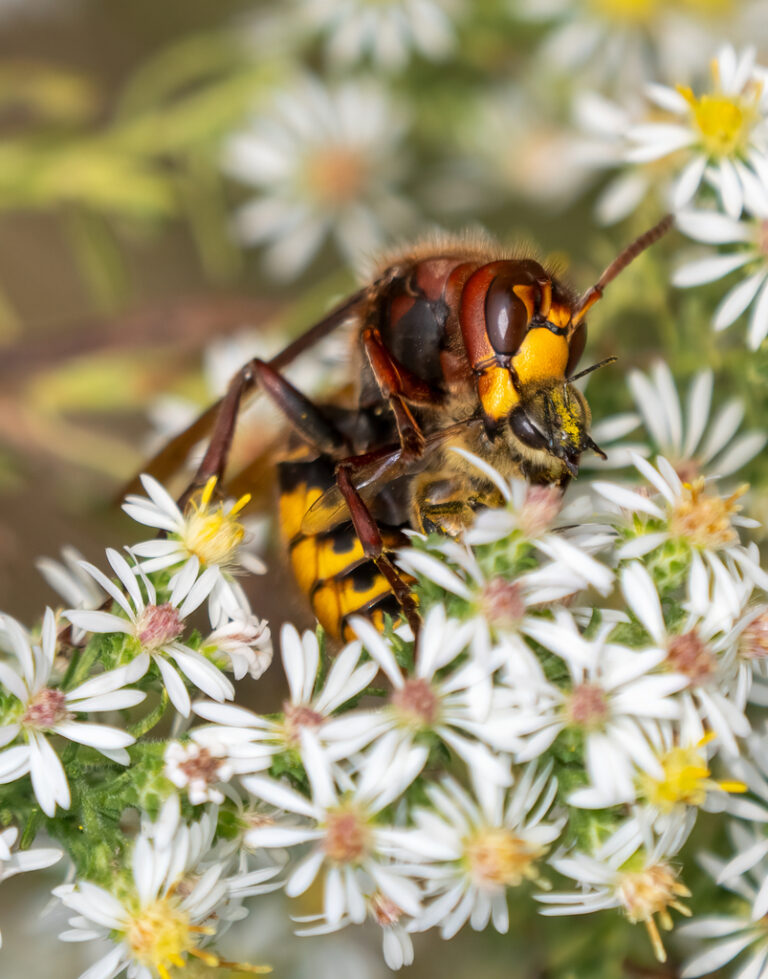 European HornetThe European hornet is the only true hornet in the eastern U.S. and the largest one you are likely…
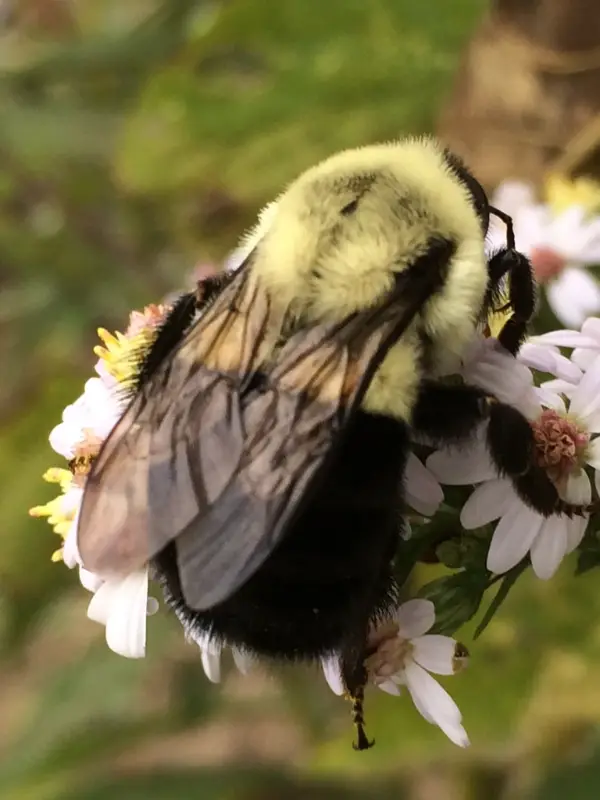 BeeBumblebeesBig and fuzzy. Usually best left alone.
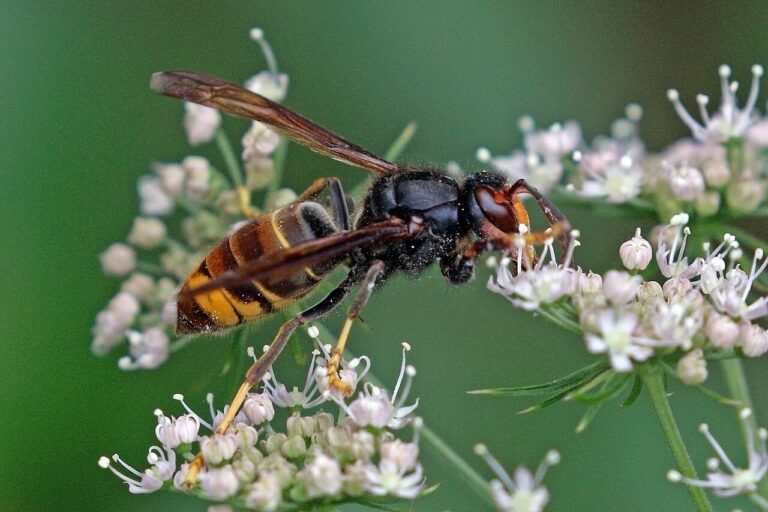 Yellow-Legged Hornet: How to Recognize It and What to DoThe yellow-legged hornet is an invasive hornet from Southeast Asia, first found in the U.S. near…
Sources
- Cicada Killer Wasp (ENT-63), David J. Shetlar and Jennifer E. Andon, Ohio State University Extension, 2015.
- Cicada Killers (E-254-W), Timothy J. Gibb, Purdue University Extension.
- The Cicada Killer Wasp (FS040), William Sciarappa, Rutgers Cooperative Extension.
- Cicada Killer Wasp (Sphecius speciosus), Katherine Dugas, Connecticut Agricultural Experiment Station.
- Giant Wasps Are Invading My Yard! No, They Still Aren’t Murder Hornets, South Dakota State University Extension, updated 2020.
Photos on this page are shared by their authors on Wikimedia Commons under Creative Commons licenses, credited under each image. For who writes these guides and how we stay independent, see About.