
Northern giant hornet (“murder hornet”): is it still in the US?
Updated
Short answer
No, not as far as anyone knows. The northern giant hornet (Vespa mandarinia, once called the Asian giant hornet or “murder hornet”) was only ever confirmed in northwest Washington. Four nests were destroyed there in 2020–2021, nothing was found from 2022 through 2024, and in December 2024 the Washington State Department of Agriculture (WSDA) and USDA declared it eradicated from the United States. The big hornet in your yard is far more likely a European hornet, a cicada killer or a yellowjacket queen. If you still think you saw one, photograph it from a safe distance and report it to your state department of agriculture.
This guide covers the hornet’s status, how to recognize it, the look-alikes people mistake for it, and exactly what to do if you think you have seen one. For the wasps and nests you are much more likely to meet at home, start with wasp identification.
Is the northern giant hornet still in the US?
The hornet was first detected in North America in British Columbia in August 2019 and confirmed in Washington, near Blaine, in December 2019. Over 2020 and 2021, WSDA and USDA tracked down and destroyed four nests in Whatcom County, all hidden in cavities such as hollow trees. Trapping continued, and no hornets were detected in 2022, 2023 or 2024. After those three clean years, the two agencies declared the species eradicated from Washington and the US in December 2024. Washington is the only state that has ever had a confirmed northern giant hornet.
“Eradicated” is not a promise that it can never come back. In October 2024 a photo from Kitsap County, Washington, appeared to show a hornet of some kind, but no specimen was ever found, so it could not be confirmed. Neighboring Oregon set close to 300 traps between 2021 and 2025 and never detected the species. Officials still ask the public to report anything that looks like it, because most of the original nests were found thanks to public reports.
If you have seen 2026 headlines about an invasive hornet in Washington, those were about a different species: a live yellow-legged hornet found on a ship at the Port of Vancouver in April 2026. That hornet is smaller and has its own look.
What a northern giant hornet looks like
| Feature | Northern giant hornet |
|---|---|
| Size | About 1.5 to 2 inches long, with a wingspan near 3 inches. Queens are the largest. |
| Head | Large and bright yellow-orange, clearly wider than a normal wasp head, with dark eyes and black, tooth-like jaws. |
| Body | Dark brown to black thorax; abdomen banded in black and yellow-orange. |
| Nest | Hidden in the ground or inside tree cavities. It does not build a hanging gray paper ball. |
| Behavior | Hunts other insects; in late summer and fall groups of workers can attack honey bee hives. |
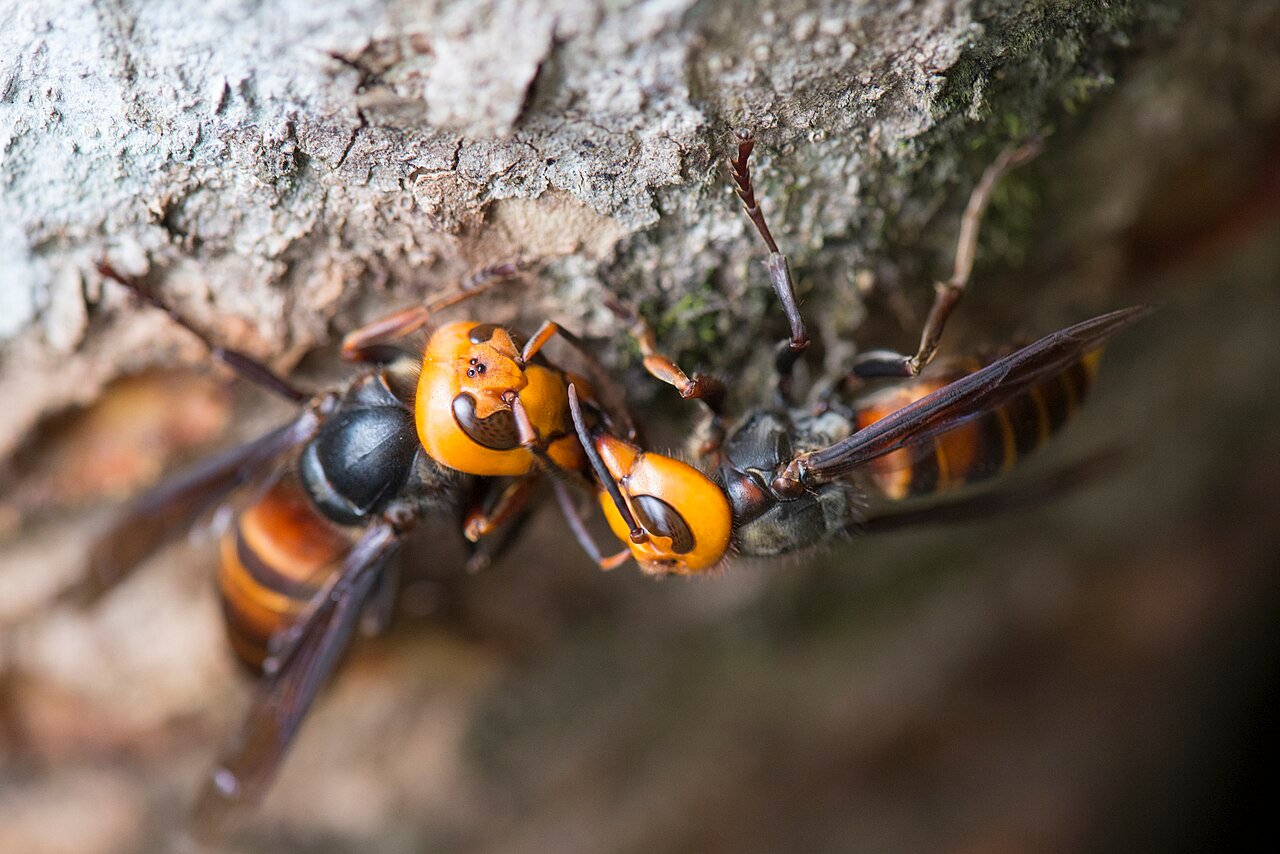
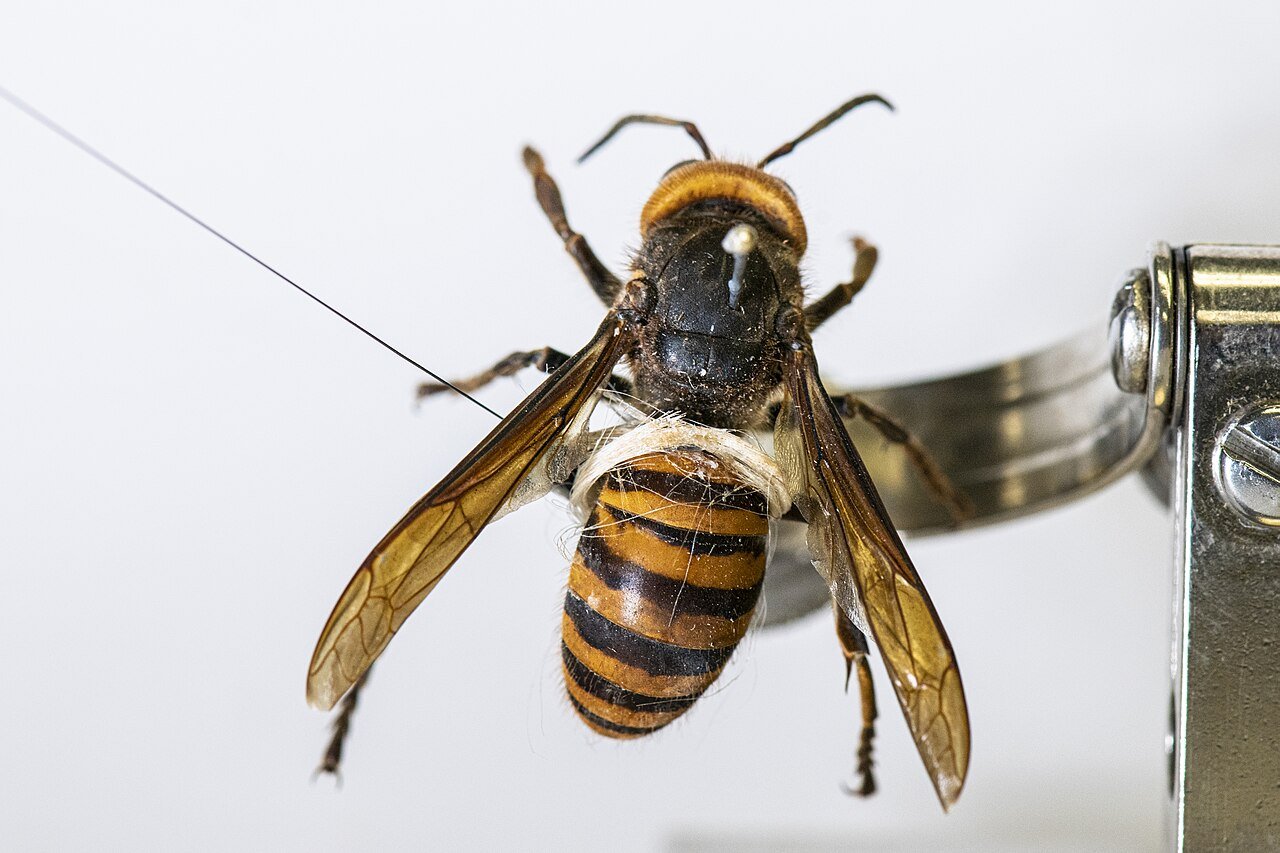
Size is the single best clue. The Washington Invasive Species Council notes that no native wasp or hornet in the state grows as large as a northern giant hornet. If the insect you saw was under about 1.25 inches, it was almost certainly something else.
Look-alikes: what you probably saw
| Insect | Size | How to tell it apart |
|---|---|---|
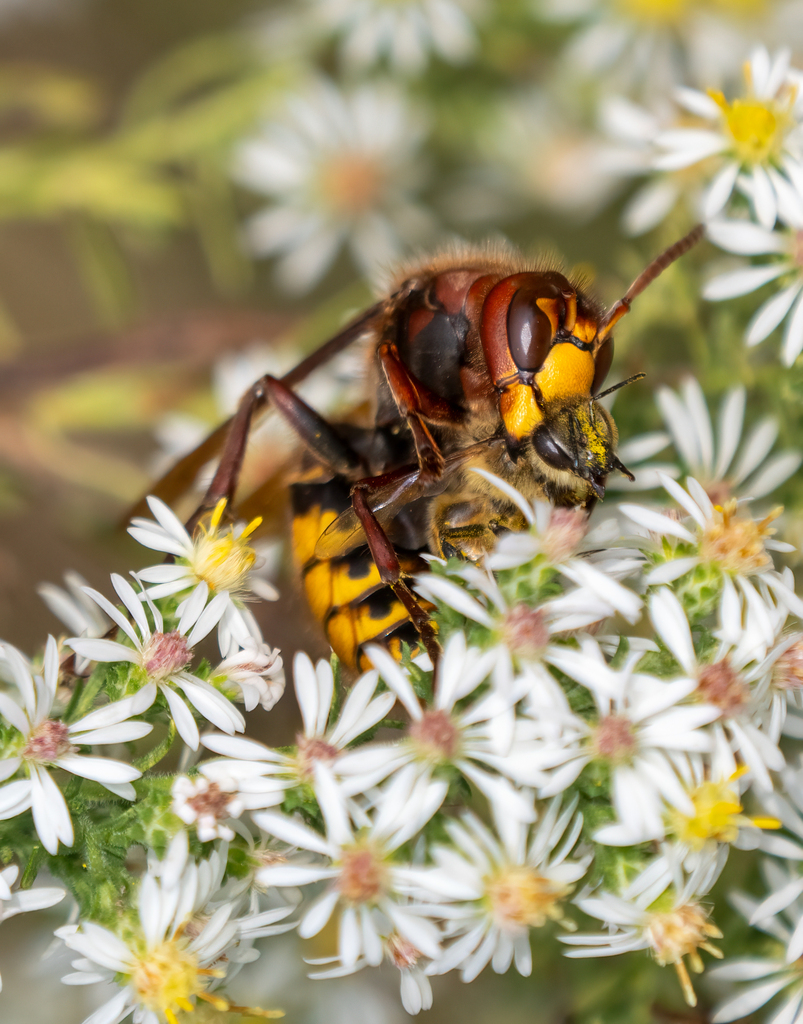
| European hornet | About 1 inch | Reddish-brown head and thorax, yellow abdomen with dark teardrop marks. Common in the eastern US; often flies to lights at night. |
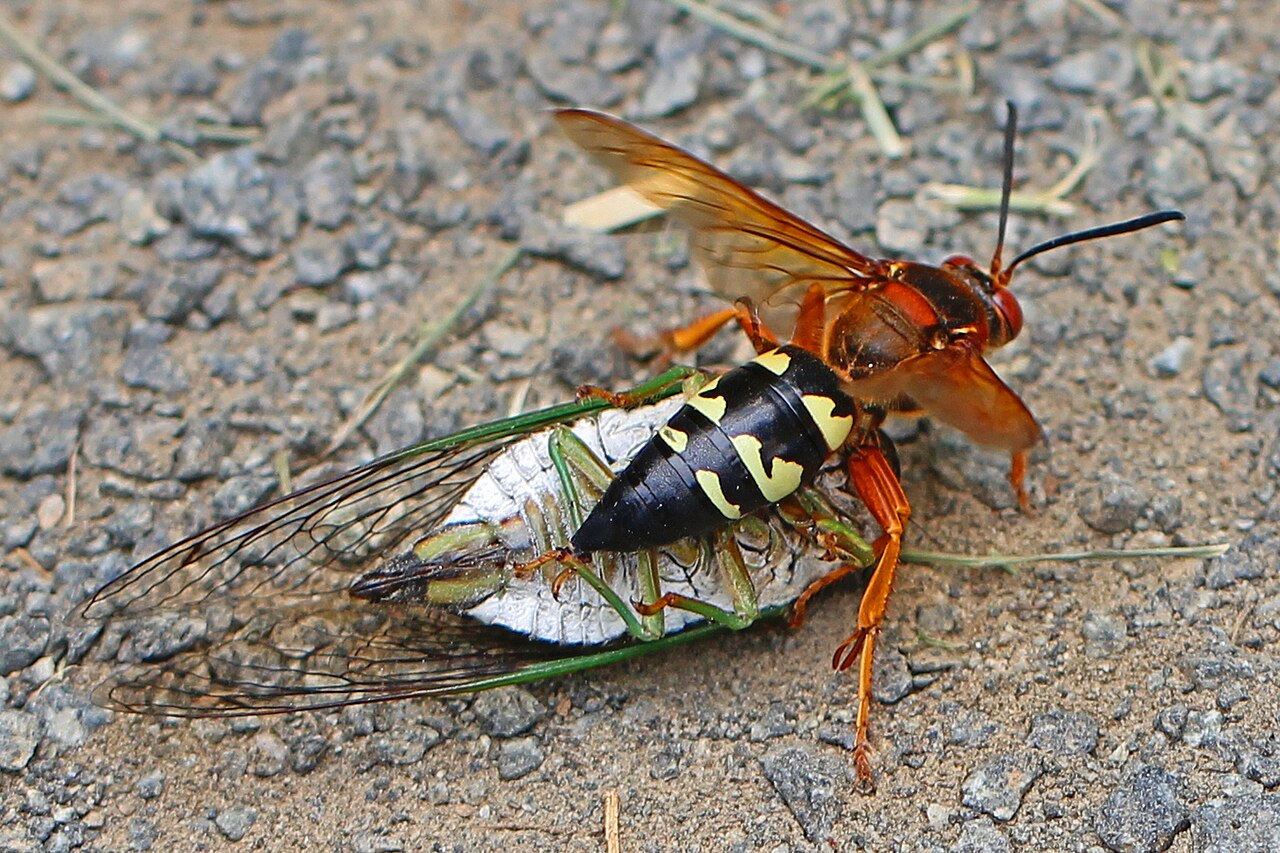
| Cicada killer | Up to about 1.5 inches | Black or rusty body with pale yellow bands; digs holes in bare soil in mid-summer. Males cannot sting and females rarely do. |
| Yellow-legged hornet | About 3/4 to 1 inch | Mostly dark body, one orange band near the tip, bright yellow lower legs. Established in parts of Georgia and South Carolina. |
| Bald-faced hornet | About 3/4 inch | Black and white, not orange; builds gray paper nests in trees and under eaves. |
| Yellowjacket queen | About 3/4 inch | Bright yellow and black, seen alone in spring looking for a nest site. See bumblebee vs. wasp vs. hornet. |
Think you saw one? What to do
- Keep your distance. Do not swat it, catch it by hand or look for its nest. Its stinger is longer than a honey bee’s, and it can sting more than once.
- Take a photo. A clear shot from a safe distance is the most useful thing you can send. If you can, include something for scale, such as a fence board or a coin nearby.
- If you find a dead one, keep it. Put it in a sealed bag or jar and store it in the freezer. A specimen lets experts confirm the species; a photo alone sometimes cannot.
- Report it. In Washington, use WSDA’s Hornet Watch report form at agr.wa.gov/hornets. In other states, contact your state department of agriculture, state apiarist or county extension office. Give the date, the exact location and your photo.
- Beekeepers: check your hives. Hornets hovering at the entrance, or piles of dead bees with their heads removed, are worth reporting too.
Where it nests, and why you will not find one under the eaves
Most nests homeowners deal with hang in the open: paper wasp combs under eaves, gray bald-faced hornet balls in trees. The northern giant hornet nests out of sight, underground or inside hollow trees, often using old rodent burrows or rotting roots. The Washington nests were found in tree cavities, mostly by tagging live hornets and following them home. If you see a big open nest or a paper ball, it belongs to a different insect; our guide to types of wasp nests will help you match it.
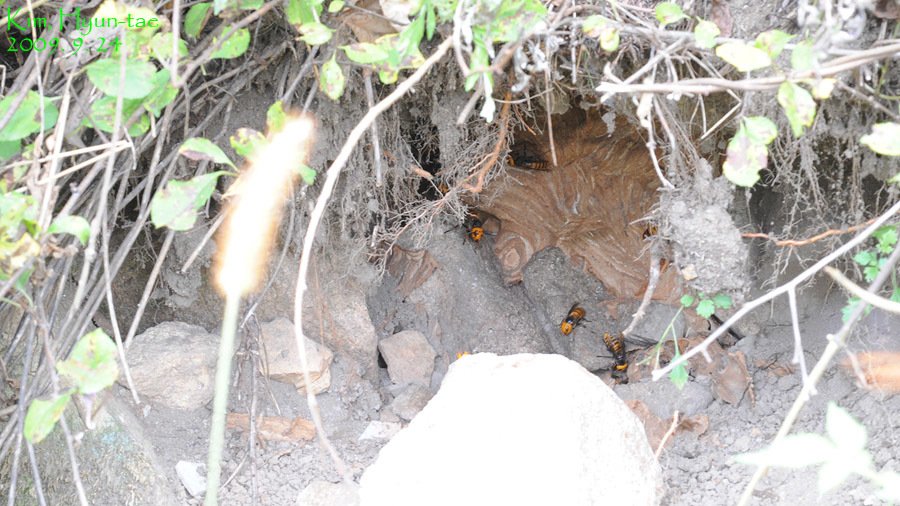
Is it dangerous to people?
Away from its nest, a northern giant hornet is not especially aggressive toward people. The danger is in numbers and venom: each sting is very painful and delivers much more venom than a honey bee sting, and several stings at once can be serious even for people without an allergy. Its biggest threat is to honey bees. WSDA notes that a group of these hornets can wipe out a honey bee hive in as little as 90 minutes, which is why the eradication effort was taken so seriously.
For any wasp or hornet sting, the basics are the same: move away, wash the site, use a cold pack, and watch for signs of a reaction. See wasp sting first aid and sting allergy.
Call 911 if anyone has trouble breathing, swelling of the face, lips or throat, dizziness or a fast heartbeat after a sting, or has been stung many times. Use an epinephrine auto-injector if one has been prescribed.
FAQ
Are murder hornets in my state?
Almost certainly not. Washington is the only state with confirmed northern giant hornets, and the species was declared eradicated there in December 2024. Reports from other states have turned out to be look-alikes, most often European hornets and cicada killers.
Is the northern giant hornet the same as the Asian giant hornet?
Yes. It is the same species, Vespa mandarinia. “Northern giant hornet” became the official common name in the US in 2022; “Asian giant hornet” and “murder hornet” are older nicknames.
I saw a huge wasp digging holes in my lawn. Is that one?
That is almost always a cicada killer, a large, mostly harmless ground-nesting wasp that appears in July and August.
Could it come back?
It is possible. The 2019 arrivals likely came in with shipping, and the British Columbia and Washington hornets were not closely related. That is why states still trap at ports and ask for reports.
Next step
- Not sure what you saw? Compare it in wasp identification.
- Big reddish hornet at your porch light at night? Read European hornet.
- Worried about the 2026 Washington find? See yellow-legged hornet.
More in Identify
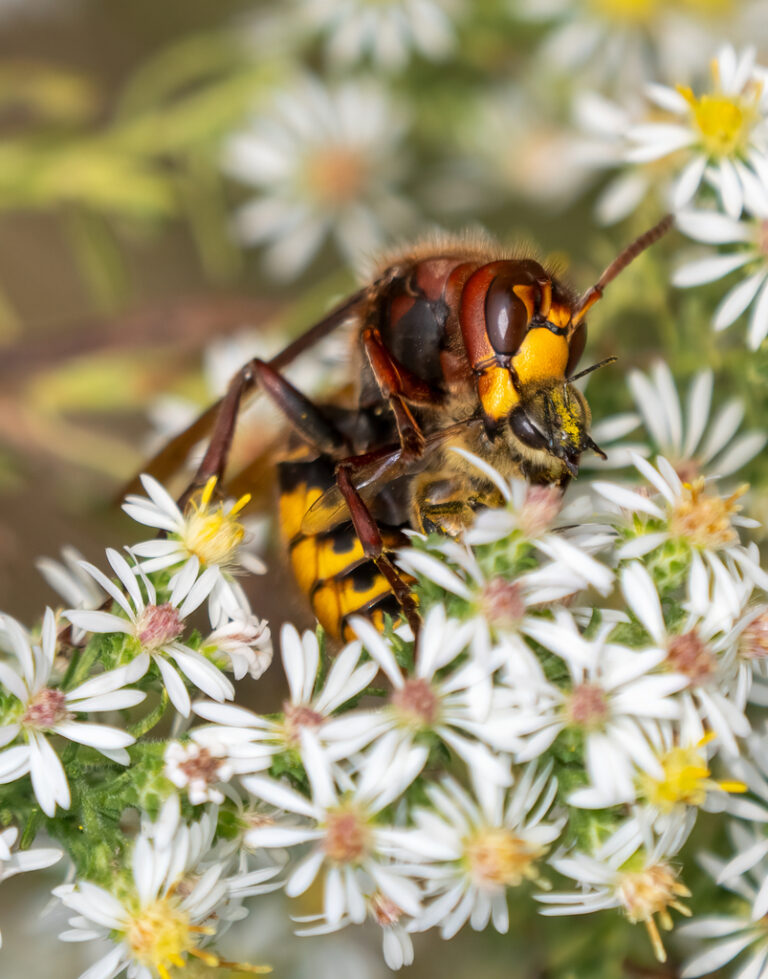 European HornetThe European hornet is the only true hornet in the eastern U.S. and the largest one you are likely…
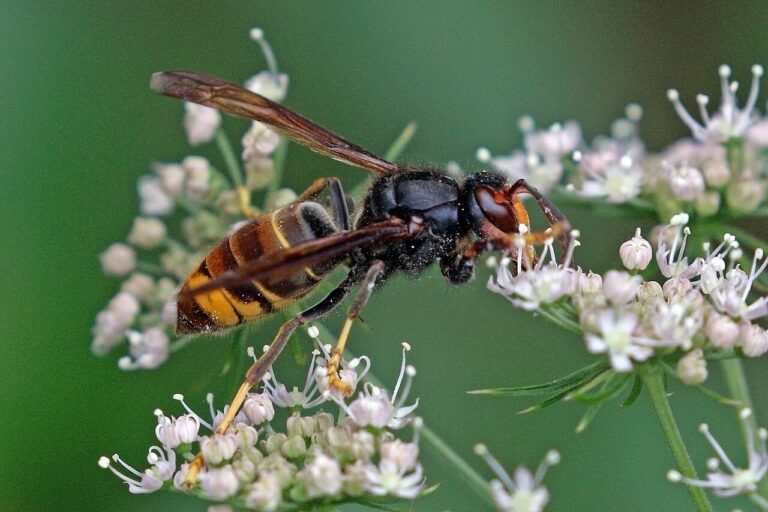 Yellow-Legged Hornet: How to Recognize It and What to DoThe yellow-legged hornet is an invasive hornet from Southeast Asia, first found in the U.S. near…
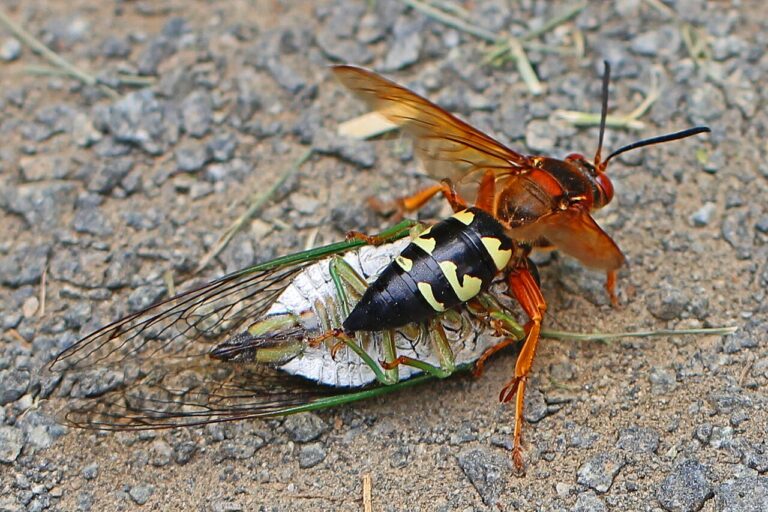 Cicada Killer WaspsGiant wasps digging holes in bare soil in summer. Males cannot sting.
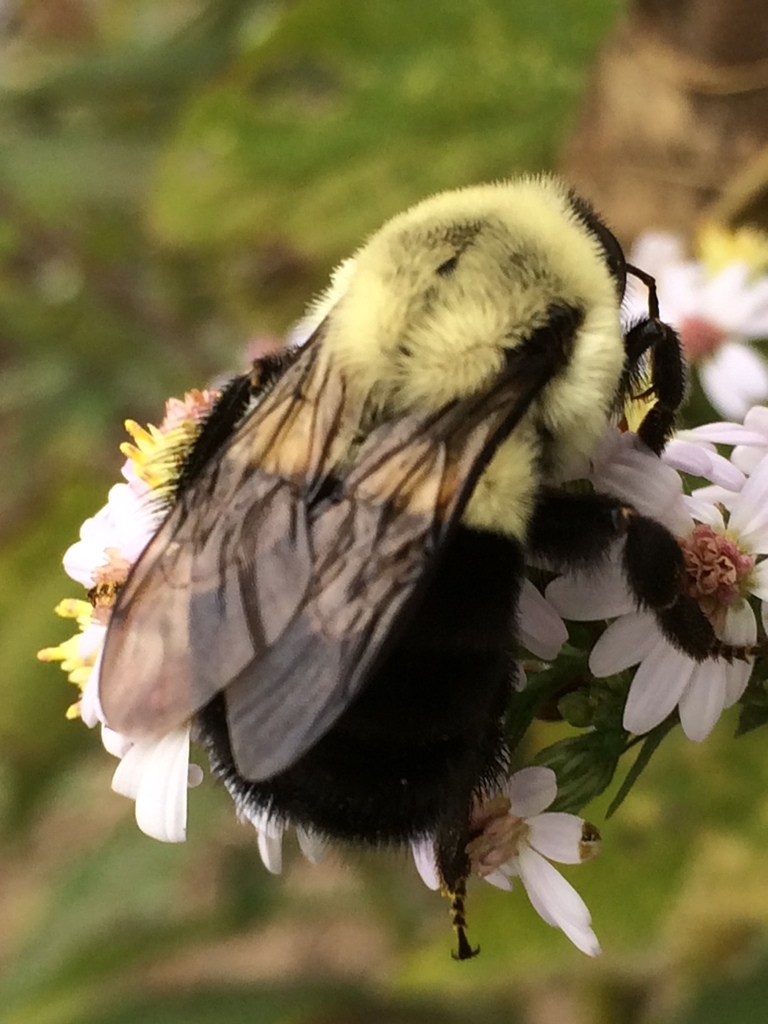 Bumblebee vs. Wasp vs. Hornet: How to Tell Them ApartBumblebees are round and fuzzy, wasps are smooth and narrow-waisted, and hornets are large wasps.…
Sources
- Report Invasive Hornet Sightings, Washington State Department of Agriculture, 2026.
- WSDA, USDA declare northern giant hornet eradicated, WSDA news release, December 2024.
- Northern Giant Hornet fact sheet, Washington Invasive Species Council, March 2025.
- Invasive Hornets, Oregon Department of Agriculture, 2026.
Photos on this page are shared by their authors on Wikimedia Commons and iNaturalist under Creative Commons licenses or in the public domain, credited under each image. For who writes these guides and how we stay independent, see About.