
Wasps in the house: where they come from and what to do
Updated
A wasp buzzing against a window is usually nothing more than a lost visitor. A few slow wasps showing up on sunny days in late winter is something else, and wasps appearing every day around a light fixture is something else again. What to do depends on how many you see, when, and where. This guide helps you tell which situation you are in.
Short answer
One wasp indoors: open a window, turn off the lights, or trap it under a glass, and it is solved. A few sluggish wasps in fall, winter or early spring are usually queens that were overwintering in the attic or walls; they rarely sting, and the fix is a vacuum now and sealing gaps later. Several active wasps every day, especially in summer and near light fixtures, outlets or ceiling vents, usually mean a nest in a wall, ceiling or attic. Do not seal the gaps then; call a pest professional.
Is this the right guide? This guide is about wasps you find inside the living space. If you can trace them to a gap in an outside wall, see wasp nest in a wall; if they come from a bathroom or dryer vent, see wasps in a vent; if they appear around the fireplace, see wasps in the chimney; and if there is activity above the ceiling, see wasp nest in the attic.
Which situation are you in?
| What you see | Most likely cause | What to do |
|---|---|---|
| One wasp, once, near an open door or window | A forager that flew in by accident | Let it out or trap it. Nothing else needed. |
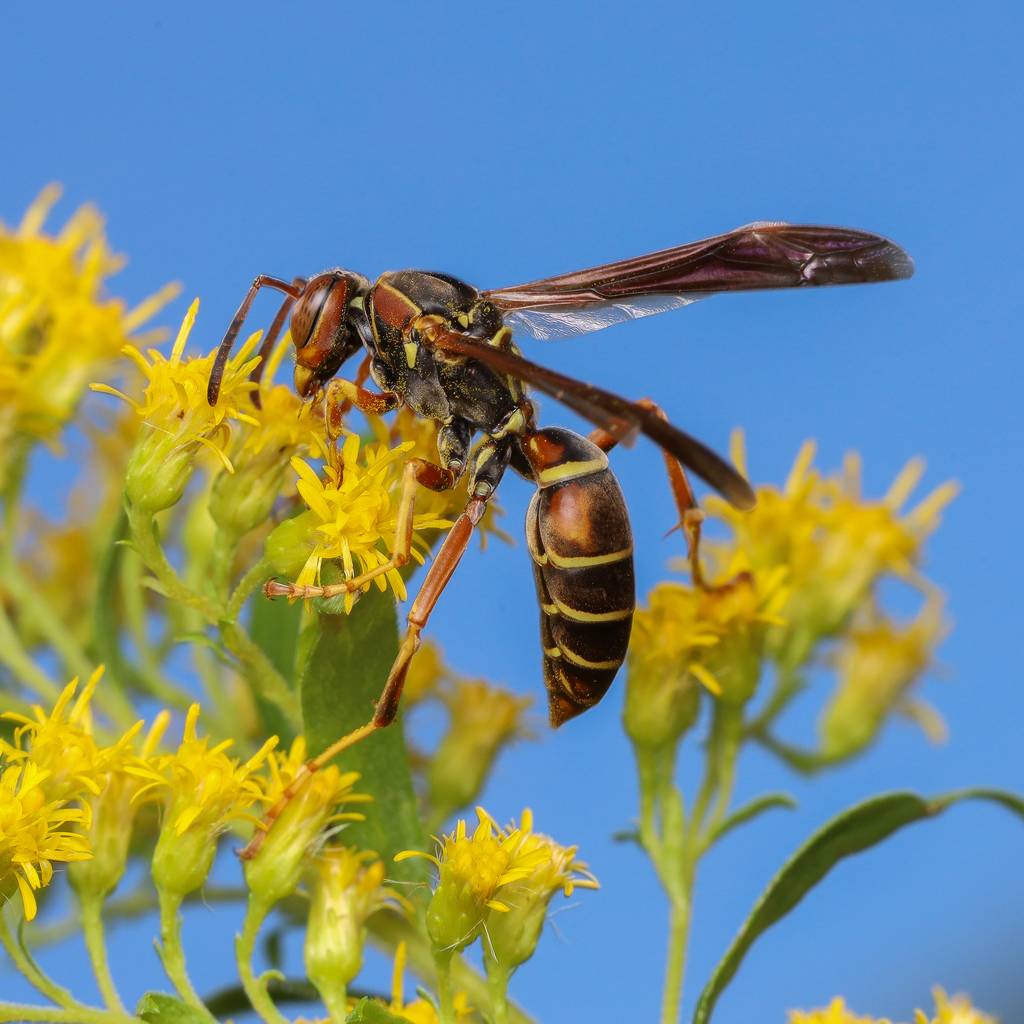
| A few slow wasps on warm days in late fall, winter or early spring, often at windows | Overwintering queens, usually paper wasps, sheltering in the attic, walls or window frames | Vacuum or trap them. Seal gaps in spring once they have gone. |
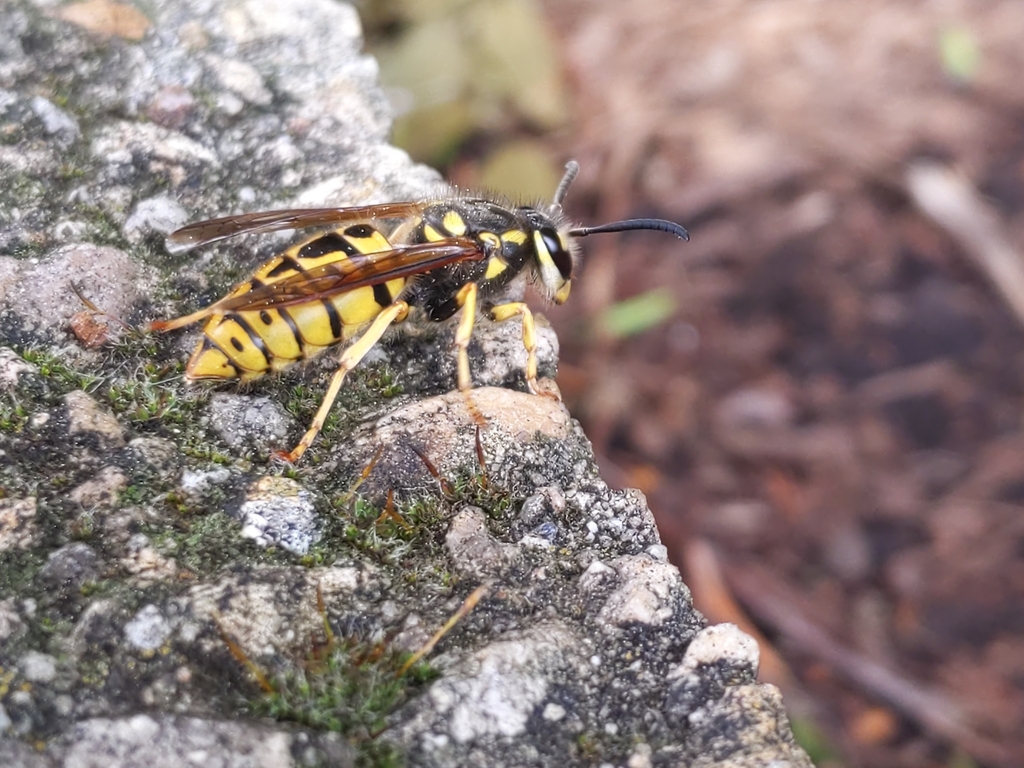
| Several active wasps every day in summer or early fall | A nest in a wall, ceiling, attic, or right next to a gap | Find where they come in; call a professional. Do not seal the gap. |
| Wasps around a light fixture, outlet, ceiling vent or recessed light | A nest in the ceiling or wall void behind it | Cover the fixture with tape or keep the light off; call a professional the same day. |
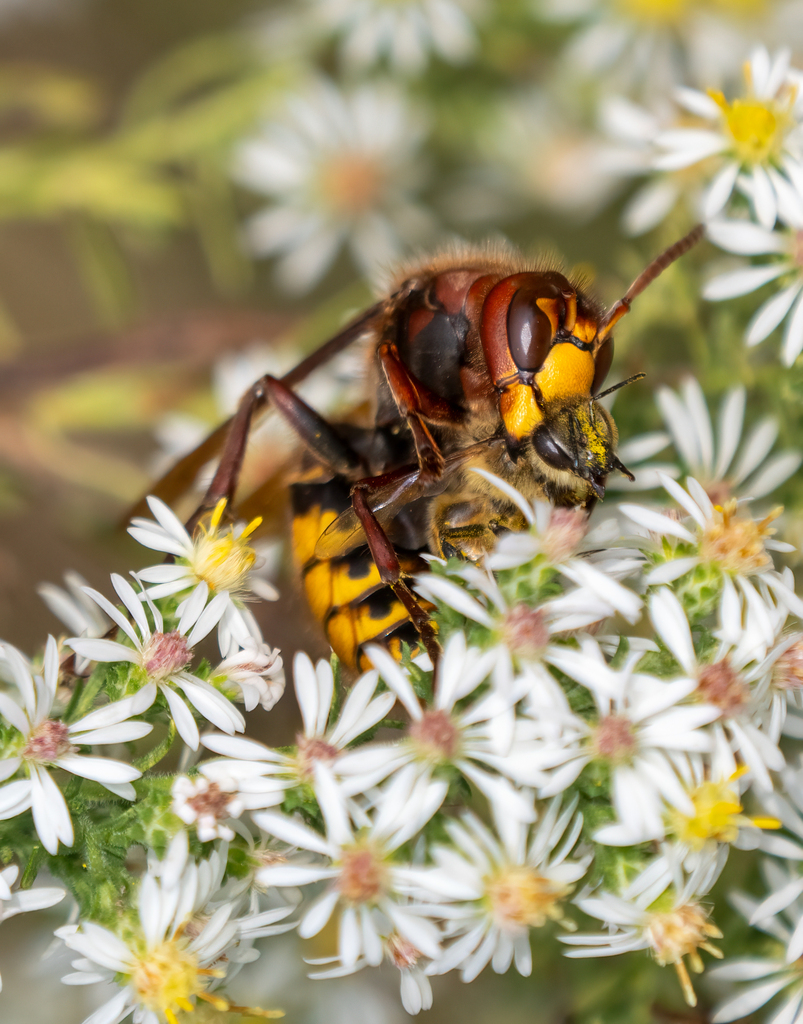
| Large brown and yellow wasps at night, drawn to lights | European hornets nesting in the wall, attic or a nearby hollow tree | Professional. See European hornets. |
Getting a single wasp out
- Stay calm and keep your distance. A wasp looking for a way out rarely stings unless swatted or trapped against skin.
- Give it a way out: open a window or door in that room, close inside doors, and turn off the lights. Wasps fly toward daylight.
- Or trap it: when it lands on a window, cover it with a glass, slide a stiff card underneath and release it outside.
- Or vacuum it with a hose attachment, then empty the canister or bag outdoors.
A fly swatter works too, but swatting and missing makes a wasp more likely to sting. Do not use a bug bomb or fogger for a single wasp.
Slow wasps in fall, winter and early spring
In fall, a wasp colony raises new queens. The old colony dies after the first hard frosts, and the mated queens look for sheltered places to spend the winter: under bark, in wood piles, and often in attics, wall voids, window frames and around siding. On warm days the house heats up, the queens become active, and some find their way into the living space. They are slow, often walk rather than fly, and gather at windows trying to get outside.
- They are not a nest. Overwintering queens do not build nests until spring, and the old nest is never reused.
- They rarely sting, because they have no nest to defend. They can still sting if stepped on or grabbed.
- Vacuum them up as they appear. Spraying is not necessary.
- Seal entry points once the weather warms and the wasps have left: gaps around windows, doors, vents, pipes and cables, and loose trim.
If one starts building a small nest under an eave in spring, knock it down early while only the queen is there. See the best time to remove a wasp nest.
Signs of a nest in the walls, ceiling or attic
- Several active wasps indoors every day, often in the same room.
- Wasps coming out around a light fixture, outlet, ceiling vent or attic hatch.
- Buzzing or scratching inside a wall or ceiling, or a damp, warm or discolored spot.
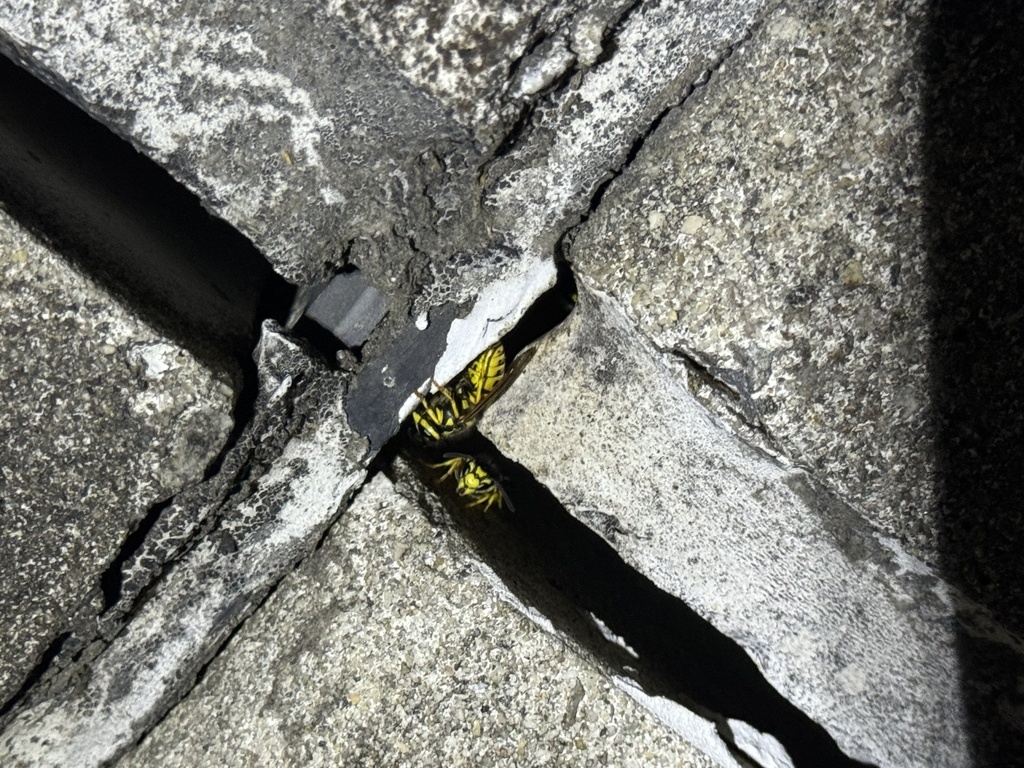
- A steady stream of wasps going in and out of one gap on the outside of the house.
Do not seal the gap where the wasps come in from outside while the nest is active, and do not spray into a wall. Trapped wasps look for another way out and can chew through drywall into a room. Close the door to the affected room, put a towel along the bottom gap, keep that light off, and call a professional. Details: wasp nest in a wall and wasp nest in the attic.
How wasps get into the house
- Open doors and windows, and torn or loose screens.
- Gaps around window and door frames, and under siding and trim.
- Attic, soffit, ridge and dryer vents without fine screening.
- Holes around pipes, cables and outdoor faucets.
- From inside the walls and ceiling, through light fixtures, outlets and recessed lights, when a nest is in the void.
What not to do
- Do not set off a bug bomb or fogger. It does not reach a nest inside a wall and leaves residue on every surface in the room.
- Do not spray into outlets, switch plates or light fixtures.
- Do not seal the outside entrance of an active nest, or caulk around a fixture wasps are coming through.
- Do not swat at wasps near your face or crush them against bare skin.
Keeping them out
Repair screens, add door sweeps, and screen vents with fine mesh. Caulk gaps around frames, pipes and cables. Check the outside of the house in April and May for new nests under eaves and near doors, and remove them while they are small. More: how to prevent wasp nests.
When to call a professional
Call a licensed pest professional if wasps appear indoors every day, come from fixtures or vents, or come out of a gap in the outside wall; if you hear them in a wall or ceiling; if anyone at home is allergic; or if you see large hornets. A pro can find the nest and treat it through the entrance without driving the wasps further into the house. See when to call a professional and what removal costs.
We are an independent guide and do not do removals or sell products.
If someone is stung
For ordinary stings, see what to do first.
Call 911
Call 911 right away if someone who was stung has trouble breathing, swelling of the lips, tongue or throat, hives spreading beyond the sting, dizziness or fainting. Use a prescribed epinephrine auto-injector if one is available.
Common questions
Why do I have wasps in my house in winter?
They are almost always queens that were overwintering in the attic or walls and became active on a warm day. They are not a sign of a nest inside, and they will leave or die off by spring.
Why are there wasps in my house but no nest?
Either they flew in by accident, they are overwintering queens, or the nest is hidden in a wall, ceiling or attic, or just outside a gap. If you see them every day in summer, look for a steady stream of wasps at one spot on the outside.
Can wasps build a nest inside the house?
Rarely in a living space, but often in wall voids, attics, soffits and crawl spaces. In spring, a queen that overwintered indoors may start a nest in an attic or garage.
Will a wasp in the house sting me?
A lone wasp trying to get out rarely stings unless it is swatted, stepped on or trapped against skin. Overwintering queens are especially unlikely to sting.
What attracts wasps into the house?
Light, warmth in fall and winter, and food, especially sweet drinks and fruit in late summer. Mostly, though, they get in through open doors and gaps.
Your next step
- Think there is a nest in a wall: wasp nest in a wall.
- Not sure what kind of wasp: all identification guides.
- All removal guides: wasp nest removal.
More in Removal
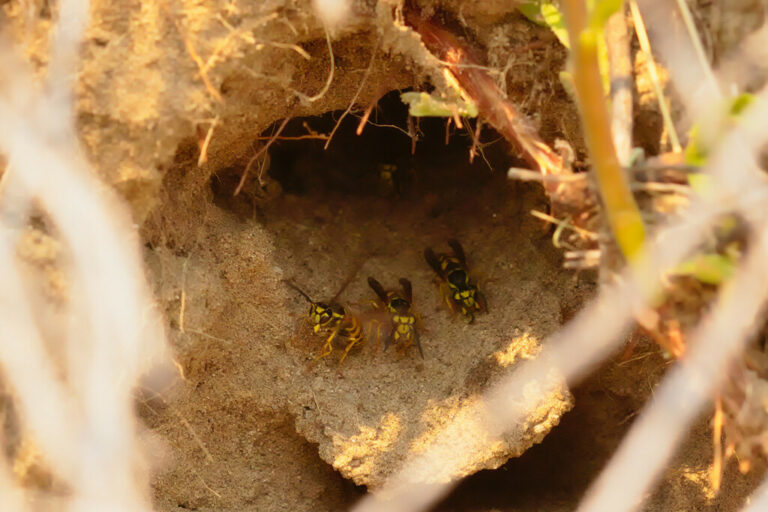 How to Get Rid of a Yellowjacket Ground NestYellowjackets streaming in and out of a hole in the lawn are one of the most common late-summer…
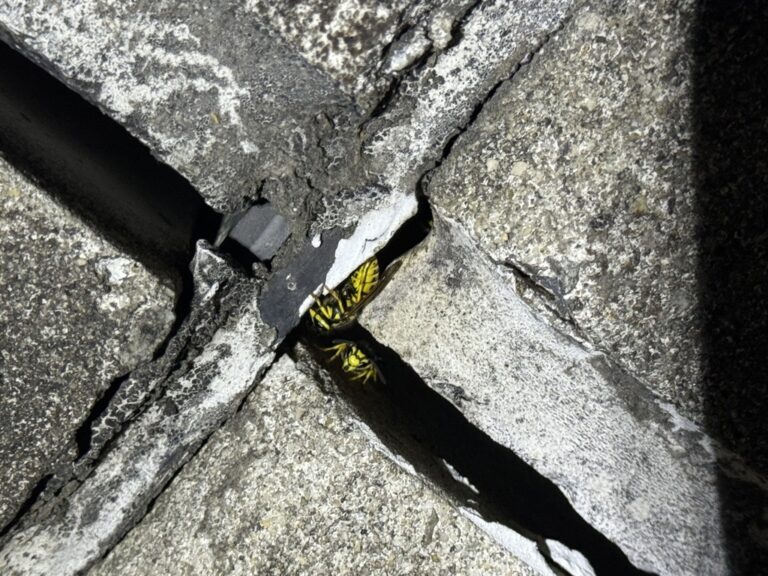 Wasp Nest in a Wall: Why Not to Seal ItWasps flying in and out of a crack in your siding, a gap under the trim or a vent usually mean a…
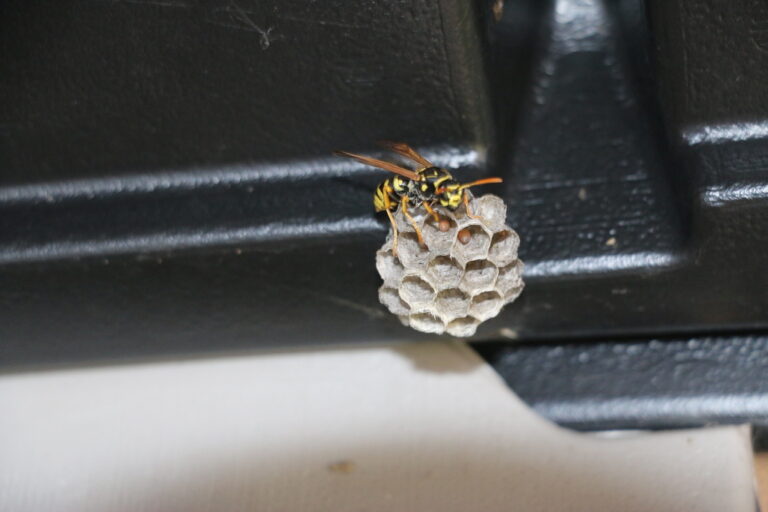 How to Get Rid of a Wasp Nest SafelyA small wasp nest you can reach from the ground is often a job you can do yourself in one evening.…What Not to Do With a Wasp NestMost bad stings around wasp nests come from a few predictable mistakes: disturbing the nest in the…
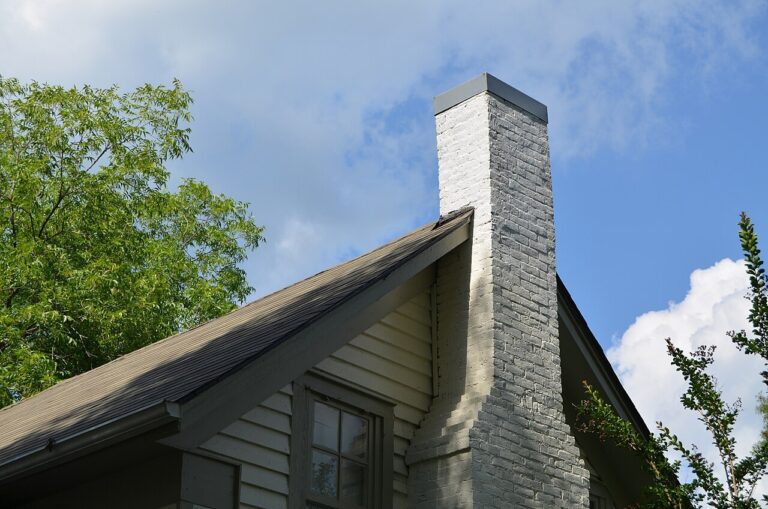 Wasps in the Chimney: What to DoWasps flying around the chimney top or showing up by the fireplace usually come from a yellowjacket…
Sources
- Cold Brings Wasps, Other Insects into Homes, University of Georgia College of Agricultural and Environmental Sciences.
- Wasps in the house, Ask Extension, 2025.
- Yellowjackets, Washington State University Pestsense, reviewed 2025.
- Controlling Wasps, Yellow Jackets and Hornets, Cornell Cooperative Extension of Suffolk County, revised 2025.
- Yellowjackets Undercover, Pinto & Associates, PCT Magazine.
Photos on this page are shared by their authors on iNaturalist under Creative Commons licenses, credited under each image. For who writes these guides and how we stay independent, see About.