
Wasp nest in the attic: what to do, and what to leave alone
Updated
Short answer
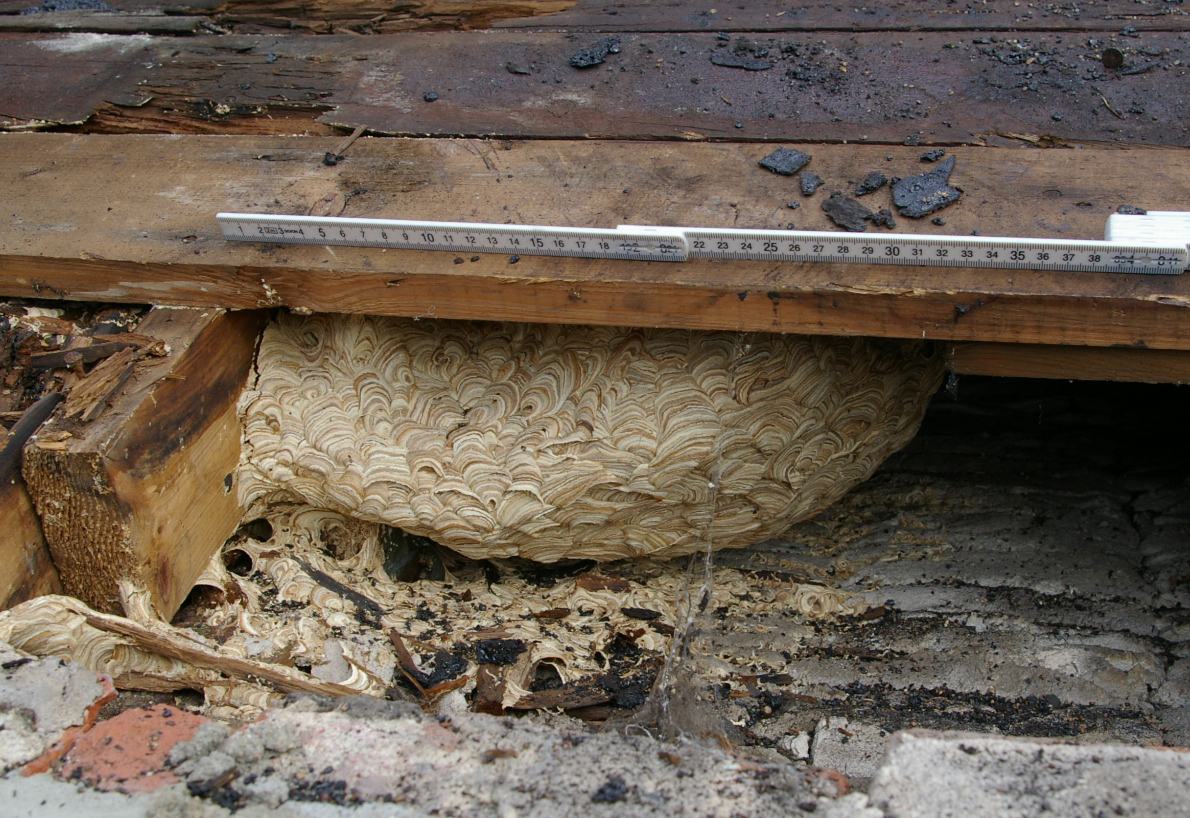
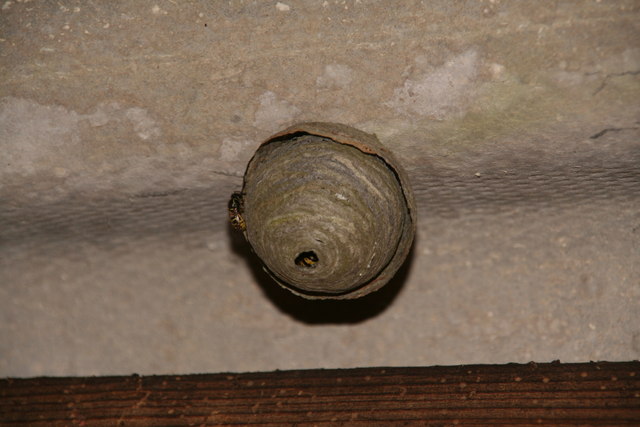
Wasps in an attic usually get in from outside, through a gable vent, a soffit gap or a gap at the roof edge. A small, open paper comb on a rafter is often a paper wasp starter nest; a closed gray paper ball is usually yellowjackets or hornets. Do not crawl in and poke at it, and never seal the outside gap while wasps are using it. An active nest in a hot, cramped attic is a job for a professional. In late fall and winter, after hard frosts, the colony dies and the empty nest can be taken down. A few slow wasps indoors in winter usually means overwintering queens, not a nest.
Is this the right guide? This guide is about nests inside the attic or roof space. If you only see wasps entering a soffit, gable or bathroom vent from outside, see wasps in a vent; if the nest hangs outside under the roofline, see wasp nest under eaves; and if the wasps are inside a wall rather than the attic, see wasp nest in a wall.
What you are probably looking at
| What you see | Most likely | What it means |
|---|---|---|
| Small open comb, cells facing down, on a rafter or roof board | Paper wasps | Often a spring starter nest. Small colonies, rarely aggressive unless the nest is touched. |
| Closed gray or tan paper ball, one small entrance | Yellowjackets or hornets | Can hold hundreds to thousands of wasps by late summer. Defended hard. Call a professional. |
| Wasps flying in and out of a gap near the roof, but no nest in sight | Yellowjackets nesting in a void | The nest is hidden between boards, in insulation or a wall cavity. Do not seal the gap. |
| A few slow wasps in rooms or at windows in winter | Overwintering queens | No nest to defend. They sheltered in the attic in fall and wander toward light on warm days. |
| Dry, empty nest found in winter | Last year's colony | Dead and not reused. Safe to remove. |
How wasps get into an attic
Attics are dry, sheltered and warm, which is exactly what a queen looks for in spring and what overwintering wasps look for in fall. The usual ways in are torn or missing screens on gable and soffit vents, gaps where the soffit meets the wall, loose fascia boards, gaps at the roof edge and around pipes or cables. Paper wasps often build right on the rafters. Yellowjackets more often build inside a hidden space and use a single gap as their door, the same way they use wall voids and gaps under the eaves.
Is the nest active?
Check from outside, not from inside the attic. On a warm afternoon, stand back and watch the roofline, vents and soffits for 10 to 15 minutes. A steady line of wasps going in and out of one spot means an active nest. No traffic on several warm days in late fall, after hard frosts, usually means the colony is finished. Our guide to checking whether a nest is active covers the details.
What to do, step by step
- Stay out of the attic for now. A cramped, hot attic is a bad place to be stung: you cannot back away fast, and footing on joists is poor.
- Find the outside entrance. In daylight, watch from the ground for the gap the wasps use. Note it for yourself or for a professional.
- Decide by size and season. A tiny paper wasp comb in spring, with one queen, is a small job. An enclosed nest or a busy entrance in late summer is not.
- Call a professional for active yellowjacket or hornet nests. They can treat the nest through the entrance or reach it inside with the right gear. See when to call a pro.
- Do not seal the outside gap while wasps use it. Trapped yellowjackets look for another way out and can end up chewing into the living space. Seal only after activity has stopped.
- Close the gaps between the attic and your rooms. Check the attic hatch, ceiling light fixtures and gaps around pipes so stray wasps cannot wander indoors.
- After the colony dies, fix the way in. Remove the empty nest, repair torn vent screens and seal gaps around the soffit and roof edge. Screen vents rather than blocking them; your attic still needs airflow.
Wasps coming from the attic in winter
If you find a few sluggish wasps in an upstairs room, on a window or near a ceiling light in winter, they are most likely queens that crawled into the attic or walls in fall to wait out the cold. Warm days wake them, and they follow the light into the house through gaps around fixtures, baseboards or vents. There is no nest to defend, so they are not aggressive; the main risk is stepping on one or pressing against it. Swat or vacuum them. Seal inside gaps now, but leave outside cracks alone until spring, when the queens leave on their own; sealing too early can trap them inside. Then make the attic wasp-tight in late summer, before they look for winter shelter again. More in wasps in the house.
Can you deal with it yourself?
Sometimes. A small, open paper wasp nest you can reach safely from solid footing can be treated in the evening with a wasp and hornet product labeled for the site, following the label exactly, as in how to remove a paper wasp nest. A nest the size of a softball or larger, any enclosed nest, a nest you cannot see, or one above insulation and wiring is a professional job. Aerosol sprays are flammable: never spray near a furnace, water heater, open light fixture or anything with a flame or spark. If anyone in the house is allergic to stings, do not try it at all.
What a professional will cost
Attic nests typically run about $325 to $450 to remove, according to the cost guides we track; harder access, very large nests and emergency visits cost more. See wasp nest removal cost for the full breakdown.
When to act
Spring is the easiest time: nests are small and colonies are just starting. Late summer and early fall are the hardest, when colonies are biggest and most defensive. If the nest is out of the way and nobody needs to go into the attic, waiting for several hard frosts is often the simplest option. More in the best time to remove a wasp nest.
What not to do
- Do not seal, foam or tape the outside entrance of an active nest.
- Do not use fire, gasoline or water. Fire in an attic can burn the house down.
- Do not set off a bug bomb in the attic; it will not reach a nest inside a void and adds a fire risk.
- Do not try to vacuum or bag an active nest yourself.
If someone is stung
Trouble breathing, throat or tongue swelling, dizziness or hives spreading over the body after a sting: call 911.
For an ordinary sting, see what to do first after a sting and signs of a sting allergy.
Common questions
Will wasps come back to the same attic nest next year?
No. Old nests are not reused, and the colony dies over winter. A new queen may still pick the same sheltered spot in spring, which is why fixing the gap matters. See do wasps return to an old nest.
Do I have to remove an old, empty nest?
Not for safety, but it is worth doing when you fix the gap. Dead larvae left in the nest can attract other pests, and a clean attic makes a new nest easier to spot.
Can wasps damage the attic?
Yellowjackets do not eat wood; they make nest paper from wood fibers they collect outside. The real risks are stings and wasps finding their way into the house.
Is a wasp in the bedroom in January a sign of a nest?
Usually not. One or a few slow wasps in winter are almost always overwintering queens. A nest shows up as steady traffic in and out of one spot on warm days. See where wasps go in winter.
Your next step
- All removal guides: wasp nest removal.
- Not sure what to do: the wasp nest decision guide.
More in Removal
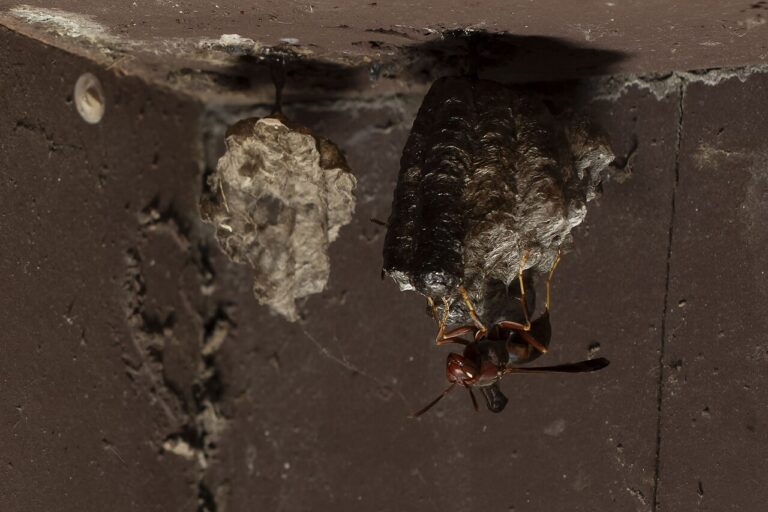 Wasp Nest Under EavesMost nests under eaves, soffits and porch ceilings are paper wasp nests: an open comb, like an…
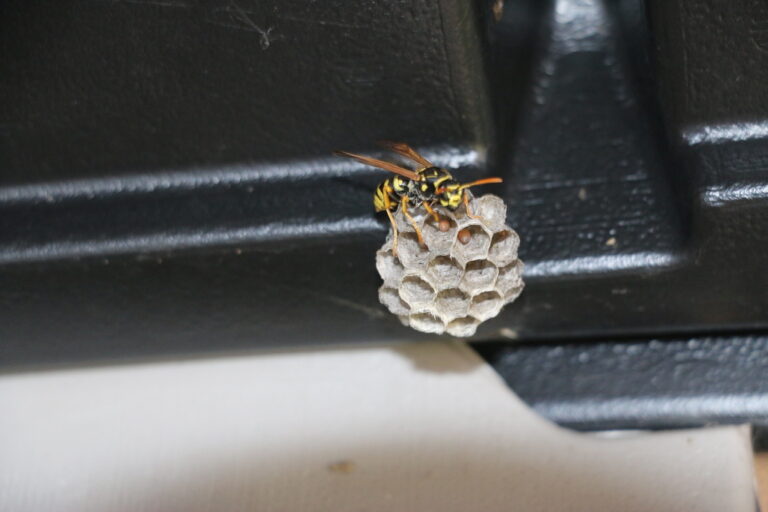 How to Remove a Paper Wasp Nest SafelyA small, open paper wasp nest within easy reach is one of the few nests most homeowners can handle…
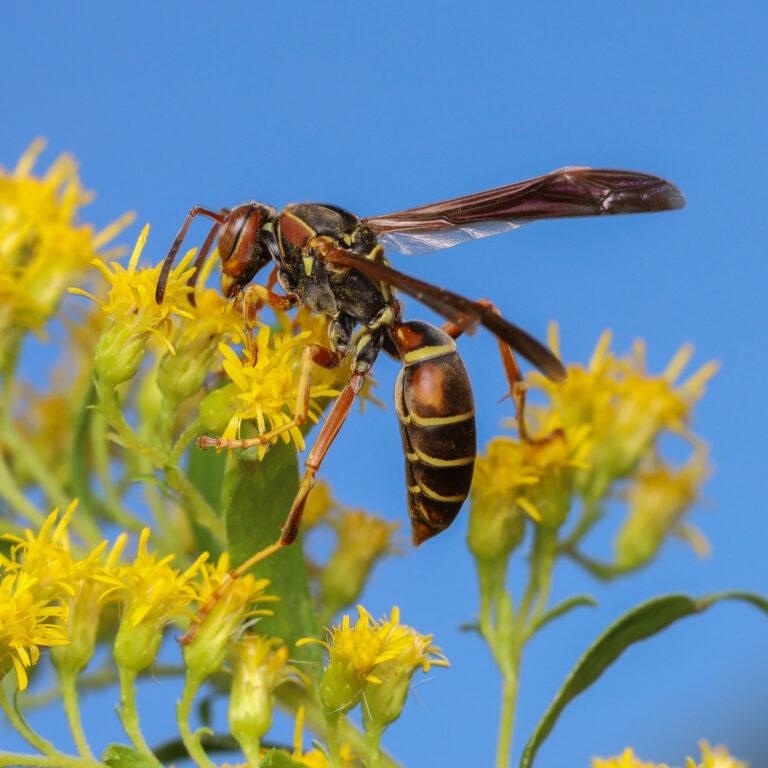 Wasps in the House: Where They Come FromA wasp buzzing against a window is usually nothing more than a lost visitor. A few slow wasps…
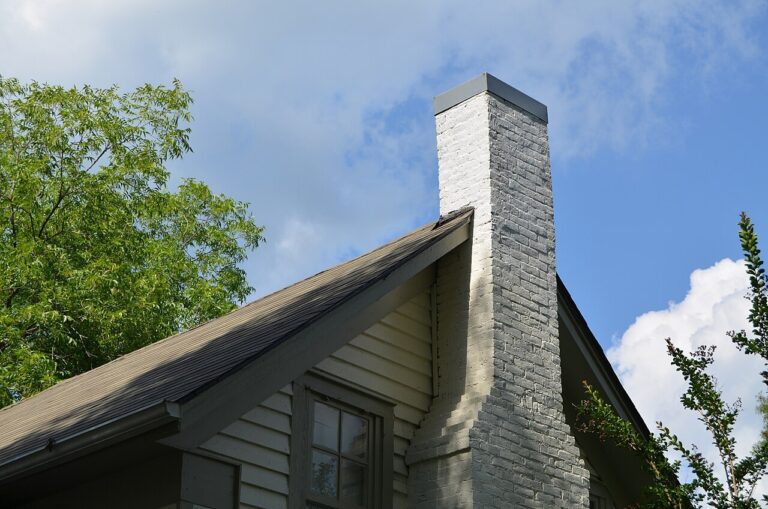 Wasps in the Chimney: What to DoWasps flying around the chimney top or showing up by the fireplace usually come from a yellowjacket…
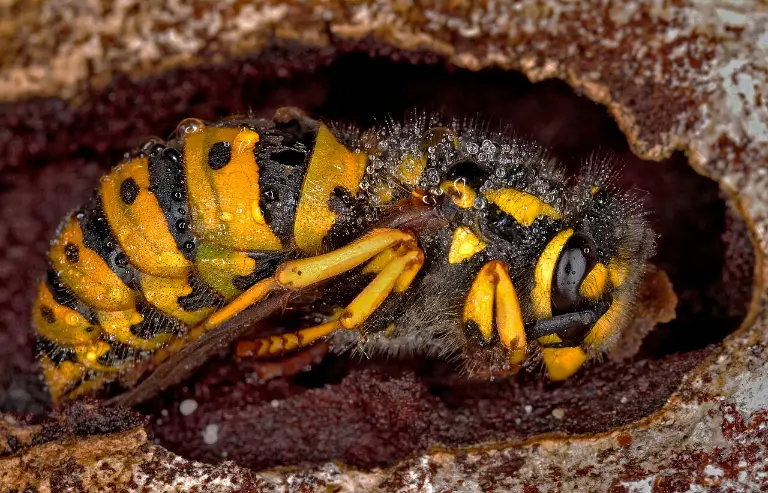 Where Do Wasps Go in Winter?What dies with the first hard freezes, where the queens hide, and why the old nest is not reused.
Sources
- Controlling Paper Wasps in and around Structures, NC State Extension, 2018.
- Paper Wasps (Bug-Wise No. 7), Blake Layton, Mississippi State University Extension, 2012.
- Yellow jackets in a soffit (Ask Extension), University of Maryland Extension, Home and Garden Information Center, 2024.
- Wasp Control Around the House, Iowa State University Extension, Yard and Garden.
- Controlling Wasps, Hornets and Yellowjackets (ENTFACT-620), Michael F. Potter, University of Kentucky Entomology, revised 2018.
Photos on this page are shared by their authors on Wikimedia Commons and geograph.org.uk under Creative Commons licenses or in the public domain, credited under each image. For who writes these guides and how we stay independent, see About.