
Wasps in a vent: bathroom fan, dryer and attic vents
Updated
Short answer
Wasps showing up in a bathroom, laundry room or kitchen usually come through the duct behind an exhaust fan or vent, often from a nest in or next to the vent hood outside. Keep the room closed, and if wasps are getting in, cover the inside grille temporarily with tape and cardboard. Do not seal the outside opening while wasps use it, and never spray into a dryer vent or a furnace or water heater vent. A nest inside a duct is a job for a professional. Once the colony is gone, fix the flap or screen so it does not happen again.
Is this the right guide? This guide is about wasps using a vent opening: bathroom and kitchen fans, dryer vents, and soffit or gable vents. If the nest is in the open attic space behind a vent, see wasp nest in the attic; if the wasps use a crack in the siding rather than a vent, see wasp nest in a wall; and for a fireplace or flue, see wasps in the chimney.
Which vent is it?
| Vent | How wasps get in | What to do |
|---|---|---|
| Bathroom or kitchen exhaust fan | A stuck, broken or missing flap on the outside hood, or a gap around it | Close the room, cover the inside grille, call a pro if there is a nest in the duct |
| Dryer vent | A flap that no longer closes, or a crushed or disconnected duct | Do not spray or dust into it. Have the nest removed and the duct cleaned before using the dryer heavily |
| Attic gable, soffit or ridge vent | Torn or missing screen | See wasp nest in the attic; screen the vent once the colony is gone |
| Furnace, water heater or boiler vent | Gaps around the vent pipe or a missing cap | Do not touch it. Call a professional; a blocked flue can be dangerous |
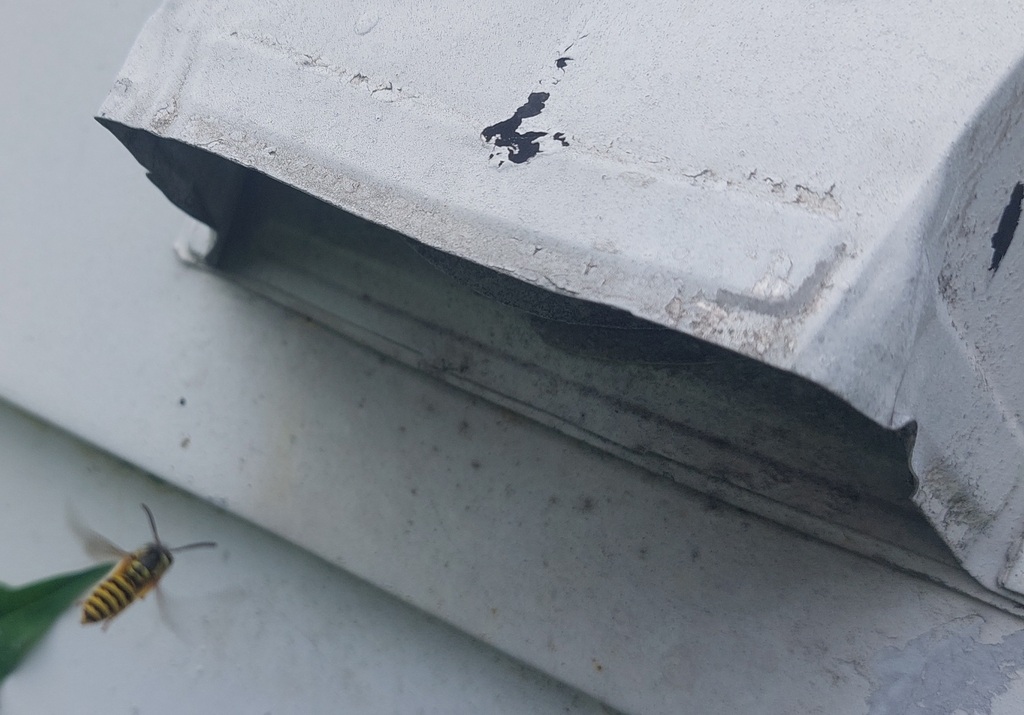
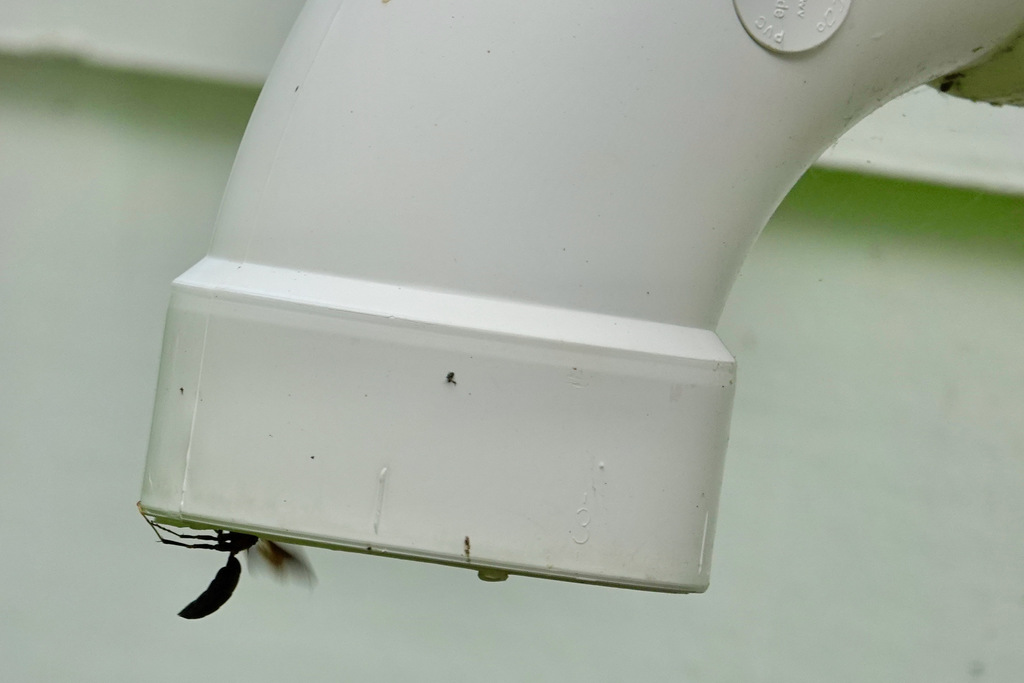
Why the wasps end up in your bathroom
An exhaust fan is a straight path from outdoors to a room. When the outside flap sticks open, wasps can walk or fly up the duct, and some squeeze past the fan grille into the room, drawn to the light. In summer that usually means yellowjackets or paper wasps nesting in or right next to the vent hood. In fall and winter it is more often overwintering queens sheltering in the duct, attic or walls, which wake on warm days and wander inside. Those are slow and rarely sting; swat or vacuum them, and see wasps in the house for the bigger picture.
What to do, step by step
- Close the room. Shut the door and keep children and pets out. Turn the fan off so it is not pulling wasps through the duct.
- Cover the inside grille for now. Tape a piece of cardboard over the fan or vent grille from inside the room. This only stops wasps reaching the room; it does not trap them, because the nest is outside.
- Look at the outside vent, from a distance. In daylight, watch the hood on the wall or roof for wasps going in and out. Note whether they enter the hood itself or a gap beside it.
- Call a professional for a nest in a duct. They can reach it through the hood, often vacuum out the workers and treat what is left. A nest in a duct cannot be moved; it has to be removed.
- Do not seal the outside opening while it is active. Blocked yellowjackets chew or crawl their way out somewhere else, sometimes into the house.
- Afterward, fix the vent. Replace a broken flap, reattach or replace a crushed duct and clean out nest debris. Screen attic vents. On a dryer vent, use a hood with a working flap or a guard made for dryers, not fine window screen, which clogs with lint.
Dryer and gas appliance vents: do not spray aerosols or puff dust into them, and do not run a gas appliance whose vent may be blocked by a nest. Aerosols are flammable, lint burns easily, and a blocked flue can push exhaust back into the house. Leave these to a professional.
Can you treat it yourself?
Only in the simplest case: a small paper wasp nest stuck to the outside of a bathroom or kitchen vent hood, within easy reach from solid ground, and nobody at home allergic to stings. Treat it in the evening with a wasp and hornet product labeled for the site, following the label exactly, as in how to remove a paper wasp nest. Anything inside the duct, any yellowjacket nest and anything on a dryer or appliance vent is a professional job. See when to call a pro.
Late in the season
In fall, a colony in a vent is near its end. Overnight freezes kill off the workers, and worker wasps cannot start a new nest even if a few are missed. If the vent is not in daily use and wasps are not getting inside, waiting for hard frosts and then cleaning and fixing the vent is often the easiest route. More in the best time to remove a wasp nest.
Keep wasps out of vents
- Check exhaust and dryer flaps each spring; they should swing shut on their own.
- Replace cracked or missing vent hoods and caulk gaps around them, once no wasps are using them.
- Repair torn screens on attic gable and soffit vents before late summer, when queens look for winter shelter.
- Knock down any small starter nest on a vent hood in spring while it is still the size of a walnut.
For a nest around the roofline instead, see wasp nest under the eaves; for wasps going in and out of siding, wasp nest in a wall. Costs for a professional visit are in wasp nest removal cost.
If someone is stung
Trouble breathing, throat or tongue swelling, dizziness or hives spreading over the body after a sting: call 911.
For an ordinary sting, see what to do first after a sting and signs of a sting allergy.
Common questions
Can I spray wasp killer into the bathroom fan?
It is not a good idea. Spraying from inside rarely reaches a nest in the duct or hood, it leaves pesticide in the room, and it can send angry wasps into the house. Cover the grille and deal with the nest from outside, or call a professional.
Will closing the flap trap the wasps?
Blocking the outside opening of an active nest can force wasps to find another way out, possibly indoors. Wait until the nest is treated or the colony has died before you seal or replace anything.
Why do I keep finding wasps in the bathroom in winter?
Most likely overwintering queens that sheltered in the duct, walls or attic. They are sluggish and rarely sting. Cover the grille, swat or vacuum the ones you find, and fix the vent flap in spring after they have left.
Will they nest in the same vent next year?
The old nest is not reused, but a new queen may choose the same sheltered spot. A working flap and an intact screen are what stop that.
Your next step
- All removal guides: wasp nest removal.
- Not sure what to do: the wasp nest decision guide.
More in Removal
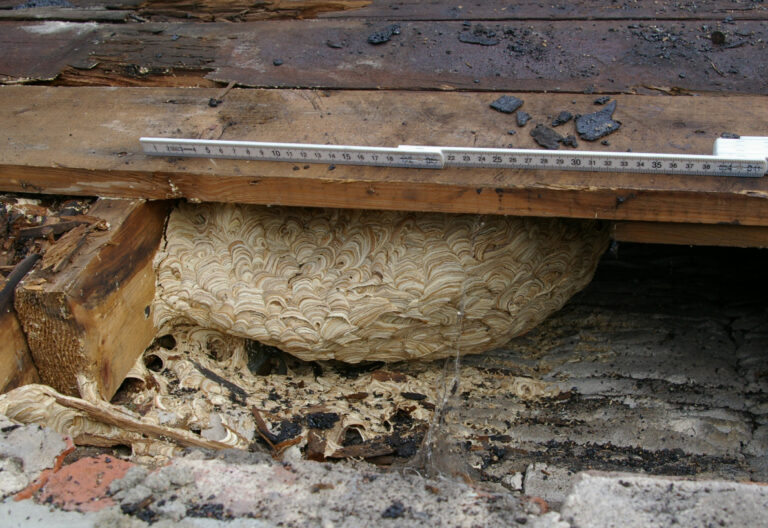 Wasp Nest in the AtticWasps in an attic usually get in from outside, through a gable vent, a soffit gap or a gap at the…
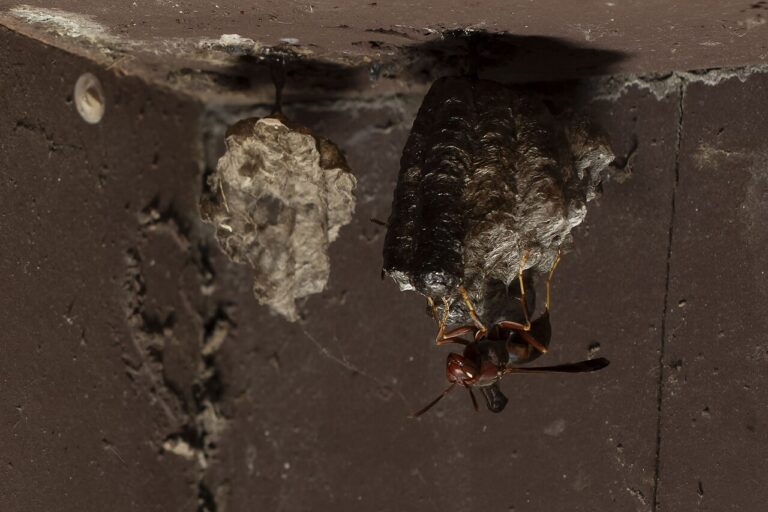 Wasp Nest Under EavesMost nests under eaves, soffits and porch ceilings are paper wasp nests: an open comb, like an…
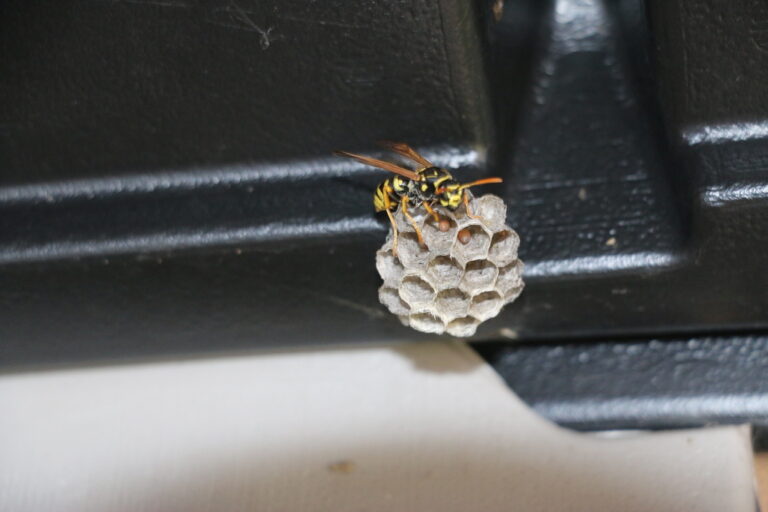 How to Remove a Paper Wasp Nest SafelyA small, open paper wasp nest within easy reach is one of the few nests most homeowners can handle…
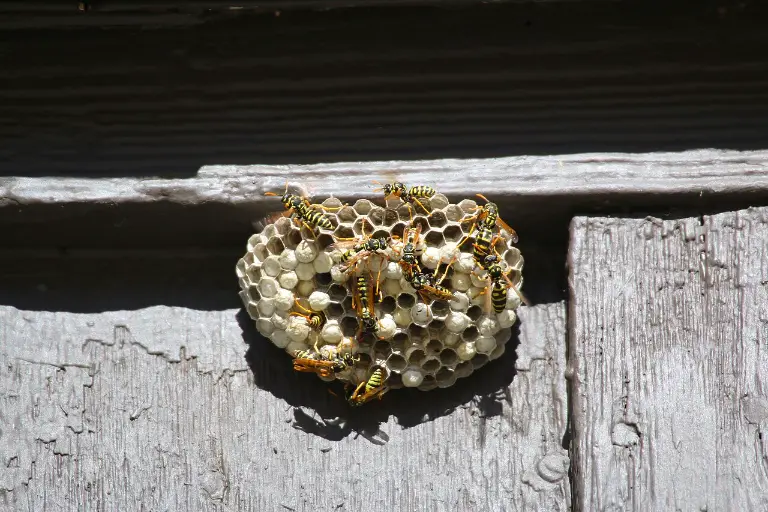 Wasp Nest in a RentalWho usually handles it, how to tell your landlord in writing, and what not to do.
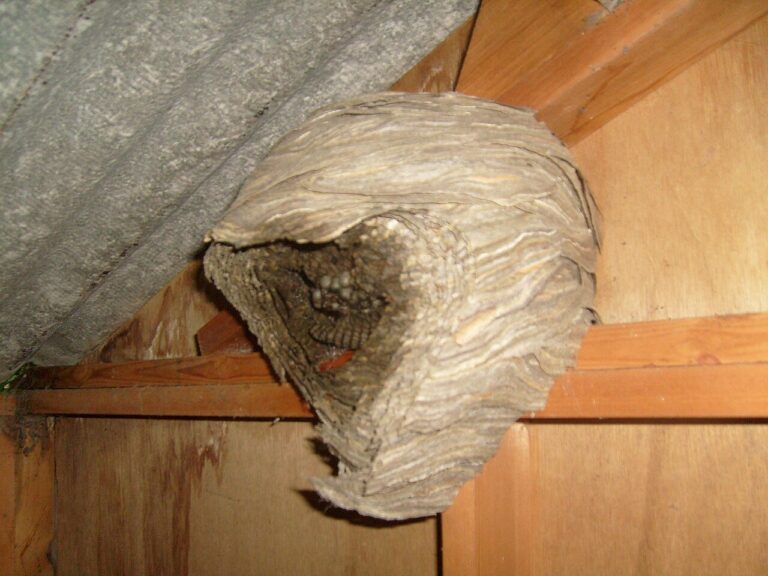 Wasp Nest in a Shed or GarageOpen combs on beams are usually paper wasps; a gray ball or a gap in the wall means yellowjackets…
Sources
- Yellow jackets in vent (Ask Extension), University of Maryland Extension, Home and Garden Information Center, 2024.
- Wasps entering through a bathroom fan (Ask Extension), Minnesota, 2024.
- Yellow jackets in a soffit (Ask Extension), University of Maryland Extension, Home and Garden Information Center, 2024.
- Controlling Paper Wasps in and around Structures, NC State Extension, 2018.
- Paper Wasps (Bug-Wise No. 7), Blake Layton, Mississippi State University Extension, 2012.
Photos on this page are shared by their authors on iNaturalist under Creative Commons licenses, credited under each image. For who writes these guides and how we stay independent, see About.