
Dog stung by a wasp: what to do and when to go to the vet
Updated
Go to a vet or emergency animal hospital now if your dog
has trouble breathing, wheezing or noisy breathing; swelling of the face, muzzle, lips or throat that keeps growing; hives or bumps spreading over the body; vomiting or diarrhea; drooling a lot; pale gums; weakness, wobbling or collapse, or was stung inside the mouth or throat or stung many times. Call the clinic on the way so they are ready. Do not wait to see if it passes.
Short answer
Most dogs stung once by a wasp get a sore, swollen spot that settles within a day or so. Move your dog away from the insects, check where the sting is, hold a cool, wet cloth on it for about 10 minutes, and watch your dog closely for the next few hours: allergic reactions usually show up within about 20 minutes but can come later. A sting in the mouth or throat, many stings, or any sign in the red box above means a vet visit now. Do not give any human medicine, including Benadryl, unless your vet tells you to and gives you the dose.
Is this the right guide? This page is about dogs. For a person who was stung, see what to do after a wasp sting. Not sure what stung your dog? How to tell a bee sting from a wasp sting. We are not vets: this is general information from veterinary sources, not a diagnosis.
How to tell your dog was stung
Dogs are usually stung on the face or nose, inside the mouth after snapping at a wasp, or on a paw after stepping on one. Most of the time you hear a sudden yelp and then see one or more of these:
- Pawing at the face or mouth, or rubbing the muzzle on the ground.
- Licking or chewing one paw, or limping and holding a paw up.
- A swollen, warm or tender spot; a lip or eyelid that puffs up.
- Whining, restlessness or drooling.
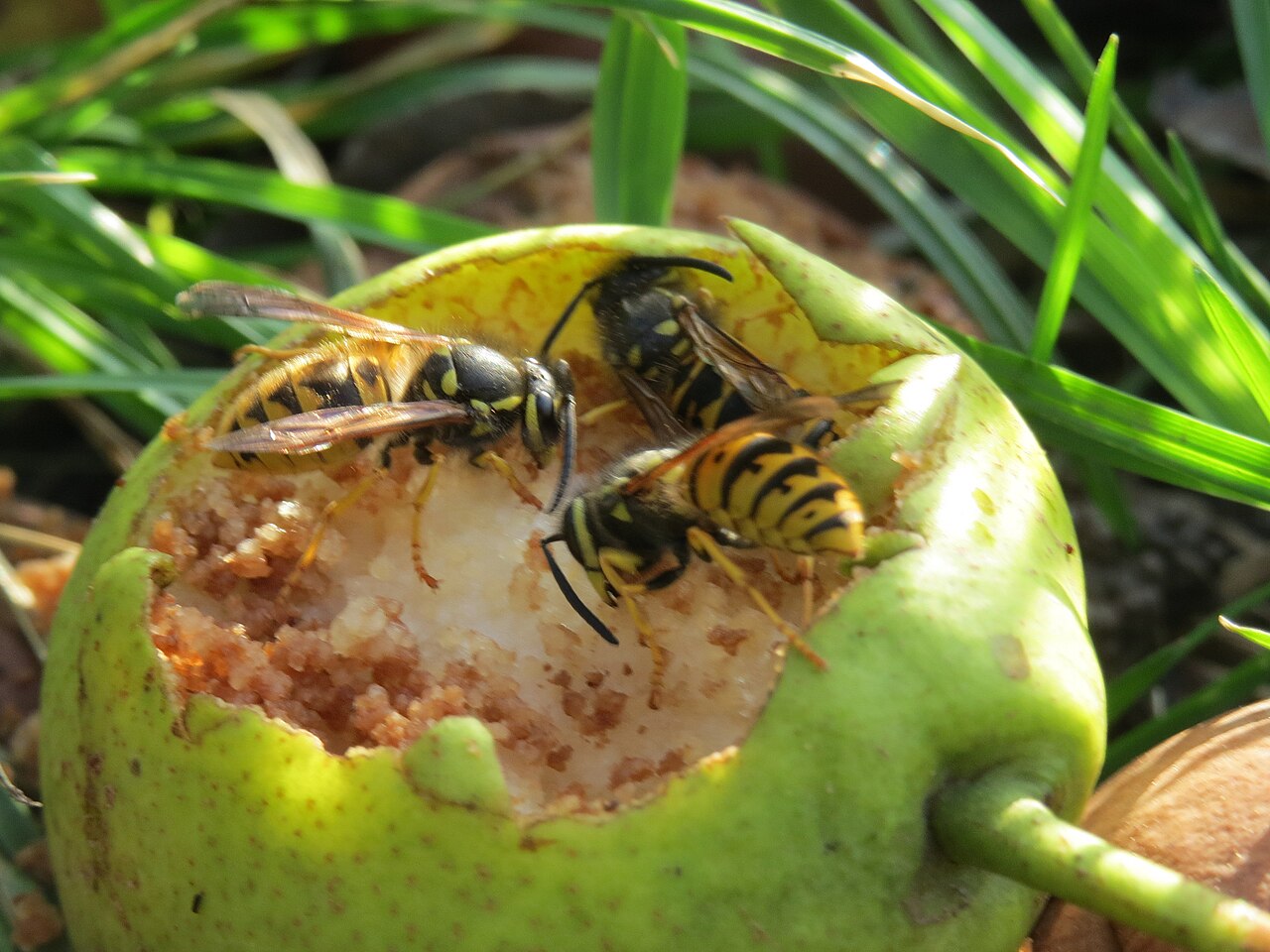
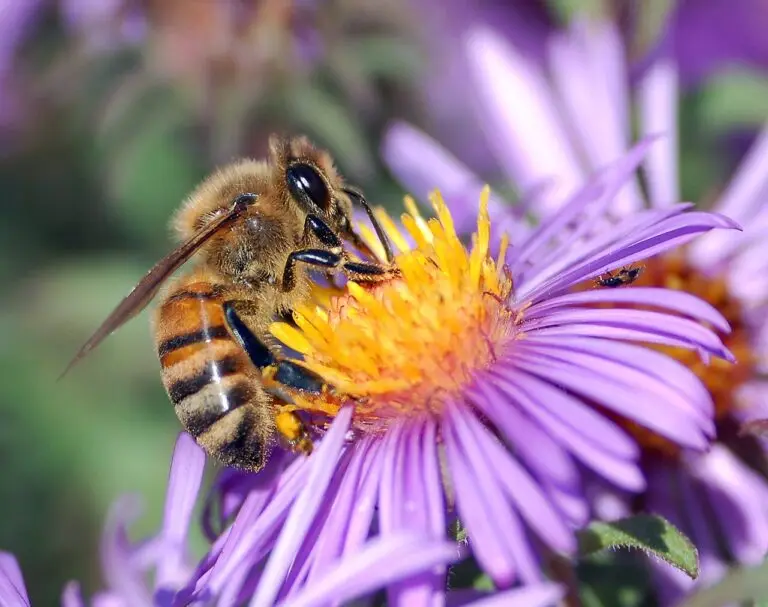
Part the fur and look at the skin. A tiny dark splinter in the skin means a honey bee: its barbed stinger stays behind. Wasps, yellowjackets and hornets do not leave a stinger and can sting more than once, so a dog that ran into a nest may have several stings.
What to do in the first minutes
- Move away. Call your dog and walk away from the spot, ideally indoors. If your dog disturbed a nest, more wasps may follow. Do not go back to look for the nest now.
- Check the airway first. Look at the face, lips and throat and listen to the breathing. Any trouble breathing, a sting in the mouth, or swelling that keeps growing means you go to the vet now.
- Find the sting. Check the face, mouth, paws and belly, and count how many spots you see. If there is a bee stinger, scrape it out sideways with the edge of a card; avoid squeezing it with tweezers.
- Cool the spot. Hold a cool, wet cloth or an ice pack wrapped in a thin towel on it for about 10 minutes. Never put ice straight on the skin.
- Keep your dog from licking or chewing it. Offer fresh water. If the mouth was stung, soft or soaked food is easier to eat.
- Watch and call. Stay with your dog for the next few hours and call your vet to tell them what happened, even if the reaction looks mild. They can tell you whether to come in.
Normal swelling or an emergency?
| What you see | What it usually means | What to do |
|---|---|---|
| One sore, swollen spot on a paw or the body | A normal local reaction | Cool it, stop licking, watch for a few hours; call your vet if it gets worse or is not better the next day |
| A puffy lip, eyelid or side of the face, breathing normal | A larger local reaction; the face swells easily | Call your vet now; go in if the swelling spreads toward the throat or keeps growing |
| Stung inside the mouth or throat, or swallowed a wasp | Swelling can narrow the airway | Go to a vet now |
| Several or many stings | More venom and a higher risk of a serious reaction | Go to a vet now |
| Hives, vomiting, diarrhea, pale gums, weakness, collapse, trouble breathing | A body-wide allergic reaction (anaphylaxis) | Emergency: go now and call ahead |
Reactions can be late. Most allergic reactions start within about 20 minutes of the sting, but some appear hours later. That is why veterinary sources say to keep a close eye on your dog for the rest of the day, not just the first few minutes.
Stung in the mouth, or ate a wasp
Dogs snap at flying insects, so stings on the lips, tongue and inside the mouth are common. Swelling there can make it hard to breathe or swallow, and you cannot see the back of the throat well at home. If you saw your dog catch or eat a wasp and it is drooling, gagging, pawing at its mouth or has a swollen muzzle, go to a vet now. If your dog swallowed an insect and seems completely normal, call your vet for advice and watch it closely for the next few hours.
Can I give my dog Benadryl or a painkiller?
Only if your vet tells you to. Vets do sometimes use antihistamines for sting reactions, but the right product and dose depend on your dog, and not every antihistamine sold for people is safe for dogs. We do not list doses here on purpose. Call your vet or an emergency clinic and ask.
Do not give human pain relievers such as ibuprofen, naproxen or acetaminophen. The U.S. Food and Drug Administration warns pet owners to stop and call a veterinarian before reaching for any of them. Home pastes of baking soda or vinegar are optional at best; a cool compress is the simple, safe first step.
How long does the swelling last?
A simple single sting usually settles within a day or two. Call your vet if the swelling is still growing after a few hours, if your dog will not eat or seems unwell, if the spot looks infected later (warm, oozing, very painful), or if your dog keeps licking it raw. If your dog has had a strong reaction before, ask your vet for a plan for next time; some dogs with a history of serious reactions are prescribed emergency medicine to carry.
If your dog ran into a nest
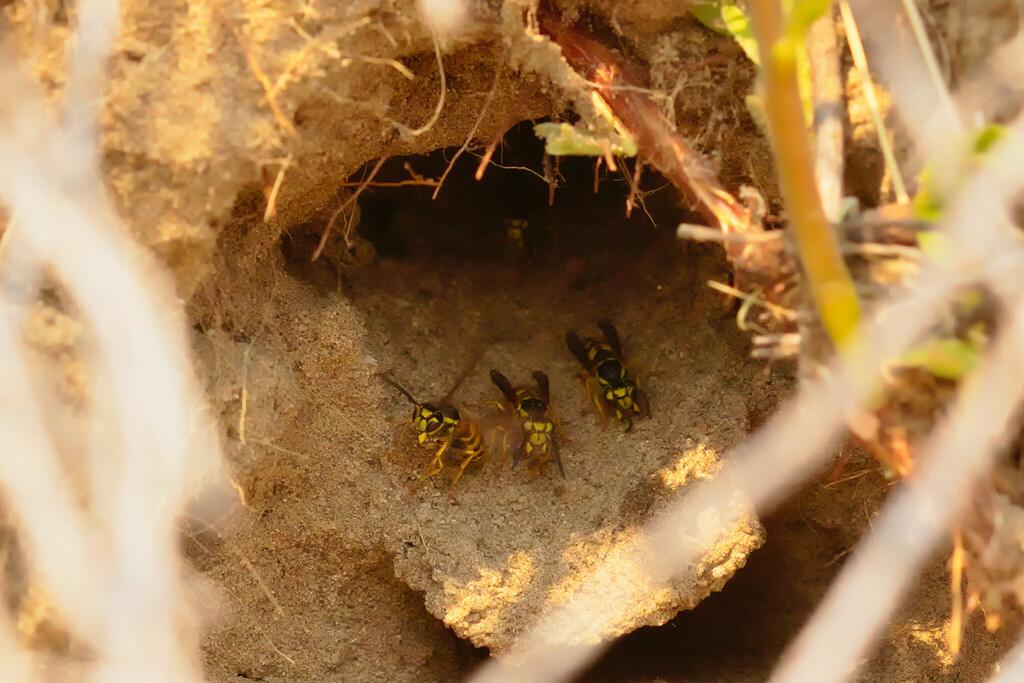
Many stings at once is the most dangerous kind of sting for a dog, so take your dog to a vet first and think about the nest later. Keep pets and children away from the area until you know what you are dealing with. Watch from at least 20 feet away on a warm afternoon to see where the wasps go in and out, then use our wasp nest decision guide. For a hole in the lawn, see how to get rid of a yellowjacket ground nest; for bees going into the soil in spring, see bees nesting in the ground. Never pour gasoline into a hole or set a nest on fire.
Lower the odds of another sting
- Pick up fallen fruit under apple, pear and plum trees in late summer and fall; yellowjackets feed on it and dogs love to sniff it.
- Keep trash, pet food and grill scraps covered outdoors. Yellowjackets are drawn to meat and sweet food.
- Walk the yard once a week in summer and look for wasps flying in and out of one spot in the lawn, a shrub or a wall. Rope off the area before your dog finds it.
- Practice a reliable recall, so you can call your dog away from a nest or a swarm.
- More ideas: keeping wasps away from the patio and how to prevent wasp nests.
Common questions
My dog was stung on the paw and is limping. Is that normal?
Yes, limping and licking a stung paw are common and usually ease within hours. Check between the toes for a bee stinger, cool the paw, and stop the licking. Call your vet if the paw keeps swelling, your dog will not put any weight on it after a few hours, or other signs appear.
How long should I watch my dog after a sting?
Stay close for at least the first few hours, and keep an eye on your dog for the rest of the day. Most allergic reactions start within about 20 minutes, but some are delayed. A sting on the nose, mouth or head needs the closest watching, because swelling there can affect breathing.
Is a wasp sting worse than a bee sting for a dog?
For first aid they are treated the same way. The difference is numbers: a honey bee stings once and dies, while wasps, yellowjackets and hornets can sting again and again and often defend their nest as a group.
Will my dog react worse next time?
Not necessarily, but a dog that had hives, vomiting, collapse or breathing trouble after a sting is at risk of another serious reaction. Tell your vet about every sting and ask whether your dog needs an emergency plan.
Should I go to the vet even if my dog seems fine?
A single sting on a paw or body with mild swelling can usually be watched at home, but it is always reasonable to call your vet and ask. Go in without waiting for any sting inside the mouth or throat, for many stings, or for any of the warning signs at the top of this page.
Your next step
- Any warning sign, a sting in the mouth or many stings: go to your vet or an emergency animal hospital now.
- A person was stung too: what to do after a wasp sting.
- All sting and safety guides: stings and safety.
- Found the nest: the wasp nest decision guide.
More in Stings & Safety
 Wasp sting: what to do firstStep-by-step first aid, normal vs. large reactions, and when to call 911.
 Wasp Sting Allergy: Signs, Emergency Steps and Long-Term ProtectionFor most people a wasp sting is painful but harmless. For a small share of people, venom triggers…
 Bee Sting vs. Wasp Sting: How to TellStinger left in the skin? Probably a honey bee. How to tell, and what to do first…
Sources
- Wasp, Bee, and Ant Stings to Animals, Merck Veterinary Manual (professional version), reviewed April 2026.
- First Aid for Insect Stings in Dogs, VCA Animal Hospitals, updated July 2024.
- What to Do If Your Dog Is Stung by a Bee or Wasp, American Kennel Club, updated February 2026.
- My Dog Was Stung by a Wasp: What Should I Do?, Veterinary Emergency Group.
- Get the Facts about Pain Relievers for Pets, U.S. Food and Drug Administration, 2022.
- Baldfaced Aerial Yellowjacket (ENTO-620NP), Virginia Cooperative Extension, revised 2025.
This guide is general information, not veterinary advice. We are not veterinarians and do not give medicine doses; your vet knows your dog. Photos on this page are shared by their authors on Wikimedia Commons and iNaturalist under Creative Commons licenses or in the public domain, credited under each image. For who writes these guides and how we stay independent, see About.