
The best time to remove a wasp nest: season and time of day
Updated
When you deal with a wasp nest matters almost as much as how. The same nest that takes two minutes in May can be a real hazard in September, and the same job that is calm after dark can go badly at noon. This guide covers the best time of year, the best time of day, and when the right answer is simply to wait.
Short answer
The best time of year is spring and early summer, when nests are small and colonies are just getting started. The best time of day is at dusk or after dark, when the wasps are back on the nest and much less active. Late summer and early fall are the worst time: colonies are at their largest and most defensive. If a nest is out of the way, the easiest option is often to wait for hard frosts, after which the colony dies and the empty nest can be taken down.
Best time of year
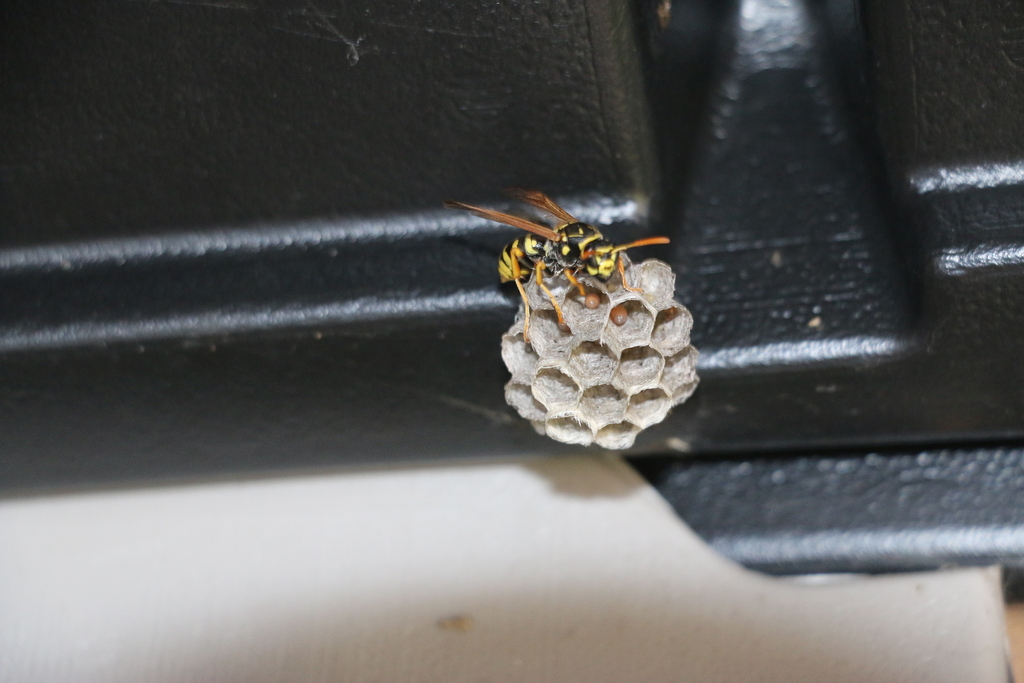
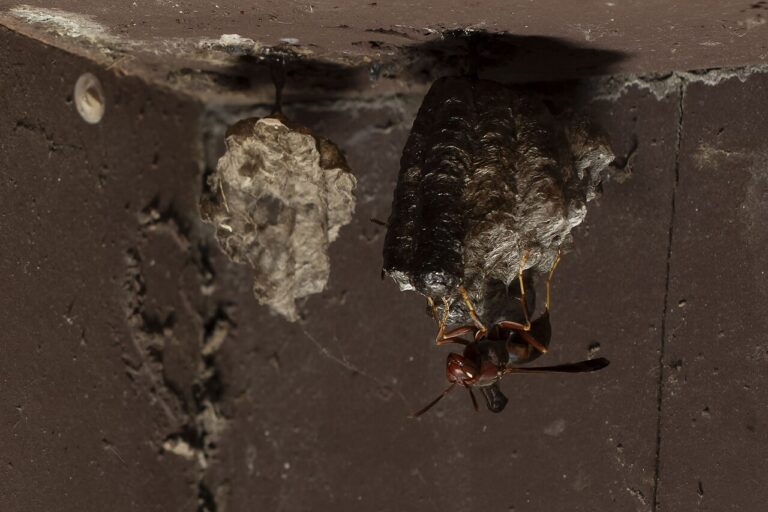
Most wasps around U.S. homes, including yellowjackets, paper wasps and bald-faced hornets, have annual colonies. A single queen starts a new nest each spring, the colony grows all summer, and it dies in fall. Only new queens survive the winter, and they never return to the old nest.
| Season | What the nest is like | What it means for you |
|---|---|---|
| Spring (April to May in most areas) | A queen alone, or with a few workers. Paper nests are smaller than a golf ball. | Best time. A starter nest under an eave can often be knocked down at dusk. Ground and wall nests are small but hard to find. |
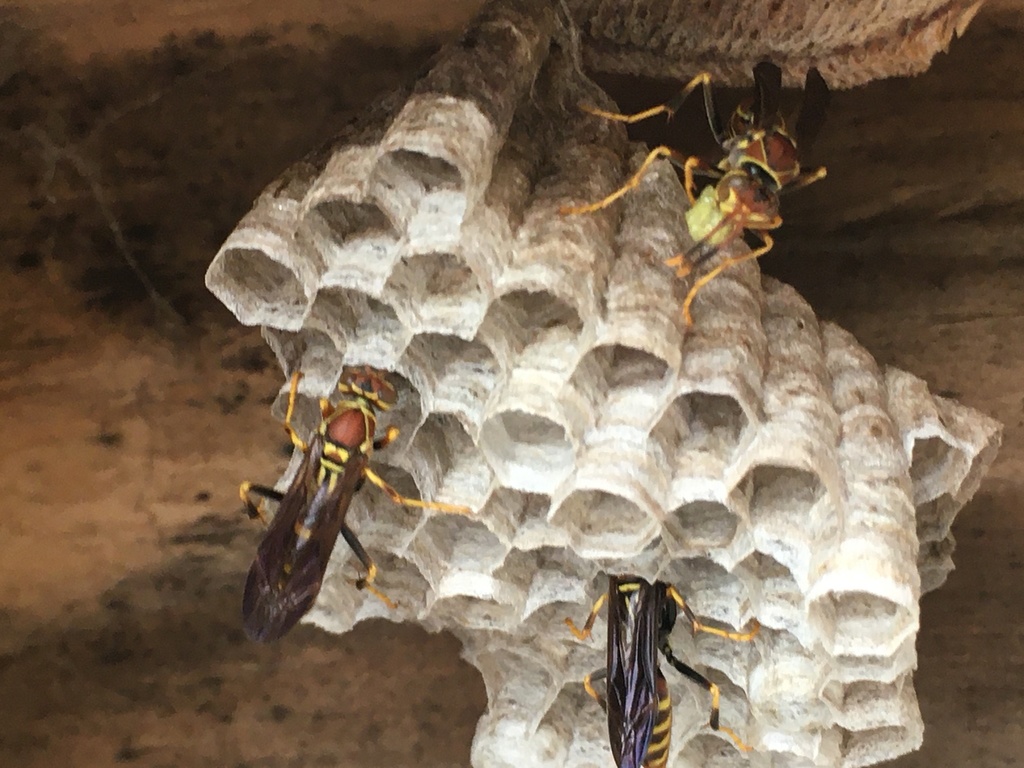
| Early summer (June to early July) | Workers hatch and the nest grows quickly. | Still a good time. Small exposed nests are a reasonable DIY job. Call a pro for ground, wall and hornet nests. |
| Late summer and early fall (August to October) | Peak size: a yellowjacket colony can reach about 5,000 wasps. Workers scavenge for sweets and sting more readily. | Worst time for DIY. Leave large, hidden and hornet nests to a professional, or leave them alone if they are out of the way. |
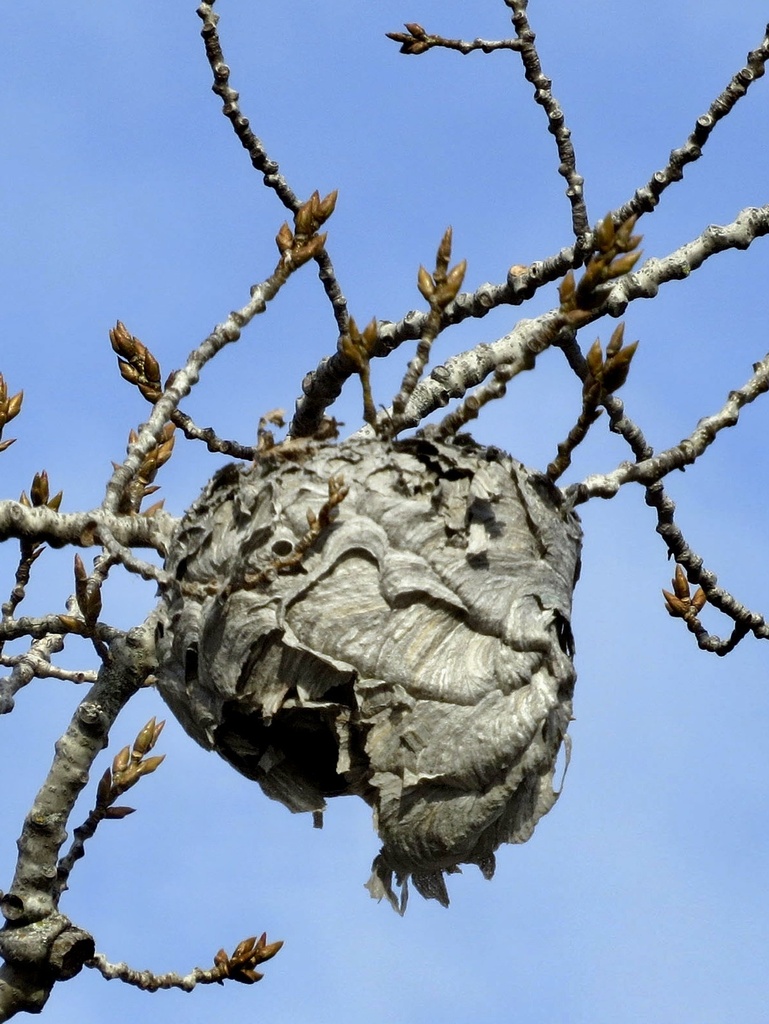
| After hard frosts (late fall and winter) | The colony dies; new queens have left to overwinter elsewhere. | Safe to take down an empty exposed nest. Seal old wall and ground entrances once you are sure activity has stopped. |
Dates shift with climate. In the Deep South and other mild-winter areas, the season starts earlier and ends later, and an occasional yellowjacket colony survives the winter and keeps growing. Go by what you see at the nest, not the calendar.
Best time of day
- At dusk or after dark: nearly all the wasps are back on the nest, they are slower in the cool evening air, and they do not fly well in the dark. This is when extension services and professionals usually treat nests.
- Very early morning, before it warms up, is the second-best choice.
- Avoid midday and warm afternoons. Many foragers are out and come back to find you at the nest, and the rest are alert.
Use a light you do not hold. A flashlight with a red filter, set on the ground and aimed near the nest, lets you see without drawing wasps to your face. European hornets are an exception: they fly at night and are attracted to light, so they are best left to a professional.
Best weather
- Dry: rain washes sprays and dusts off before they work.
- Calm: wind blows spray back at you and scatters dust.
- Cool: wasps are calmer and slower in cool weather than on a hot evening.
Timing by type of nest
| Nest | Best time | Notes |
|---|---|---|
| Paper wasp nest under an eave or railing | Spring or early summer, at dusk | Often a DIY job while small. See how to get rid of a wasp nest |
| Yellowjackets in the ground | As early as you notice them, at night | Away from people, waiting for frost is fine. See yellowjacket ground nests |
| Wasps in a wall or attic | As soon as you notice them | Professional; never seal the hole while active. See wasp nest in a wall |
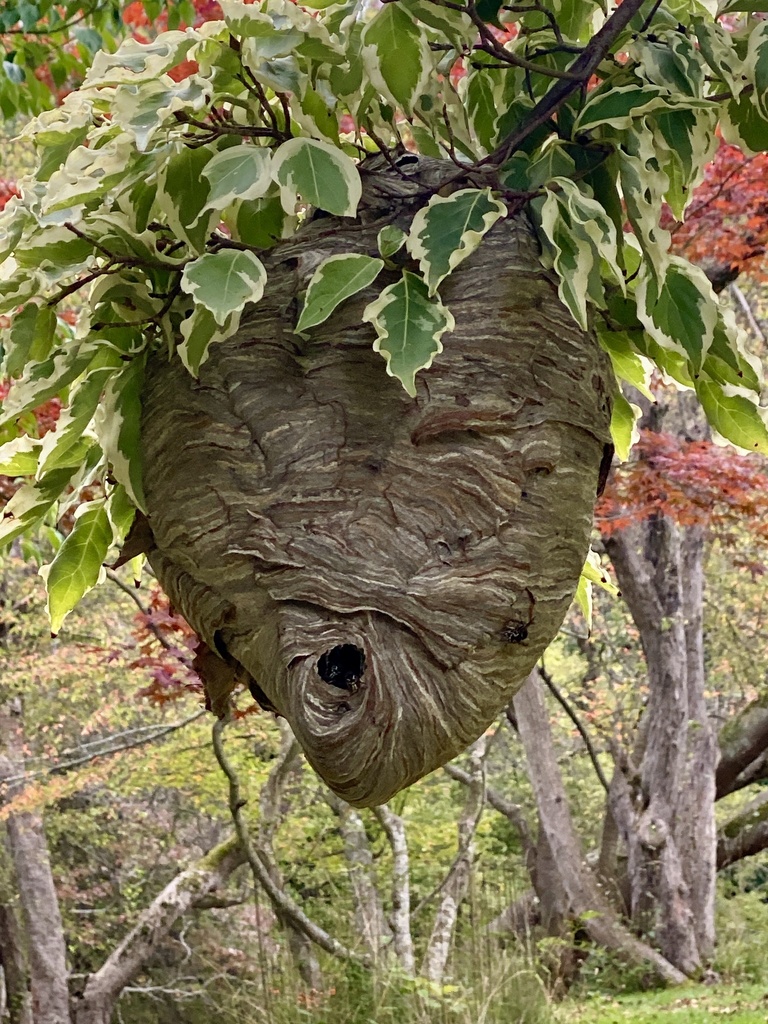
| Bald-faced hornet nest in a tree | Early summer if it must go; otherwise after frost | A high nest far from the house can usually wait. See bald-faced hornet nests |
| Empty nest from last year | Any time | Not reused. Check that it is really empty: how to tell if a wasp nest is active |
When waiting is the best plan
Many nests do not need to be removed at all. Waiting is reasonable when the nest is well away from doors, paths, decks and play areas; nobody in the household is allergic to stings; no one has been stung; and it is already late in the season. Mark the spot, keep people and mowers clear, and take the empty nest down or seal the entrance after hard frosts. More on that decision: should you remove a wasp nest or leave it.
Do not wait if wasps are getting into the house, the nest is next to a door or play area, someone at home is allergic, or the wasps have already stung. Call a professional now: when to call a professional for wasps.
Before you start: a quick checklist
- Confirm it is wasps, not bees. See wasp vs. bee.
- Check that it is a DIY nest: exposed, smaller than a softball, reachable from the ground.
- Plan for dusk on a dry, calm evening, and note your route back indoors.
- Have the gear ready: a product labeled for the site, long sleeves, gloves, eye protection and a light you can set down.
- Bring children and pets inside and tell everyone at home what you are doing.
Then follow the step-by-step method in how to get rid of a wasp nest safely, or for paper wasps, how to remove a paper wasp nest.
The best time to prevent next year’s nest
The cheapest nest to deal with is the one that never gets built. In April and May, check eaves, railings, sheds and the grill every week or two and knock down starter nests while only the queen is there. Seal gaps in siding and vents in winter. More: how to prevent wasp nests.
Common questions
What month should I remove a wasp nest?
In most of the U.S., April through June, while nests are small. If you missed that window and the nest is out of the way, wait until after the first hard frosts, usually October or November.
Is it better to spray a wasp nest at night or in the morning?
Night, starting around dusk. Very early morning works too. Both are much safer than the middle of the day.
Do wasps die in winter?
The workers and the old queen do. New queens survive by hiding in sheltered spots such as bark, wood piles, attics and wall gaps, and start new nests in spring. More in where wasps go in winter.
Can I remove a wasp nest in winter?
Yes, an empty exposed nest can be taken down after hard frosts. Wear gloves, check for activity on a warm afternoon first, and bag the nest. In mild-winter areas, make sure the nest is really empty.
Why are wasps more aggressive in fall?
Colonies are at their largest, the brood is ending, and workers switch from hunting insects to scavenging sweets and food, which brings them into contact with people. They also defend a much bigger nest.
What if I get stung?
Move away quickly and get indoors. For ordinary stings, see what to do first. Call 911 for trouble breathing, swelling of the face or throat, spreading hives, dizziness, or many stings.
Your next step
- Ready to act: how to get rid of a wasp nest safely.
- Not sure it should go: the wasp nest decision guide.
- All removal guides: wasp nest removal.
More in Removal
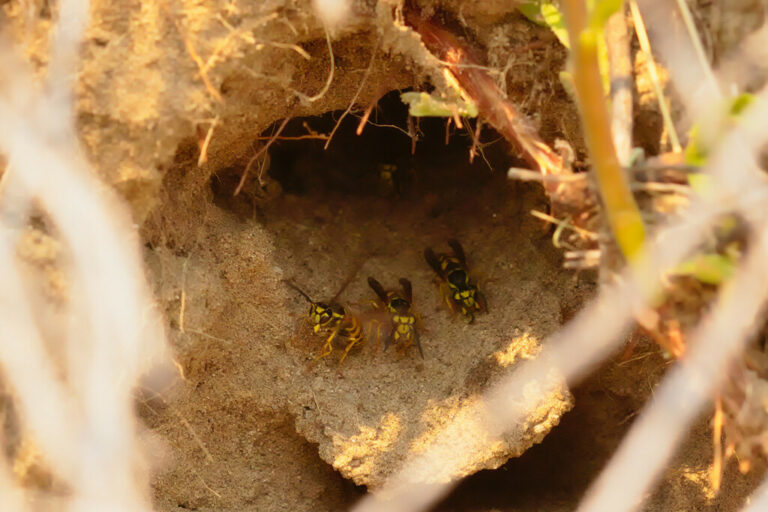 How to Get Rid of a Yellowjacket Ground NestYellowjackets streaming in and out of a hole in the lawn are one of the most common late-summer…
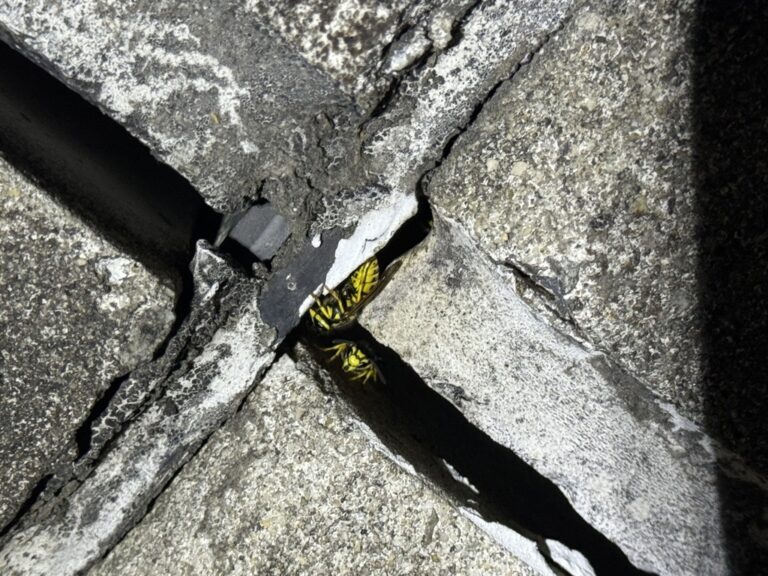 Wasp Nest in a Wall: Why Not to Seal ItWasps flying in and out of a crack in your siding, a gap under the trim or a vent usually mean a…
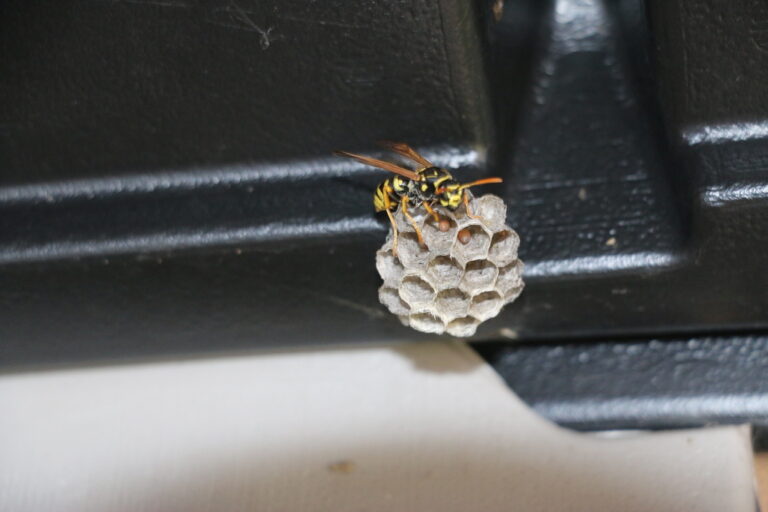 How to Get Rid of a Wasp Nest SafelyA small wasp nest you can reach from the ground is often a job you can do yourself in one evening.…
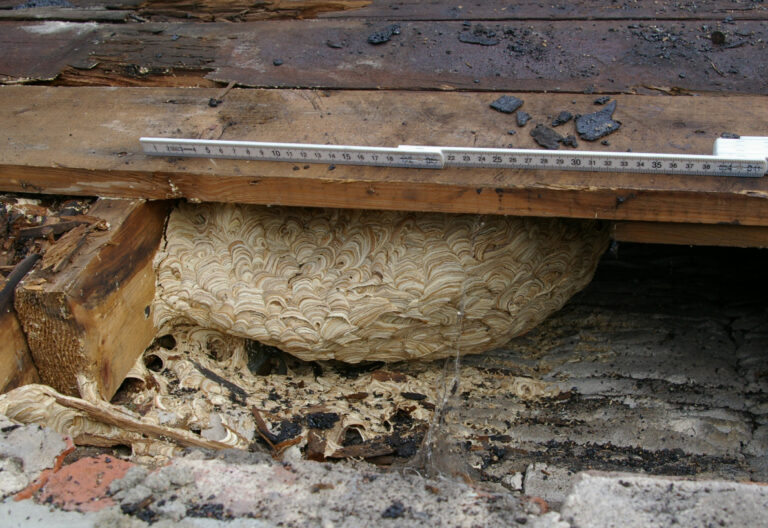 Wasp Nest in the AtticWasps in an attic usually get in from outside, through a gable vent, a soffit gap or a gap at the…
Sources
- Yellow Jackets, University of Georgia Cooperative Extension, Towns/Union counties, 2018.
- Yellowjacket Wasps, Iowa State University Extension.
- Yellowjacket in Turf, NC State Extension, revised 2022.
- Yellowjackets and Their Control, University of Idaho Cooperative Extension.
- Controlling Wasps, Yellow Jackets and Hornets, Cornell Cooperative Extension of Suffolk County, revised 2025.
Photos on this page are shared by their authors on iNaturalist under Creative Commons licenses, credited under each image. For who writes these guides and how we stay independent, see About.