
Mud dauber nests: what they are and what to do about them
Updated
Short answer
Mud tubes or fist-sized lumps of dried mud on a wall, ceiling or under a deck are built by mud daubers, solitary wasps that hunt spiders. They do not live in colonies, do not guard their nests and rarely sting. Most of the time you can leave the nests alone or simply scrape them off with a putty knife. No spray is usually needed.
How to recognize a mud dauber nest
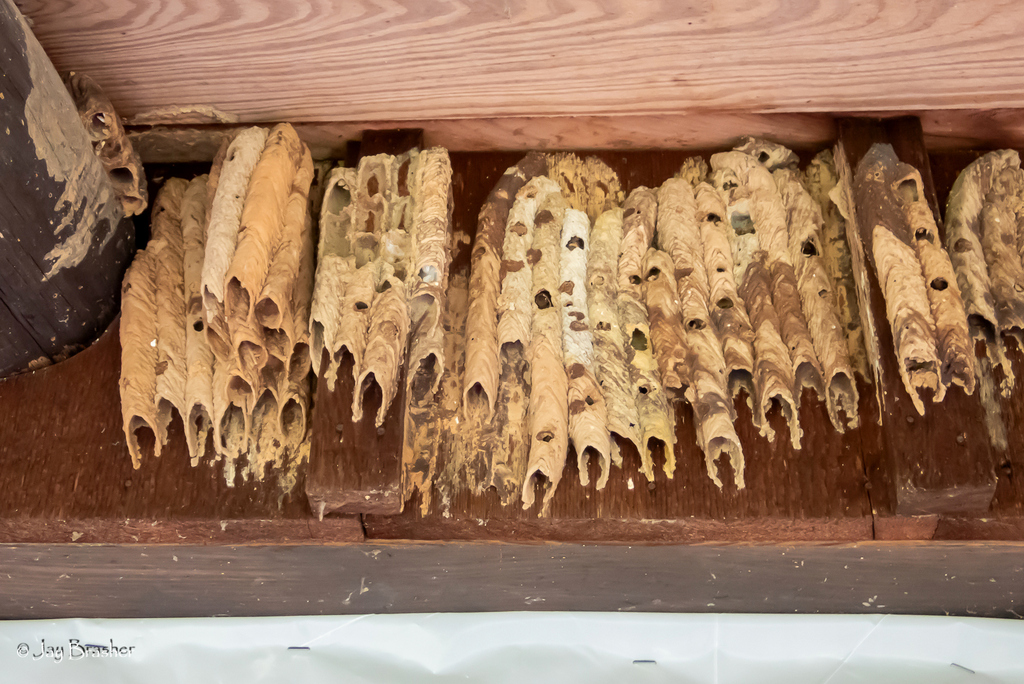
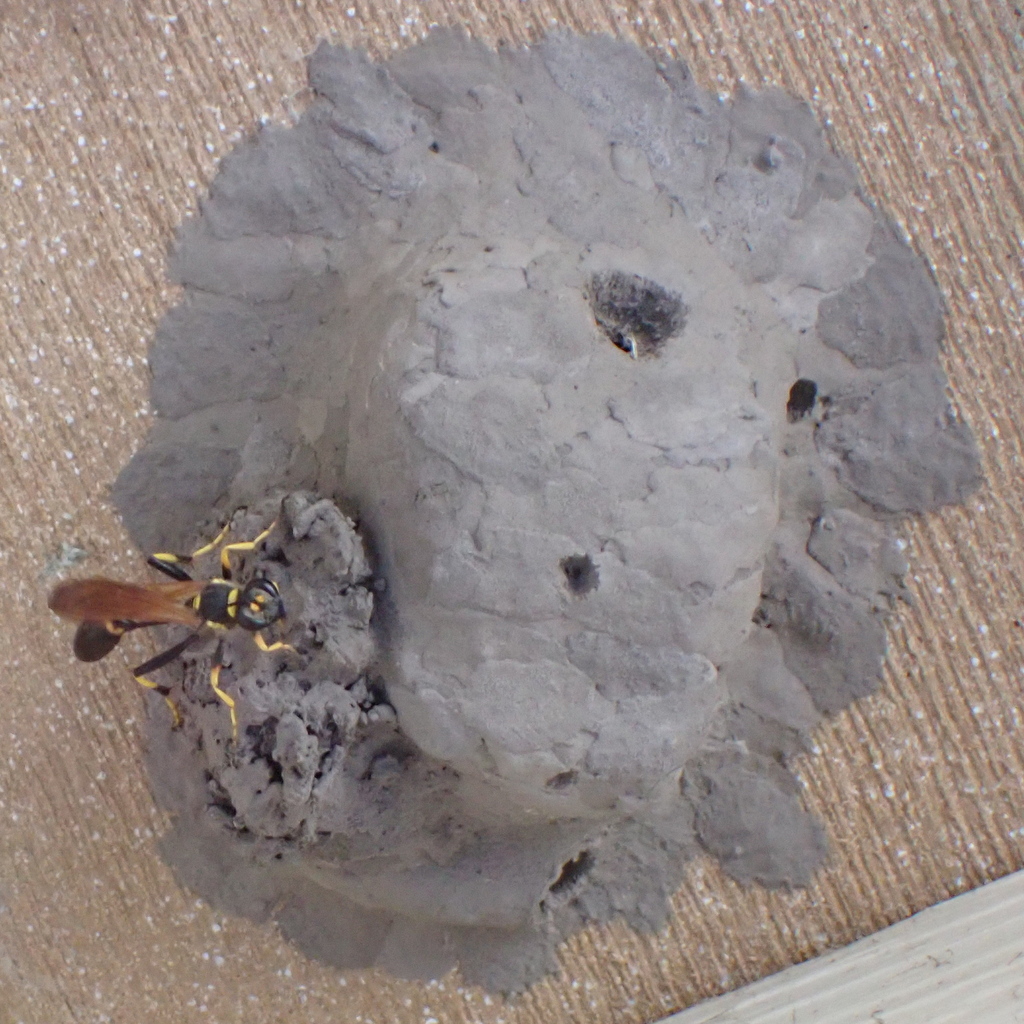
- Made of mud, not paper. Paper wasps, yellowjackets and hornets build with chewed wood fiber that looks gray or tan and papery.
- No wasps crowding the nest. One female builds and stocks it, and she is usually away hunting.
- Sheltered spots: eaves and porch ceilings, garages, sheds, attics, barns, under decks and bridges, and inside equipment, vehicles and boats that sit unused.
- Small round holes in the mud mean the young wasps have already chewed their way out.
The three common mud daubers
| Wasp | Looks like | Nest |
|---|---|---|
| Black and yellow mud dauber | Black with yellow markings and legs, a very long, thread-like waist, about 1 inch long | Short mud cells plastered into a lump the size of a fist |
| Organ-pipe mud dauber | All black, a little stockier | Long vertical tubes side by side, like organ pipes |
| Blue mud dauber | Shiny metallic blue-black with blue wings | Does not build its own; moves into old black and yellow mud dauber nests |
Compare with other nests in types of wasp nests. If wasps are swarming around a gray paper nest or flying in and out of a hole, it is a social wasp, not a mud dauber: see paper wasp nests or yellowjacket nests.
Are mud daubers dangerous?
Not really. Mud daubers are solitary, with one female per nest and no workers to defend it. They do not attack people who come near the nest. Stings are rare and usually happen only when a wasp is trapped against the skin or handled. The sting is painful but brief. Anyone with a known sting allergy should still be careful; see wasp sting allergy.
They are also useful: each nest cell is packed with paralyzed spiders, mostly orb weavers, which feed the young wasp.
How a mud dauber nest works
- A female builds a mud cell, about an inch long.
- She stings spiders to paralyze them, packs them into the cell, lays one egg and seals it.
- She adds more cells, then plasters over the group or builds the next tube beside it.
- The larva eats the spiders, spins a cocoon and, in many cases, waits through winter inside the cell.
- The new adult chews a round exit hole and flies off. Some old nests are reused or taken over by blue mud daubers.
So a sealed nest in winter may still hold young wasps; a nest full of round holes is empty. More: how to tell if a wasp nest is active.
How to remove mud dauber nests
- Leave them if they are out of the way, in a barn or high under a deck. They do no harm.
- Scrape them off with a putty knife or paint scraper, wearing gloves, if they are on a porch, door frame or siding where you do not want them. Do it in cool weather or early morning if any adult is around. Removing the nest also removes the young inside, so fewer wasps hatch there next year.
- Wash off the mud stains with water and a stiff brush after the nest is gone.
- Spray only if needed, for example where many daubers are active in a busy area or someone is allergic. Use a wasp and hornet aerosol by the label, in the evening, then scrape the nest off. Do not chase wasps in flight.
Nests in vents, pipes and equipment
Mud daubers like round openings: dryer and bath vents, weep holes, exhaust and gas lines on grills, tubing on equipment, and parts of vehicles, boats and campers that sit unused for weeks. A blocked vent or gas line can be a real problem. Check these spots each spring, clear any mud plugs, and fit fine screens or covers where the manufacturer allows.
Preventing mud daubers
- Scrape off old nests so the young inside do not hatch and the blue mud dauber cannot reuse them.
- Caulk cracks and screen openings around the house, sheds and garages.
- Clear spider webs from porches and eaves. Fewer spiders means less food and fewer reasons to nest nearby.
- Keep garage and shed doors closed when you can, and cover equipment that sits outside.
More: how to prevent wasp nests.
Common questions
Do mud daubers sting?
They can, but they rarely do. They do not defend their nests, and stings usually happen only when a wasp is pressed against the skin.
Should I kill mud daubers?
Usually no. They are not aggressive and they eat spiders. Remove nests from places where you do not want them, and leave the rest.
Are there wasps inside an old mud nest?
Possibly. Sealed cells can hold young wasps, sometimes through winter. A nest with round exit holes is empty.
Do mud daubers come back to the same place?
They often nest in the same sheltered spots year after year, and some reuse old nests. Scraping off nests and sealing gaps helps.
Your next step
- All identification guides: identify wasps and nests.
- A nest that is not a mud dauber nest: the wasp nest decision guide.
More in Identification
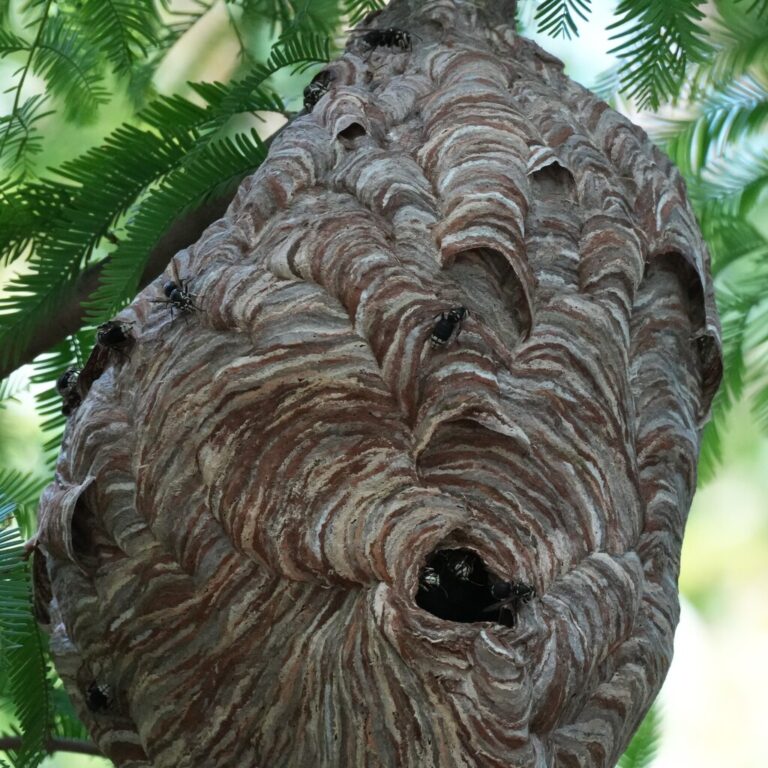 Is a Wasp Nest Active? How to Check SafelyWatch the nest from at least 10 to 20 feet away on a warm, sunny afternoon for 10 to 15 minutes. If…
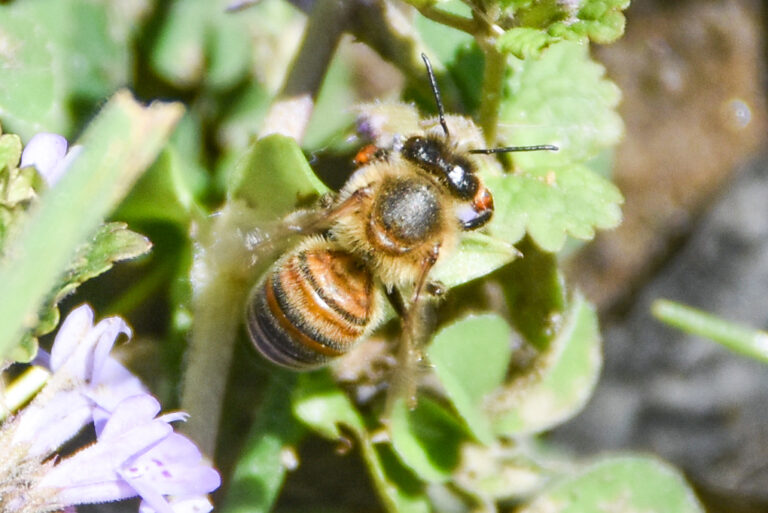 Wasp vs. Bee: How to Tell the DifferenceBees are fuzzy and stocky; wasps are smooth and narrow-waisted. Quick checks, nest clues,…
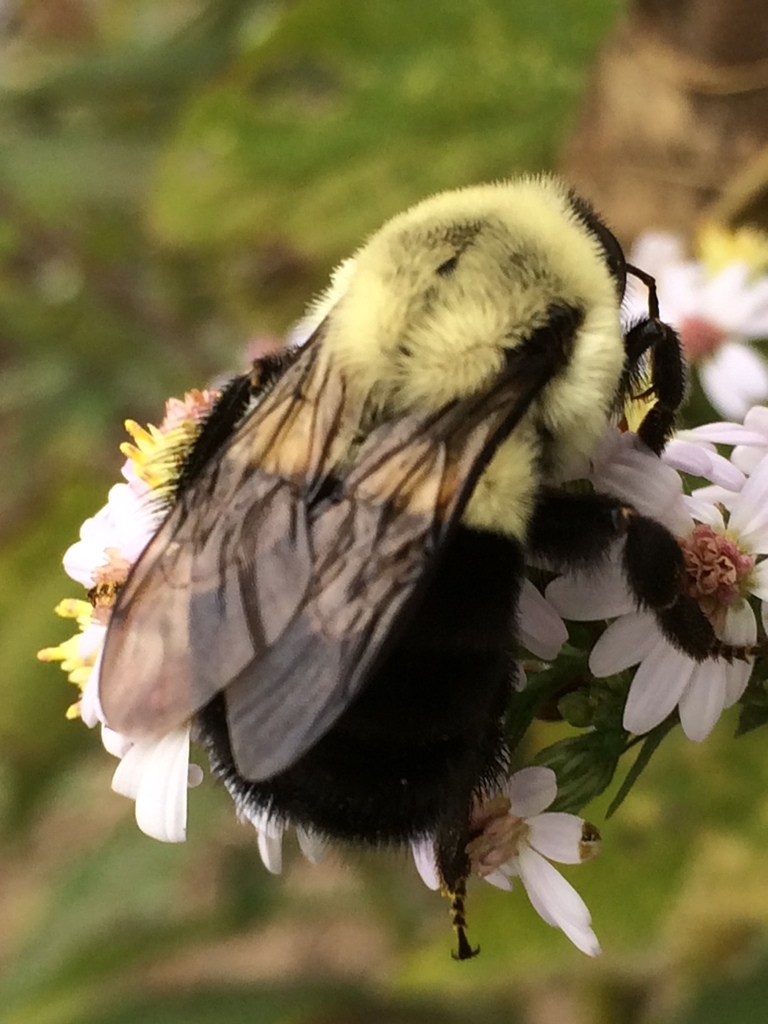 Bumblebee vs. Wasp vs. Hornet: How to Tell Them ApartBumblebees are round and fuzzy, wasps are smooth and narrow-waisted, and hornets are large wasps.…
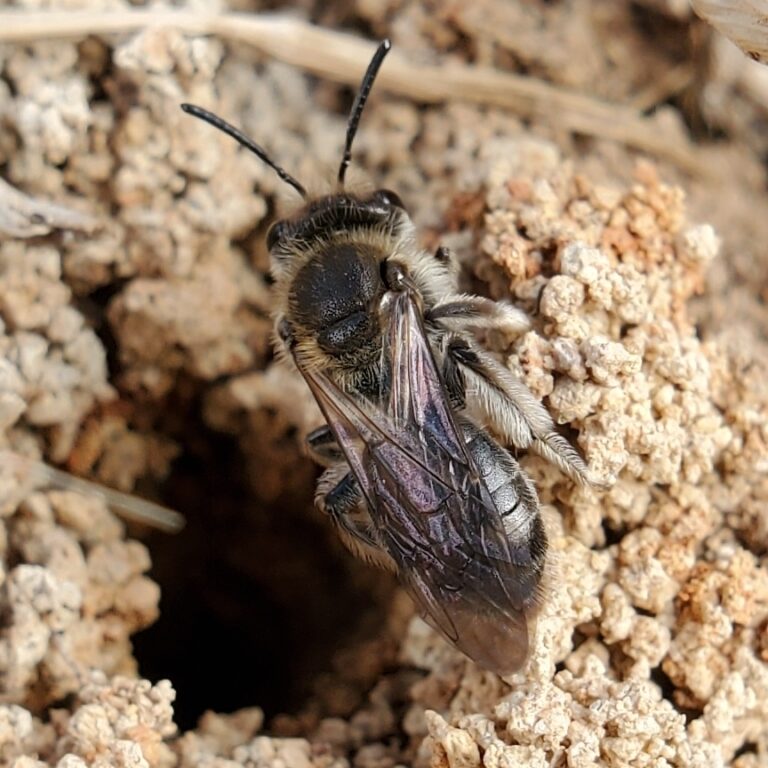 Bees Nesting in the GroundLots of small holes with little mounds of soil in a bare or thin patch of lawn, with fuzzy bees…
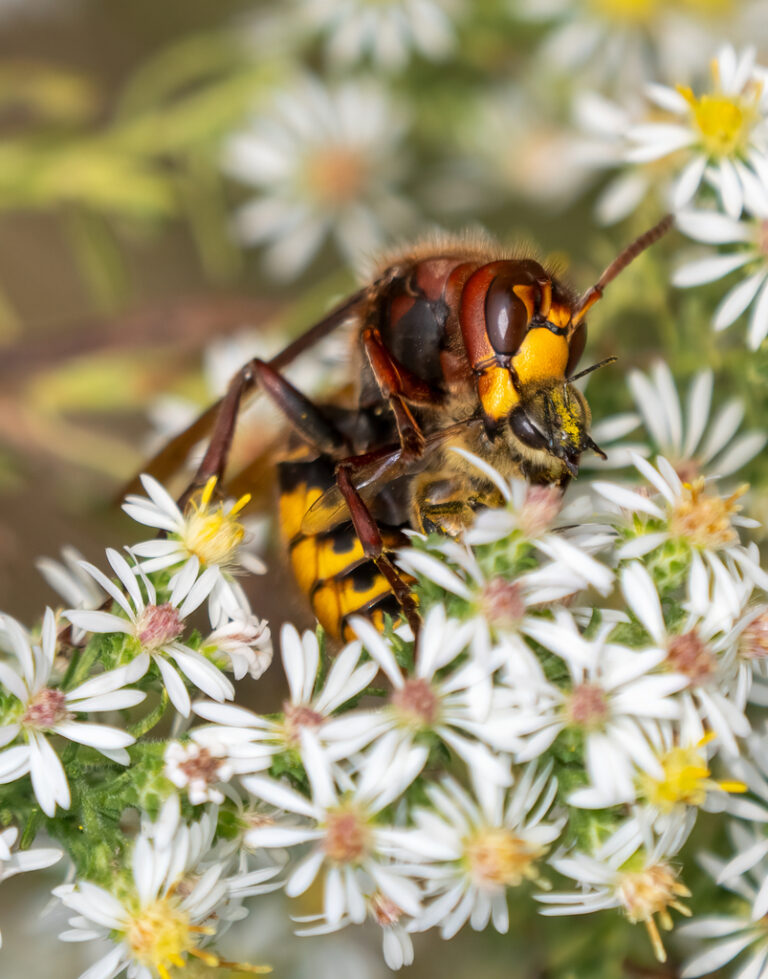 European HornetThe European hornet is the only true hornet in the eastern U.S. and the largest one you are likely…
Sources
- Mud Daubers (HGIC 2512), Powell Smith, Eric P. Benson and Jhessye Moore-Thomas, Clemson Cooperative Extension, revised 2025.
- Mud Daubers (E-253), Timothy J. Gibb, Purdue Extension Entomology, 2018.
- Organ Pipe Mud Dauber, Blake Layton, Mississippi State University Extension, Bug’s Eye View, 2020.
Photos on this page are shared by their authors on iNaturalist under Creative Commons licenses, credited under each image. For who writes these guides and how we stay independent, see About.