
Wasp nest in a shed or garage: what to do, and how to keep them out
Updated
Short answer
Sheds and garages are favorite nest sites because they are dry, quiet and full of beams. An open comb on a rafter is usually paper wasps and can often be treated yourself in the evening with a wasp and hornet spray. A gray paper ball, or wasps going in and out of a gap in the wall or floor, usually means yellowjackets, and those are better left to a professional. In late fall the colony dies on its own, the nest is not reused, and you can remove it and seal the gaps before spring.
This guide covers garden sheds, detached and attached garages, workshops and outbuildings: how to tell which wasp you have, how to check without getting stung, when to do it yourself and when to call someone, and how to stop a new queen moving in next year. For a nest on the outside of the roofline, see wasp nest under eaves. Nest under a deck or porch? See wasp nest under a deck. Wasps inside a stored grill? See wasp nest in a grill. Nest on a beam or over the door of an attached garage? See wasp nest in a garage.
Which wasp is in your shed?
| What you see | Likely wasp | Risk |
|---|---|---|
| Open comb on a rafter, beam or door frame, cells visible from below | Paper wasps | Low to moderate; usually a few dozen wasps at most |
| Gray or tan paper ball hanging from the roof or a shelf, one entrance hole | Yellowjackets or hornets; see yellowjacket nest | High by late summer; hundreds to thousands of wasps |
| Wasps flying in and out of a gap in the siding, floor or wall, no nest in sight | Yellowjackets in a hidden cavity; see wasp nest in a wall | High; the nest may be bigger than it looks |
| Mud tubes on walls or tools | Mud daubers | Very low; they almost never sting |
| Holes in bare soil next to the shed or under the floor | Yellowjackets or ground-nesting bees; see ground nests | High if yellowjackets |
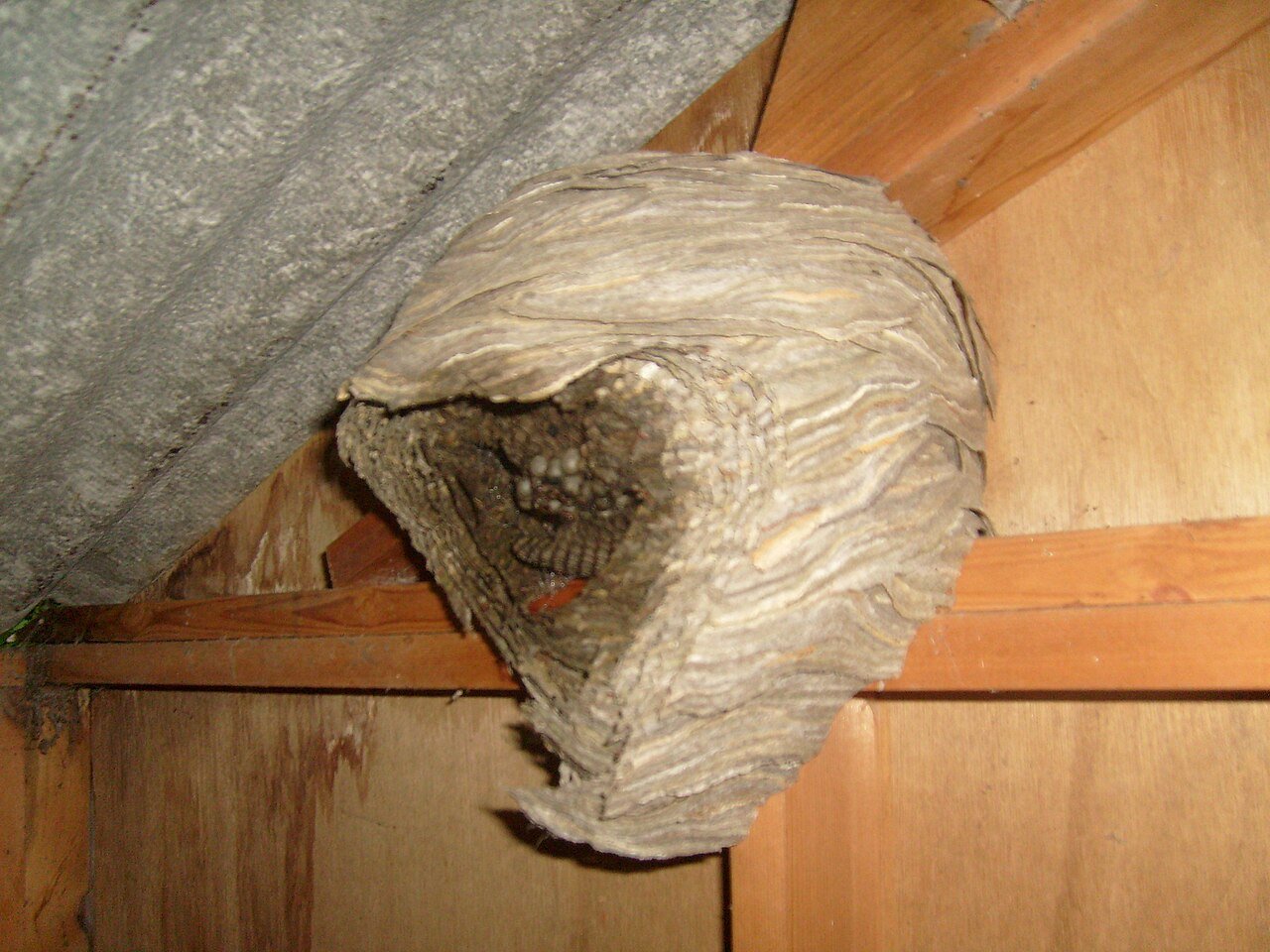
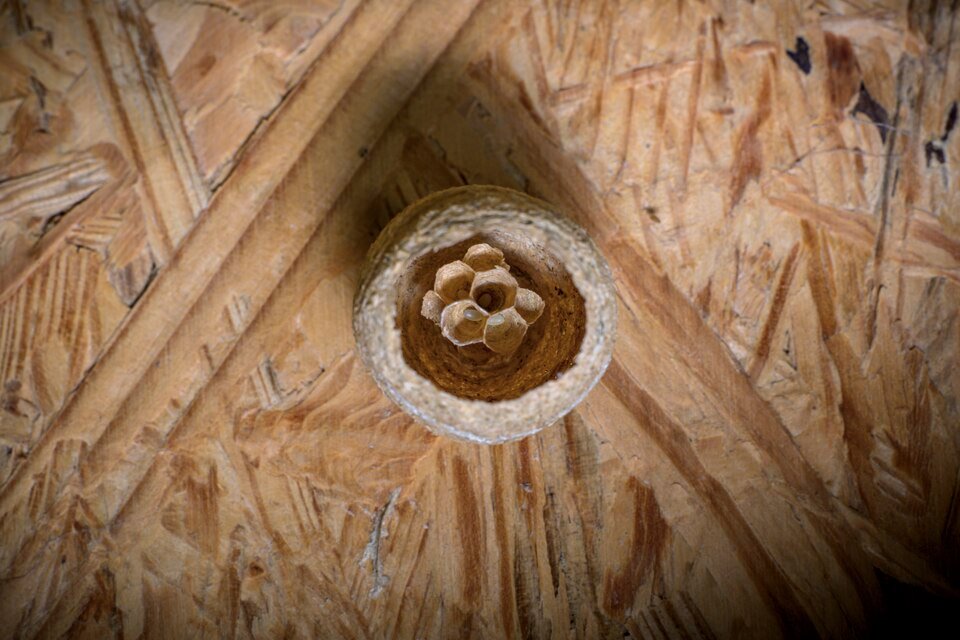
How to check a shed without getting stung
- Look before you reach. Open the door slowly and stand in the doorway. Check the rafters, the corners where the roof meets the walls, the top of the door frame and under shelves.
- Watch the traffic. A steady line of wasps flying to one spot means an active nest, even if you cannot see it. Stored things count too: wasps nest inside empty boxes, mower covers, grill lids, kids’ play equipment and folded tarps.
- Do not move things near the nest. Vibration from dragging a mower or slamming a door is what usually sets off a colony in a small building.
- Check from outside. Walk around the shed and look for wasps using gaps under the eaves, around vents, at the base of the walls or under the floor.
Not sure if anyone is home? Our guide on how to tell if a wasp nest is active walks through the signs.
Do it yourself or call a professional?
A shed is a cramped space with one door, so a mistake is harder to walk away from than a nest on an open porch. As a rule of thumb:
- Reasonable to do yourself: an open paper wasp comb, or a paper nest no bigger than a softball, that you can spray from the doorway or from the ground, with a clear way out behind you.
- Call a professional: anyone in the household is allergic to stings; the nest is inside a wall, under the floor or above a ceiling panel; it is bigger than a football; it sits right above the door you use every day; or you would need a ladder inside the shed.
See when to call a professional and what wasp nest removal costs.
How to treat a nest in a shed or garage
- Pick the time: late evening or early morning, when the wasps are on the nest and slower. Bring a flashlight with a red filter or keep the light pointed away from the nest.
- Dress for it: long sleeves, long pants, gloves and eye protection. Keep children and pets inside the house.
- Prop the door open and plan your exit before you start. Never close yourself inside with the nest.
- Exposed nest: use a wasp and hornet aerosol labeled for the site, spray from the distance the label gives, soak the entrance or comb, and leave. See choosing a wasp spray.
- Hidden nest in a wall or under the floor: do not plug the hole. An insecticide dust puffed into the entrance works better than spray, because returning wasps carry it inside. See wasp dust. If the wall is shared with your house, call a professional.
- Air it out and check the next day. If wasps are still flying, treat again in the evening. Once there is no traffic for a day or two, scrape the nest into a bag and throw it away.
Things not to try in a shed: burning the nest, spraying gasoline, or sealing wasps in with foam or tape. Our list of what not to do with a wasp nest explains why.
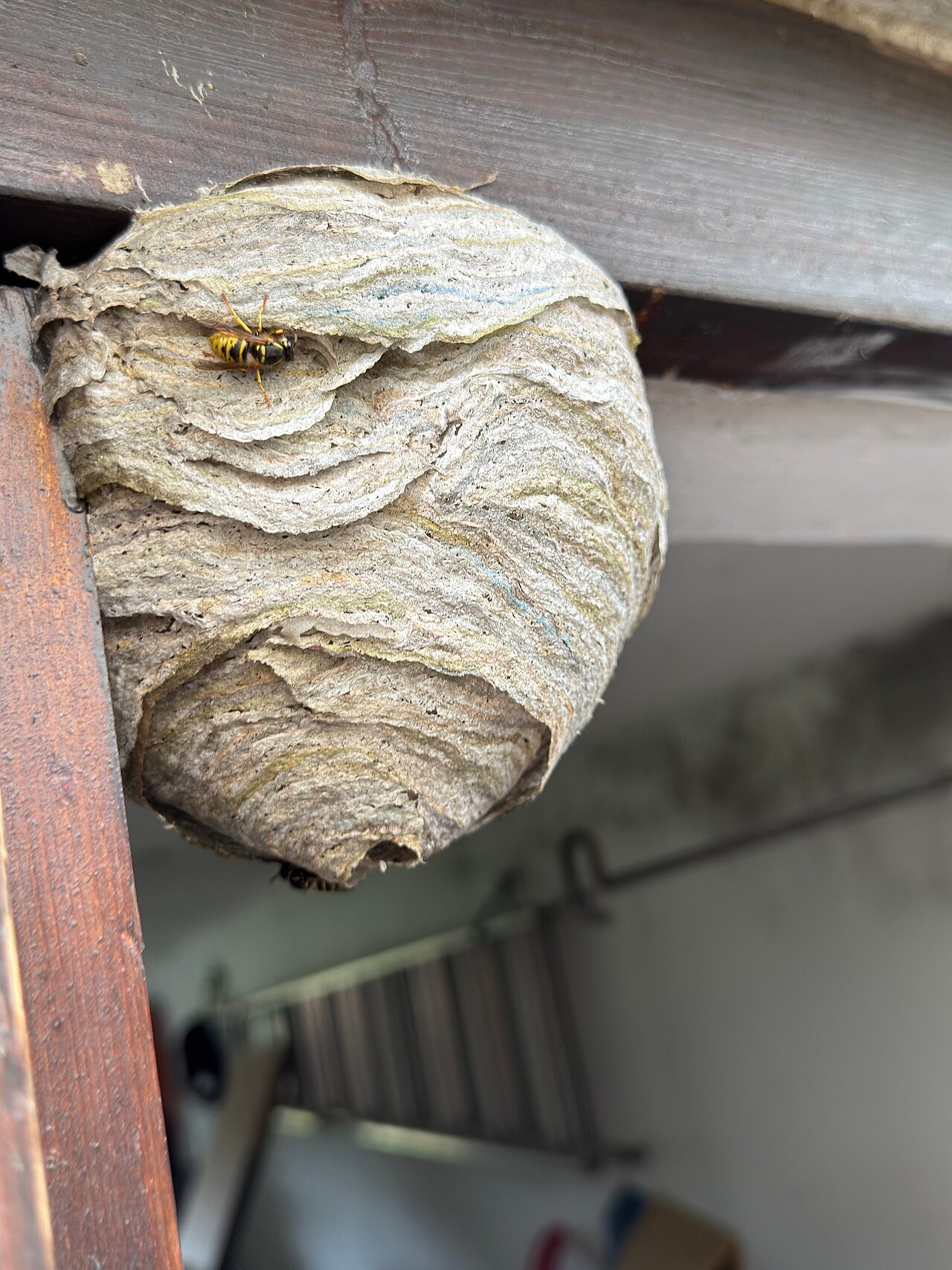
Found it in fall or winter?
Paper wasp and yellowjacket colonies last one season. Freezing nights, usually in the mid-to-upper 20s °F, kill the workers and the old queen, and an old nest is not reused the next year. Only new queens survive, hidden somewhere else. So a nest you find in November or December is almost always empty: watch it for a few minutes on a mild afternoon, and if nothing moves you can knock it down and bag it. More on this in do wasps return to an old nest? and where do wasps go in winter.
If the nest is not in the way, simply leaving it until a hard freeze is a valid choice too; see the best time to remove a wasp nest.
Keep wasps out of the shed next year
- Seal gaps in late fall or winter, after the colony is dead: cracks around the roofline, gaps between boards, holes in siding and spaces around pipes.
- Screen vents and windows, and fit a door sweep so the door closes tight.
- Keep the door closed in spring, when queens are looking for nest sites.
- Check monthly from April to June for golf-ball-sized starter nests and knock them down while only the queen is there.
- Store things closed: lids on bins, covers zipped, empty pots stacked upside down.
More ideas in how to prevent wasp nests.
Call 911 if anyone has trouble breathing, swelling of the face, lips or throat, dizziness or a fast heartbeat after a sting, or has been stung many times. Use an epinephrine auto-injector if one has been prescribed. For ordinary stings, see wasp sting first aid.
FAQ
Can I just keep the shed closed until winter?
Often, yes. If you do not need the shed and nobody is allergic, waiting for freezing weather is the safest option: the colony dies by itself, and you remove the empty nest afterwards.
Should I block the hole the wasps use?
Not while they are alive. A blocked entrance makes yellowjackets chew a new exit, sometimes into the inside of the shed or your house. Seal it only after there has been no activity for several days.
Will wasps from the shed get into my house?
Not usually from a detached shed. In an attached garage, a nest in the shared wall can lead wasps indoors; treat it as a wall nest and call a professional.
Why do wasps keep picking my shed?
Sheds offer shelter from rain, wood to chew for nest paper and little disturbance. Gaps and an open door in spring are the invitation; closing them is the fix.
Next step
- Open comb on a beam? Read how to remove a paper wasp nest.
- Wasps disappearing into a wall? See wasp nest in a wall.
- Comparing other locations? Start at the removal guide.
More in Removal
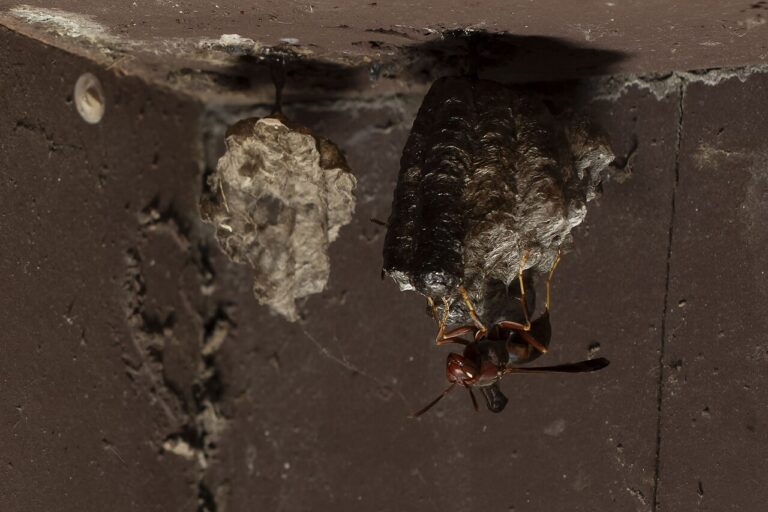 Wasp Nest Under EavesMost nests under eaves, soffits and porch ceilings are paper wasp nests: an open comb, like an…
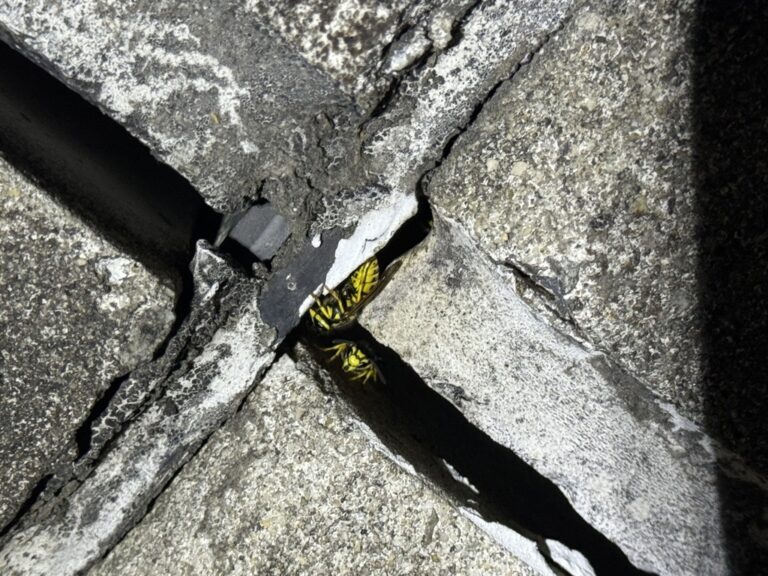 Wasp Nest in a Wall: Why Not to Seal ItWasps flying in and out of a crack in your siding, a gap under the trim or a vent usually mean a…
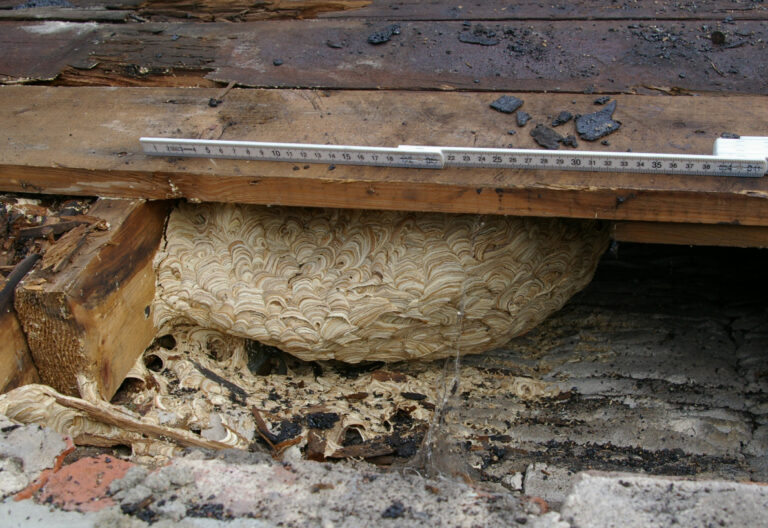 Wasp Nest in the AtticWasps in an attic usually get in from outside, through a gable vent, a soffit gap or a gap at the…
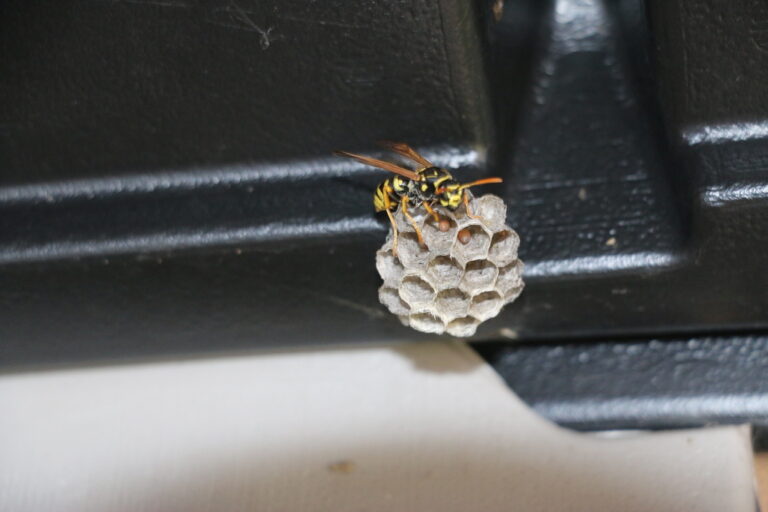 How to Remove a Paper Wasp Nest SafelyA small, open paper wasp nest within easy reach is one of the few nests most homeowners can handle…
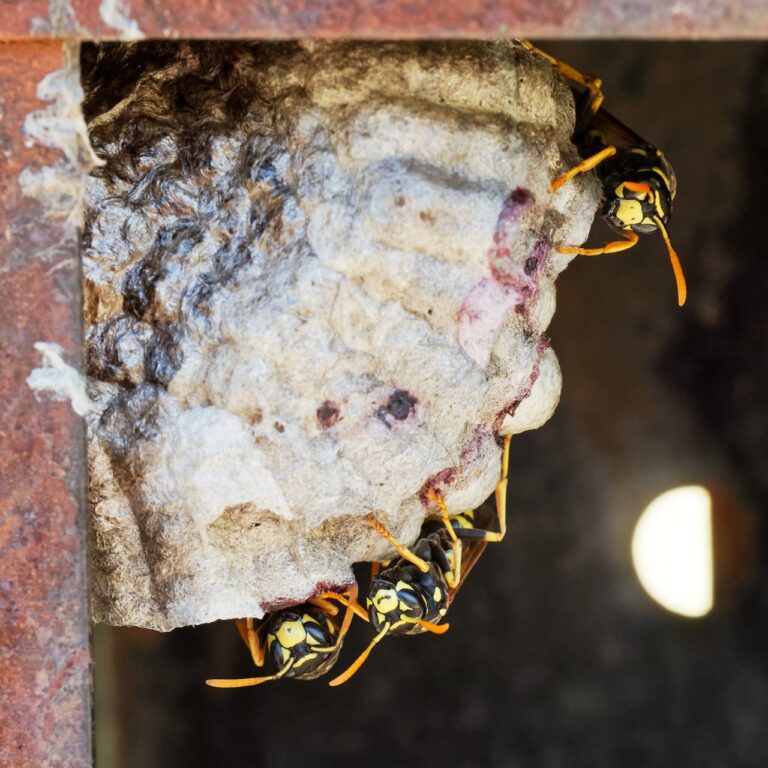 Wasp Nest in a MailboxMost mailbox nests are paper wasps. How to open the box safely, remove the nest and get your mail delivered again…
Sources
- Wasps and bees, University of Minnesota Extension, reviewed 2025.
- Yellowjackets in Virginia, Virginia Cooperative Extension, 2025.
- Paper wasps and yellowjackets, Nebraska Extension urban entomology.
Photos on this page are shared by their authors on Wikimedia Commons under Creative Commons licenses or in the public domain, credited under each image. For who writes these guides and how we stay independent, see About.