
Home Removal
Wasp nest removal: guides by nest and location
Updated
Whether a wasp nest is a one-evening DIY job or a call to a professional depends on what built it, where it is and who lives with it. These guides cover safe methods for the nests you can handle yourself, and explain clearly when a nest is not a DIY job.
Start with two questions: does the nest need to go at all, and is it small, exposed and reachable from the ground? If not, or if anyone is allergic, call a professional. Read should you remove a wasp nest or leave it and DIY vs. professional removal.
Wasp nest removal: the short answer
Most wasp nests do not need to be removed at all. A colony lives for one season, dies after the first hard frosts and never moves back into the old nest, so a nest high in a tree or at the back of the yard is often safest left alone. Remove a nest when it sits where people walk, mow, play or open doors, when wasps are getting into the house, or when someone at home is allergic to stings.
Whether you can do it yourself comes down to three things: what built the nest, where it is, and how big it has grown. A small, open paper wasp nest under a railing in spring is a reasonable evening job. A yellowjacket colony inside a wall, a bald-faced hornet nest the size of a ball, or anything you cannot see fully and reach from the ground is not.
DIY or professional?
A do-it-yourself treatment makes sense when the nest is small, fully exposed, reachable without a ladder, and nobody nearby is allergic. Work at dusk or after dark, when the wasps are inside and slow, wear long sleeves and eye protection, and use a product labeled for wasp and hornet nests exactly as the label says. Our step-by-step removal guide walks through the checks, the gear and the method.
Call a professional when the nest is hidden in a wall, attic, vent, chimney or the ground next to the house; when it is large or high; when you would need a ladder; or when anyone in the home has had a serious reaction to a sting. In the U.S. a typical removal costs a few hundred dollars, and hidden or large nests cost more; see what wasp nest removal costs and DIY vs. professional removal before you decide.
When to remove it
Timing matters almost as much as method. In spring a nest is the size of a golf ball and guarded by a single queen; by late summer the same colony can hold thousands of wasps that defend it hard. Treat at night or at dusk, never in the middle of a warm day. From late fall, after several hard frosts, most nests in cold regions are empty and can simply be taken down. Details are in the best time to remove a wasp nest.
What not to do
Do not seal the hole a colony is using: yellowjackets in a wall or the ground will chew a new way out, sometimes into your living space. Do not flood or burn a nest, knock it down with a stick, or use a fogger in the attic. Do not spray into a vent or chimney you cannot see into, and do not stand on a ladder under an active nest. The full list, with the reasons, is in what not to do with a wasp nest.
Find your nest by location
Many nests look alike from a distance, and the right next step depends on where the nest is. Use this table to find the guide that matches your situation.
| Where is the nest? | Usually built by | What to do | |
|---|---|---|---|
| In the ground | Yellowjackets (or harmless ground-nesting bees) | Do not plug or flood the hole. Treat the entrance at night or call a pro. Ground nest guide | |
| Under eaves or a porch ceiling | Paper wasps (open comb); sometimes bald-faced hornets (gray paper ball) | A small open comb is often a DIY job at dusk; a ball-shaped nest is a job for a pro. Nest under eaves · Paper wasp nest removal | |
| Inside a wall | Yellowjackets | Do not seal the gap. A professional treats the void with dust. Nest in a wall | |
| In the attic | Yellowjackets, paper wasps | Check from a distance; hidden or large nests need a pro. Nest in the attic | |
| In a vent | Yellowjackets, paper wasps | Do not spray into the duct; close the room and screen the vent afterward. Wasps in a vent | |
| In the chimney | Yellowjackets, paper wasps (or chimney swifts) | No fire or smoke to drive them out; keep the damper closed and call a pro. Wasps in the chimney | |
| In a shed or garage | Paper wasps on beams; yellowjackets in gaps in the walls or floor | Check from the doorway first. Treat an open comb in the evening; call a pro for hidden nests. Shed and garage guide | |
| In a mailbox | Paper wasps | Open the door slowly at arm’s length; treat a small comb in the evening and tell your post office when it is gone. Wasp nest in a mailbox | |
| Under a deck or porch | Paper wasps under boards and railings; yellowjackets in the soil below | Find the entrance from a distance first. Treat a small open comb at dusk; call a pro for nests you cannot reach. Wasp nest under a deck | |
| On or behind house siding | Paper wasps on the siding; yellowjackets inside the wall behind it | Do not seal or spray the gap while wasps use it; seal it in winter. Wasp nest in siding | |
| In or under a rain gutter | Paper wasps under the gutter lip; mud daubers in downspouts | Check from the ground; do not treat a live nest from a ladder. Wasp nest in a gutter | |
| Inside a grill or smoker | Paper wasps under the lid or in the cabinet; spiders and small wasps in burner tubes | Do not light it; clear the nest, then clean the burner tubes. Wasp nest in a grill | |
| On a swing set, slide or playhouse | Paper wasps under roofs and platforms; paper wasps or yellowjackets inside open pipe ends | Keep children off it; do not plug a tube while wasps use it. Wasp nest in a playhouse or swing set | |
| On or inside a light fixture | Paper wasps; bald-faced hornets around yard lamps | Switch the light off first; never hose a fixture. Wasp nest in a light fixture | |
| In a birdhouse, gourd or nest box | Paper wasps hanging a small open comb under the roof of the box | Leave it if it is out of the way; clean the box in late fall and rub bar soap on the inside of the roof. Wasp nest in a birdhouse | |
| Inside a hollow fence post or pipe | Wasps flying in and out of the post opening | Leave it if it is away from gates and paths; close the opening in late fall or winter. Wasp nest in a fence post | |
| Inside a garage (beams, rafters, door tracks) | Wasps around the garage door, ceiling beams or shelves | Leave a small nest in an unused corner; treat one by a door you use late in the evening, or call a pro for a big or hidden nest. | Wasp nest in a garage |
| Wasps inside the house | Overwintering queens, or a nest in a wall or attic | A few slow wasps in winter are usually queens; many wasps mean a nest nearby. Wasps in the house | |
| At a rental home | Any of the above | Tell the landlord in writing; do not seal or spray it yourself. Wasp nest in a rental | |
| In a tree or shrub | Bald-faced hornets, European hornets | Leave it if it is high and away from people; otherwise call a pro. Bald-faced hornet nest · Nest in a tree | |
| Mud tubes on a wall | Mud daubers | Rarely sting; scrape the tubes off. Mud dauber nests |
Not sure what you are looking at? Start with types of wasp nests or the identification guides. Below are all removal guides in one place.
Start here
Decide whether the nest has to go and who should remove it, then follow the basic method.
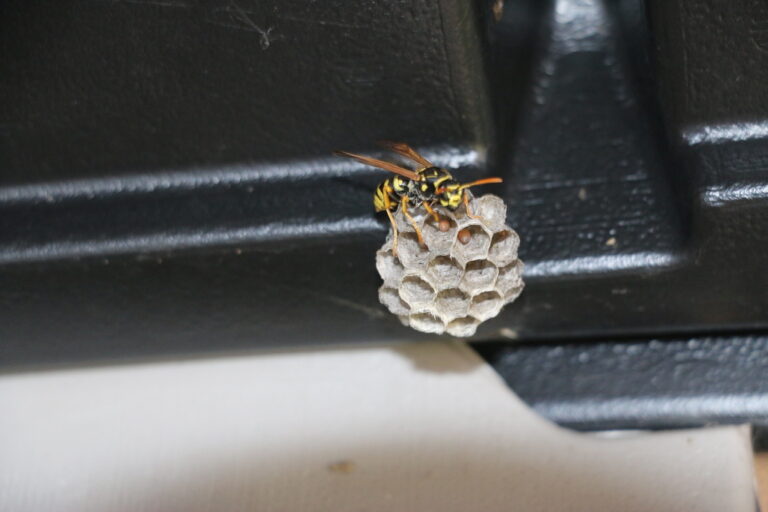 How to get rid of a wasp nest safelyChecks, timing, gear and a step-by-step method for a small nest.
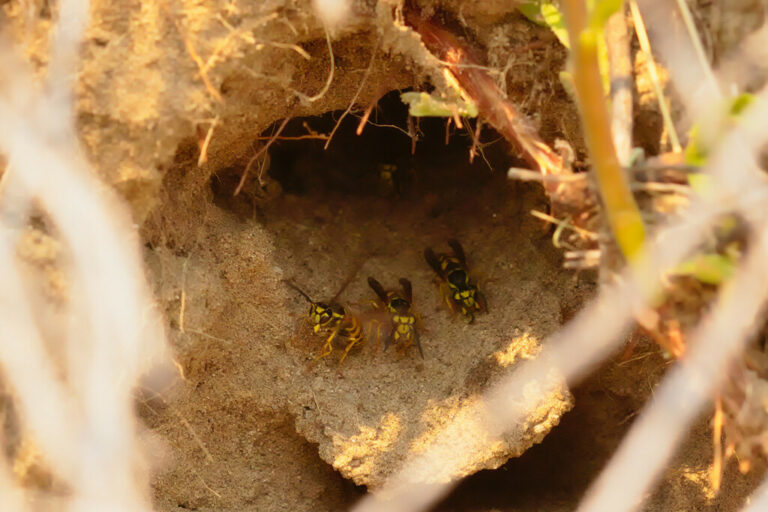 Should you remove it or leave it?When a nest is fine where it is, and when it has to go.
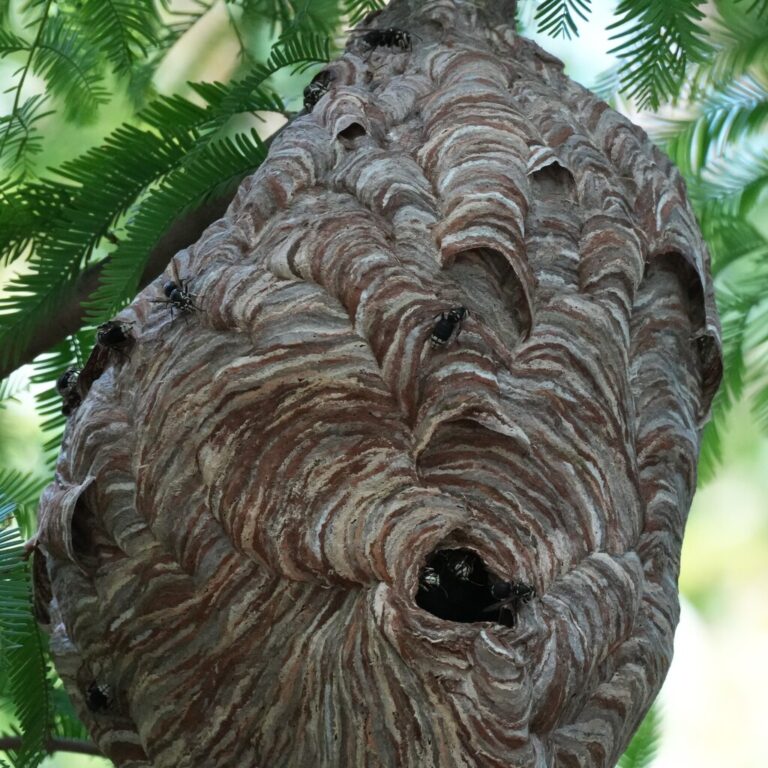 DIY vs. professional removalCost, safety and results compared, honestly.
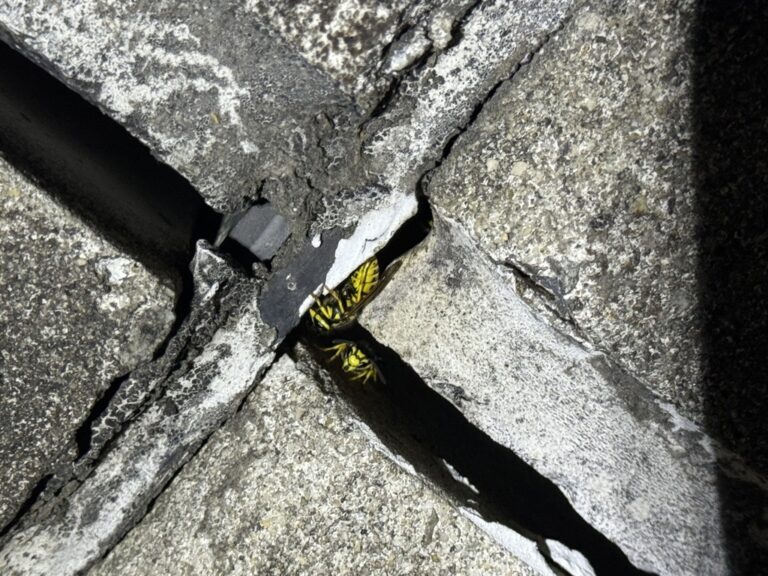 When to call a professionalThe situations where DIY is the wrong call.
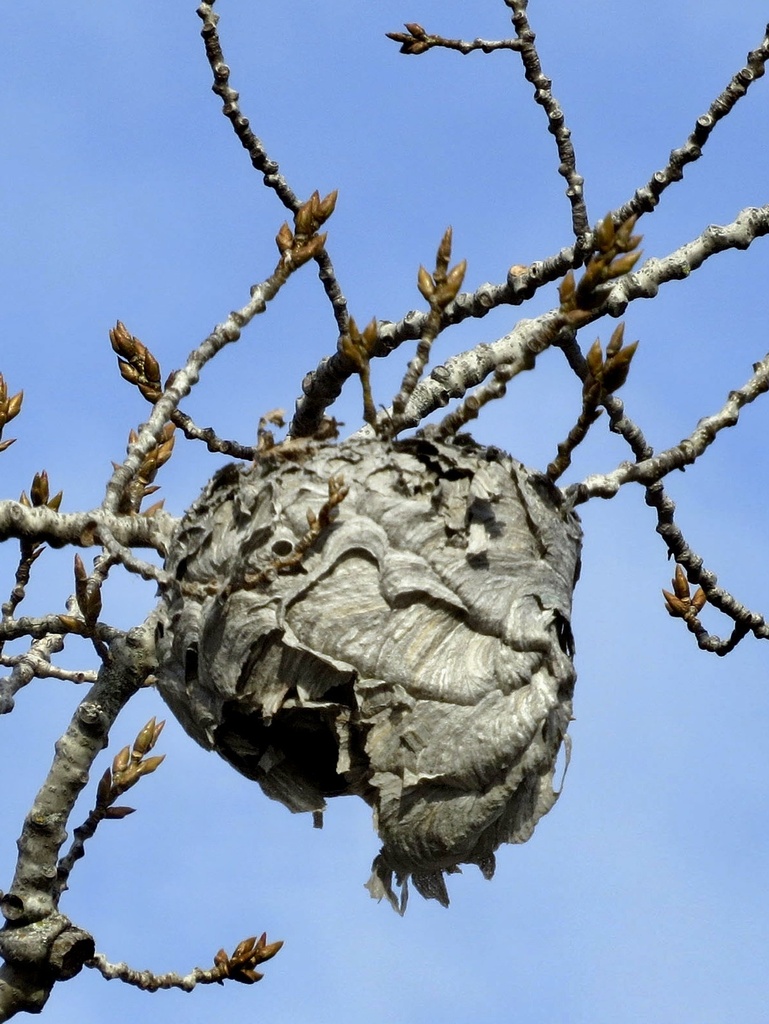 Best time to remove a wasp nestTime of day and season that make removal safer.
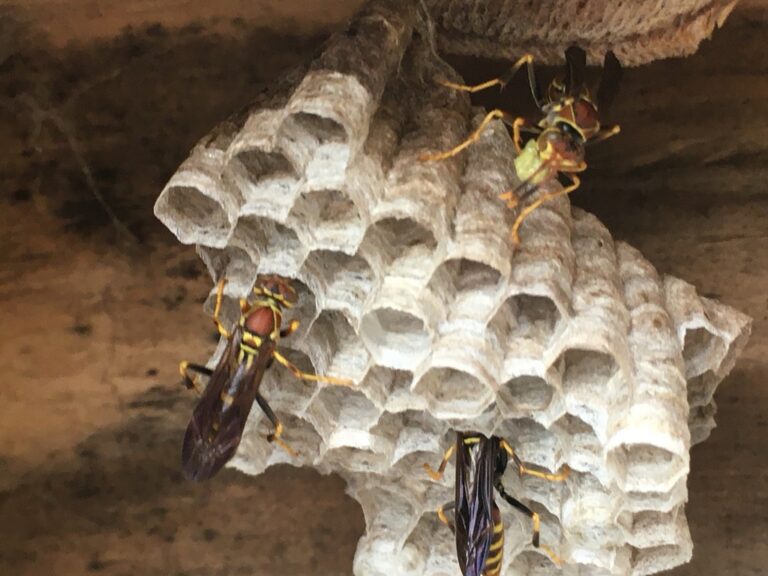 How to remove a paper wasp nestThe classic DIY nest under eaves, railings and the grill.
By location
Where the nest is often decides whether it is safe to handle yourself.
Yellowjacket nest in the groundWhy ground nests are harder than they look, and what works.Wasp nest in a wallWhy you should not seal the hole, and what a pro does.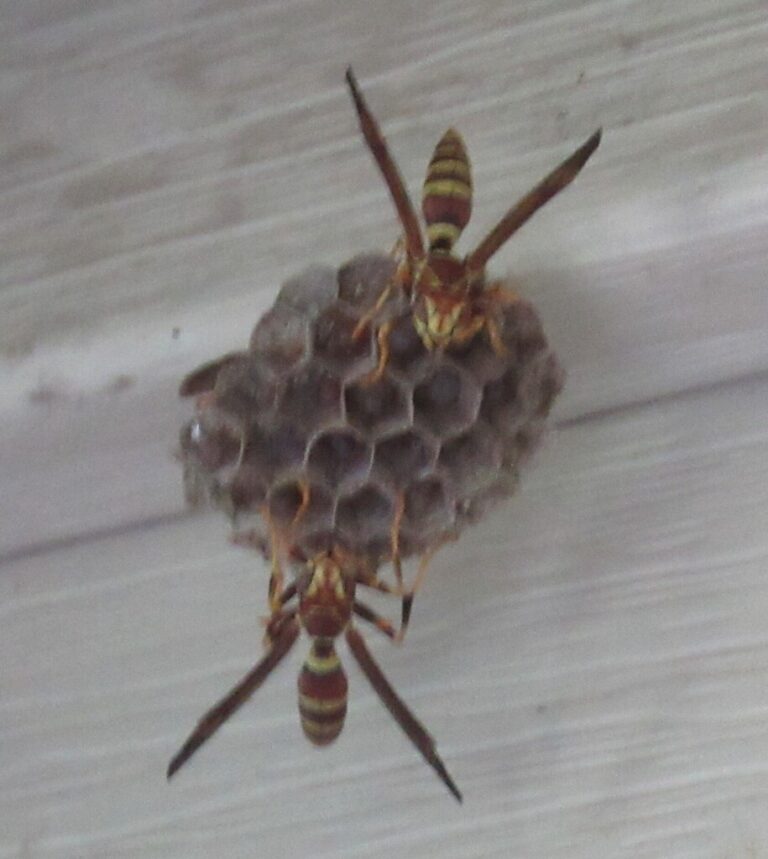 Under eaves, decks and roofsExposed nests on the house, from easy to ladder jobs.
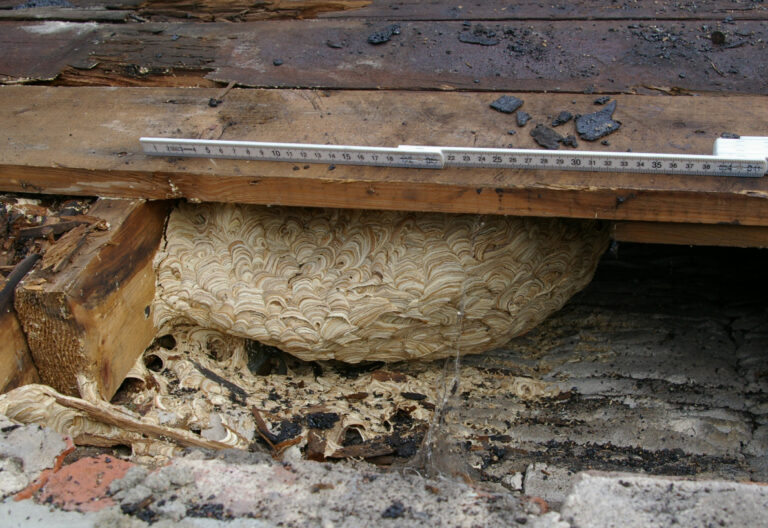 Wasp nest in the atticSigns, risks and why it is a job for a professional.
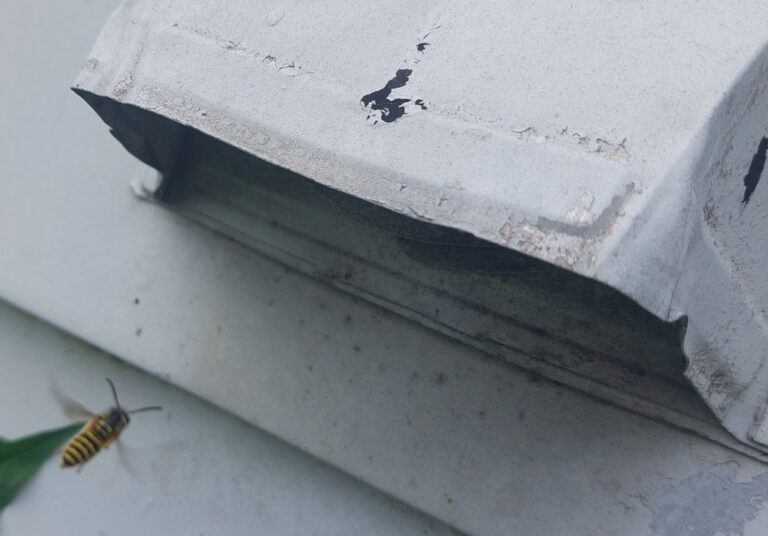 Wasps in a VentWasps coming through a bathroom fan or dryer vent: why not to spray into it and when to call a pro.
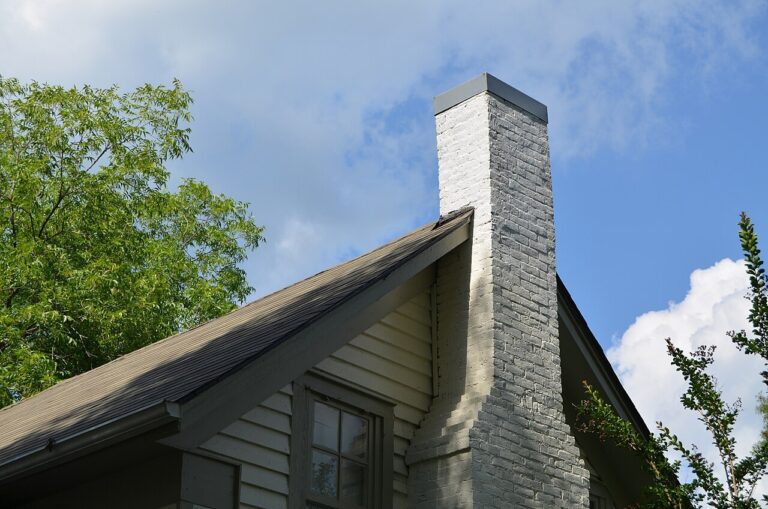 Wasps in the Chimney: What to DoWasps flying around the chimney top or showing up by the fireplace usually come from a yellowjacket…
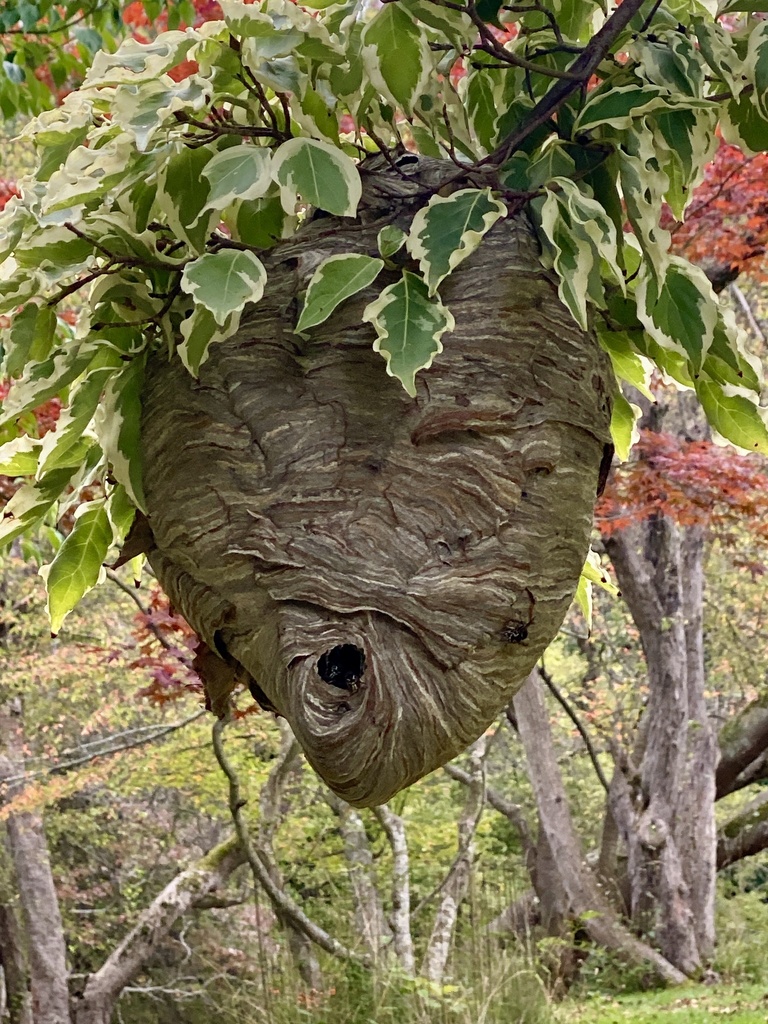 Wasp nest in a tree or bushWhen to leave it and when it has to go.Wasps in the houseWhere indoor wasps come from and what to do.
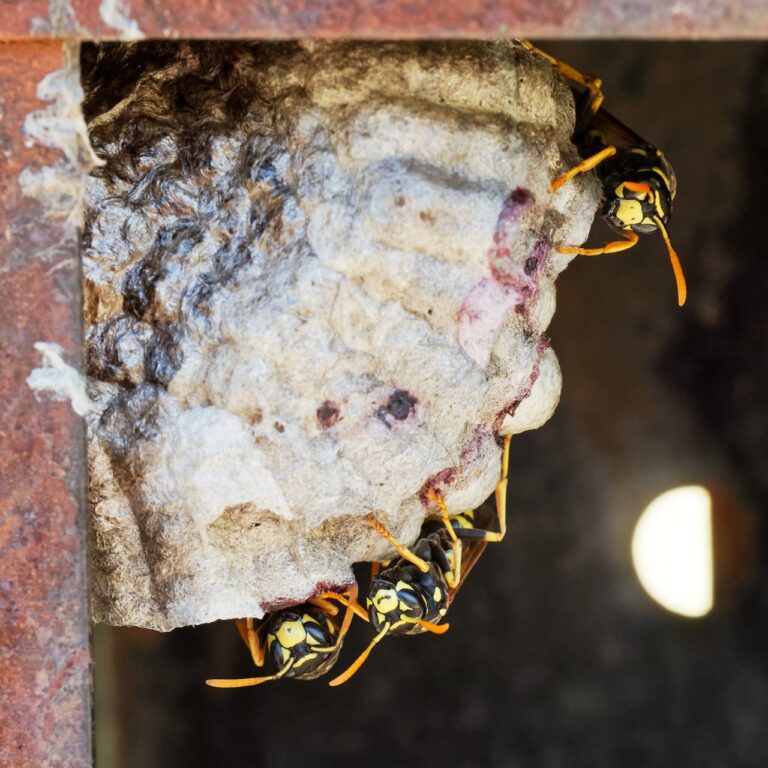 Wasp Nest in a MailboxMost mailbox nests are paper wasps. How to open the box safely, remove the nest and get your mail delivered again…
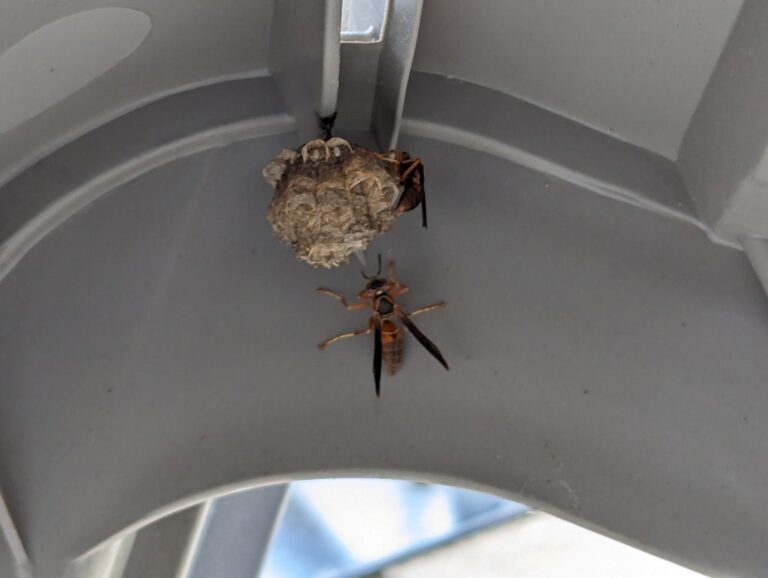 Wasp Nest Under a DeckPaper wasps under the boards or yellowjackets in the soil below: how to tell, and when to treat it or call a pro…
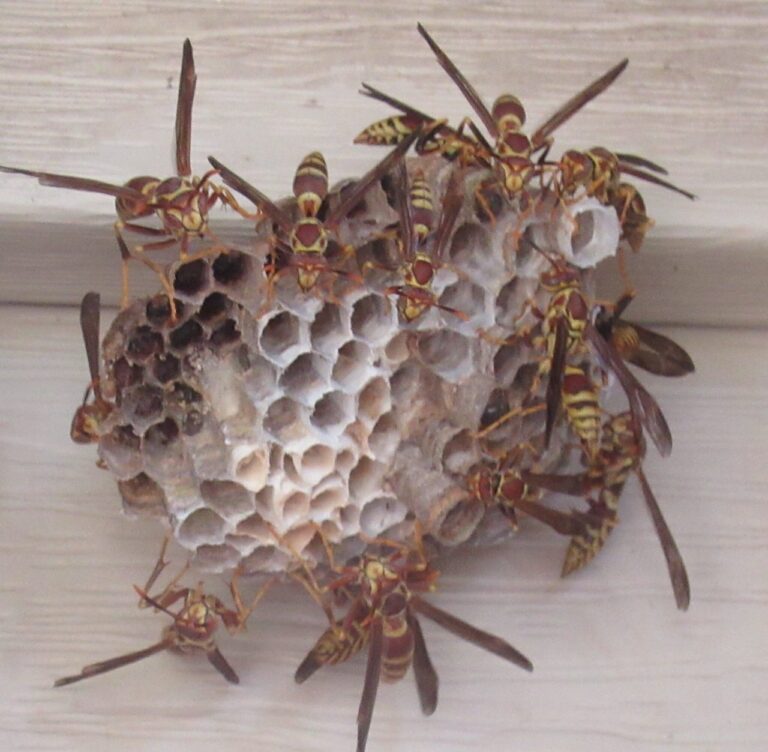 Wasp Nest in SidingPaper wasp comb on the siding or yellowjackets inside the wall: how to tell, why not to seal the gap, and when to call a pro…
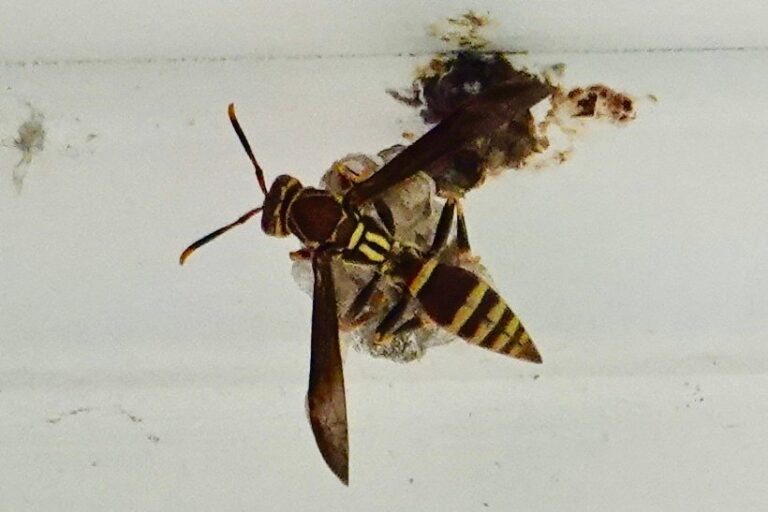 Wasp Nest in a GutterPaper wasp comb under the gutter lip, a paper ball at the corner or mud tubes in the downspout: what to do before you climb the ladder…
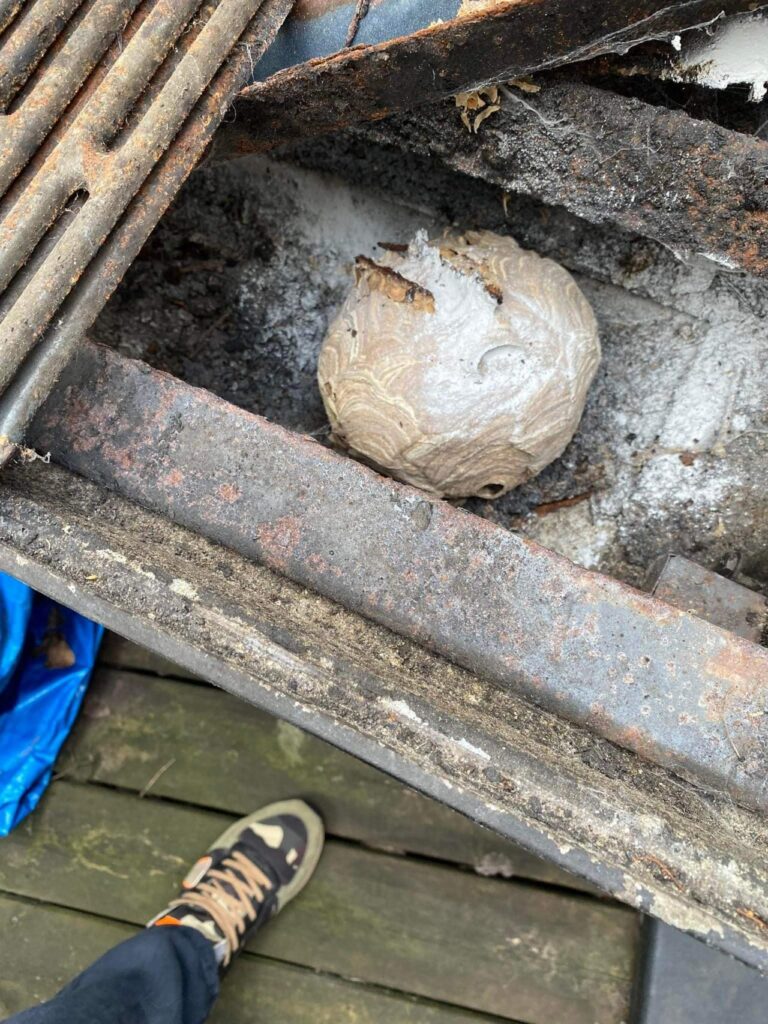 Wasp Nest in a GrillWasps in a stored grill or smoker: why nests in burner tubes are a fire risk, how to clear them safely and how to keep them out…
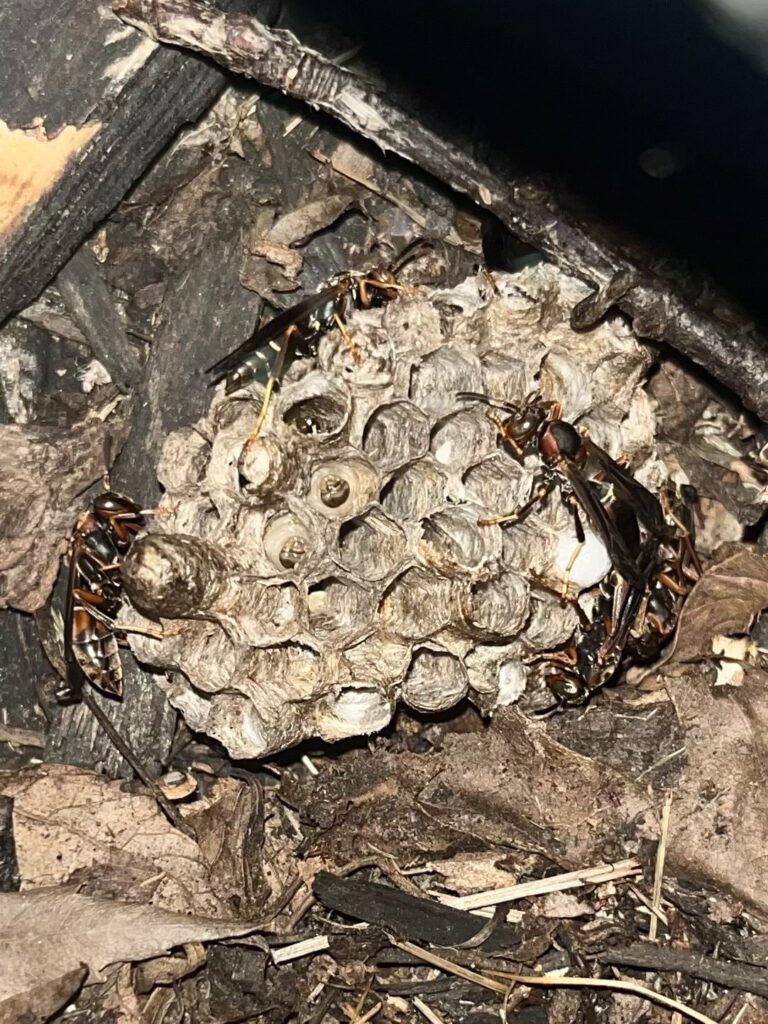 Wasp Nest in a Playhouse or Swing SetPaper wasps under the playhouse roof or inside a tire swing, yellowjackets in open pipes: how to keep kids safe and what to do first…
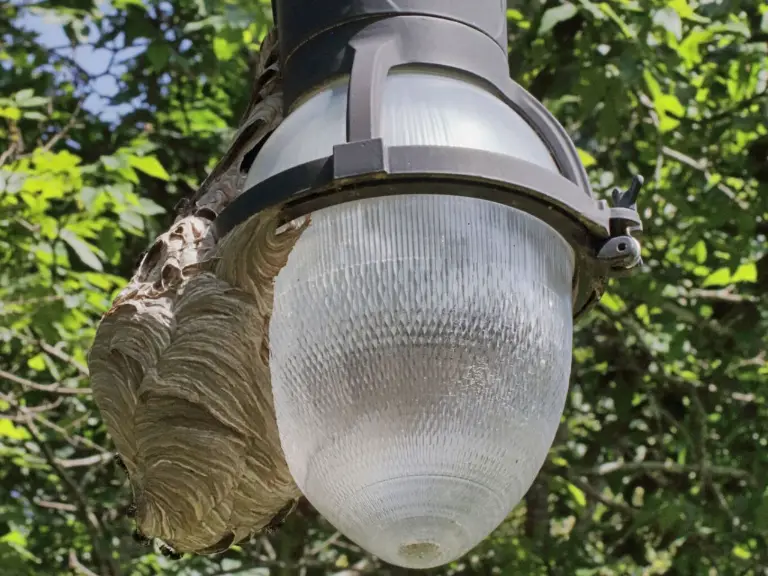 Wasp Nest in a Light FixtureA comb in the porch light or a paper ball around a yard lamp: switch the light off first, then how to remove it safely…
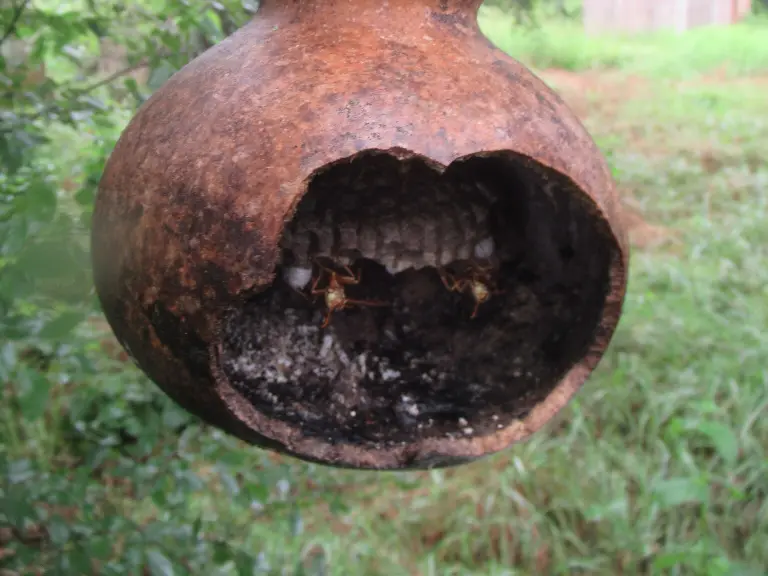 Wasp Nest in a BirdhousePaper wasps in a nest box or gourd: when to leave them, how to clear the box safely and keep wasps out before spring…
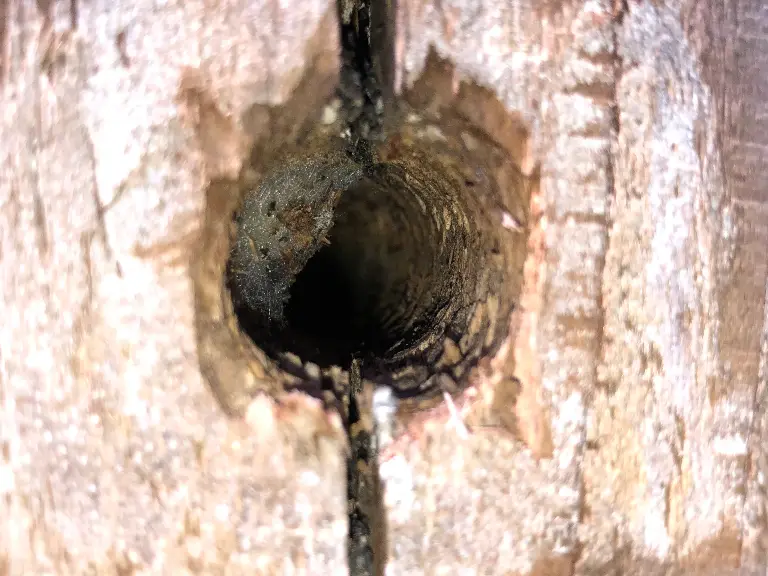 Wasp Nest in a Fence PostWasps flying in and out of a hollow post or fence pipe: when to leave them, how to treat at night and when to seal it…
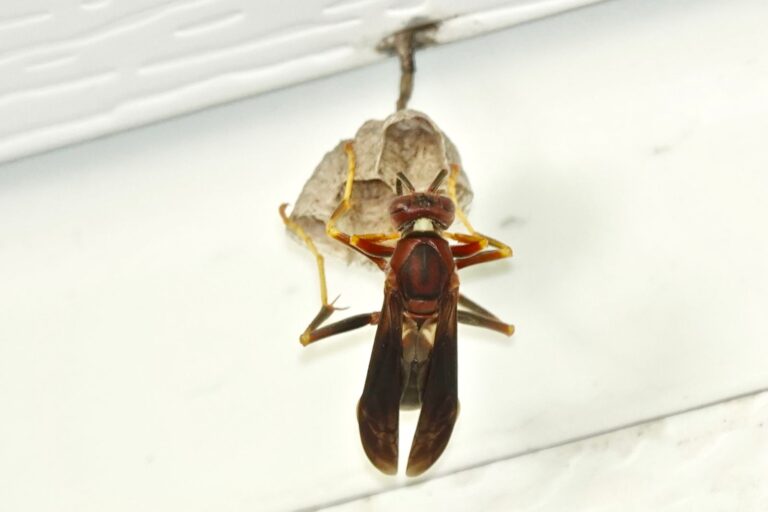 Wasp Nest in a GaragePaper wasps, hornets or mud daubers in a garage: how to tell them apart, when to treat a nest and how to keep wasps out next spring…
Safety
Allergic to stings?
If anyone in your household is allergic to bee or wasp stings, do not try to remove a nest yourself. In an emergency, such as trouble breathing or swelling of the face or throat after a sting, call 911 and use a prescribed epinephrine auto-injector if one is available.
Not sure where to start?
Take the four-question wasp nest decision guide, or see when to call a professional for wasps. Not sure what built the nest? Start with wasp identification.
Photos on these cards are shared by their authors on iNaturalist under Creative Commons licenses and credited in each guide. For who writes these guides and how we stay independent, see About.