
Wasp nest under the eaves: what to do, and how to stop it coming back
Updated
Short answer
Most nests under eaves, soffits and porch ceilings are paper wasp nests: an open comb, like an upside-down umbrella. A small one out of reach of doors and windows can often be left until fall. One by an entrance can be removed in the evening, when the wasps are home, or by a professional. If wasps keep coming back after you spray, they are usually nesting inside a gap in the soffit or roofline, not in the nest you can see. Never seal a gap while wasps are going in and out.
Is this the right guide? This guide covers nests attached outside, under eaves, soffits and porch ceilings, where you can see the comb or paper ball. If wasps disappear into a soffit vent or a gap and you cannot see a nest, the colony is probably inside the roof space or the wall; see wasp nest in the attic or wasp nest in a wall. For removing an open paper wasp comb step by step, see how to remove a paper wasp nest. For a nest on or behind the wall cladding, see wasp nest in siding. For a nest in or under a rain gutter, see wasp nest in a gutter. For a nest on or inside a porch light, see wasp nest in a light fixture.
Which wasp is it?
| What you see under the eave | Likely wasp | Risk |
|---|---|---|
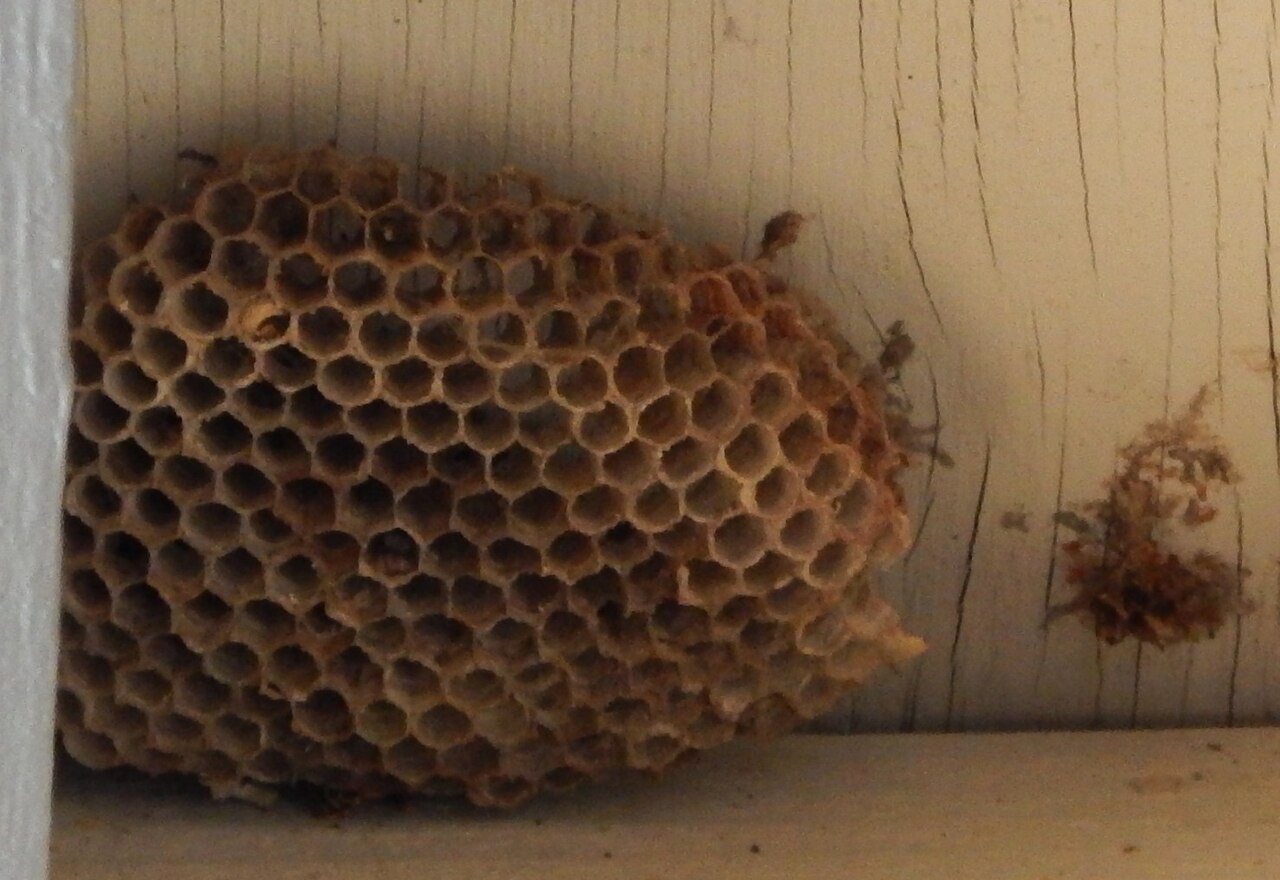
| Open comb, cells visible from below, a few dozen wasps sitting on it | Paper wasps | Low to moderate; sting when the nest is bumped |
| Gray paper ball with one hole, football-sized or larger by late summer | Bald-faced hornets or aerial yellowjackets | High; hundreds of defensive workers |
| No nest visible, wasps entering a crack, vent or gap in the soffit | Yellowjackets or paper wasps inside the structure | Moderate to high; the nest is hidden |
| Mud tubes or lumps on the wall or soffit | Mud daubers | Very low; rarely sting |
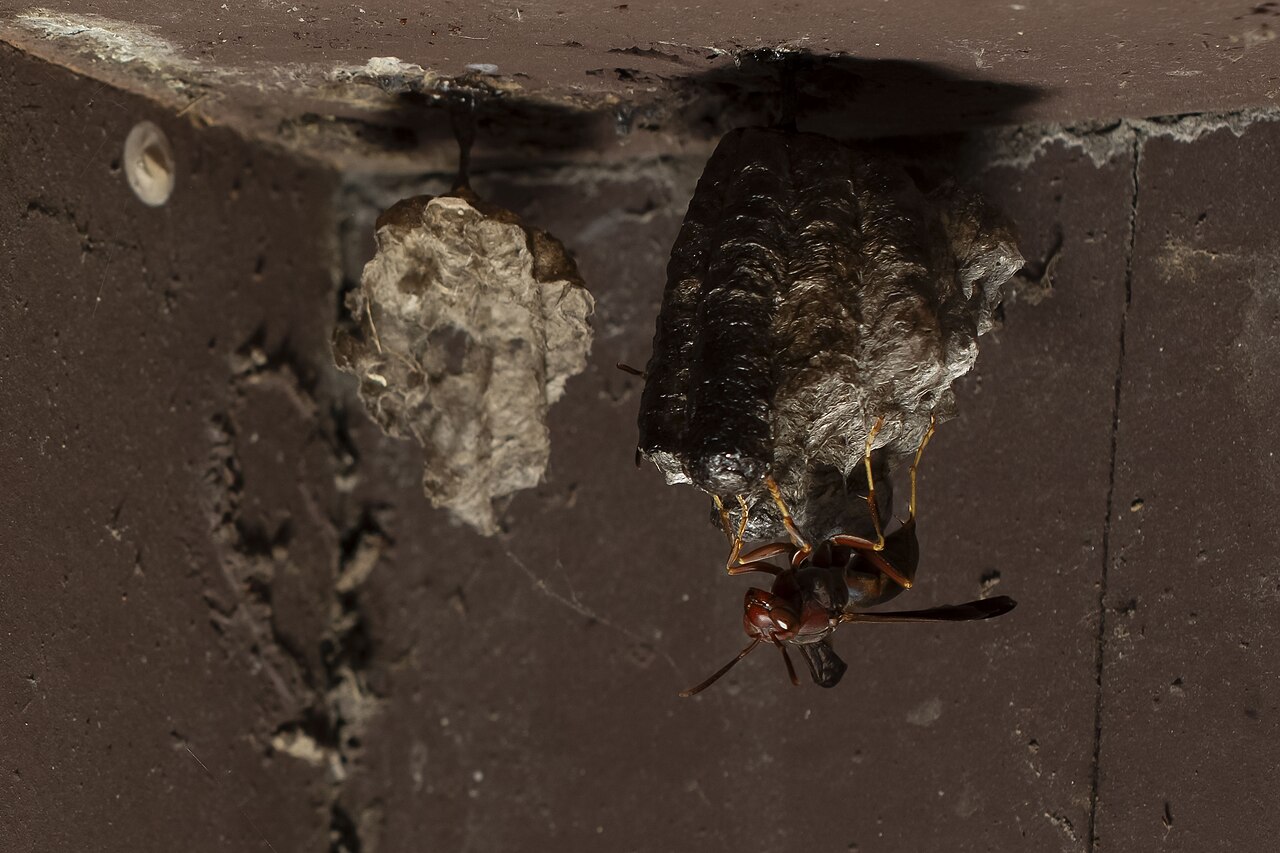
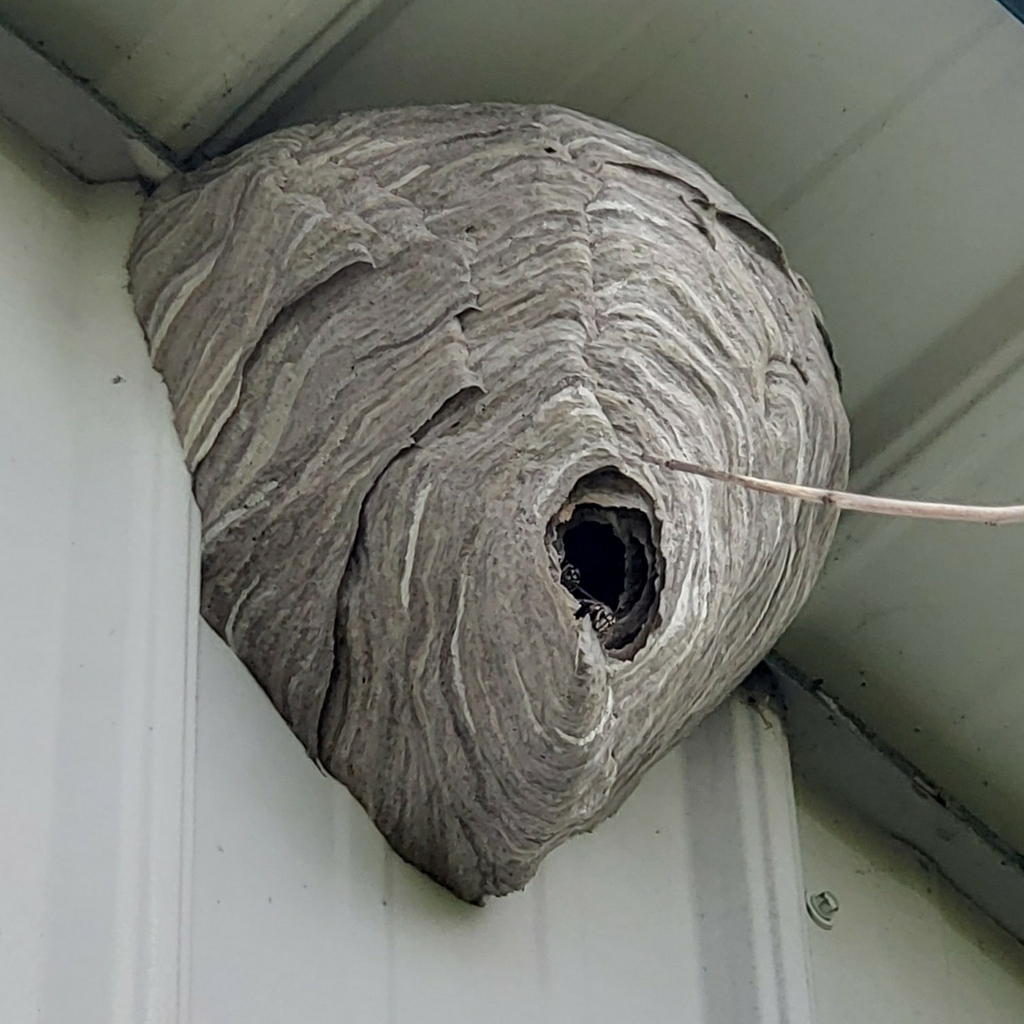
More help with identification: paper wasp nests, bald-faced hornet nests, yellowjacket nests and mud dauber nests.
Leave it or remove it?
- Leave it if it is a small paper wasp nest high up, away from doors, windows, decks and play areas. Paper wasps eat caterpillars and other garden pests, and the colony dies after a hard frost.
- Remove it if it hangs over a door, walkway or window people open, if children play nearby, or if anyone in the household is allergic to stings.
- Call a professional for an enclosed hornet nest, any nest you cannot reach from the ground, or wasps going into the soffit or roofline.
Still deciding? See should you remove a wasp nest and when to call a professional.
How to remove a small paper wasp nest under an eave
- Pick the time: late evening or early morning, when the wasps are on the nest and calm, with enough light to see it.
- Dress for it: long sleeves, long pants, gloves and eye protection. Keep children and pets inside.
- Stay off the ladder. Treat from the ground with a wasp and hornet aerosol that reaches from a distance, following the label exactly. A ladder plus stinging wasps is how most serious falls happen.
- Wait a day, then check from a distance that nothing is flying. See how to check if a nest is active.
- Knock it down with a long pole, bag it and throw it away.
- Scrape and wash the spot where the stalk was attached with soapy water. This removes the scent marks that draw wasps back to the same spot.
Full step-by-step guide: how to remove a paper wasp nest. For larger nests: how to get rid of a wasp nest.
Why they keep coming back after you spray
This is the most common complaint about roofline wasps. The usual reasons:
- The real nest is hidden. Wasps going into a gap between the soffit and the fascia, under shingles or behind siding are nesting inside. Spraying the opening kills only the wasps that touch the spray.
- Several small nests. Paper wasps often build more than one nest along the same roofline. Knock one down and you notice the next.
- Foragers come home. Wasps that were out when you sprayed return to the spot for a day or two.
- The same spot every year. New queens look for sheltered, sunny overhangs, and they spend the winter in nearby gaps in soffits, attics and siding. A spot that worked once keeps attracting them.
If the nest is inside the structure, a professional usually treats it with an insecticide dust through the opening, then the gap is sealed after the colony is dead. Do not caulk or foam the hole while wasps are using it; they can chew a new way out, sometimes into the attic or the house. More: wasp nest in a wall and wasp nest in the attic.
Nests in vents and fans
Bathroom fan, dryer and attic vents on the eaves are popular nest sites. Wasps can follow the duct and show up indoors, often in the bathroom. Do not spray insecticide into or near a dryer vent; extension specialists call that dangerous. Have a professional remove the nest, then fit a cover or screen over the vent so they cannot return. See also wasps in the house.
How to keep wasps from nesting under your eaves
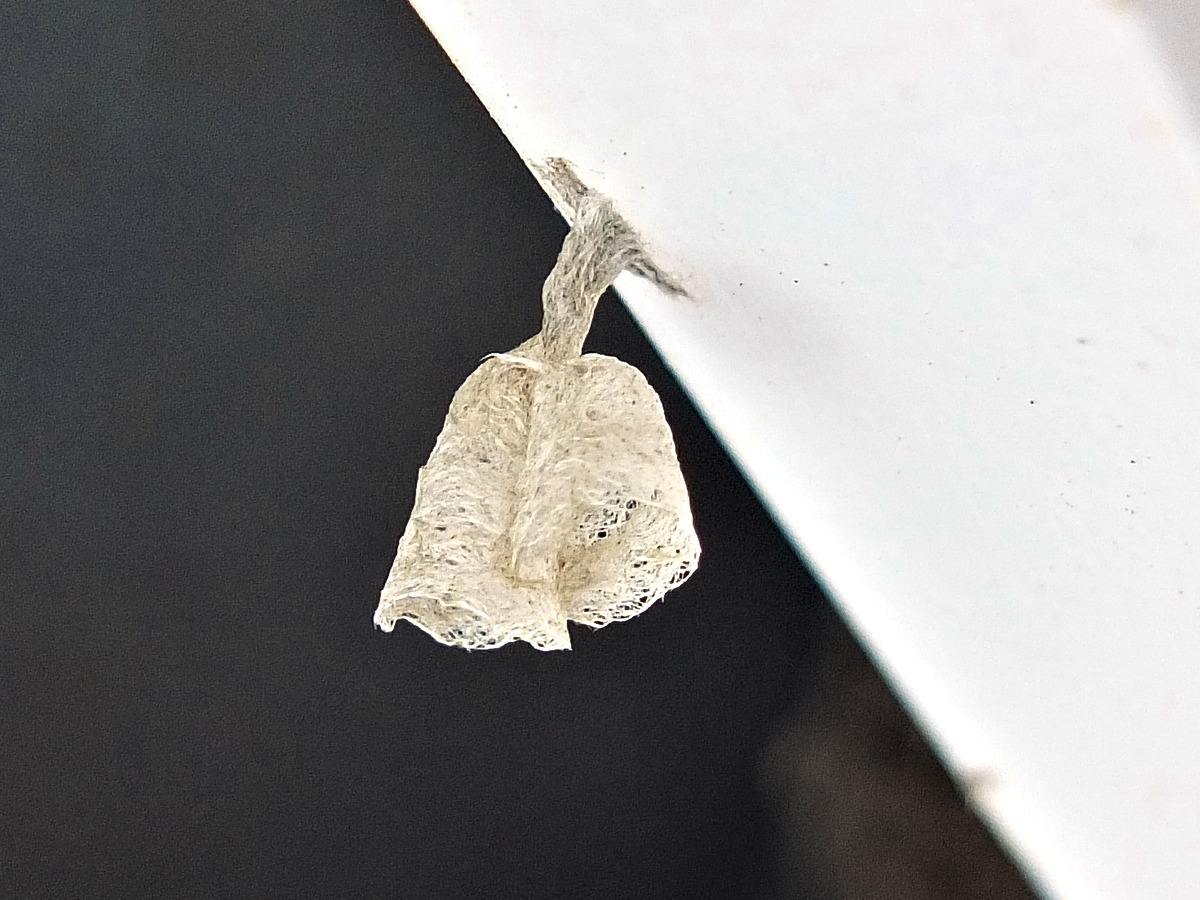
- Check in spring. From April to early June, look under eaves, porch ceilings and window frames every week or two. A new nest the size of a walnut, with only the queen, can be knocked down with a broom.
- Remove old nests in winter and scrape the attachment points. Old nests are not reused, but they mark a good spot.
- Seal gaps in soffits, fascia, siding and around pipes and wires in late fall or winter, when no wasps are active.
- Screen vents on the eaves, gable ends and roof with fine mesh, and fit covers on dryer and bathroom exhausts.
- Paint or stain bare wood on porches and fences; wasps scrape weathered wood to make paper.
The full plan: how to prevent wasp nests. Fake nests and other tricks: all prevention guides.
What it costs to have it removed
A small nest under an eave is one of the cheaper jobs; enclosed hornet nests, hidden nests in the roofline and anything that needs a tall ladder cost more. Typical prices are in wasp nest removal cost.
If someone is stung
Trouble breathing, throat or tongue swelling, dizziness or hives spreading over the body after a sting: call 911.
For an ordinary sting, see what to do first after a sting and signs of a sting allergy.
Common questions
Can I knock down a wasp nest under the eaves in winter?
Yes, in most of the country, once there have been several hard frosts and you see no wasps on a warm afternoon. Wear gloves, bag the nest and scrape the spot. In the South, check first; colonies can stay active much longer. See the best time to remove a wasp nest.
Will wasps rebuild in the same spot?
Often in the same area, though never in the old nest. Scraping and washing the spot, sealing gaps and checking in spring makes a repeat much less likely.
Does a fake wasp nest keep them away?
Results are mixed. It may discourage a few paper wasp queens, but it will not move an existing nest. Treat it as a small extra, not a fix.
Is it safe to spray a nest while standing on a ladder?
No. If you cannot reach the nest from the ground with a long-range spray or a pole, hire a professional.
Your next step
- All removal guides: wasp nest removal.
- Not sure what to do: the wasp nest decision guide.
More in Removal
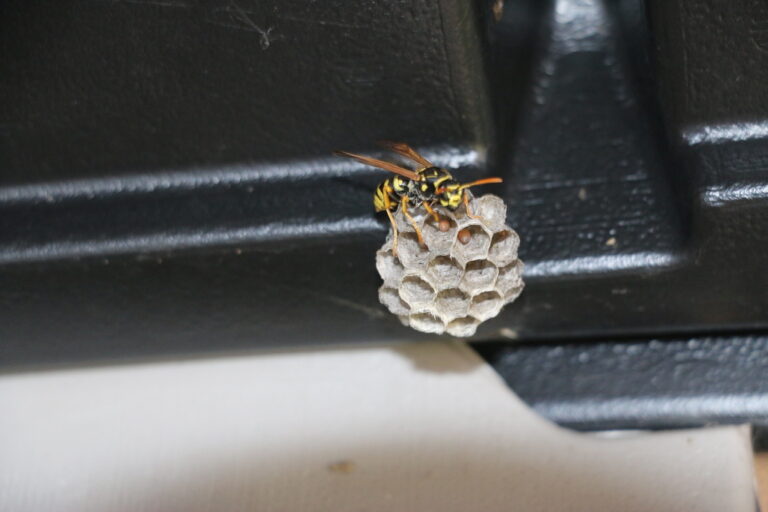 How to Remove a Paper Wasp Nest SafelyA small, open paper wasp nest within easy reach is one of the few nests most homeowners can handle…
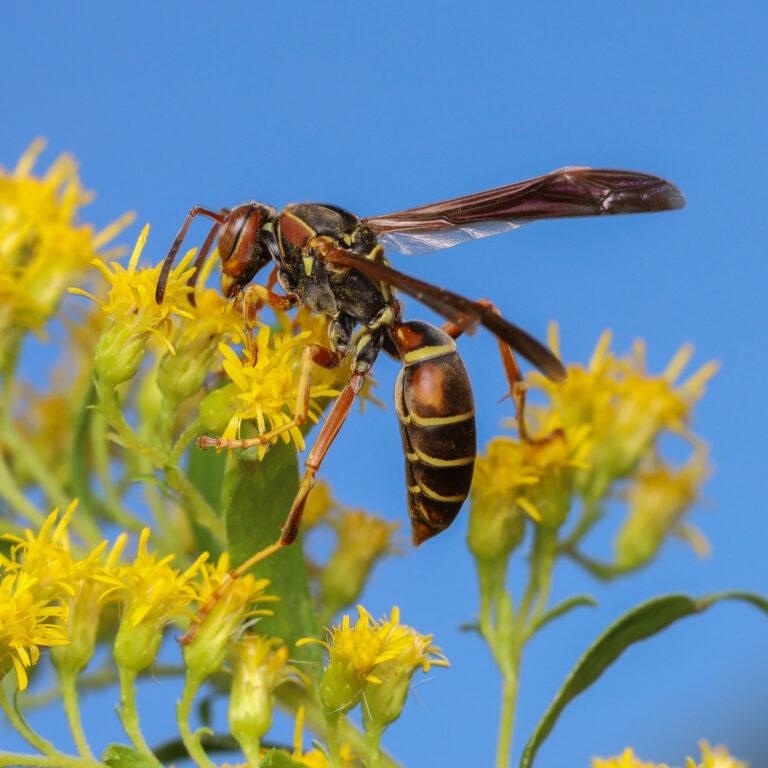 Wasps in the House: Where They Come FromA wasp buzzing against a window is usually nothing more than a lost visitor. A few slow wasps…
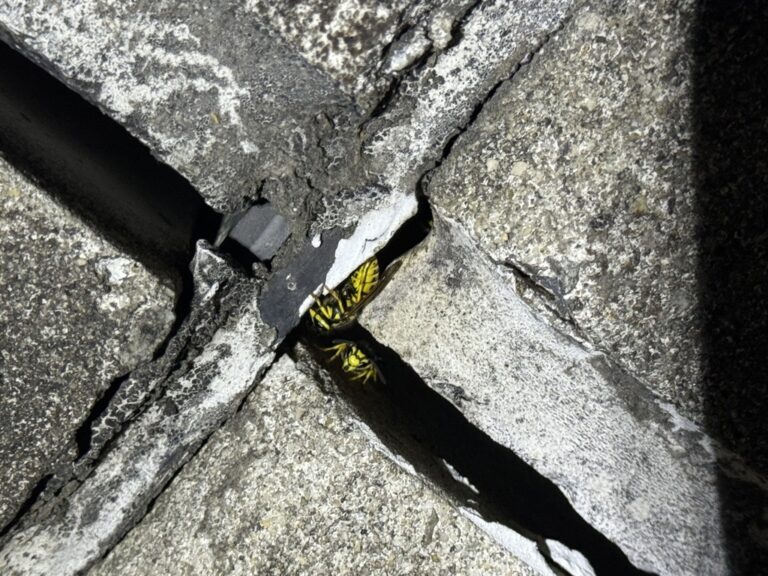 What Not to Do With a Wasp NestMost bad stings around wasp nests come from a few predictable mistakes: disturbing the nest in the…
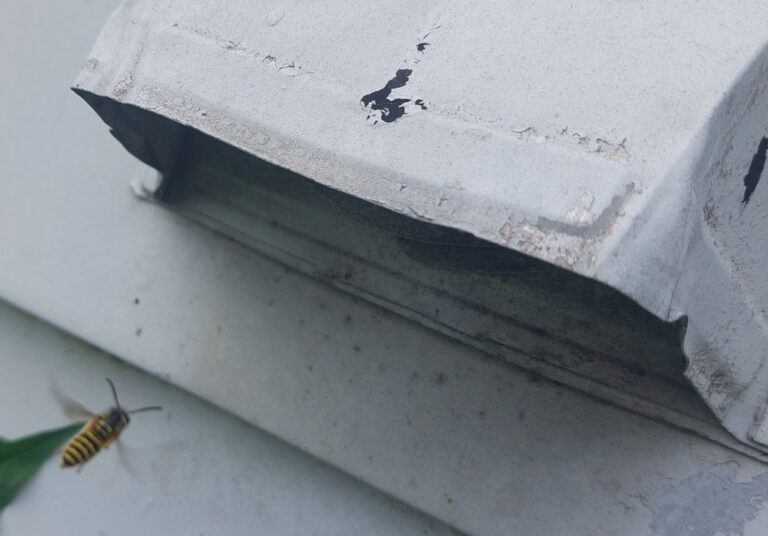 Wasps in a VentWasps showing up in a bathroom, laundry room or kitchen usually come through the duct behind an…
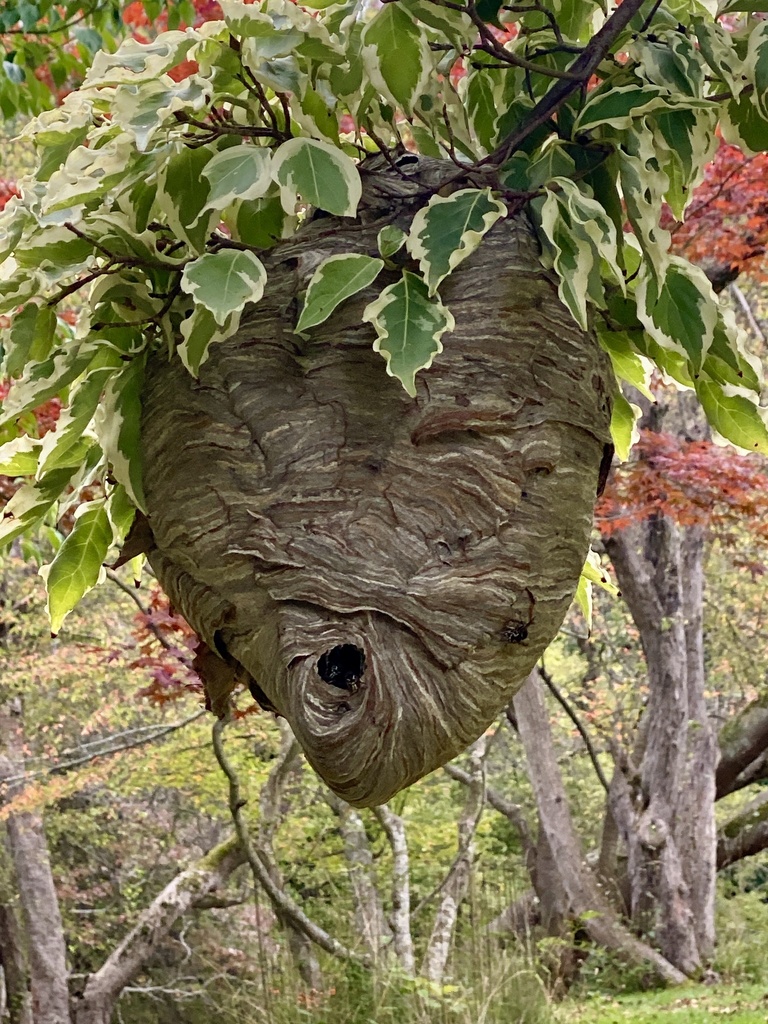 Wasp nest in a tree or bushWhen to leave it and when it has to go.
Sources
- Controlling Paper Wasps in and around Structures, NC State Extension, 2018.
- Paper Wasps, University of Maryland Extension, updated 2023.
- Paper Wasps, Utah State University Extension.
- Paper wasps (indoors), University of Minnesota Extension.
- Wasps nesting near a dryer vent (Ask Extension, Ohio), 2024.
- Controlling Wasps, Hornets and Yellowjackets (ENTFACT-620), Michael F. Potter, University of Kentucky Entomology, revised 2018.
Photos on this page are shared by their authors on Wikimedia Commons and iNaturalist under Creative Commons licenses or in the public domain, credited under each image. For who writes these guides and how we stay independent, see About.