
Wasps in the chimney: what to do, and why not to light a fire
Updated
Short answer
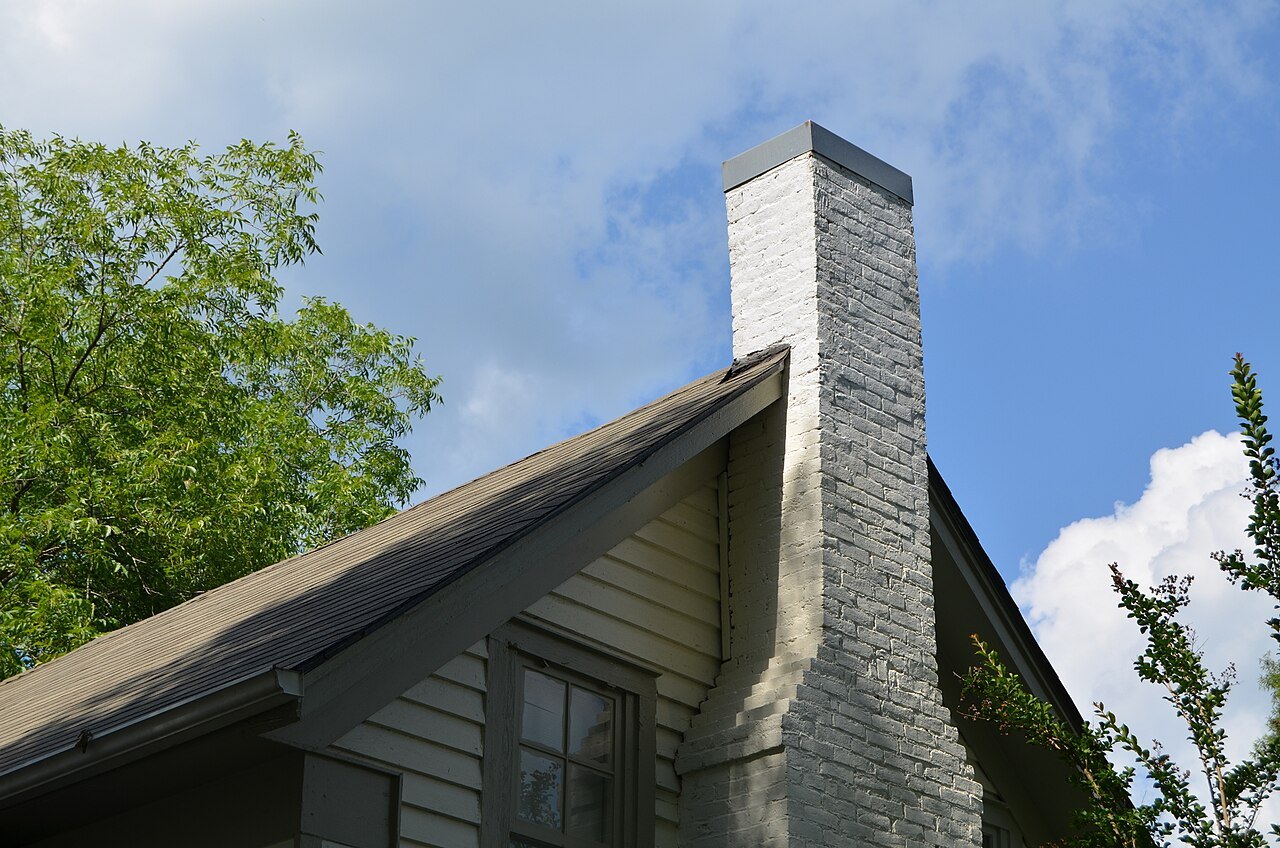
Wasps flying around the chimney top or showing up by the fireplace usually come from a yellowjacket or paper wasp nest in a crack in the masonry, the chimney crown or cap, or a gas fireplace vent. Do not light a fire or set off a bug fogger to drive them out: that tends to push them into the room and adds a fire risk. Keep the damper and glass doors closed, find where they get in from the ground, and let a professional treat an active nest you cannot reach safely. Repairs and a chimney cap come after the wasps are gone, usually in late fall or winter.
A wasp nest in a chimney is awkward: it is high up, often reached only from the roof, and right next to a room you use. The good news is that most of these nests are small, the colony dies after a few hard frosts, and the long-term fix is ordinary chimney maintenance. This guide covers what is likely living in your chimney, what not to do, and the steps that actually work.
Is this the right guide? This guide is about wasps in a chimney flue or fireplace. If they use a gap in the brickwork or siding rather than the flue, see wasp nest in a wall; for bathroom, dryer or attic vents, see wasps in a vent; and if you are finding wasps indoors with no obvious source, see wasps in the house.
What is in your chimney?
| What you notice | Most likely | What it means |
|---|---|---|
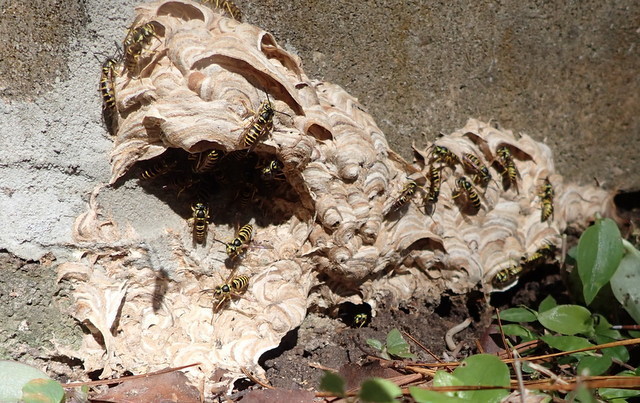
| A steady line of black-and-yellow wasps going in and out of one crack on the outside of the chimney | Yellowjacket nest in the masonry | An active colony. Do not seal the crack while they use it; see the steps below. |
| Long-legged, slender wasps around the cap, the crown or the top edge | Paper wasps | Usually a small open comb under the cap. Less defensive than yellowjackets. |
| One or two slow wasps in the house in fall or winter, often after you light the fireplace | Wasps sheltering in the chimney, often new queens | The colony may already be dead. These are queens looking for a winter spot. See wasps in the house. |
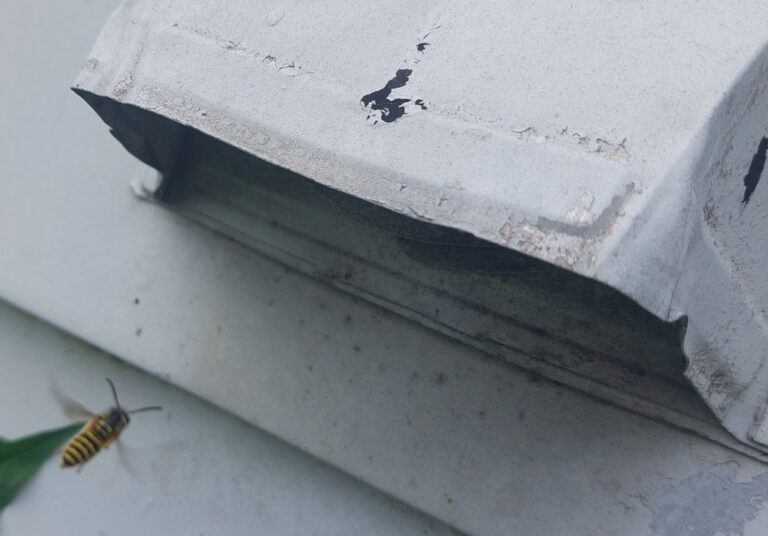
| Wasps around the exterior vent of a gas fireplace | Wasps nesting in or entering through the vent hood | Do not block the vent yourself; it carries exhaust gases. See the vent step below. |
| A large cloud of bees at the chimney top in spring, then a steady busy stream | Honey bees | A swarm that moved in. They build wax comb and will not leave on their own. Call a beekeeper. |
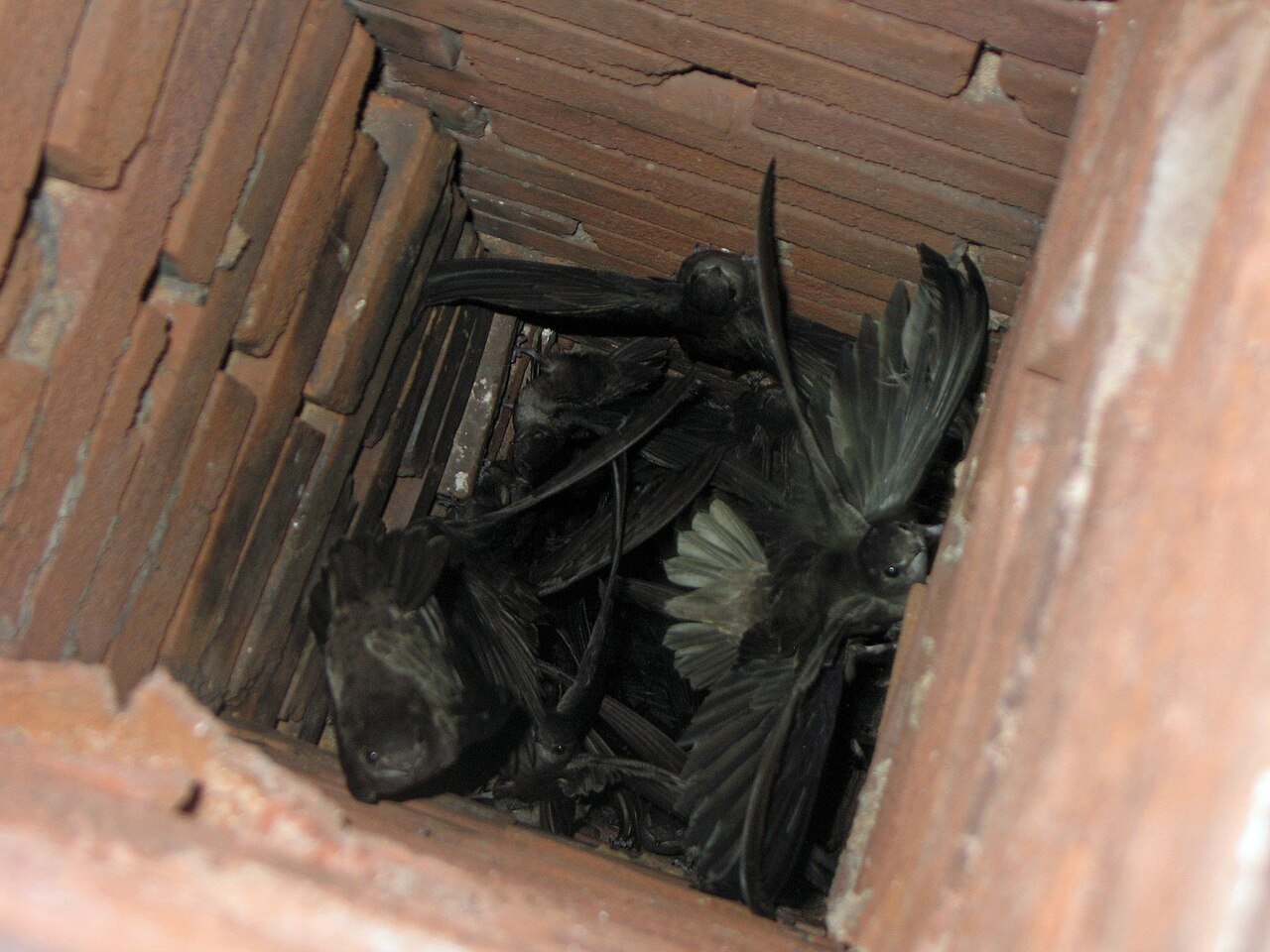
| Chirping or chittering from late spring to summer, small dark birds diving in at dusk | Chimney swifts | Protected birds, not insects. Leave them until they migrate in fall. |
Not sure whether it is bees or wasps? See wasp vs. bee.
Why not to light a fire or use a fogger
- Fire and smoke push wasps into the room. A nest in the masonry or under the cap is rarely in the flue itself, so the heat does not kill the colony. It does stir up the wasps, and some find their way down and out of the fireplace.
- A blocked chimney is a fire and smoke hazard. A paper nest is only a little fuel, but nests, comb and bird debris can partly block the flue. If you suspect anything is built inside the flue, do not use the fireplace until a chimney professional has inspected it.
- Foggers do not belong in a fireplace. Total-release foggers contain flammable propellants. The EPA warns that they can cause fires and explosions near a flame or pilot light and says to keep them at least six feet from any ignition source. They also will not reach a nest in the masonry.
- Spraying up the flue mostly drifts back into your house.
What to do, step by step
- Close it off from inside: shut the damper and the fireplace glass doors, or cover the opening with a fitted fireplace cover. A wasp that does get in can be swatted or vacuumed; indoor stragglers are usually slow and alone.
- Find the entry from the ground. On a warm afternoon, watch the chimney from 15 to 20 feet away, with binoculars if needed. Look for wasps going in and out of one spot: a mortar crack, the crown, the cap, the flashing or a vent. Do not climb onto the roof or a ladder near an active nest.
- Check the season. From spring to early fall the colony is active and growing. After several hard frosts, the workers and the old queen die; how to tell if a nest is still active.
- Active nest near the house, on the roof or with someone allergic at home: hire a professional. A pest professional usually treats a masonry nest by puffing insecticide dust into the entry crack, often from the roof, which is not a job for a homeowner. Our cost guide puts chimney jobs at roughly $475–$600, more if roof access is hard.
- Gas fireplace vent: once the wasps are gone, ask your fireplace installer or the manufacturer about an approved vent guard. Do not tape, plug or wrap the vent yourself; blocking it can send exhaust gases back into the house. An Ohio State Extension educator suggested fine metal mesh for a vent wasps were using, and noted that any wasp trap should be set well away from the vent, not next to it.
- Fix the openings once the wasps are gone. Have a chimney sweep inspect and clean the flue, repair cracked mortar and the crown, and fit a cap with a screen. Do this in late fall or winter. Never seal a crack while wasps are still using it; trapped wasps chew new exits, sometimes into the house.
The old nest will not be reused next year, but spring queens look for the same kind of sheltered gap, so sealing it matters. See do wasps return to an old nest and how to prevent wasp nests.
Honey bees or chimney swifts
Honey bees that move into a chimney build wax comb and settle in. An extension expert answering a Michigan homeowner in 2024 recommended a beekeeper who does cutouts rather than waiting or trying to lure them out. Do not use the fireplace until the chimney is cleared and checked.
Chimney swifts nest in chimneys from about May to July and leave for South America in fall. They are protected by federal law, and disturbing an active nest requires a permit. Connecticut’s wildlife agency suggests scheduling cleaning between the end of the wood-burning season and mid-March, before the swifts return.
If someone is stung
Trouble breathing, throat or tongue swelling, dizziness or hives spreading over the body after a sting: call 911.
For an ordinary sting, see what to do first after a sting.
Common questions
Will the wasps in my chimney die in winter?
In most of the country, yes. The workers and the old queen die after several hard frosts. New queens may shelter in the masonry and wander into the house on warm days or when the fireplace heats up.
Can a wasp nest in the chimney catch fire?
A paper nest is a small amount of fuel, and most nests are in the masonry rather than the flue. The bigger concern is anything that partly blocks the flue. When in doubt, have the chimney inspected before you light a fire.
Why do wasps come into the room when I use the fireplace?
Heat and smoke disturb wasps sheltering in the chimney, and they move toward the light and warmth of the room. Keep the damper and doors closed until the entry is found and sealed.
Can I spray into the crack myself?
Only if the crack is low, safe to reach from the ground and you follow the product label. Most chimney entries are on the roof; do not treat a nest from a ladder or the roof.
Your next step
- A similar problem in a wall: wasp nest in a wall.
- Vents and attics: wasps in a vent and wasp nest in the attic.
- Deciding whether to hire help: when to call a professional.
More in Removal
 Wasps in a VentWasps showing up in a bathroom, laundry room or kitchen usually come through the duct behind an…
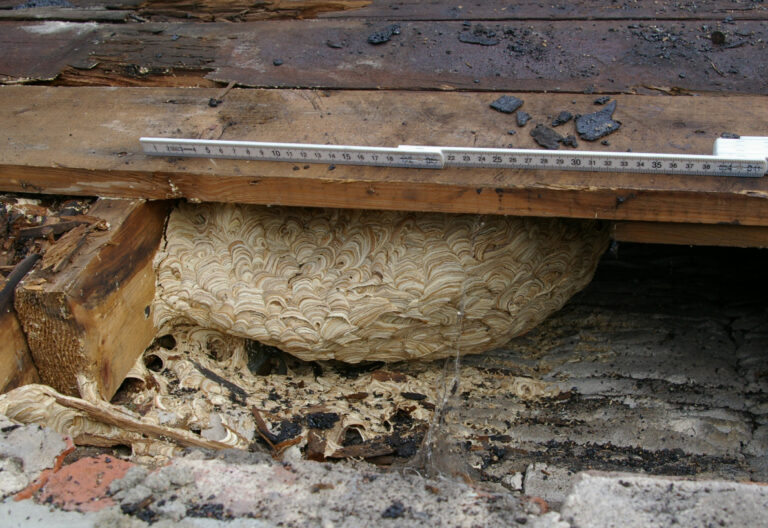 Wasp Nest in the AtticWasps in an attic usually get in from outside, through a gable vent, a soffit gap or a gap at the…
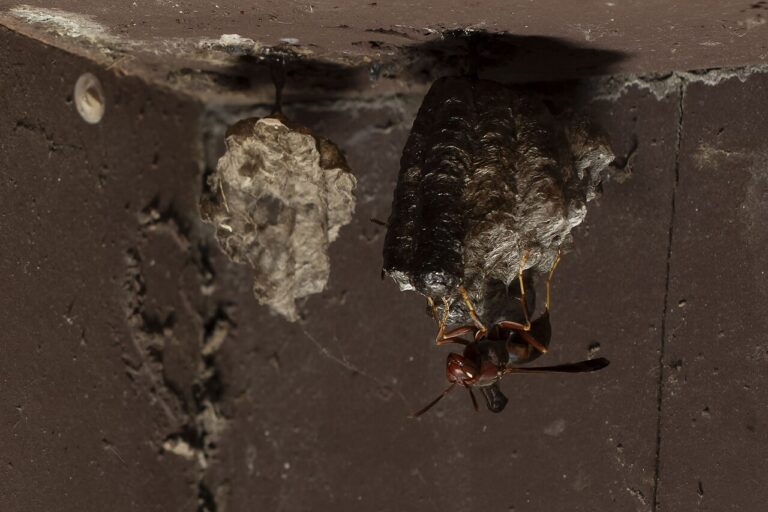 Wasp Nest Under EavesMost nests under eaves, soffits and porch ceilings are paper wasp nests: an open comb, like an…
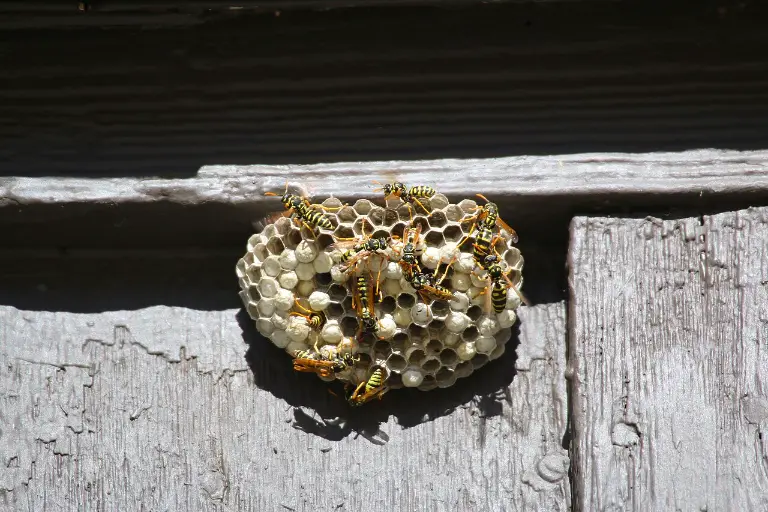 Wasp Nest in a RentalWho usually handles it, how to tell your landlord in writing, and what not to do.
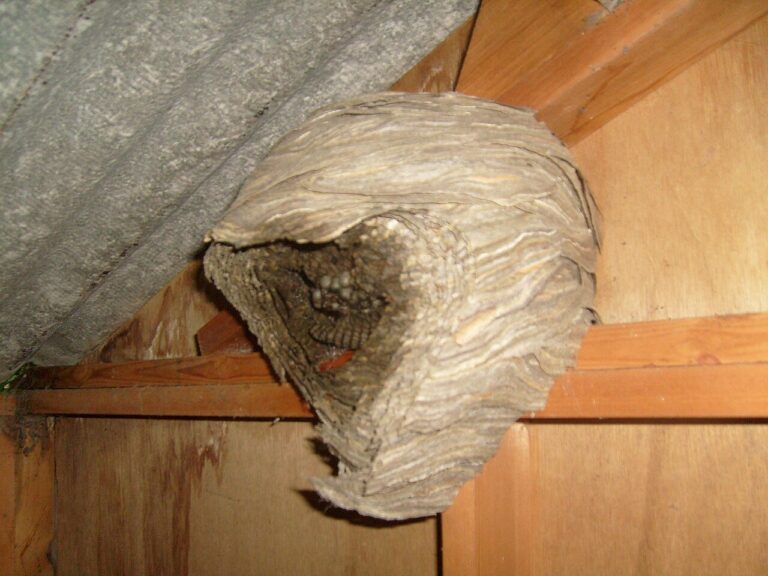 Wasp Nest in a Shed or GarageOpen combs on beams are usually paper wasps; a gray ball or a gap in the wall means yellowjackets…
Sources
- Yellowjackets coming in through a gas fireplace vent, Ask Extension, answered by Ohio State University Extension, Butler County, 2025.
- Honey bees in a chimney, Ask Extension, Michigan, 2024.
- Safety Precautions for Total Release Foggers, U.S. Environmental Protection Agency.
- Renovate with Swifts in Mind, Connecticut Department of Energy and Environmental Protection.
- Wasps in fireplace vent, Walter Reeves, The Georgia Gardener, updated 2020.
Photos on this page are shared by their authors on Wikimedia Commons and iNaturalist under Creative Commons licenses or in the public domain, credited under each image. For who writes these guides and how we stay independent, see About.