
European hornet: how to identify it and what to do about a nest
Updated
Short answer
The European hornet is the only true hornet in the eastern U.S. and the largest one you are likely to see: about 1 inch long, with a reddish-brown head and thorax and a yellow abdomen marked with dark teardrops. It nests in hollow trees and sometimes in walls, attics and barns, flies at night and is drawn to porch lights. It is usually not aggressive away from its nest, but a nest near the house should be handled by a professional. It is not the “murder hornet.”
How to recognize it
- Size: workers about 1 inch, queens up to about 1.3 inches. Much bigger and bulkier than a yellowjacket.
- Colors: head and thorax reddish-brown to brown, face yellowish; abdomen mostly yellow with dark bands and teardrop-shaped spots.
- Hairy rather than smooth and shiny.
- Behavior: one of the few wasps that flies at night. Big hornets bumping into lit windows or circling a porch light after dark are almost always European hornets.
- Where: much of the eastern half of the country, especially near woods. It came from Europe in the mid-1800s and has been here ever since.
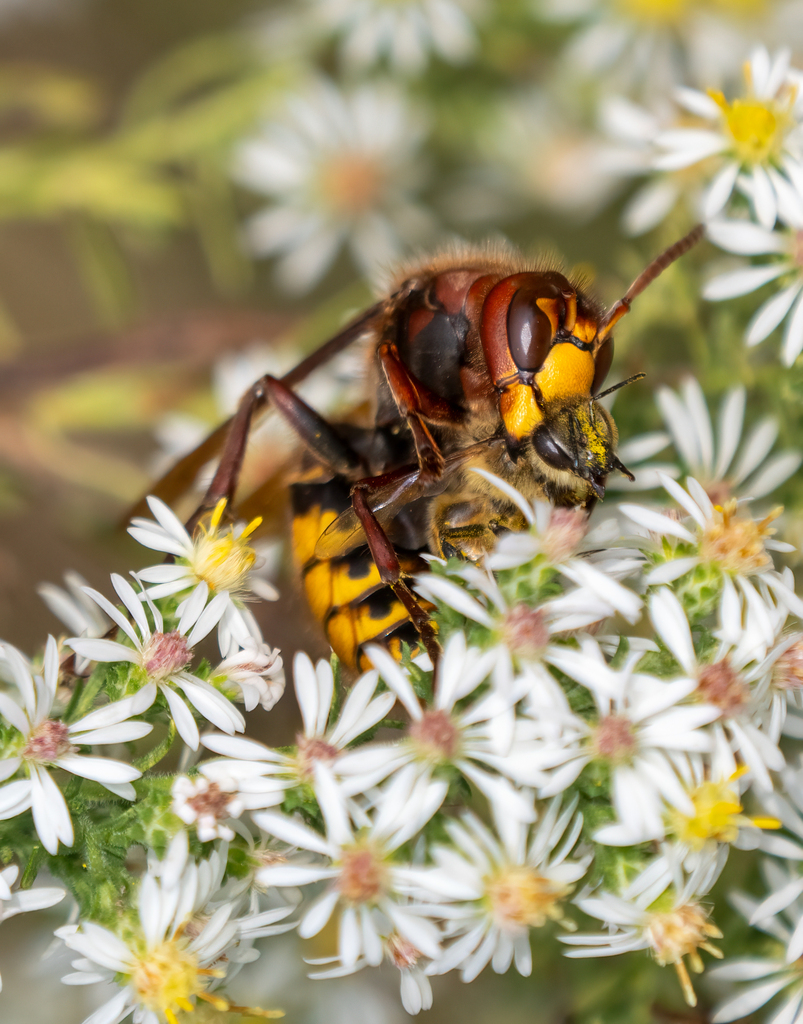
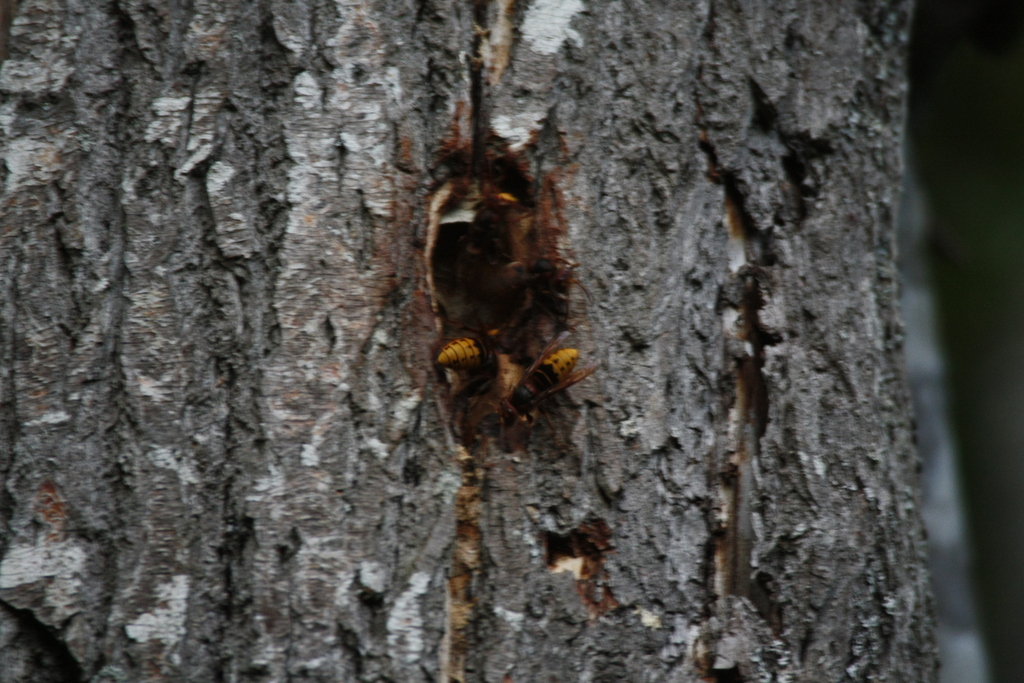
European hornet or something else?
| Insect | Size | How to tell |
|---|---|---|
| European hornet | About 1 to 1.3 in | Brown and yellow, hairy; nests in cavities; flies at night |
| Bald-faced hornet | About 0.5 to 0.75 in | Black and ivory-white; gray paper ball hanging in a tree or under eaves. See bald-faced hornet nests. |
| Yellowjacket | About 0.5 in | Bright yellow and black, smooth; nests in the ground or walls. See yellowjacket nests. |
| Cicada killer | 1 to 2 in | Black with pale yellow marks, slim; digs single holes in sandy soil in midsummer; rarely stings. See cicada killers. |
| Northern giant hornet | Up to about 2 in | Only ever found in a small area of northwestern Washington, and officially declared eradicated from the U.S. in December 2024. See northern giant hornet. |
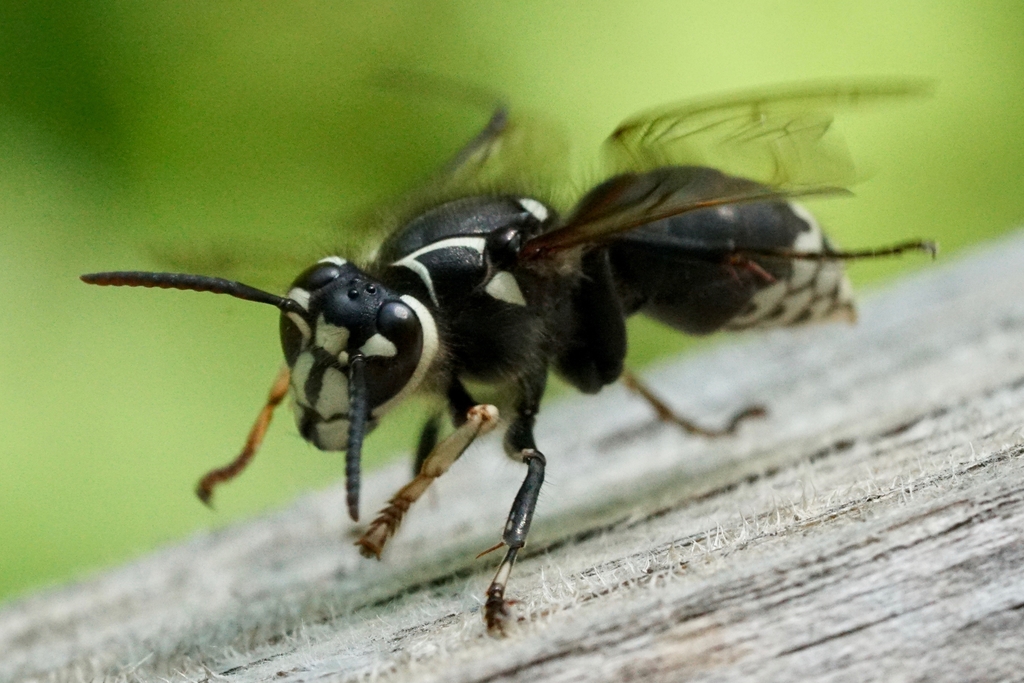
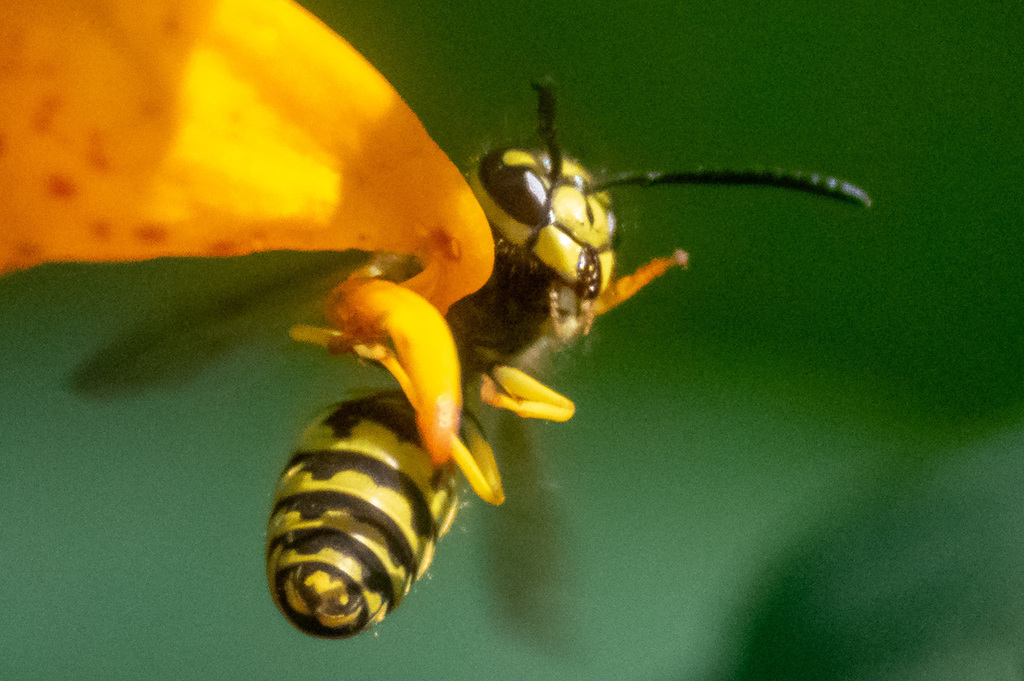
More side-by-side comparisons: bumblebee vs. wasp vs. hornet and wasp vs. bee.
Where the nest is and what it looks like
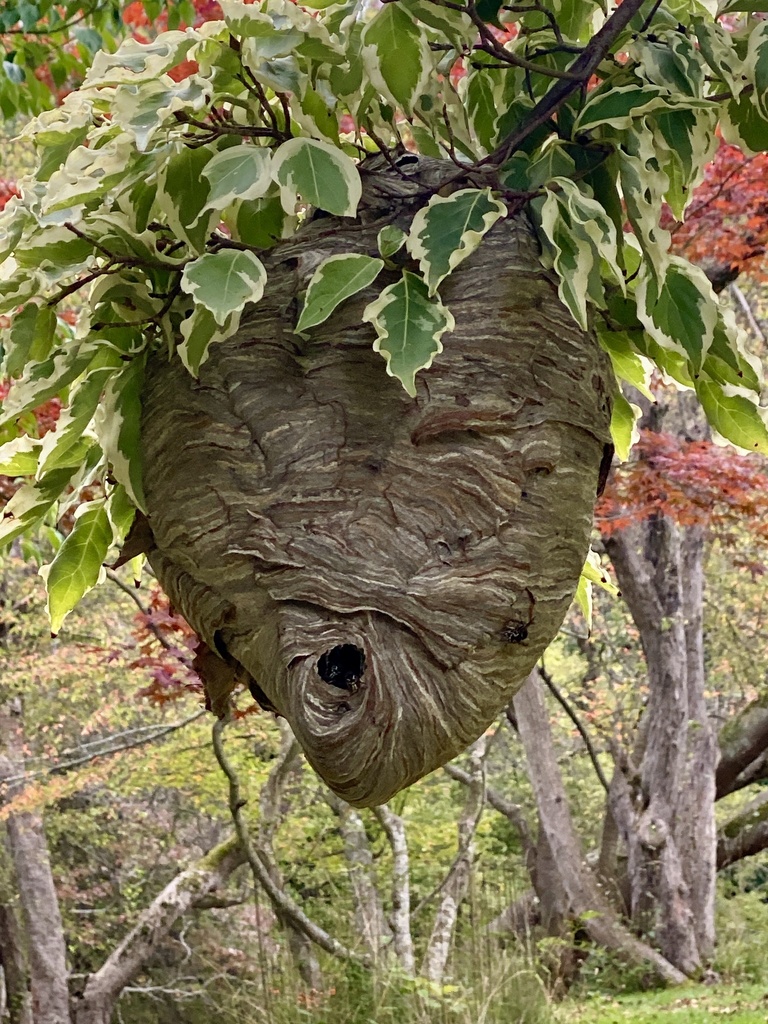
European hornets like dark, sheltered spaces. The nest is made of brown to gray paper chewed from decaying wood, often brittle and patchy rather than smooth.
- Hollow trees are the most common site, often 6 feet or more above the ground and sometimes much higher.
- Buildings near woods: wall voids, attics, barns, sheds and hollow porch columns.
- Occasionally in a hole in the ground or a hollow stump.
A colony starts in spring with one queen, grows all summer and usually reaches a few hundred workers, sometimes 800 to 1,000 or more, by early fall. It stays active into October or early November in many areas. After hard frosts the workers die; only new queens survive the winter, elsewhere, and the old nest is not reused. A sign of a nest inside a wall: hornets at a crack or gap in the siding, and big hornets showing up indoors. See wasp nest in a wall.
Stripped bark on lilacs and birches
In late summer and fall, European hornets chew bark off twigs and branches to get sap and nest material. Lilac and birch are favorites; ash, willow, poplar, boxwood and rhododendron are also hit. Bark stripped all the way around a branch kills the part above it, and the damage is often blamed on squirrels. Hornets can travel a long way from the nest to feed, and they tend to return to the same shrubs year after year.
- Check the shrub at dusk and after dark; that is when the hornets are most active.
- Fine netting can protect a small, valuable shrub during August and September.
- Watching which way the hornets fly when they leave can lead you to the nest.
Are European hornets dangerous?
Away from the nest, European hornets are generally not aggressive; they hunt other insects, including yellowjackets, and feed on sap and ripe or fallen fruit. Near the nest they defend it. Like other wasps, they can sting more than once, and the sting is painful, with swelling that can last a few days.
Trouble breathing, throat or tongue swelling, dizziness or hives spreading over the body after a sting: call 911.
For an ordinary sting, see what to do first after a sting; warning signs of a serious reaction are in sting allergy.
What to do about a nest
- Nest in a tree away from the house: often best left alone. The colony dies after the first hard frosts. See should you remove a wasp nest and the best time to remove one.
- Nest in a wall, attic or porch column: call a pest professional. Do not seal the entrance; the hornets can chew a new way out, sometimes into the house.
- Nest high in a tree near a deck, path or play area: also a job for a professional; never climb a tree that may hold a hornet nest.
- Hornets indoors: usually a sign of a nest in the wall or attic, or a hornet drawn in by lights. See wasps in the house.
- Fewer visitors at night: turn off porch lights or switch to yellow bug lights, and keep windows screened.
Not sure whether the nest is still in use? See how to check if a nest is active. What a professional costs: wasp nest removal cost. When to call: when to call a professional.
Common questions
Is the European hornet a “murder hornet”?
No. The northern giant hornet, nicknamed “murder hornet,” was only ever found in a small corner of northwestern Washington, and officials declared it eradicated from the U.S. in December 2024. A big hornet in the East is almost certainly a European hornet.
Why are hornets hitting my windows at night?
European hornets fly after dark and are attracted to lights. Turning off outdoor lights or using yellow bulbs helps. If they keep showing up indoors, look for a nest in a wall or attic.
Do European hornets attack people?
Not usually. They sting when their nest is disturbed or when they are trapped or swatted. Stay well away from the nest and do not swat at them.
Will they come back to the same nest next year?
No. The colony dies in fall and the nest is abandoned. A new queen may start a nest in a similar spot nearby, though, especially a hollow tree that worked before.
Your next step
- All identification guides: identify wasps and nests and types of wasp nests.
- Not sure what to do: the wasp nest decision guide.
More in Identification
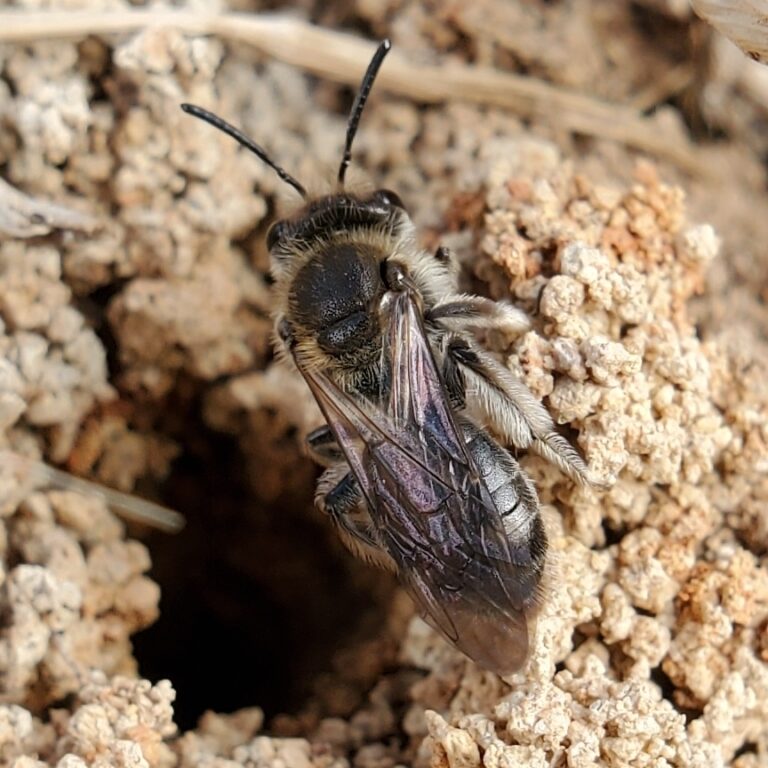 Bees Nesting in the GroundLots of small holes with little mounds of soil in a bare or thin patch of lawn, with fuzzy bees…
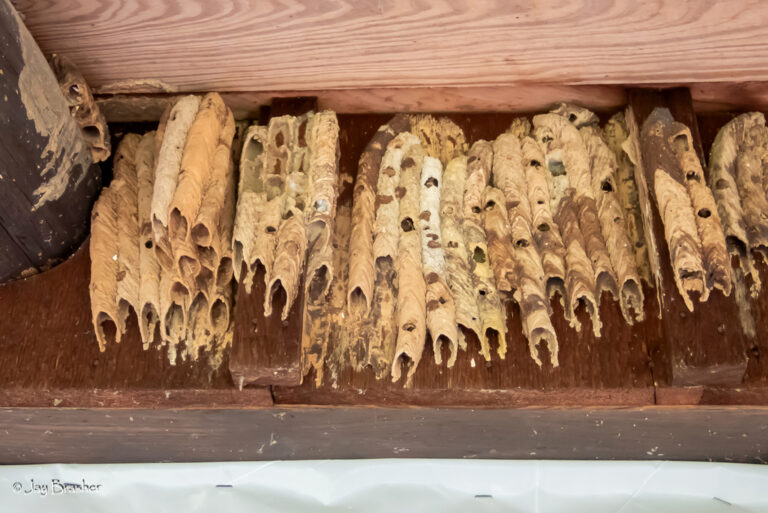 Mud Dauber Nests: What They Are and What to DoMud tubes or fist-sized lumps of dried mud on a wall, ceiling or under a deck are built by mud…
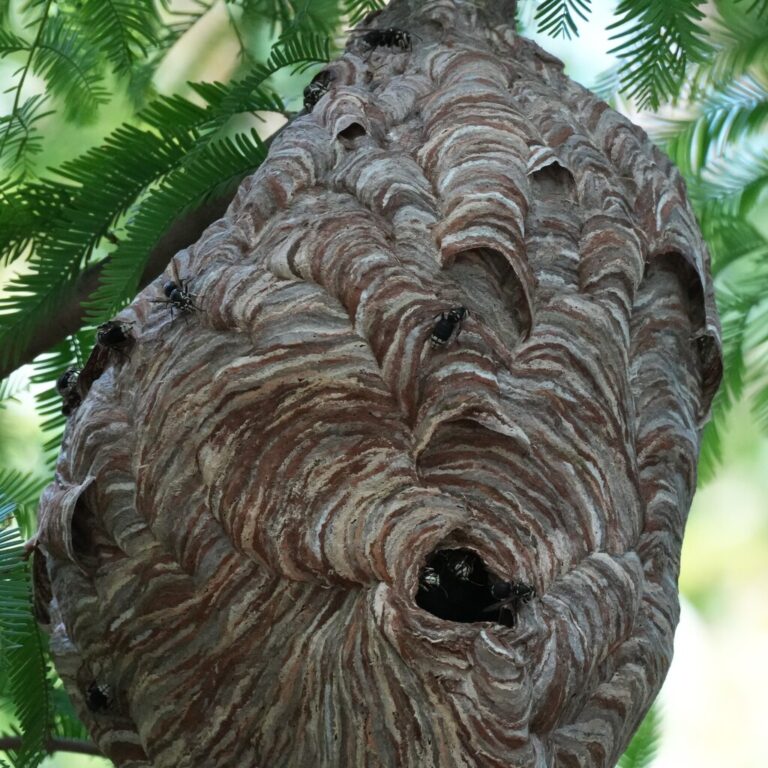 Is a Wasp Nest Active? How to Check SafelyWatch the nest from at least 10 to 20 feet away on a warm, sunny afternoon for 10 to 15 minutes. If…
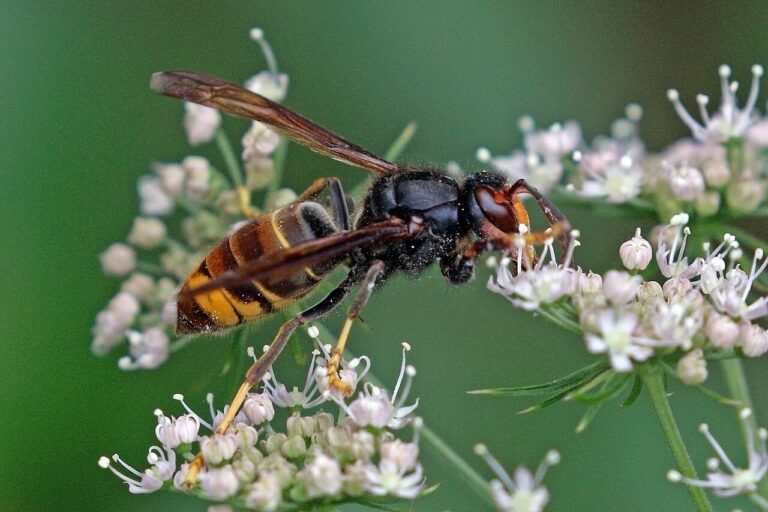 Yellow-Legged Hornet: How to Recognize It and What to DoThe yellow-legged hornet is an invasive hornet from Southeast Asia, first found in the U.S. near…
 Wasp nest in a tree or bushWhen to leave it and when it has to go.
Sources
- European Hornet: Largest Hornet in Georgia (C 1354), Shimat V. Joseph, University of Georgia Extension, 2025.
- European Hornet (Vespa crabro germana), UMass Extension Landscape, Nursery and Urban Forestry Program, updated 2023.
- European Hornet: The Mysterious Branch Girdler, Steven K. Rettke, Rutgers Cooperative Extension, 2015.
- “Murder” Hornets, Mary Jo Gibson, Penn State Extension, updated 2025.
- Northern giant hornet declared eradicated from the U.S., Washington State Department of Agriculture, December 2024.
Photos on this page are shared by their authors on iNaturalist under Creative Commons licenses, credited under each image. For who writes these guides and how we stay independent, see About.